Article generation failed: Error code: 402 – {‘error’: {‘message’: ‘Insufficient credits. Add more using https://openrouter.ai/settings/credits’, ‘code’: 402}}
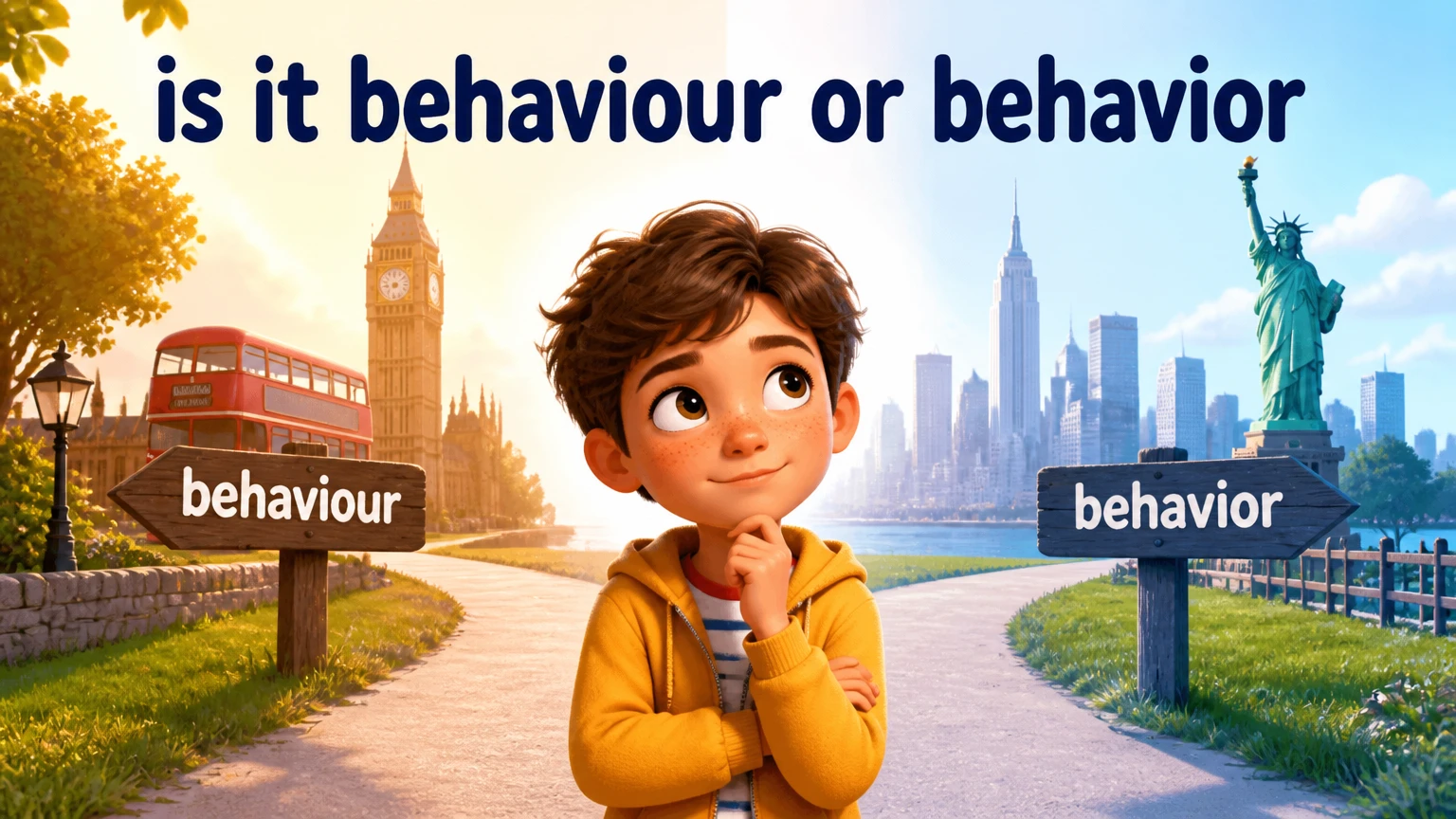
The short answer is that both behaviour and behavior are correct spellings of the same word. The difference lies entirely in which dialect of English you are using. While they share the same meaning—referring to the way in which one acts or conducts oneself—the spelling you choose depends on your geographic location or your intended audience.
Table of Contents
Regional Differences: UK vs. US
The distinction between these two spellings is one of the most common examples of the divide between British and American English.
British English (Behaviour)
In the United Kingdom, as well as in Australia, Canada, New Zealand, and other Commonwealth nations, the spelling behaviour is the standard. If you are writing for a British journal, a Canadian newspaper, or an Australian school assignment, you should include the “u”.
American English (Behavior)
In the United States, the “u” is omitted, making behavior the accepted spelling. This change was largely popularized by Noah Webster, the famous American lexicographer, who sought to simplify English spelling and distinguish American identity from British influence in the late 18th and early 19th centuries.
The History of the “u”
The word originates from the Old French word havoir, influenced by the English verb “behave.” Middle English speakers originally used various spellings. During the Renaissance, many English words were standardized with the “-our” suffix (derived from French influence). While the British retained this traditional spelling, American English moved toward the Latin-rooted “-or” ending to create a more phonetic and logical system.
Derived Words: Behavioral vs. Behavioural
The spelling preference remains consistent even when the word changes form. Whether you are adding suffixes like -al, -ism, or -ist, you should stick to your chosen regional style.
- Adjective: Behavioral (US) / Behavioural (UK)
- Noun: Behaviorism (US) / Behaviourism (UK)
- Adverb: Behaviorally (US) / Behaviourally (UK)
Examples in Context
American English: “The scientist studied the behavior of the lab rats to understand their social patterns.”
British English: “The teacher praised the student for her excellent behaviour during the field trip.”
Summary Table
| Context | American English | British/Commonwealth English |
|---|---|---|
| Noun (Standard) | Behavior | Behaviour |
| Adjective | Behavioral | Behavioural |
| Psychological Theory | Behaviorism | Behaviourism |
| Plural Form | Behaviors | Behaviours |
Quick Practice
Identify which sentence is written in British English:
- The company has a strict code of behavior.
- We are monitoring the predatory behaviour of the lions.
Answer: Sentence 2 is British English because it uses the behaviour spelling.
Frequently Asked Questions
Is “behavior” spelled with a “u” in Canada?
Yes, in Canada, the preferred spelling is behaviour, following the British convention, though American influences are common in digital media.
Is it “misbehavior” or “misbehaviour”?
The same rule applies. Use misbehavior in the US and misbehaviour in the UK and Commonwealth countries.
Can I use both in the same document?
Consistency is key in professional writing. You should choose one style (US or UK) and apply it to every word in your document. Mixing “behavior” and “colour” (British) in the same text is considered a mistake.