Article generation failed: Error code: 402 – {‘error’: {‘message’: ‘Insufficient credits. Add more using https://openrouter.ai/settings/credits’, ‘code’: 402}}
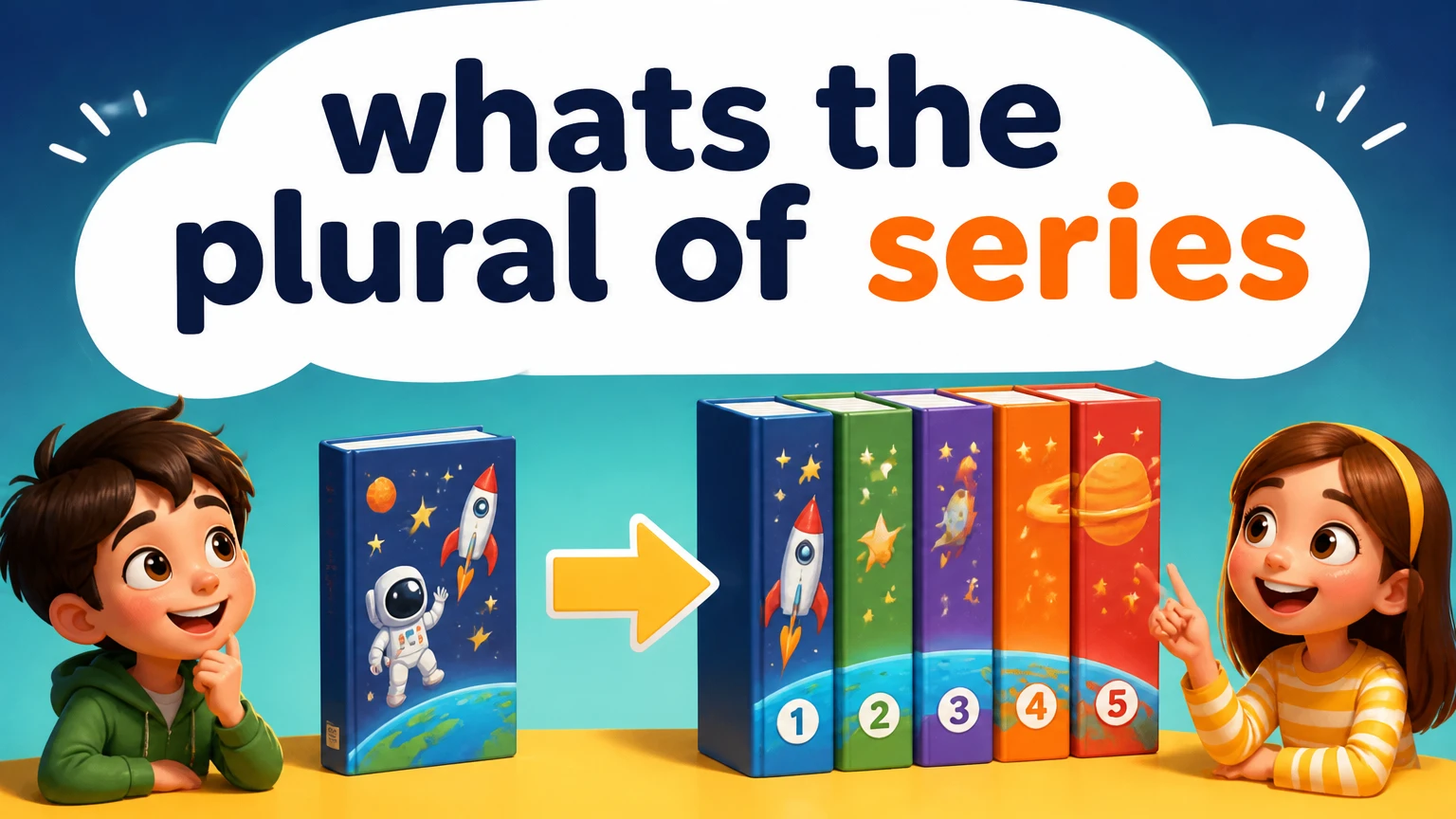
The word **series** is a unique noun in the English language because it is a **zero plural** (also known as an unchanging plural). This means that the singular and plural forms are exactly the same.
Table of Contents
The Definition of Series
A series is defined as a number of things, events, or people of a similar kind or related nature coming one after another. Whether you are talking about a single set of books or multiple sets of television shows, the word remains “series.”
Singular vs. Plural Usage
Because the spelling does not change, the distinction between singular and plural depends entirely on the verb agreement and the articles or determiners used in the sentence.
| Form | Word | Example Verb Agreement |
|---|---|---|
| Singular | Series | The series is… |
| Plural | Series | The series are… |
Examples in Context
To better understand how to use “series” correctly, look at these examples:
Singular Example:
“Netflix just released a new series that is trending worldwide.”
Plural Example:
“There are three different series of lectures scheduled for this semester.”
Common Mistakes to Avoid
Many English learners and even native speakers often make the mistake of trying to “singularize” the word by removing the ‘s’ or “pluralize” it by adding ‘es’.
- A serie (Incorrect) → A series (Correct)
- Many serieses (Incorrect) → Many series (Correct)
Why Doesn’t it Change?
The word “series” comes directly from the Latin word series, which means “row, succession, or chain.” In Latin, it belongs to the fifth declension, where the nominative singular and plural are the same. English has preserved this structure, similar to other Latin-derived words like species.
Frequently Asked Questions
Is “serieses” ever a word?
No. While you might hear it in casual speech when someone is trying to emphasize multiple sets, “serieses” is not recognized as a standard English word in any major dictionary.
How do I tell if “series” is plural in a sentence?
Look for clues in the rest of the sentence. Words like these, those, many, several, or a plural verb like are or were indicate that “series” is being used in its plural form.
Is “species” the same as “series”?
Yes, exactly. Just like “series,” one species is singular, and many species are plural. You should never say “a specie” (unless you are talking about coins/money, which is a different definition entirely).
Quick Quiz:
Identify if “series” is singular or plural in this sentence: “These series of events have changed history.”
Answer: Plural (Clues: “These” and “have”).