Hello, learners! In this comprehensive guide, we’re going to explore tense in English grammar — one of the most essential building blocks of the English language.
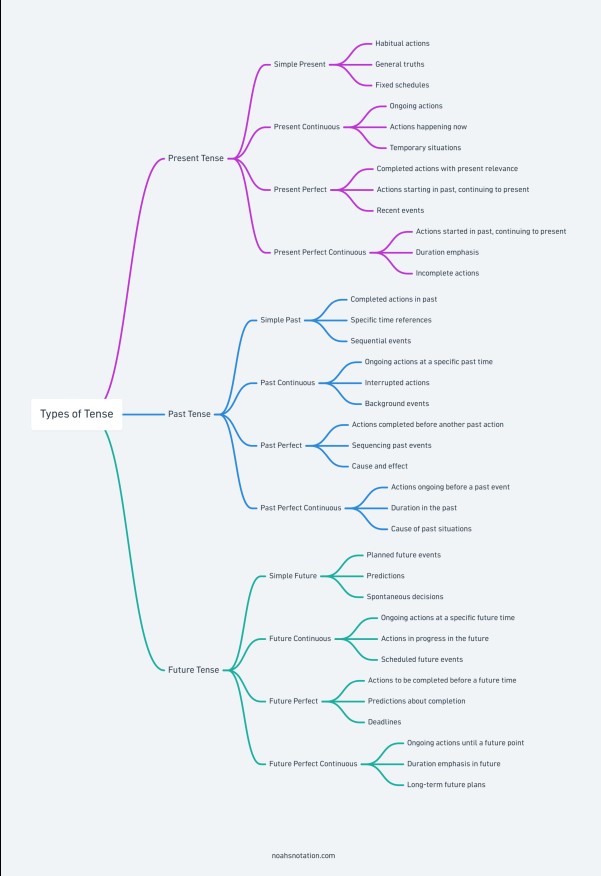
A tense is the form of a verb that tells us when an action happens — whether it’s in the past, present, or future. There are three main tenses, each divided into four aspects, giving us 12 distinct types in total. Understanding tenses helps you speak, write, and communicate with confidence and clarity.
So, teachers and students — don’t go anywhere, because this guide is going to make tenses simple, exciting, and unforgettable!
Types of Tenses – At A Glance
The Four Types of Present Tense – Explanation With Examples
The present tense in English is used to describe actions happening in the present time, habits, general truths, and ongoing activities. It helps us communicate what is currently true or regularly happens in daily life.
There are four main types of present tense: Simple Present, Present Continuous, Present Perfect, and Present Perfect Continuous. Each type shows a different meaning of time and action, helping us express situations more clearly and accurately.
Types of Present Tense Examples
Example 01 – Simple Present
I play football every day.
This shows a habit or regular action.
Example 02 – Present Continuous
I am playing football now.
This shows an action happening at this moment.
Example 03 – Present Perfect
I have played football today.
This shows a completed action with present relevance.
Example 04 – Present Perfect Continuous
I have been playing football for two hours.
This shows an action that started in the past and is still continuing.
Example 05 – Mixed Understanding
She reads books every night.
This shows a regular habit in present time.
Example Sentences
1. He goes to school daily.
This is Simple Present because it shows a regular habit.
2. They are studying now.
This is Present Continuous because the action is happening right now.
3. She has finished her homework.
This is Present Perfect because the action is completed.
4. I have been learning English for two years.
This is Present Perfect Continuous because it started in the past and is still continuing.
The Four Types of Past Tense – Explanation With Examples
The past tense in English is used to describe actions that have already happened or were completed in the past. It helps us talk about events, experiences, and situations that are no longer happening now.
There are four main types of past tense: Simple Past, Past Continuous, Past Perfect, and Past Perfect Continuous. Each type shows different timing and duration of past actions, helping us express time more clearly.
Types of Past Tense Examples
Example 01 – Simple Past
I played football yesterday.
This shows an action completed in the past.
Example 02 – Past Continuous
I was playing football at 5 PM.
This shows an ongoing action in the past.
Example 03 – Past Perfect
I had finished my work before he came.
This shows an action completed before another past action.
Example 04 – Past Perfect Continuous
I had been studying for two hours before the exam started.
This shows an action that continued for some time before another past action.
Example 05 – Mixed Understanding
She went to school early.
This shows a completed action in the past.
Example Sentences
1. He visited his grandparents last week.
This is Simple Past because the action is completed.
2. They were watching TV at night.
This is Past Continuous because the action was ongoing.
3. She had left before I arrived.
This is Past Perfect because it happened before another past action.
4. I had been waiting for hours before the bus came.
This is Past Perfect Continuous because it shows duration before another event.
The Four Types of Future Tense – Explanation With Examples
The future tense in English is used to describe actions that will happen after the present moment. It helps us talk about plans, predictions, decisions, and actions that have not yet occurred.
There are four main types of future tense: Simple Future, Future Continuous, Future Perfect, and Future Perfect Continuous. Each type shows different timing, duration, and completion of future actions.
Types of Future Tense Examples
Example 01 – Simple Future
I will play football tomorrow.
This shows a future action or decision.
Example 02 – Future Continuous
I will be playing football at 5 PM.
This shows an ongoing action at a future time.
Example 03 – Future Perfect
I will have finished my homework by evening.
This shows an action completed before a future time.
Example 04 – Future Perfect Continuous
I will have been studying for 3 hours by 6 PM.
This shows a continuous action that will continue up to a future point.
Example 05 – Mixed Understanding
She will go to school tomorrow.
This shows a planned future action.
Example Sentences
1. He will visit his uncle next week.
This is Simple Future because it shows a future action.
2. They will be watching a movie at night.
This is Future Continuous because the action will be ongoing in the future.
3. She will have completed her course by next month.
This is Future Perfect because the action will finish before a future time.
4. I will have been working here for five years by 2027.
This is Future Perfect Continuous because it shows duration up to a future point.
Let’s Practice!
Don’t miss these worksheets for better learning!
Present Tense Worksheet
Choose the correct tense type for each sentence
Past Tense Worksheet
Choose the correct tense type for each sentence
Future Tense Worksheet
Choose the correct tense type for each sentence
Let’s Learn Tense With Fun!
And that’s a wrap, learners! We hope this complete guide on tense in English grammar has made things much clearer for both teachers and students.
From the Present Tense describing everyday actions, to the Past Tense recalling what already happened, and the Future Tense expressing what’s coming ahead — all 12 distinct types work together to make your English communication more accurate and natural.
Remember, getting a good grip on tenses isn’t just about memorizing rules — it’s about expressing when things happen with confidence and clarity.
Keep practicing, stay curious, and never stop learning. Once you understand tenses well, writing and speaking correct English becomes a whole lot easier!