Article generation failed: Error code: 402 – {‘error’: {‘message’: ‘Insufficient credits. Add more using https://openrouter.ai/settings/credits’, ‘code’: 402}}
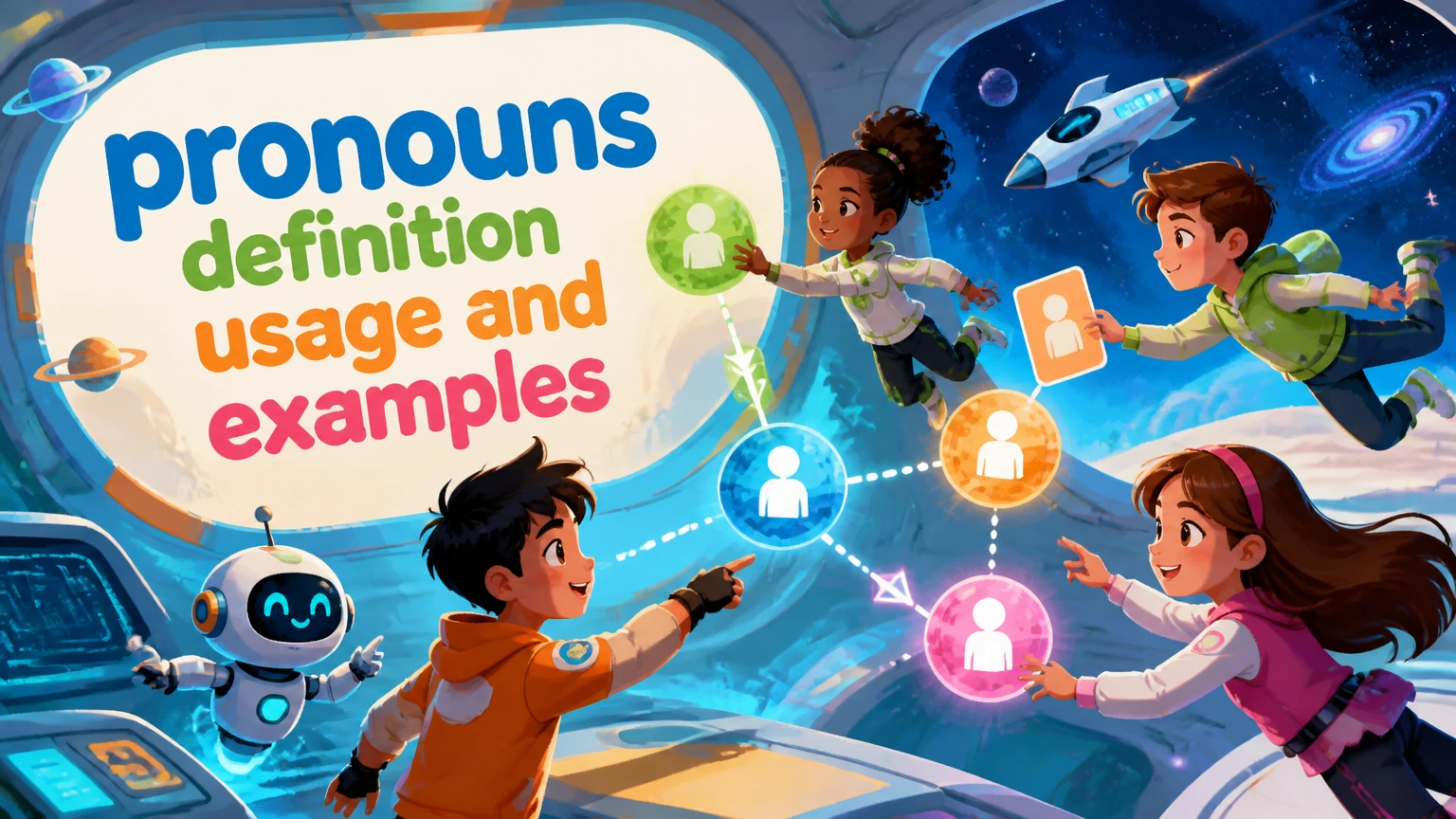
In the English language, pronouns are essential building blocks that allow for fluid, natural communication. Without them, our speech and writing would feel repetitive and clunky. This guide explores the definition, types, and proper usage of pronouns to help you master this fundamental part of speech.
Table of Contents
What is a Pronoun?
A pronoun is a word used in place of a noun or a noun phrase. The specific noun that a pronoun replaces or refers back to is called its antecedent. By using pronouns, we avoid repeating the same names and objects over and over again.
Without Pronouns: Sarah told Sarah’s mother that Sarah would be late because Sarah’s car broke down.
With Pronouns: Sarah told her mother that she would be late because her car broke down.
Types of Pronouns
Pronouns are classified into several categories based on their function within a sentence. Understanding these categories is key to using them correctly.
1. Personal Pronouns
These refer to specific people or things. They change form based on person (first, second, or third), number (singular or plural), and case (subject or object).
| Person | Subject Pronouns | Object Pronouns |
|---|---|---|
| 1st Person (Singular) | I | Me |
| 2nd Person (Singular/Plural) | You | You |
| 3rd Person (Singular) | He, She, It, They | Him, Her, It, Them |
| 1st Person (Plural) | We | Us |
| 3rd Person (Plural) | They | Them |
2. Possessive Pronouns
These show ownership. Unlike possessive adjectives (my, your, his), possessive pronouns stand alone and do not precede a noun.
- Mine: That book is mine.
- Yours: Is this coffee yours?
- Theirs: The victory was theirs.
3. Relative Pronouns
These connect relative clauses to independent clauses. They include who, whom, whose, which, and that.
“The woman who called yesterday is here.”
4. Reflexive and Intensive Pronouns
These end in -self or -selves. Reflexive pronouns are used when the subject and object are the same, while intensive pronouns are used for emphasis.
- Reflexive: I hurt myself.
- Intensive: I myself will handle the repairs.
Rules for Proper Usage
Pronoun-Antecedent Agreement: A pronoun must always agree with its antecedent in number and gender. If the antecedent is singular, the pronoun must be singular.
Common mistakes often occur with indefinite pronouns like everyone, someone, or each. These are grammatically singular.
Everyone must bring their own lunch. (Informal but common)
Everyone must bring his or her own lunch. (Traditional/Formal)
Note: In modern English, “they/them” is increasingly accepted as a singular, gender-neutral pronoun for individuals or when the gender is unknown.
Examples in Context
Here are some sentences demonstrating different pronoun types in action:
- Interrogative: Who is coming to the party?
- Demonstrative: That is a beautiful painting.
- Indefinite: Everything happens for a reason.
- Reciprocal: They gave each other gifts.
Frequently Asked Questions
What is the difference between “who” and “whom”?
“Who” is a subject pronoun (like “he” or “she”), while “whom” is an object pronoun (like “him” or “her”). If you can replace the word with “him,” use “whom.”
Can a pronoun start a sentence?
Yes. Subject pronouns like “He,” “She,” “I,” and “They” frequently start sentences as the primary subject of the verb.
Quick Exercise
Replace the nouns in the following sentence with pronouns:
“The teacher gave the students the homework.”
Answer: “She gave them it.” (Or: “He gave them it.”)