The letter K introduces a flavorful collection of authentic Moroccan foods, featuring iconic pastries, aromatic meat dishes, traditional breads, and preserved specialties. From the elegant Kaab el Ghazal and savory Kefta Tagine to rustic Khobz and flavorful Khli, these dishes showcase Morocco’s rich culinary heritage and centuries-old culinary traditions.
Alongside favorites like Couscous, Harira, Tagine, and Bastilla, the foods beginning with K offer another exciting opportunity to explore authentic Moroccan cuisine.
This guide explores Moroccan foods that start with K, introducing traditional recipes, regional specialties, and classic dishes enjoyed throughout Morocco.
K Keeps Morocco’s Culinary Traditions Alive
The letter K contains many authentic Moroccan food names, representing festive pastries, hearty meat dishes, artisan breads, and traditional preservation techniques.
One of the best-known examples is Kaab el Ghazal, also known as “Gazelle Horns.” These delicate crescent-shaped pastries are filled with almond paste flavored with orange blossom water and cinnamon before being wrapped in a thin pastry shell. They are among Morocco’s most famous traditional desserts and are commonly served during weddings and celebrations.
Another beloved specialty is Kefta Tagine, a classic Moroccan dish made with seasoned beef or lamb meatballs simmered in a rich tomato sauce with onions, garlic, paprika, cumin, parsley, and eggs. It is one of the country’s most popular family meals.
Bread lovers may already know Khobz, Morocco’s traditional round bread. Freshly baked every day in homes and neighborhood bakeries, Khobz accompanies almost every Moroccan meal and is often used instead of utensils to scoop up tagines, salads, and stews.
You’ll also encounter Khli, a traditional Moroccan preserved meat prepared by marinating beef in spices before drying and storing it in rendered fat. Khli has been used for generations as a practical way to preserve meat and remains an important ingredient in breakfasts, tagines, and omelets.
Other authentic Moroccan foods beginning with K include Khlii and Eggs, Kraâ Mhamssa (zucchini stew), Khoudenjal Tea, Kefta Brochettes, Kefta Briouats, Kefta Couscous, Khoudenjal Herbal Drink, and Kefta Sandwich.
These foods show that the letter K offers an outstanding introduction to authentic Moroccan cuisine.
Benefits of Learning Moroccan Foods Beginning With K
- Complete your Moroccan food vocabulary from A to Z.
- Discover authentic regional Moroccan specialties.
- Learn about traditional Moroccan cooking methods.
- Explore breads, pastries, tagines, preserved meats, and grilled dishes.
- Recognize iconic foods served across Morocco.
- Improve confidence when reading Moroccan restaurant menus.
- Strengthen memory through alphabetical learning.
- Prepare for travel by identifying local specialties.
- Support classroom and worksheet activities.
- Learn about Morocco’s rich culinary heritage.
- Find inspiration for cooking authentic Moroccan recipes at home.
- Experience both savory and sweet Moroccan foods.
- Develop a deeper appreciation for Moroccan cuisine.
Moroccan Foods That Start With K
The list below features Moroccan foods beginning with the letter K, including pastries, breads, tagines, preserved meats, and regional favorites enjoyed throughout Morocco.
The letter K represents an impressive variety of Moroccan culinary traditions. You’ll find almonds, orange blossom water, beef, lamb, tomatoes, cumin, paprika, garlic, fresh herbs, and aromatic spices appearing throughout the collection.
Many of these dishes have been enjoyed for generations and remain staples in Moroccan homes, bakeries, cafés, and festive celebrations. Their enduring popularity reflects Morocco’s appreciation for handmade recipes, fresh ingredients, and culinary craftsmanship.

Gazelle Horn Pastry
Kaab el Ghzal
Syllable: kahb el gh-ZAL
Pronunciation: Kaab el Ghzal
- Gazelle horn pastry is filled with almonds. – Kaab el Ghzal m3ammar b l-louz.
- We enjoyed gazelle horn pastries with tea. – Klina Kaab el Ghzal m3a atay.
- My grandmother makes gazelle horn pastries. – Jeddti katdir Kaab el Ghzal.
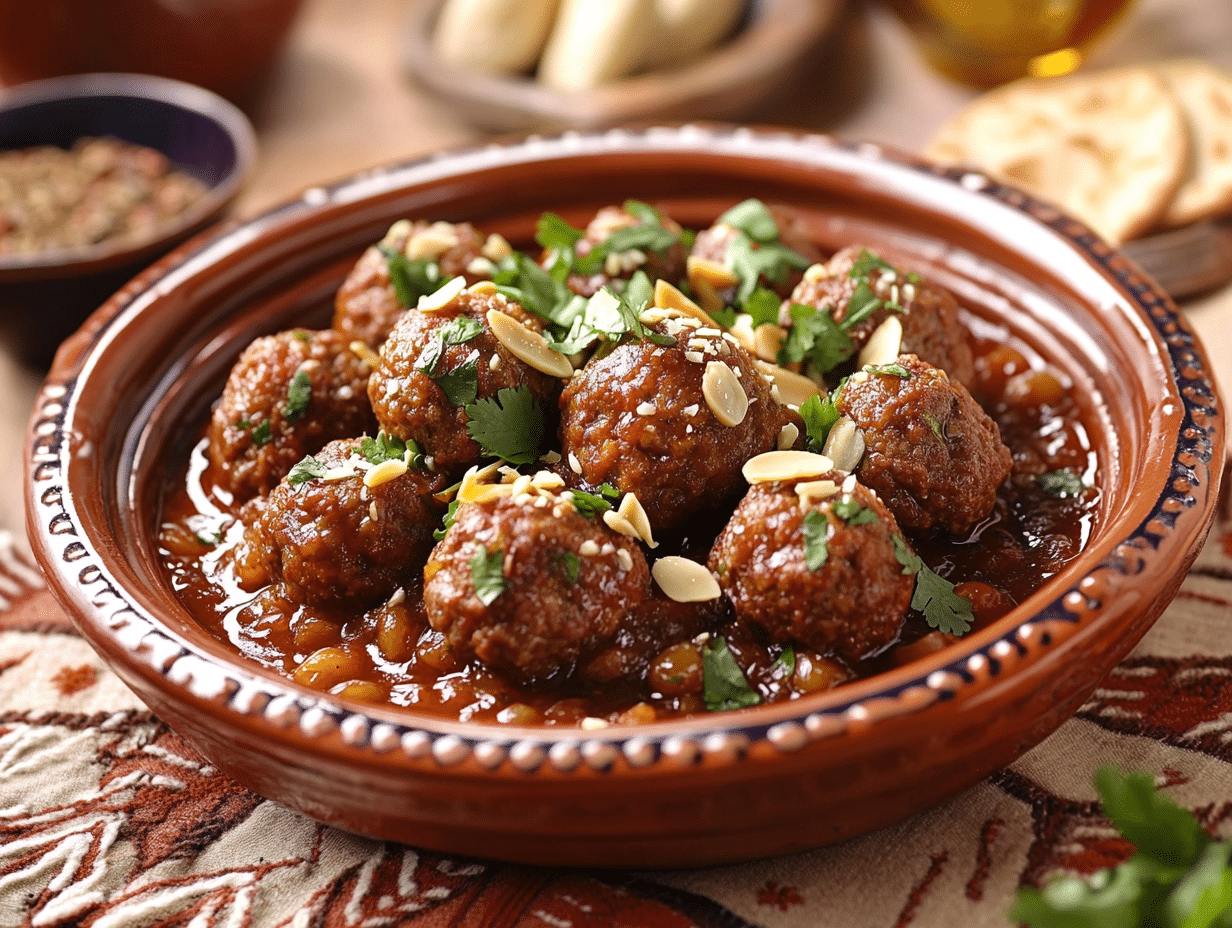
Moroccan Meatballs (Beef/Lamb)
Kefta
Syllable: KEF-ta
Pronunciation: Kefta
- Moroccan meatballs are juicy and flavorful. – Kefta bnina w ghniya b n-nkha.
- We cooked kefta with tomato sauce. – Tayyabna kefta m3a salsa dyal matisha.
- My family loves kefta. – 3a\’ilti katbghi kefta.

Moroccan Bread
Khobz
Syllable: KHOBZ
Pronunciation: Khobz
- Moroccan bread is fresh and soft. – Khobz tazaj w hnin.
- We ate bread with olive oil. – Klina khobz m3a zit zitoun.
- My mother bakes bread every morning. – Yemma katkhbez khobz kul sbah.

Moroccan Preserved Beef
Khlii
Syllable: khlee
Pronunciation: Khlii
- Moroccan preserved beef has a rich flavor. – Khlii fih madhaq ghani.
- We added khlii to the stew. – Zidna khlii l-tabq.
- My family enjoys khlii in winter. – 3a\’ilti katbghi khlii f sh-shita.

Galangal Herbal Infusion
Khoudenjal
Syllable: khoo-den-JAL
Pronunciation: Khoudenjal
- Galangal herbal infusion is warm and refreshing. – Khoudenjal sakhon w mona3sh.
- We drank galangal infusion after dinner. – Shrebna khoudenjal mn ba3d l-3sha.
- My grandmother prepares herbal infusions. – Jeddti katwajjed khoudenjal.
Moroccan Cuisine Blends Heritage With Flavor
One of the defining strengths of Moroccan cuisine is its ability to preserve centuries-old traditions while creating flavorful meals from simple local ingredients.
Kaab el Ghazal represents Morocco’s refined pastry-making tradition, while Kefta Tagine showcases the country’s mastery of slow-cooked comfort food. Khobz highlights the importance of fresh bread in everyday Moroccan life, and Khli reflects Morocco’s historic methods of preserving food.
Together, these specialties demonstrate how Moroccan cuisine blends Berber, Arab, Andalusian, and Mediterranean influences into unforgettable dining experiences.
Practice Activities
- Learn five Moroccan foods beginning with K.
- Practice pronouncing each food name aloud.
- Create flashcards with food pictures.
- Match foods with their main ingredients.
- Read authentic Moroccan recipes.
- Watch Moroccan cooking videos featuring traditional specialties.
- Organize foods into pastries, breads, tagines, preserved meats, and grilled dishes.
- Research the history of Kaab el Ghazal and Khli.
- Visit a Moroccan restaurant and identify foods beginning with K.
- Keep a notebook of Moroccan culinary terms.
- Try making Kefta Tagine or Kaab el Ghazal at home.
- Review your favorite foods from every alphabet letter.
- Share your discoveries with family or friends.
- Test your knowledge using the worksheet.
Continue Your Moroccan Food Alphabet Journey!
The letter K introduces another memorable collection of authentic Moroccan foods. From elegant Kaab el Ghazal and hearty Kefta Tagine to rustic Khobz and flavorful Khli, these specialties celebrate Morocco’s regional diversity, culinary heritage, and timeless cooking traditions.
Now we’d love to hear from you! Which Moroccan food beginning with K caught your attention the most, or is there another authentic K specialty we should include? Share your recommendation in the comments, tell us your favorite Moroccan dish, and pass this worksheet along to anyone who enjoys discovering delicious foods from around the world.