
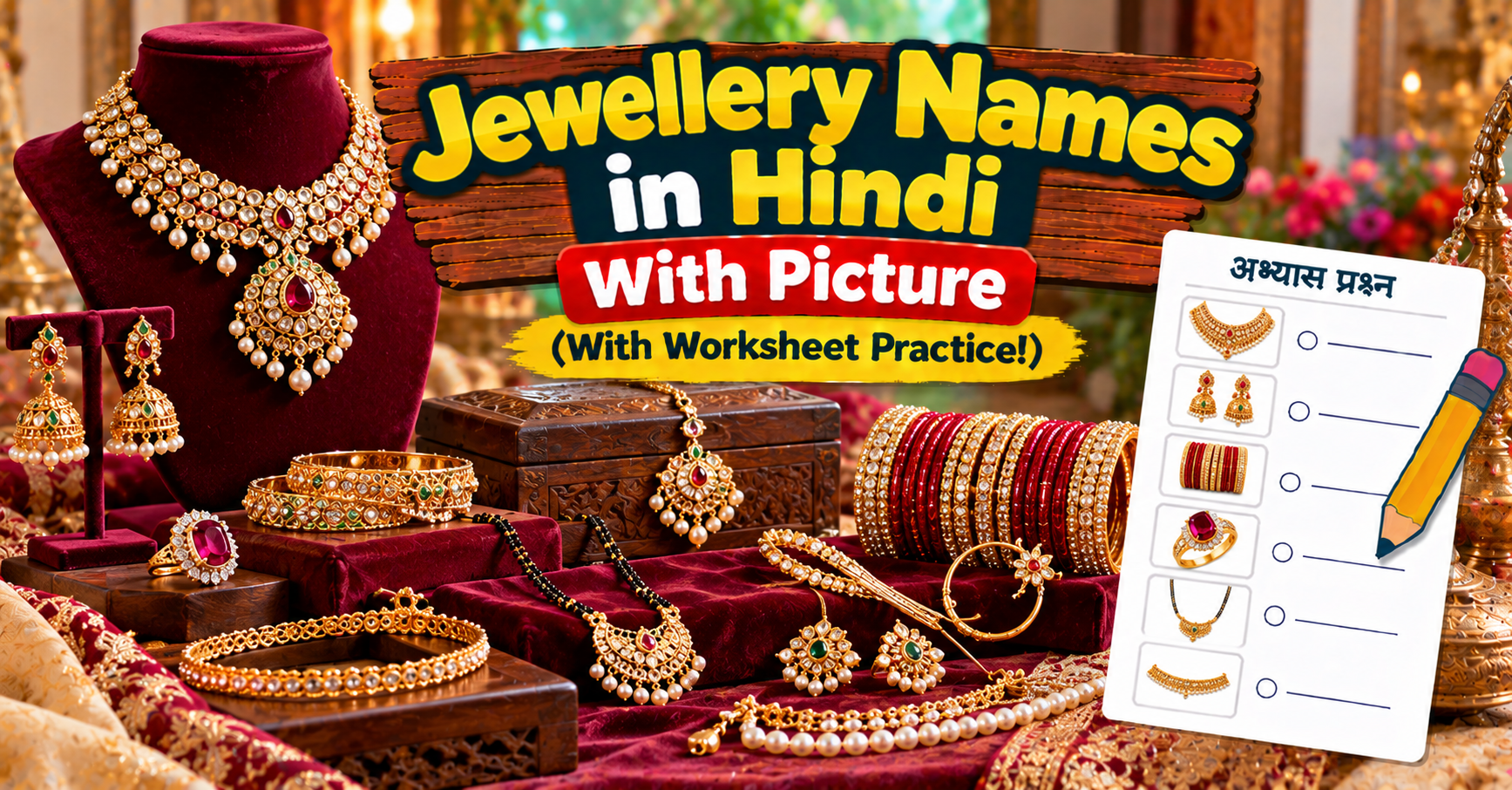
Jewellery is an important part of fashion, culture, and traditional celebrations in India. People wear different types of jewellery for everyday use, weddings, festivals, religious occasions, and special events. Learning jewellery names in Hindi is useful for students, children, travelers, language learners, and anyone interested in Indian culture and vocabulary.
In this article, you will learn common jewellery names in Hindi with their English meanings. The list includes necklaces, earrings, rings, bangles, bracelets, anklets, nose jewellery, hair jewellery, traditional ornaments, and other popular jewellery items.
Learning jewellery vocabulary with pictures makes it easier to recognize different ornaments and remember their Hindi names. Let us explore some of the most useful jewellery names in Hindi and English.
Learn Jewellery Names in Hindi and English
Jewellery vocabulary is useful when shopping, describing ornaments, discussing traditional clothing, or talking about weddings and festivals.
For example:
- हार means Necklace.
- माला means Garland or Necklace.
- कंगन means Bangle or Bracelet.
- चूड़ी means Bangle.
- अंगूठी means Ring.
- झुमका means Jhumka Earring.
- पायल means Anklet.
- नथ means Nose Ring.
- मांग टीका means Maang Tikka.
- मुकुट means Crown.
Learning these words helps Hindi learners understand jewellery-related conversations and descriptions more easily.
Benefits of Learning Jewellery Names
Learning jewellery names helps students expand their Hindi vocabulary and understand words commonly used in fashion, shopping, culture, weddings, and festivals.
It also introduces learners to traditional Indian ornaments. Many jewellery items have regional names, distinctive designs, and cultural significance.
Knowing these words can be especially helpful when visiting jewellery shops or reading descriptions of traditional Indian clothing and ornaments.
Jewellery Names in Hindi With Pictures
Pictures make jewellery vocabulary easier to understand because learners can see the actual ornament while learning its Hindi name.
You can use jewellery pictures for vocabulary lessons, classroom worksheets, flashcards, children’s learning activities, and Hindi language practice.
Some common jewellery items include हार, चूड़ी, कंगन, अंगूठी, झुमका, पायल, नथ, मांग टीका, और बिछिया.

Necklace
हार
Syllable: Haar
Pronunciation: Haar
- She is wearing a beautiful necklace. – उसने सुंदर हार पहना है।
- The necklace is made of gold. – हार सोने का बना है।
- Her necklace looks elegant. – उसका हार सुंदर दिखता है।

Chain
चेन
Syllable: Chen
Pronunciation: Chain
- He bought a gold chain. – उसने सोने की चेन खरीदी।
- The chain is very delicate. – चेन बहुत नाज़ुक है।
- She wears a chain every day. – वह हर दिन चेन पहनती है।

Pendant
लटकन
Syllable: Latkan
Pronunciation: Pendant
- The pendant is beautiful. – लटकन सुंदर है।
- She wears a pendant with her necklace. – वह अपने हार के साथ लटकन पहनती है।
- The pendant has a small stone. – लटकन में एक छोटा पत्थर लगा है।

Earrings
झुमके
Syllable: Jhumke
Pronunciation: Earrings
- She is wearing gold earrings. – उसने सोने के झुमके पहने हैं।
- The earrings match her dress. – झुमके उसकी पोशाक से मेल खाते हैं।
- These earrings are beautiful. – ये झुमके सुंदर हैं।
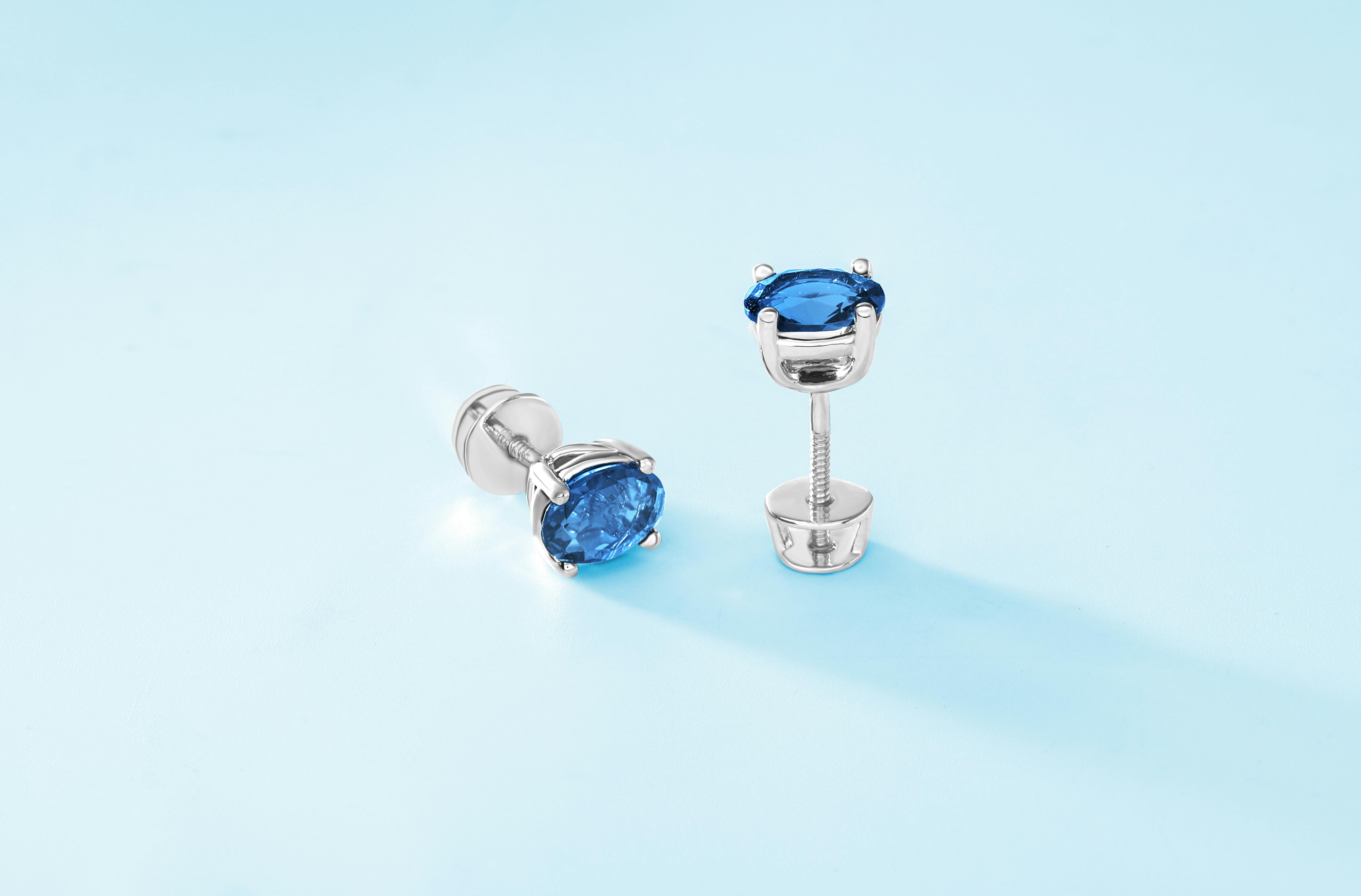
Stud Earrings
बाली
Syllable: Baali
Pronunciation: Stud Earrings
- She wears small stud earrings. – वह छोटी बालियाँ पहनती है।
- The earrings are simple and elegant. – बालियाँ सरल और सुंदर हैं।
- Her stud earrings are made of gold. – उसकी बालियाँ सोने की बनी हैं।

Jhumka
झुमका
Syllable: Jhumka
Pronunciation: Jhumka
- Jhumka earrings are popular in India. – झुमके भारत में लोकप्रिय हैं।
- She bought a pair of jhumkas. – उसने झुमकों की एक जोड़ी खरीदी।
- The jhumkas have a traditional design. – झुमकों का डिज़ाइन पारंपरिक है।

Bangles
चूड़ियाँ
Syllable: Choodiyan
Pronunciation: Bangles
- She wears colorful bangles. – वह रंगीन चूड़ियाँ पहनती है।
- The bangles are made of glass. – चूड़ियाँ काँच की बनी हैं।
- Her bangles make a soft sound. – उसकी चूड़ियाँ हल्की आवाज़ करती हैं।

Bracelet
कंगन
Syllable: Kangan
Pronunciation: Bracelet
- He bought a silver bracelet. – उसने चाँदी का कंगन खरीदा।
- The bracelet looks stylish. – कंगन सुंदर दिखता है।
- She wears a bracelet on her wrist. – वह अपनी कलाई पर कंगन पहनती है।

Ring
अंगूठी
Syllable: Angoothi
Pronunciation: Ring
- She is wearing a gold ring. – उसने सोने की अंगूठी पहनी है।
- The ring has a beautiful stone. – अंगूठी में एक सुंदर पत्थर लगा है।
- He gave her a ring. – उसने उसे एक अंगूठी दी।

Nose Ring
नथ
Syllable: Nath
Pronunciation: Nose Ring
- She is wearing a traditional nose ring. – उसने पारंपरिक नथ पहनी है।
- The nose ring is made of gold. – नथ सोने की बनी है।
- The nose ring has a simple design. – नथ का डिज़ाइन सरल है।

Nose Pin
नोज़ पिन
Syllable: Noz Pin
Pronunciation: Nose Pin
- She wears a small nose pin. – वह छोटी नोज़ पिन पहनती है।
- The nose pin is made of gold. – नोज़ पिन सोने की बनी है।
- Her nose pin looks elegant. – उसकी नोज़ पिन सुंदर दिखती है।

Anklet
पायल
Syllable: Paayal
Pronunciation: Anklet
- She wears silver anklets. – वह चाँदी की पायल पहनती है।
- The anklets make a soft sound. – पायल हल्की आवाज़ करती है।
- Her anklets are beautifully designed. – उसकी पायल का डिज़ाइन सुंदर है।
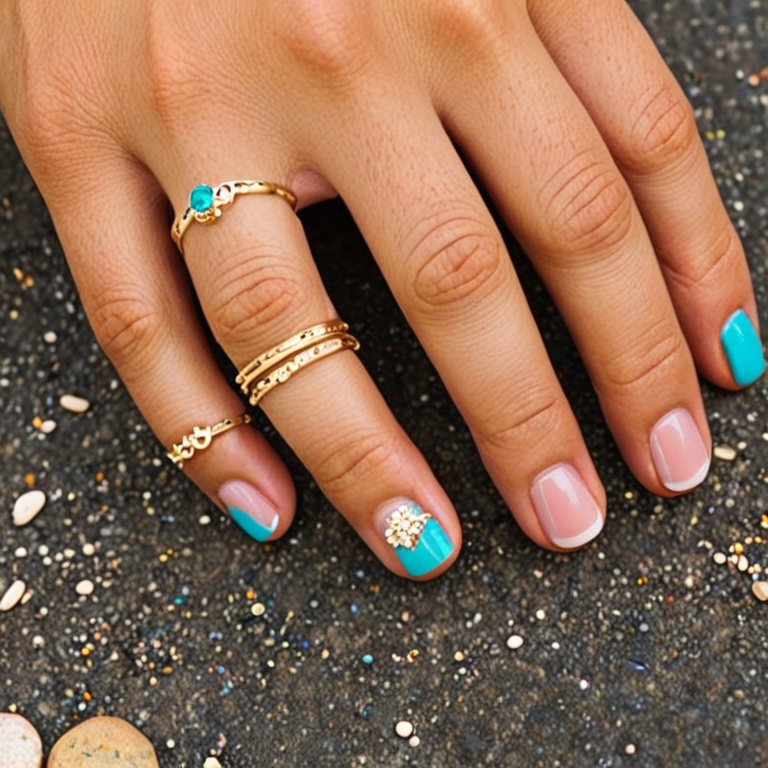
Toe Ring
बिछिया
Syllable: Bichhiya
Pronunciation: Toe Ring
- She wears toe rings on her feet. – वह पैरों में बिछिया पहनती है।
- The toe rings are made of silver. – बिछिया चाँदी की बनी है।
- Toe rings are common in traditional Indian jewelry. – बिछिया पारंपरिक भारतीय आभूषणों में आम है।

Maang Tikka
मांग टीका
Syllable: Maang Tika
Pronunciation: Maang Tikka
- The bride wore a beautiful maang tikka. – दुल्हन ने सुंदर मांग टीका पहना।
- The maang tikka has a large stone. – मांग टीके में एक बड़ा पत्थर लगा है।
- It is worn on the forehead. – इसे माथे पर पहना जाता है।

Bindi
बिंदी
Syllable: Bindi
Pronunciation: Bindi
- She wears a red bindi. – वह लाल बिंदी लगाती है।
- The bindi is small and round. – बिंदी छोटी और गोल है।
- The bindi matches her traditional dress. – बिंदी उसकी पारंपरिक पोशाक से मेल खाती है।

Bajuband
बाजूबंद
Syllable: Baajuband
Pronunciation: Bajuband
- A bajuband is worn on the upper arm. – बाजूबंद ऊपरी बाँह पर पहना जाता है।
- The bridal bajuband is beautifully decorated. – दुल्हन का बाजूबंद सुंदर ढंग से सजाया गया है।
- It is a traditional Indian ornament. – यह एक पारंपरिक भारतीय आभूषण है।
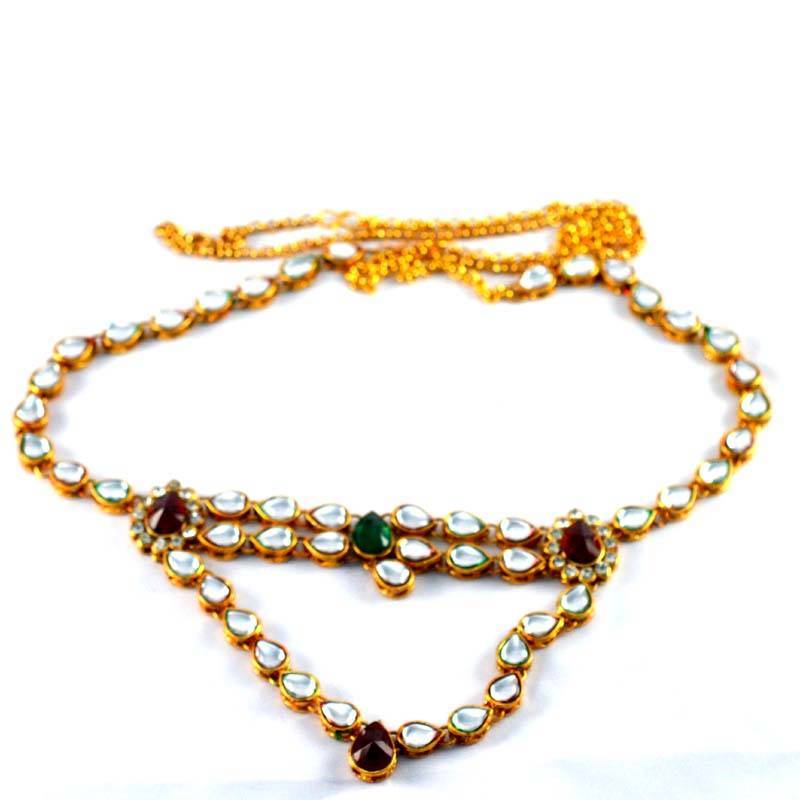
Kamarband
कमरबंद
Syllable: Kamarband
Pronunciation: Kamarband
- A kamarband is worn around the waist. – कमरबंद कमर के चारों ओर पहना जाता है।
- The bridal kamarband is decorated with stones. – दुल्हन का कमरबंद पत्थरों से सजाया गया है।
- It is a traditional ornament. – यह एक पारंपरिक आभूषण है।

Haar
हार
Syllable: Haar
Pronunciation: Haar
- The bride wore a heavy haar. – दुल्हन ने भारी हार पहना।
- The haar has many decorative stones. – हार में कई सजावटी पत्थर हैं।
- It looks beautiful with the saree. – यह साड़ी के साथ सुंदर दिखता है।

Mangal Sutra
मंगलसूत्र
Syllable: Mangal Sutra
Pronunciation: Mangal Sutra
- A mangal sutra is a traditional necklace. – मंगलसूत्र एक पारंपरिक हार है।
- She wears a mangal sutra around her neck. – वह गले में मंगलसूत्र पहनती है।
- The mangal sutra has black beads. – मंगलसूत्र में काले मोती होते हैं।
Choker
गले का हार
Syllable: Gale Ka Haar
Pronunciation: Choker
- She is wearing a beautiful choker. – उसने सुंदर गले का हार पहना है।
- The choker fits closely around her neck. – गले का हार गर्दन के पास रहता है।
- The choker has a traditional design. – गले के हार का डिज़ाइन पारंपरिक है।

Tiara
मुकुट
Syllable: Mukut
Pronunciation: Tiara
- The princess wore a sparkling tiara. – राजकुमारी ने चमकदार मुकुट पहना।
- The tiara has many stones. – मुकुट में कई पत्थर लगे हैं।
- The tiara looks beautiful. – मुकुट सुंदर दिखता है।

Crown
मुकुट
Syllable: Mukut
Pronunciation: Crown
- The crown is decorated with jewels. – मुकुट आभूषणों से सजाया गया है।
- The king wore a golden crown. – राजा ने सुनहरा मुकुट पहना।
- The crown looks magnificent. – मुकुट शानदार दिखता है।

Pearl Necklace
मोती का हार
Syllable: Moti Ka Haar
Pronunciation: Pearl Necklace
- She is wearing a pearl necklace. – उसने मोती का हार पहना है।
- The pearls are white and shiny. – मोती सफेद और चमकदार हैं।
- The necklace looks elegant. – हार सुंदर दिखता है।

Gold Necklace
सोने का हार
Syllable: Sone Ka Haar
Pronunciation: Gold Necklace
- She received a gold necklace. – उसे सोने का हार मिला।
- The gold necklace is beautiful. – सोने का हार सुंदर है।
- She wears it on special occasions. – वह इसे विशेष अवसरों पर पहनती है।

Silver Necklace
चाँदी का हार
Syllable: Chaandi Ka Haar
Pronunciation: Silver Necklace
- The silver necklace looks elegant. – चाँदी का हार सुंदर दिखता है।
- She bought a silver necklace. – उसने चाँदी का हार खरीदा।
- The necklace has a simple design. – हार का डिज़ाइन सरल है।

Gold Ring
सोने की अंगूठी
Syllable: Sone Ki Angoothi
Pronunciation: Gold Ring
- He gave her a gold ring. – उसने उसे सोने की अंगूठी दी।
- The gold ring has a diamond. – सोने की अंगूठी में हीरा लगा है।
- She wears the ring every day. – वह हर दिन अंगूठी पहनती है।

Silver Ring
चाँदी की अंगूठी
Syllable: Chaandi Ki Angoothi
Pronunciation: Silver Ring
- She bought a silver ring. – उसने चाँदी की अंगूठी खरीदी।
- The silver ring has a simple design. – चाँदी की अंगूठी का डिज़ाइन सरल है।
- The ring looks beautiful on her finger. – अंगूठी उसकी उंगली पर सुंदर दिखती है।

Diamond Ring
हीरे की अंगूठी
Syllable: Heere Ki Angoothi
Pronunciation: Diamond Ring
- The diamond ring is sparkling. – हीरे की अंगूठी चमक रही है।
- She received a diamond ring. – उसे हीरे की अंगूठी मिली।
- The diamond is set in gold. – हीरा सोने में जड़ा हुआ है।

Pearl Earrings
मोती के झुमके
Syllable: Moti Ke Jhumke
Pronunciation: Pearl Earrings
- She is wearing pearl earrings. – उसने मोती के झुमके पहने हैं।
- The pearls are bright and smooth. – मोती चमकीले और चिकने हैं।
- The earrings look elegant. – झुमके सुंदर दिखते हैं।

Gold Bangles
सोने की चूड़ियाँ
Syllable: Sone Ki Choodiyan
Pronunciation: Gold Bangles
- She wears gold bangles. – वह सोने की चूड़ियाँ पहनती है।
- The gold bangles are beautifully designed. – सोने की चूड़ियों का डिज़ाइन सुंदर है।
- They shine in the light. – वे रोशनी में चमकती हैं।
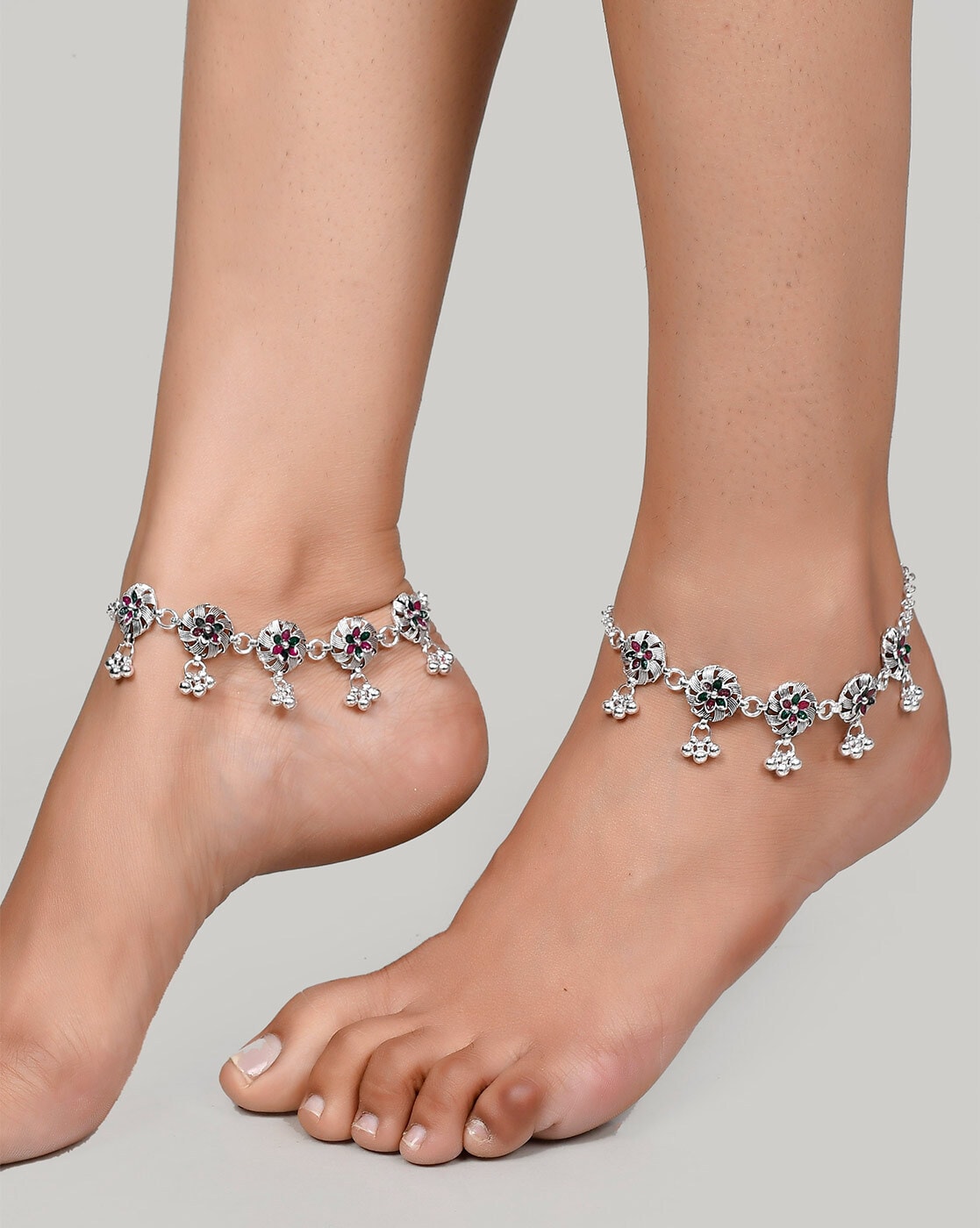
Silver Anklet
चाँदी की पायल
Syllable: Chaandi Ki Paayal
Pronunciation: Silver Anklet
- She wears a silver anklet. – वह चाँदी की पायल पहनती है।
- The anklet has small bells. – पायल में छोटी घंटियाँ लगी हैं।
- It looks beautiful on her ankle. – यह उसके टखने पर सुंदर दिखती है।

Brooch
ब्रोच
Syllable: Broch
Pronunciation: Brooch
- She wore a beautiful brooch. – उसने सुंदर ब्रोच पहना।
- The brooch is attached to her dress. – ब्रोच उसकी पोशाक पर लगा है।
- The brooch has a decorative stone. – ब्रोच में एक सजावटी पत्थर लगा है।

Gemstone
रत्न
Syllable: Ratna
Pronunciation: Gemstone
- The ring has a colorful gemstone. – अंगूठी में रंगीन रत्न लगा है।
- The gemstone shines brightly. – रत्न चमकीला दिखाई देता है।
- She likes gemstone jewelry. – उसे रत्नों वाले आभूषण पसंद हैं।
Common Jewellery Names in Hindi
Some common jewellery names in Hindi are:
हार, माला, कंठहार, चूड़ी, कंगन, बाजूबंद, अंगूठी, झुमका, बाली, पायल, नूपुर, नथ, नथनी, मांग टीका, माथा पट्टी, कमरबंद, बिछिया, हँसली, और करधनी।
These ornaments may be made from gold, silver, precious stones, beads, pearls, or other materials.
Popular Jewellery Names in Hindi
India is known for its rich tradition of jewellery making. Different regions have developed distinctive ornaments and styles.
साड़ी और हार are often seen together in traditional outfits. Necklaces can range from simple chains to elaborate traditional designs.
झुमका (Jhumka) is one of the most recognizable traditional earring styles. It is available in many designs and materials.
चूड़ी (Chudi) and कंगन (Kangan) are commonly worn as wrist ornaments. They can be made from gold, silver, glass, metal, or other materials.
पायल (Payal) is worn around the ankle. Traditional designs may include small bells or decorative elements.
नथ (Nath) is a traditional nose ornament found in several Indian jewellery traditions. Different regions have their own styles of nose rings.
मांग टीका (Maang Tikka) is a traditional forehead ornament that is commonly worn with festive and bridal outfits.
बिछिया (Bichhiya) is a toe ring traditionally worn on the toes and is an important part of certain traditional jewellery customs.
करधनी (Kardhani) is a waist ornament worn around the waist and is found in various traditional jewellery styles.
Jewellery and Their Common Uses
Different jewellery items are worn on different parts of the body and for different purposes.
Neck jewellery includes हार, माला, कंठहार, चोकर, रानी हार, और मंगलसूत्र.
Ear jewellery includes झुमका, झुमकी, बाली, कर्णफूल, और कुंडल.
Hand and wrist jewellery includes चूड़ी, कंगन, कड़ा, ब्रेसलेट, और हाथफूल.
Head and forehead jewellery includes मांग टीका, माथा पट्टी, शीशफूल, बोरला, और सरपेच.
Foot jewellery includes पायल, नूपुर, पाजेब, झांझर, और बिछिया.
Waist jewellery includes करधनी, कमरबंद, और तगड़ी.
Nose jewellery includes नथ, नथनी, फुल्ली, लौंग, और बुलाक.
Jewellery Materials in Hindi
Jewellery can be made from many different materials. Learning these material names can also help students understand jewellery descriptions.
| Hindi Name | English Name |
|---|---|
| सोना | Gold |
| चाँदी | Silver |
| हीरा | Diamond |
| मोती | Pearl |
| माणिक | Ruby |
| पन्ना | Emerald |
| नीलम | Sapphire |
| पुखराज | Yellow Sapphire |
| मूंगा | Coral |
| गोमेद | Hessonite |
| लहसुनिया | Cat’s Eye |
| रत्न | Gemstone |
| कुंदन | Kundan |
| मीनाकारी | Meenakari |
| मोती | Pearl |
Why Learning With Pictures Is Helpful
Learning jewellery names with pictures makes vocabulary more visual and easier to remember. Instead of memorizing a Hindi word alone, learners can connect the word with the shape and appearance of the ornament.
For example, seeing a picture of a झुमका while learning the Hindi word can help students recognize this traditional earring style more easily.
Pictures are especially helpful for children and beginners. Teachers can use jewellery pictures for classroom lessons, vocabulary worksheets, flashcards, and Hindi learning activities.
Practice Activities
Practice the jewellery names regularly by looking at a picture and trying to identify the Hindi name. Then check the vocabulary table to confirm the English meaning.
You can choose five jewellery names each day and write the Hindi name and English meaning in a notebook. Try to remember where each ornament is normally worn.
Another useful activity is to look at jewellery in photographs or illustrations and identify whether it is a हार, झुमका, चूड़ी, कंगन, पायल, नथ, या मांग टीका.
You can also create your own jewellery vocabulary cards using pictures. Write the Hindi name on one side and the English meaning on the other side.
Hindi Jewellery Name
| # | English Jewellery Name | Hindi Jewellery Name |
|---|---|---|
| 1 | Necklace | हार |
| 2 | Chain | चेन |
| 3 | Pendant | लटकन |
| 4 | Earrings | झुमके |
| 5 | Stud Earrings | बाली |
| 6 | Jhumka | झुमका |
| 7 | Bangles | चूड़ियाँ |
| 8 | Bracelet | कंगन |
| 9 | Ring | अंगूठी |
| 10 | Nose Ring | नथ |
| 11 | Nose Pin | नोज़ पिन |
| 12 | Anklet | पायल |
| 13 | Toe Ring | बिछिया |
| 14 | Maang Tikka | मांग टीका |
| 15 | Bindi | बिंदी |
| 16 | Bajuband | बाजूबंद |
| 17 | Kamarband | कमरबंद |
| 18 | Haar | हार |
| 19 | Mangal Sutra | मंगलसूत्र |
| 20 | Choker | गले का हार |
| 21 | Tiara | मुकुट |
| 22 | Crown | मुकुट |
| 23 | Pearl Necklace | मोती का हार |
| 24 | Gold Necklace | सोने का हार |
| 25 | Silver Necklace | चाँदी का हार |
| 26 | Gold Ring | सोने की अंगूठी |
| 27 | Silver Ring | चाँदी की अंगूठी |
| 28 | Diamond Ring | हीरे की अंगूठी |
| 29 | Pearl Earrings | मोती के झुमके |
| 30 | Gold Bangles | सोने की चूड़ियाँ |
| 31 | Silver Anklet | चाँदी की पायल |
| 32 | Brooch | ब्रोच |
| 33 | Gemstone | रत्न |
1. Which is the correct Hindi name for “Necklace”?
2. Which is the correct Hindi name for “Chain”?
3. Which is the correct Hindi name for “Pendant”?
4. Which is the correct Hindi name for “Earrings”?
5. Which is the correct Hindi name for “Stud Earrings”?
6. Which is the correct Hindi name for “Jhumka”?
7. Which is the correct Hindi name for “Bangles”?
8. Which is the correct Hindi name for “Bracelet”?
9. Which is the correct Hindi name for “Ring”?
10. Which is the correct Hindi name for “Nose Ring”?
11. Which is the correct Hindi name for “Nose Pin”?
12. Which is the correct Hindi name for “Anklet”?
13. Which is the correct Hindi name for “Toe Ring”?
14. Which is the correct Hindi name for “Maang Tikka”?
15. Which is the correct Hindi name for “Bindi”?
16. Which is the correct Hindi name for “Bajuband”?
17. Which is the correct Hindi name for “Kamarband”?
18. Which is the correct Hindi name for “Haar”?
19. Which is the correct Hindi name for “Mangal Sutra”?
20. Which is the correct Hindi name for “Choker”?
21. Which is the correct Hindi name for “Tiara”?
22. Which is the correct Hindi name for “Crown”?
23. Which is the correct Hindi name for “Pearl Necklace”?
24. Which is the correct Hindi name for “Gold Necklace”?
25. Which is the correct Hindi name for “Silver Necklace”?
26. Which is the correct Hindi name for “Gold Ring”?
27. Which is the correct Hindi name for “Silver Ring”?
28. Which is the correct Hindi name for “Diamond Ring”?
29. Which is the correct Hindi name for “Pearl Earrings”?
30. Which is the correct Hindi name for “Gold Bangles”?
31. Which is the correct Hindi name for “Silver Anklet”?
32. Which is the correct Hindi name for “Brooch”?
33. Which is the correct Hindi name for “Gemstone”?
Why Hindi Jewellery Names Matter
Jewellery vocabulary is an important part of learning about Hindi language and Indian culture. These words appear in conversations about fashion, shopping, weddings, festivals, traditional clothing, and cultural celebrations.
Words such as हार, चूड़ी, कंगन, अंगूठी, झुमका, पायल, नथ, मांग टीका, और बिछिया are useful for understanding descriptions of traditional and modern jewellery.
Learning these names also helps students recognize the cultural diversity of Indian ornaments. Different regions have their own jewellery traditions, designs, materials, and names.
By learning Hindi jewellery vocabulary, students can build a stronger everyday vocabulary while also learning more about Indian clothing and cultural traditions.
Continue Exploring Hindi Vocabulary
Learning jewellery vocabulary is another useful step toward improving Hindi vocabulary. After learning these jewellery names, you can continue exploring other useful Hindi vocabulary topics such as clothes names, body parts names, colors names, makeup names, beauty products names, food names, drinks names, household items names, school items names, and animal names.
Keep practicing the Hindi words regularly and use pictures whenever possible. Connecting each word with a real object or picture can make Hindi vocabulary easier and more enjoyable to learn.


