
Article generation failed: Error code: 402 – {‘error’: {‘message’: ‘Insufficient credits. Add more using https://openrouter.ai/settings/credits’, ‘code’: 402}}
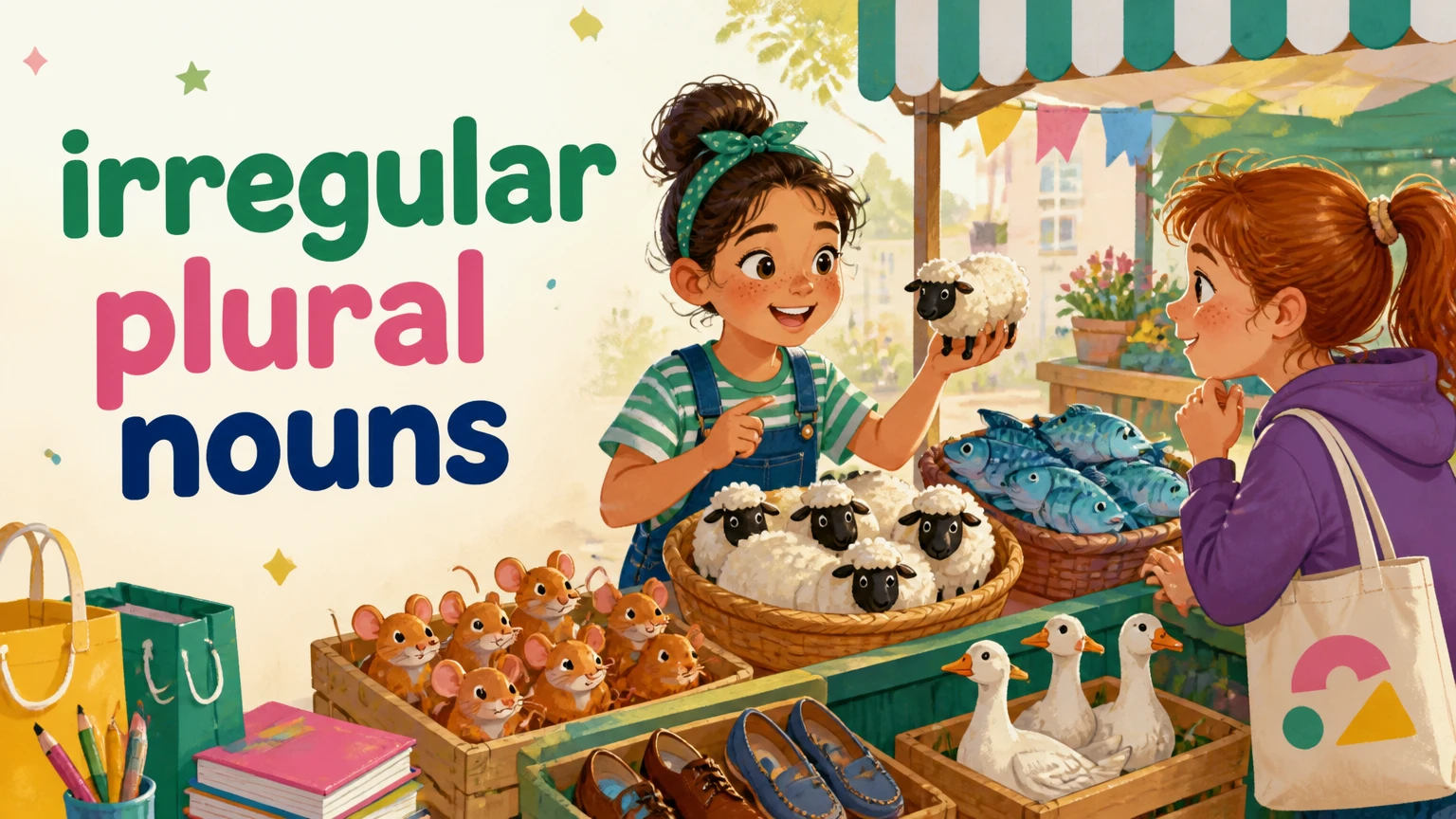
In English grammar, most nouns follow a simple rule: add “-s” or “-es” to make them plural. However, **irregular plural nouns** are words that do not follow these standard rules. Understanding these exceptions is essential for clear and professional communication.
Table of Contents
Because irregular plural nouns don’t follow a single pattern, they must often be memorized individually. Let’s explore the different categories of these unique words.
1. Nouns with Vowel Changes
Some of the most common irregular nouns change their internal vowel sounds rather than adding an ending. These are often referred to as “mutation” plurals.
| Singular | Plural | Example Sentence |
|---|---|---|
| Man | Men | The men are waiting in the lobby. |
| Woman | Women | Three women founded the startup. |
| Foot | Feet | My feet are sore after the long hike. |
| Tooth | Teeth | You should brush your teeth twice a day. |
| Goose | Geese | A flock of geese flew overhead. |
| Mouse | Mice | We discovered mice in the attic. |
2. Nouns Ending in -f or -fe
For many nouns ending in -f or -fe, the ending changes to -ves to create the plural form. This change reflects a shift in pronunciation from a voiceless “f” to a voiced “v.”
| Singular | Plural |
|---|---|
| Leaf | Leaves |
| Knife | Knives |
| Life | Lives |
| Wife | Wives |
| Thief | Thieves |
| Shelf | Shelves |
3. Latin and Greek Origins
Academic and scientific English often retains pluralization rules from Latin and Greek. These can be particularly tricky for learners.
Nouns Ending in -us (Latin)
Many Latin words ending in -us change to -i in the plural.
- Cactus → Cacti (or Cactuses)
- Focus → Foci (or Focuses)
- Stimulus → Stimuli
- Alumnus → Alumni
Nouns Ending in -is (Greek)
Words ending in -is usually change to -es (pronounced “eez”).
- Analysis → Analyses
- Crisis → Crises
- Thesis → Theses
4. Nouns That Do Not Change
Some nouns are exactly the same in both their singular and plural forms. These are often related to animals or specific types of food.
| Singular | Plural |
|---|---|
| Sheep | Sheep |
| Fish | Fish (sometimes “fishes” for species diversity) |
| Deer | Deer |
| Series | Series |
| Species | Species |
5. Common Mistakes and Tips
Spot the Error:
The childs are playing in the park.
The children are playing in the park.
I saw three deers in the woods.
I saw three deer in the woods.
Is “person” an irregular noun?
Yes. While “persons” is used in very formal legal contexts, the standard plural of person is people.
What about “ox”?
The plural of ox is oxen. This is one of the few remaining words in English that uses the old Germanic “-en” plural ending (similar to child/children).


