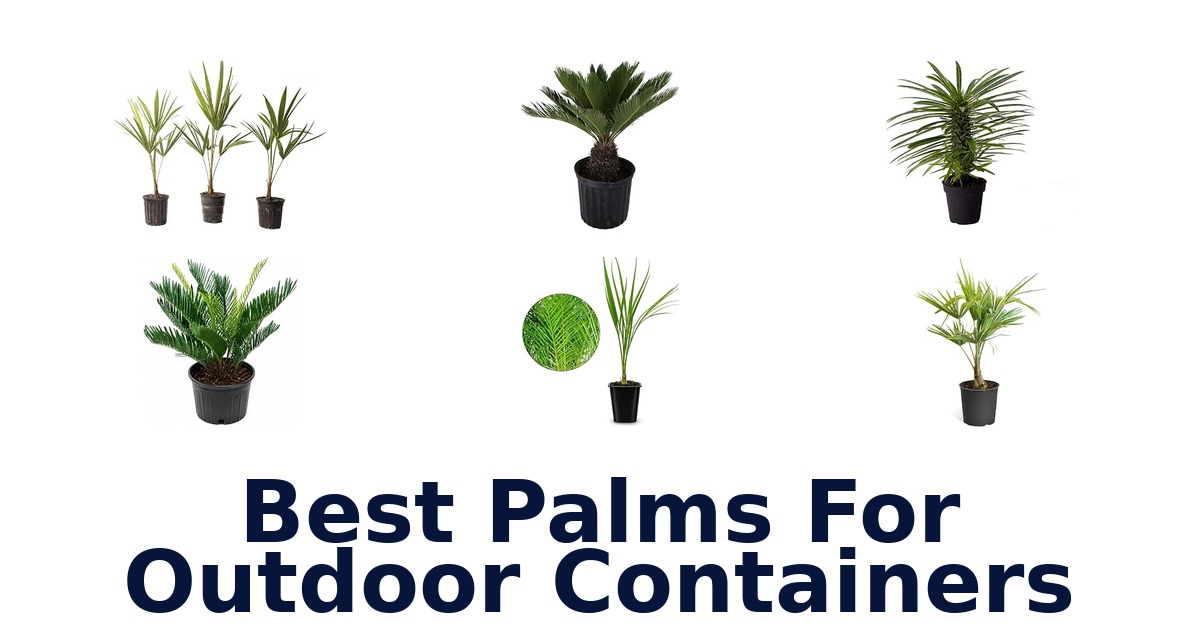
A strong outdoor-container palm combines a size suited to your pot with climate tolerance and foliage that fits the space, making this roundup useful for patio gardeners and warm-climate growers. The American Plant Exchange Windmill Palm leads because it is explicitly described as container-friendly and cold-hardy across USDA Zones 7–Other options trade outdoor suitability for compact starter sizing, warm-climate appeal, or drought tolerance.
The lineup also includes cycads and a spiny succulent-like plant sold under palm names, so botanical labels alone can mislead. Compare the supplied pot sizes, growing guidance, and use descriptions before choosing; a starter plant in a small nursery pot may need a larger container as it grows.
Climate fit matters too, especially when a plant is intended to stay outdoors year-round.
The American Plant Exchange Windmill Palm is the strongest all-around choice for outdoor containers because its listing explicitly recommends decorative pots and patios, and states that it can grow in USDA Zones 7–It arrives as a 4-inch three-pack, which suits buyers who want several plants for a coordinated display. For warm-climate patios seeking a compact starter, the MYSHELFIE Pygmy Date Palm is another clear container option, though it comes in a much smaller 2.5-inch nursery pot.
Our Top Picks
 Best Overall
American Plant Exchange Windmill Palm
Explicitly suited to decorative pots and patios, this 4-inch three-pack is listed as cold-hardy in USDA Zones 7–11.
View on Amazon Best Compact Starter
Its 2.5-inch starter pot and stated patio-container use suit small displays, while outdoor planting is specified for warm climates.
View on Amazon Best Drought-Tolerant
American Plant Exchange Sago Palm
This 10-inch potted plant is recommended for patio containers and described as drought-tolerant, though its outdoor climate range is not specified.
View on Amazon- Best Shade Flexibility American Plant Exchange Coontie Palm
Compare these outdoor-container palm options
| # | Product | Weight | Material Feature | Material Features | Buy |
|---|---|---|---|---|---|
| 1 | 1. American Plant Exchange Windmill PalmBest Overall | 6 lb | Live Plant, Nursery Pot, Potting Soil | Live Plant, Nursery Pot, Potting Soil | View on Amazon |
| 2 | 2. MYSHELFIE Pygmy Date PalmBest Compact Starter | 3.3 lb | Live Plant | Live Plant | View on Amazon |
| 3 | 3. American Plant Exchange Sago PalmBest Drought-Tolerant | 8 lb | Live Plant, Nursery Pot, Potting Soil | Live Plant, Nursery Pot, Potting Soil | View on Amazon |
| 4 |  4. American Plant Exchange Coontie PalmBest Shade Flexibility | 7 lb | Live Plant, Nursery Pot, Potting Soil | Live Plant, Nursery Pot, Potting Soil | View on Amazon |
| 5 |  5. Brighter Blooms Pindo PalmSouthern-climate fruiting palm | 13 lb | Natural | Natural | View on Amazon |
| 6 |  6. American Plant Exchange Madagascar PalmSculptural spiny-stem accent | 5 lb | Plant | Plant | View on Amazon |
Detailed Reviews: Best Palms For Outdoor Containers
#1 · Best Overall
1. American Plant Exchange Windmill Palm
- Weight: 6 lb
- Material Feature: Live Plant, Nursery Pot, Potting Soil
- Material Features: Live Plant, Nursery Pot, Potting Soil
Best for: Cold-tolerant patio grouping.
Why it ranks #1: Explicitly suited to decorative pots and patios, this 4-inch three-pack is listed as cold-hardy in USDA Zones 7–11.
A three-pack of 4-inch Windmill Palms makes it easier to repeat the same fan-frond look across several outdoor containers. Their cold tolerance, listed for USDA Zones 7–11, also gives container gardeners in cooler regions a palm option suited to patios, entryways, or landscape groupings.
Each live plant comes in a nursery pot with potting soil, so the three starters arrive ready to place or transplant into decorative containers. Fan-shaped green fronds and upright growth create a coordinated look when pots line a walkway or flank an entry. The listed Zone 7–11 hardiness supports outdoor use across a broad range of climates, while the low-maintenance and drought-tolerant features can reduce routine care. The 4-inch starter size calls for a small-container beginning.
- Three live Windmill Palms for planting in multiples
- Fan-shaped green fronds and upright growth
- Listed for USDA Hardiness Zones 7–11
- Low-maintenance and drought-tolerant features
- The 4-inch nursery pots are starter-sized, not mature display containers.
Skip it if you need an already substantial palm for a large patio pot; these arrive in 4-inch starter pots.
Choose this three-pack if you want matching, cold-tolerant palm starters for patio containers, entryways, or a walkway. Its 4-inch pot size suits a starter arrangement, so plan on small plants rather than immediate large-scale container impact.
Full product details
| Brand | American Plant Exchange |
|---|---|
| Color | Cold Hardy Palm |
| Included Components | Windmill Palm Tree |
| Item Weight | 6 pounds |
| Manufacturer | AMPLEX |
| Part Number | Windmill Palm Trees |
| Material Feature | Live Plant, Nursery Pot, Potting Soil |
| Material Features | Live Plant, Nursery Pot, Potting Soil |
| Model Number | Windmill Palm Trees |
| Special Features | Air Purification, Compact, Drought Tolerant, Low Maintenance, Pet Friendly |
| Care Instructions | Windmill Palm prefers full to partial sun and well-draining soil, with regular watering during establishment and reduced frequency once mature. |
| Special Feature | Air Purification, Compact, Drought Tolerant, Low Maintenance, Pet Friendly |
Listed on Amazon as: American Plant Exchange Windmill Palm – 4-Inch 3-Pack – Live Easy Care Tropical Outdoor Palm Tree, Cold-Hardy, Container-Friendly Plant for Patios, Landscapes & Garden Decor
View on Amazon#2 · Best Compact Starter
2. MYSHELFIE Pygmy Date Palm
- Weight: 3.3 lb
- Material Feature: Live Plant
- Material Features: Live Plant
Best for: Compact patio starter palm.
Why it ranks #2: Its 2.5-inch starter pot and stated patio-container use suit small displays, while outdoor planting is specified for warm climates.
A 2.5-inch nursery pot makes this Pygmy Date Palm an especially compact starter for a patio container, where its fine, arching fronds can add a tropical accent without arriving as a large specimen. It is listed for outdoor use in warm climates as well as bright indoor spaces.
The Phoenix roebelenii arrives as a live starter in a 2.5-inch plastic nursery pot, a small footprint that can fit into a container garden or plant collection. Its fine-textured, arching fronds provide the tropical look, while slow growth means it can remain a measured accent rather than quickly dominating a display. Care instructions call for well-draining soil, moderate watering, pruning as needed, and fertilizing during the growing season. Outdoor use is specified for warm climates.
- Compact 2.5-inch starter pot
- Fine-textured, arching fronds
- Slow-growing habit
- Care instructions specify drainage, moderate watering, pruning, and seasonal fertilizer
- Outdoor planting is specified for warm climates.
Skip it if you need a palm specified for cold-climate outdoor containers; this one is listed for warm-climate outdoor use.
Choose this compact Pygmy Date Palm starter for a small patio container or bright indoor space, with room to grow gradually. For outdoor placement, its stated fit is warm climates, and care calls for well-draining soil.
Full product details
| Brand | MYSHELFIE, MY SHELFIE |
|---|---|
| Color | Green |
| Item Weight | 3.3 pounds |
| Manufacturer | MYSHELFIE |
| Material Feature | Live Plant |
| Material Features | Live Plant |
| Special Features | Attracts Pollinators |
| Care Instructions | Plant In Well-draining Soil, Water Moderately, Prune As Needed To Maintain Shape, Fertilize During Growing Season |
| Special Feature | Attracts Pollinators |
Listed on Amazon as: Pygmy Date Palm Live Plant, Phoenix Roebelenii Palm Tree, 2.5-Inch Pot
View on Amazon#3 · Best Drought-Tolerant
3. American Plant Exchange Sago Palm
- Weight: 8 lb
- Material Feature: Live Plant, Nursery Pot, Potting Soil
- Material Features: Live Plant, Nursery Pot, Potting Soil
Best for: Flexible light, slow growth.
Why it ranks #3: This 10-inch potted plant is recommended for patio containers and described as drought-tolerant, though its outdoor climate range is not specified.
A 10-inch potted Sago Palm pairs a substantial starter pot with tolerance for bright, indirect light through full sun, giving container growers flexibility in where to display it. Its slow-growing form suits patios and entryways when you prefer an ornamental cycad that needs minimal watering.
The live plant arrives in a 10-inch pot with nursery soil, offering a ready-made container starting point for a patio or entryway. Lush, feathery fronds and a sculptural trunk provide the tropical look, while slow growth means it is not presented as a fast-filling display. The listed light range—from bright indirect light to full sun—allows placement choices, and its drought-tolerant, low-maintenance description supports a lighter watering routine. It is also described for both indoor and outdoor use.
- Live Sago Palm in a 10-inch pot
- Feathery fronds and a striking trunk
- Tolerates bright indirect light to full sun
- Drought-tolerant and low-maintenance
- Its slow growth will not quickly fill a large outdoor container.
Skip it if you want a fast-filling container palm; its listed slow growth favors a patient display.
This suits buyers wanting a potted, slow-growing tropical accent for a patio or entryway, with the option to move it indoors. Choose it for a measured growth habit, not for quick coverage of a large container.
Full product details
| Brand | American Plant Exchange |
|---|---|
| Color | Large Sago Palm |
| Included Components | Your Living Plant ; A Personal Thank You Card ; Your Greg App Card |
| Item Weight | 8 pounds |
| Manufacturer | AMPLEX |
| Part Number | King Sago Palm Tree |
| Material Feature | Live Plant, Nursery Pot, Potting Soil |
| Material Features | Live Plant, Nursery Pot, Potting Soil |
| Model Number | King Sago Palm Tree |
| Special Features | Air Purification, Compact, Disease Resistant, Drought Tolerant, Low Maintenance |
| Care Instructions | Sago Palm thrives in bright, indirect to full sun with well-draining soil, requiring infrequent watering and protection from frost for optimal growth. |
| Special Feature | Air Purification, Compact, Disease Resistant, Drought Tolerant, Low Maintenance |
| Style Name | Sago Palm |
#4 · Best Shade Flexibility
4. American Plant Exchange Coontie Palm
- Weight: 7 lb
- Material Feature: Live Plant, Nursery Pot, Potting Soil
- Material Features: Live Plant, Nursery Pot, Potting Soil
Best for: Adaptable Florida-native containers.
Why it ranks #4: The 10-inch pot and ability to perform in full sun, partial shade, or filtered shade offer flexibility for warm-climate outdoor settings.
Coontie’s ability to perform in full sun, partial shade, or filtered shade gives container gardeners more placement flexibility than a plant tied to one light setting. This Florida-native cycad has compact, evergreen, fern-like foliage, offering a year-round tropical texture in warm-climate outdoor spaces.
The live Coontie comes in a 10-inch pot with nursery potting soil, providing a ready starting point for a patio container. Its naturally compact habit and evergreen, fern-like foliage help maintain a contained display with year-round texture. The listed range from full sun to partial or filtered shade gives more options for positioning a pot, while drought tolerance applies once established. Coontie is a cycad, not a true palm, an important distinction for buyers seeking a botanical palm specifically.
- Live plant in a 10-inch pot
- Compact habit with evergreen, fern-like foliage
- Suitable for full sun, partial shade, or filtered shade
- Drought-tolerant once established
- Coontie is a cycad, not a true palm.
Skip it if you require a true palm rather than a palm-like cycad; Coontie is identified as a cycad.
This is a good fit for warm-climate container gardeners who want compact, evergreen foliage and flexible light placement. Pick it for cycad texture rather than a true palm, and account for its drought tolerance only once established.
Full product details
| Brand | American Plant Exchange |
|---|---|
| Color | Green |
| Container Material | Plastic |
| Item Weight | 7 pounds |
| Manufacturer | AMPLEX |
| Material Feature | Live Plant, Nursery Pot, Potting Soil |
| Material Features | Live Plant, Nursery Pot, Potting Soil |
| Special Features | Air Purification, Compact, Drought Tolerant, Low Maintenance, Shade Resistant |
| Planter Color | Black |
| Care Instructions | Plant Coontie in full sun to shade with well-draining soil, water regularly until established, allow the soil to drain between watering, and avoid overwatering for healthy, long-lasting growth. |
| Special Feature | Air Purification, Compact, Drought Tolerant, Low Maintenance, Shade Resistant |
| Style Name | Coontie |
Listed on Amazon as: American Plant Exchange Coontie Palm – Live Native Cycad, 10-Inch Pot
View on Amazon#5
5. Brighter Blooms Pindo Palm
- Weight: 13 lb
- Material Feature: Natural
- Material Features: Natural
Best for: Southern-climate fruiting palm.
Why it ranks #5: The 3-gallon plant offers a substantial starting size and cold-weather appeal for southern winters, but the listing does not specify container use.
The Pindo Palm combines a low-growing habit with the possibility of juicy, amber-colored fruit in warmer climates, bringing more than foliage to an outdoor container display. Its ability to withstand chilly Southern winters also makes it relevant to gardeners seeking a Southern palm beyond the warmest settings.
Supplied as a 3-gallon plant, this Pindo Palm offers a larger starting point than the small nursery-pot options in this roundup, making it suited to a substantial outdoor container. Its low-growing form can help keep the palm’s display within a more contained profile, while the listed cold tolerance supports use through chilly Southern winters. In warmer climates it can produce amber-colored fruit, but the provided information stresses that proper sun, growing zone, soil, and watering matter for plant performance.
- Supplied in a 3-gallon size
- Low-growing palm form
- Can withstand chilly Southern winters
- May produce amber-colored fruit in warmer climates
- Fruit production is specified for warmer climates, not all growing conditions.
Skip it if you garden outside the listed Southern-winter context and need a stated hardiness-zone range; this listing provides none.
Consider this 3-gallon Pindo Palm for a larger outdoor container in a suitable Southern setting, especially if fruit potential appeals. Its performance depends on appropriate sun, zone, soil, and watering, so placement matters.
Full product details
| Brand | Brighter Blooms |
|---|---|
| Color | Blue, Grey |
| Item Weight | 13 pounds |
| Manufacturer | Brighter Blooms |
| Part Number | PAL-PIN3 |
| Manufacturer Warranty Description | If anything does happen to your plants during delivery, don't worry… we got you covered. Every plant is covered by our warranty. We guarantee your plants to be true to type and in healthy condition. Due to the nature of the trees and shrubs you are buying, a root system and trunk will quickly deve |
| Material Feature | Natural |
| Material Features | Natural |
| Special Features | Resistant |
| Care Instructions | Full Sun, Partial Shade |
| Special Feature | Resistant |
Listed on Amazon as: Brighter Blooms Pindo Palm, 3 Gallon
View on Amazon#6
6. American Plant Exchange Madagascar Palm
- Weight: 5 lb
- Material Feature: Plant
- Material Features: Plant
Best for: Sculptural spiny-stem accent.
Why it ranks #6: Its 4-inch pot is compact, but the listing emphasizes indoor décor and clarifies that it is not a true palm; its trunk has sharp spines.
A shiny silver trunk covered in sharp spines gives this 4-inch Madagascar Palm a distinctly sculptural look, unlike a typical leafy container palm. Its narrow green leaves grow in a tuft at the trunk’s top, making the compact young plant a distinctive accent for home or garden displays.
The live plant arrives in a 4-inch pot, making it a small-scale option for a container display rather than an established large palm. Its thick, spiny silver trunk and crown of long, narrow leaves create a strong vertical focal point in a compact footprint. The listing clarifies that Madagascar Palm is not a true palm, despite its name, and describes it as an indoor plant as well as home and garden décor. The sharp spines make placement and handling a practical consideration.
- Compact 4-inch potted plant
- Distinctive shiny silver trunk
- Long, narrow leaves form a top crown
- Sculptural appearance unlike a typical palm
- Prominent sharp spines require careful handling and placement.
Skip it if you need a smooth-trunked palm for close-contact areas; its trunk is covered with sharp spines.
Choose this for a small container display where a spiny, sculptural trunk is welcome and can be placed safely. It is a Madagascar Palm by common name, not a true palm, and its 4-inch pot is a young starter.
Full product details
| Brand | American Plant Exchange |
|---|---|
| Color | Madagascar Palm |
| Item Weight | 5 pounds |
| Manufacturer | AMPLEX |
| Part Number | Madagascar Palm |
| Material Feature | Plant |
| Material Features | Plant |
| Model Number | Madagascar Palm |
| Special Features | Air Purification |
| Care Instructions | Water |
| Special Feature | Air Purification |
| Style Name | Madagascar Palm |
Listed on Amazon as: American Plant Exchange Live Madagascar Palm Tree, Plant Pot for Home and Garden Decor, 4" Pot
View on AmazonPalm Names Can Hide Important Differences
A plant sold as a palm may be a cycad or a spiny, succulent-like plant rather than a true palm. The American Plant Exchange Coontie Palm is explicitly identified as a cycad, while the American Plant Exchange Madagascar Palm is described as not a true palm. Both can provide palm-like visual interest, but buyers should not assume they share the same growth habits or outdoor requirements as a true palm.
The Madagascar Palm has a thick trunk with long, sharp spines, a practical concern for narrow patios, walkways, or spaces where people and pets brush past it. The American Plant Exchange Sago Palm is also a cycad, despite its common name.
These distinctions matter when selecting plants for a container display: compare the supplied care and placement details rather than relying on the word palm. The listings do not provide complete mature dimensions or detailed winter-care instructions, so confirm those needs for your intended location before committing to a permanent outdoor setup.
Small Nursery Pots Are Starter Sizes
A small nursery pot is a starting point, not proof that a plant will remain small enough for a permanent patio container. The MYSHELFIE Pygmy Date Palm arrives in a 2.5-inch pot, and the American Plant Exchange Windmill Palm comes in 4-inch pots as a three-pack. Those formats make it easier to begin with compact plants or several matching specimens, but the listings do not state mature dimensions or recommend final container sizes.
By contrast, the American Plant Exchange Sago Palm and American Plant Exchange Coontie Palm are supplied in 10-inch pots, while the Brighter Blooms Pindo Palm is listed as a 3-gallon plant. A larger starting format may suit buyers seeking an established-looking display, but pot size alone does not establish a plant’s long-term container needs.
Leave room to assess growth and drainage, and check care guidance for the exact plant before repotting.
How to Choose an Outdoor Container Palm
Climate Tolerance
Look for a stated climate range if the plant will remain outside through changing seasons. The American Plant Exchange Windmill Palm is the clearest choice for cooler conditions: its listing gives USDA Zones 7–11 and calls it one of the most cold-tolerant palms. The Brighter Blooms Pindo Palm is described as withstanding the chilliest Southern winters, but no zone range is supplied.
The American Plant Exchange Coontie Palm is presented for Florida and other warm-climate landscapes, while the MYSHELFIE Pygmy Date Palm is for outdoor planting in warm climates. Choose the Windmill Palm when a listed zone range is useful; favour the warm-climate options when your outdoor conditions match their stated setting.
The product information does not give winter protection instructions for every plant, so do not infer a hardiness range where one is absent.
Starting Pot or Plant Size
Choose a starting size that suits the look you want now and the space available for future growth. The MYSHELFIE Pygmy Date Palm arrives in a 2.5-inch nursery pot, the American Plant Exchange Windmill Palm in 4-inch pots as a three-pack, and the American Plant Exchange Madagascar Palm in a 4-inch pot. For a larger supplied format, the American Plant Exchange Sago Palm and American Plant Exchange Coontie Palm come in 10-inch pots; the Brighter Blooms Pindo Palm is listed at 3 gallons.
The smaller formats suit buyers who want compact starters or several matching plants, while the larger pots and gallon size may better match buyers seeking a more substantial starting plant. Supplied pot size is not a mature-size guarantee, and the listings do not give a common set of mature dimensions for comparison.
Light and Water Flexibility
Match the plant’s stated light and water preferences to the exposure and attention your container will receive. The American Plant Exchange Sago Palm is described as drought-tolerant and able to thrive from bright, indirect light to full sun. The American Plant Exchange Coontie Palm is adaptable to full sun, partial shade, or filtered shade, and is drought-tolerant once established.
The MYSHELFIE Pygmy Date Palm calls for well-draining soil and moderate watering, while the Brighter Blooms Pindo Palm guidance stresses choosing appropriate sun, soil, and water without giving a specific schedule. Buyers with varied light conditions may favour Coontie; those seeking a listed drought-tolerant option may prefer Sago or established Coontie.
Do not treat drought tolerance as a reason to skip watering, especially for a newly potted plant: the supplied information does not specify a universal container-watering schedule.
Which Outdoor Container Palm Should You Choose?
Choose the American Plant Exchange Windmill Palm if you want the clearest match for outdoor containers, a three-plant display, and a stated USDA Zone 7–11 range. For a compact starter on a warm patio, the MYSHELFIE Pygmy Date Palm is explicitly suited to patio containers and arrives in a 2.5-inch pot. Pick the American Plant Exchange Sago Palm for a 10-inch pot and stated drought tolerance, or the American Plant Exchange Coontie Palm if your spot ranges from full sun to shade and suits a warm-climate cycad.
The Brighter Blooms Pindo Palm is a larger 3-gallon option for buyers drawn to its southern-winter tolerance, but container use is not specified. Skip the American Plant Exchange Madagascar Palm for a typical palm display if its sharp spines are a concern.
Frequently Asked Questions
How large should an outdoor container be for a palm as it grows?
Choose a container that gives the palm’s roots room to grow, and plan to move it into a larger pot as it outgrows its current one. The listings here range from a 2.5-inch nursery pot to a 10-inch pot and a 3-gallon option, so check the listed starting size before choosing.
Can container palms stay outdoors through winter in my climate?
That depends on the plant and your local winter conditions. The Windmill Palm listing states USDA Zones 7–11, while the Pindo Palm listing mentions southern-winter tolerance without giving a zone range. Check the plant’s stated suitability against your location, and don’t assume other listings establish winter hardiness.
How often should I water a palm growing in an outdoor pot?
Water based on the potting mix’s moisture rather than a fixed calendar: check the soil regularly and adjust for weather and how quickly the container dries. The Sago Palm listing describes it as drought-tolerant, but that does not mean every palm here has the same needs. Avoid letting watering guidance for one plant stand for all.
Which option is suited to a compact patio display?
The MYSHELFIE Pygmy Date Palm is the clearest compact-starter option in the verdict: it is explicitly suited to patio containers and arrives in a 2.5-inch pot. The Windmill Palm is another patio-ready choice, but its listing describes a three-pack, making it a better fit if you want several plants for a coordinated display.
Which listed plants suit a spot with changing sun exposure?
The American Plant Exchange Coontie Palm is the listed choice for a location ranging from full sun to shade, according to the editorial verdict. It is a warm-climate cycad, so consider whether your climate suits it as well. The other product details provided do not establish the same sun-to-shade range.
Final Words
For the clearest match to outdoor containers, choose the American Plant Exchange Windmill Palm: its listing recommends decorative pots and patios, gives a USDA Zone 7–11 range, and includes three plants. For a compact warm-patio starter, consider the Pygmy Date Palm. The Sago and Coontie suit specific needs, while the larger Pindo lacks a stated container recommendation.
Avoid the Madagascar Palm if sharp spines are a concern.