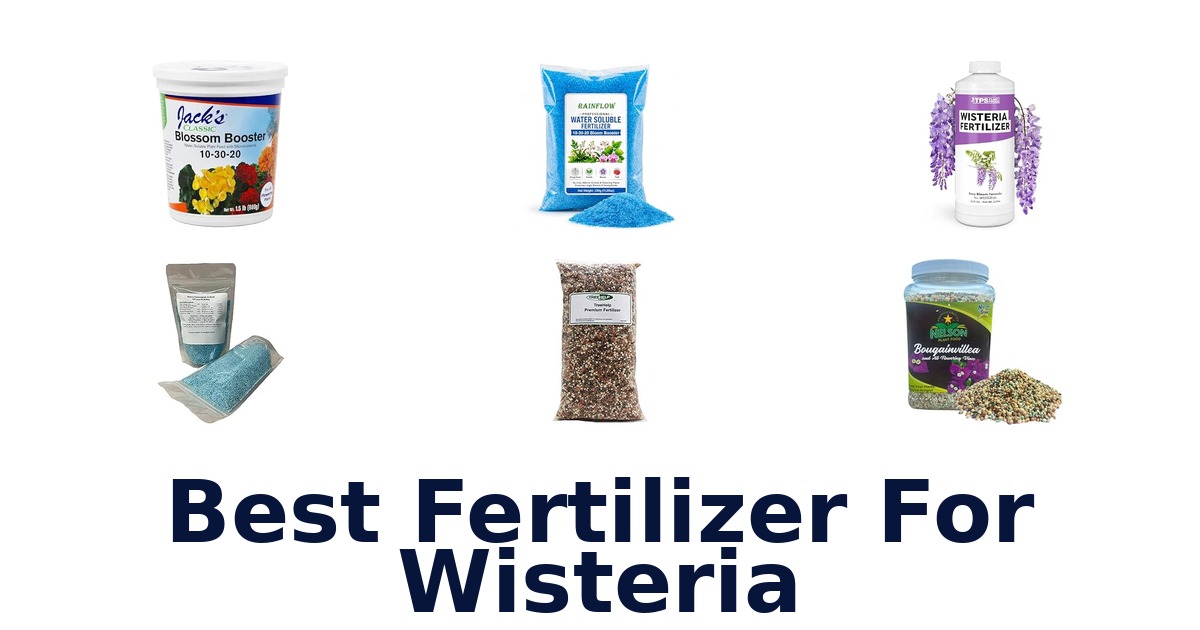
A strong wisteria fertilizer should match the plant’s growth needs, whether you want a formula made specifically for wisteria, a flowering-vine blend, or a convenient slow-release feed. TreeHelp Premium Fertilizer for Wisteria is the clearest fit for long-term root development and season-long nitrogen; Nelson Plant Food suits gardeners seeking a flowering-vine formula with a stated 17-7-10 analysis. The nine options here range from wisteria-specific products to general bloom boosters, in liquid, granular, and water-soluble forms.
That distinction matters: a bloom-focused ratio is not the same as a formula designed for vine establishment, and the listed directions and intended plants differ. Compare the product’s stated use, nutrient information, and application cadence with your plant’s needs before choosing.
TreeHelp Premium Fertilizer for Wisteria is the leading choice because it is specifically formulated for wisteria and lists slow-release nitrogen for feeding throughout the growing season. It also emphasizes robust root development, an important consideration for establishing or maintaining a vigorous vine. Nelson Plant Food is a strong alternative if you want a flowering-vine product with a stated 17-7-10 formula and feeding guidance.
Choose a general bloom booster only when its broader flowering-plant use fits your situation.
Our Top Picks
 Best Overall
Made specifically for wisteria, it promotes root development and supplies slow-release nitrogen throughout the growing season.
View on Amazon Best Vine Formula
Names wisteria among its intended flowering vines and provides a stated 17-7-10 formula with feeding guidance.
View on Amazon Best Liquid Option
Designed for wisteria, this liquid plant food is described as supporting abundant blooms and strong climbing-vine development.
View on Amazon- Best Slow-Release Pellets Ho Yoku Flowering Pellets
Compare Wisteria Fertilizer Options
| # | Product | Form | Weight | Buy |
|---|---|---|---|---|
| 1 | 1. TreeHelp Wisteria FertilizerBest Overall | Liquid | 1.5 kg | View on Amazon |
| 2 | 2. Nelson Flowering Vine FoodBest Vine Formula | Granules | 4 lb | View on Amazon |
| 3 | 3. TPS Wisteria Liquid FoodBest Liquid Option | Liquid | — | View on Amazon |
| 4 |  4. Ho Yoku Flowering PelletsBest Slow-Release Pellets | Granules | — | View on Amazon |
| 5 |  5. Jack's Classic Blossom BoosterMeasured bloom-feeding routines | Powder | — | View on Amazon |
| 6 |  6. Peters Professional Bloom BoosterBloom-cycle and peat-based growers | Powder | 16 oz | View on Amazon |
| 7 |  7. Peter's Blossom BoosterFoliar-spray or soil-drench users | Liquid | 2 lb | View on Amazon |
| 8 |  8. RAINFLOW Blossom BoosterQuick-mix flowering plant care | Granules | 11.28 oz | View on Amazon |
| 9 |  9. Fertilome Blooming and RootingHigh-phosphorus bloom feeding | Liquid | — | View on Amazon |
Detailed Reviews: Best Fertilizer For Wisteria
#1 · Best Overall
1. TreeHelp Wisteria Fertilizer
- Form: Liquid
- Weight: 1.5 kg
Best for: Established wisteria tree care.
Why it ranks #1: Made specifically for wisteria, it promotes root development and supplies slow-release nitrogen throughout the growing season.
Slow-release nitrogen that feeds throughout the growing season is the central appeal of TreeHelp Premium Fertilizer for Wisteria. It is specially formulated for wisteria trees and promotes robust root development, making it a focused option for gardeners prioritizing longer-term vitality over a bloom-only feeding approach.
TreeHelp specifies coverage for one large tree or two to three smaller or newly planted trees, which helps buyers relate the amount to their planting rather than a general garden area. Its slow-release nitrogen continues feeding through the growing season, reducing the need to treat it as a short-term bloom boost. Robust root development is the stated route to long-term vitality. Complete instructions are included, though the supplied listing does not provide their application details.
- Specially formulated for wisteria trees
- Slow-release nitrogen feeds throughout the growing season
- Promotes robust root development and long-term vitality
- Treats one large tree or two to three smaller or newly planted trees
- The listed coverage is limited to one large tree or two to three smaller or newly planted trees.
Skip it if you need fertilizer for many mature wisteria trees; the listed amount treats one large tree or two to three smaller or newly planted trees.
This suits a gardener caring for one large wisteria tree or a small group of younger trees, especially when season-long feeding and root development are priorities. Check the stated coverage against the number and size of your trees.
Full product details
| Brand | TreeHelp |
|---|---|
| Item Form | Liquid |
| Item Weight | 1.5 kg |
| Manufacturer | TreeHelp |
| Additional Information | Important information Safety Information Keep out of reach of children. Harmful if swallowed or absorbed through the skin. Directions [detailed instructions for applying the fertilizer] |
Listed on Amazon as: TreeHelp Premium Fertilizer for Wisteria
View on Amazon#2 · Best Vine Formula
2. Nelson Flowering Vine Food
- Form: Granules
- Weight: 4 lb
Best for: Low-maintenance flowering vines.
Why it ranks #2: Names wisteria among its intended flowering vines and provides a stated 17-7-10 formula with feeding guidance.
A 17-7-10 formula with four nitrogen sources is the defining feature of Nelson NutriStar, a granular food listed for wisteria and other flowering vines. Its feeding cadence is also explicit: every 14 days until blooming begins, then monthly, offering homeowners a defined routine around the flowering season.
The granular form and stated feeding intervals give this product a clear routine: feed every 14 days before blooming, then once a month after blooms begin. That schedule can help homeowners plan vine care without guessing at frequency. Its 17-7-10 formula, four nitrogen sources, and specific micronutrients are described as supporting healthy vines and colorful blooms. The listed use covers wisteria alongside bougainvillea, trumpet vine, and honeysuckles, making it suitable for mixed flowering-vine plantings.
- 17-7-10 formula for flowering vines
- Granular form
- Four nitrogen sources and specific micronutrients
- Stated feeding interval changes from every 14 days to monthly once blooming begins
- The application schedule requires more frequent feeding before blooming than after.
Skip it if you want a liquid fertilizer rather than granules; this Nelson product is granular, while the TPS NUTRIENTS wisteria food is liquid.
Choose this for wisteria growers who want a stated feeding cadence and also care for other flowering vines. Its schedule changes when blooming starts, so it suits gardeners willing to adjust feeding frequency through the flowering cycle.
Full product details
| Brand | PREMIUM CRAFTED EST. 1983 NELSON PLANT FOOD |
|---|---|
| Item Form | Granules |
| Item Weight | 4 pounds |
| Manufacturer | Nelson Plant Food |
| Model Number | BOUGAINVILLEA-4LB |
Listed on Amazon as: Nelson Plant Food For All Flowering Vines Bougainvillea Trumpet Wisteria Honeysuckles Indoor Outdoor Granular Fertilizer NutriStar 17-7-10 (4 lb)
View on Amazon#3 · Best Liquid Option
3. TPS Wisteria Liquid Food
- Form: Liquid
Best for: Outdoor wisteria vine growers.
Why it ranks #3: Designed for wisteria, this liquid plant food is described as supporting abundant blooms and strong climbing-vine development.
A wisteria-specific liquid plant food pairs support for abundant blooms with encouragement for strong vine development. That combination suits gardeners tending a climbing plant on a trellis or pergola, where flowering and structural growth both matter. Its stated garden and landscape use also makes it relevant to outdoor plantings.
The liquid form gives this product a straightforward fit for gardeners who prefer plant food in liquid rather than granular form. Its stated support for vibrant flowers and seasonal flowering cycles connects the feeding purpose directly to wisteria bloom goals, while support for strong vine development addresses the plant’s climbing growth. The listed trellis, pergola, and outdoor planting uses make it particularly relevant to landscape wisteria; the supplied details do not specify a dose or application schedule.
- Formulated specifically for wisteria
- Liquid plant food form
- Supports abundant blooms and seasonal flowering cycles
- Supports strong vine development for climbing growth
- The supplied product details do not specify a feeding schedule or dose.
Skip it if you need a stated application schedule or mixing dose; neither is included in the supplied product details.
This is a reasonable match for outdoor gardeners feeding wisteria on a trellis, pergola, or in a landscape planting. Choose it for wisteria-focused bloom and vine support, but note that the supplied information does not give application directions.
Full product details
| Brand | TPS NUTRIENTS |
|---|---|
| Item Form | Liquid |
| Manufacturer | TPS Nutrients |
Listed on Amazon as: Wisteria Fertilizer – Liquid Plant Food for More Blooms, 32 oz
View on Amazon#4 · Best Slow-Release Pellets
4. Ho Yoku Flowering Pellets
- Form: Granules
Best for: Wisteria bonsai and container growers.
Why it ranks #4: Wisteria is among its listed plants, and the granular pellets are applied every three to four weeks during the growing season.
Small, quarter-inch organic pellets make Ho Yoku’s flowering bonsai fertilizer a compact option for wisteria grown as bonsai or in containers. The slow-release granules are applied every three to four weeks during the growing season, offering a defined routine for gardeners seeking flowering support across several listed tree types.
The pellet format is intended to be scattered across the soil surface, a simple application method for bonsai and other compact plantings. Slow release and the stated three-to-four-week interval during the growing season help establish a repeatable maintenance rhythm. Wisteria is listed alongside bougainvillea and azalea, as well as tropical trees and flowering houseplants, so the product can serve a collection rather than a single species. Its stated focus is flowering, not vine-scale coverage.
- Wisteria is among the listed suitable plants
- Small quarter-inch organic pellets
- Slow-release fertilizer
- Stated application interval is every three to four weeks during the growing season
- The listing centers on bonsai and other compact plantings rather than large landscape vines.
Skip it if you are feeding a large landscape wisteria vine; TreeHelp Premium Fertilizer for Wisteria lists coverage for a large tree.
Consider it for a wisteria bonsai or compact flowering-tree collection where surface-applied pellets and a recurring seasonal schedule fit. It is less suited to buyers seeking a product specifically presented for large landscape vines.
Full product details
| Brand | Ho Yoku Products |
|---|---|
| Item Form | Granules |
| Manufacturer | Ho Yoku |
| Additional Information | Important information Safety Information Keep out of reach of children and pets. Wear protective clothing during application. Avoid contact with skin and eyes. Directions Scatter the organic bonsai fertilizer pellets across the surface of the soil. Once done, water the plant. Over the next few weeks, water when needed. |
#5
5. Jack's Classic Blossom Booster
- Form: Powder
Best for: Measured bloom-feeding routines.
Why it ranks #5: Its 10-30-20 analysis and added micronutrients target flowering plants, though the listing does not specifically name wisteria.
A 10-30-20 analysis gives Jack’s Classic Blossom Booster its specific flowering-plant focus, with the product described as supporting brighter, more plentiful flowers. The water-soluble powder is measured and mixed with water, letting a gardener prepare multiple gallons of feed from the concentrate for flowering plants such as wisteria.
The water-soluble powder format lets users measure the concentrate and mix it with water before feeding, a useful workflow for preparing multiple gallons at once. Its 10-30-20 analysis is identified with brighter, more plentiful flowers, while added micronutrients supply nutrition for plant growth and health. The listing says additional feeding is not required, which is relevant to buyers weighing a bloom-focused product against a more frequent routine. It does not provide a wisteria-specific application rate.
- 10-30-20 analysis
- Water-soluble powder mixed with water
- Measured concentrate can prepare multiple gallons of fertilizer
- Added micronutrients; listing says additional feeding is not required
- The supplied details do not give a wisteria-specific application rate.
Skip it if you need a stated wisteria mixing rate before feeding; the supplied details do not provide one for this product.
This fits gardeners comfortable measuring and dissolving powder who want a 10-30-20 bloom-focused feed with micronutrients. It is not the most explicit choice for wisteria-specific dosing, since the supplied listing gives no application rate for that plant.
Full product details
| Brand | JR Peters |
|---|---|
| Included Components | 1 |
| Item Form | Powder |
| Manufacturer | J R Peters Inc |
| Model Number | JRP51024-1 |
| Additional Information | Important information Safety Information safety_warning Ingredients B00OCCAT9O Directions Not_Applicable |
Listed on Amazon as: JR Peters Inc Jack's Classic 10-30-20 Blossom Booster Water-Soluble Fertilizer – 1.5lbs
View on Amazon#6
6. Peters Professional Bloom Booster
- Form: Powder
- Weight: 16 oz
Best for: Bloom-cycle and peat-based growers.
Why it ranks #6: This 10-30-20 water-soluble powder includes magnesium and five additional micronutrients for flowering plants, but is not wisteria-specific.
Peters Professional Bloom Booster is described as useful when flower production begins, with application timing linked to plant-cycle stage and the potential to stimulate more flowers. Its powder form and stated usefulness in peat-based growing media make it relevant to growers coordinating bloom feeding with a particular growing setup.
The powder is dissolved in water according to the product directions, giving the user a prepare-before-feeding workflow rather than a ready-to-apply format. The described 10-30-20 ratio, magnesium, and five additional key micronutrients connect the formula to the listing’s claims about flower density, quality, and size. Timing matters: the supplied details say application stage can affect flower production. Peat-based growing media are specifically mentioned, while no wisteria-specific rate is supplied.
- 10-30-20 ratio
- Powder dissolves in water before application
- Includes magnesium and five additional key micronutrients
- Listed as useful for peat-based growing media and when flower production begins
- No wisteria-specific application rate is included in the supplied details.
Skip it if you need a stated wisteria feeding rate; the supplied details describe timing and media but do not give a wisteria-specific dose.
This suits growers who can time feeding around the start of flower production, particularly those using peat-based media. For wisteria, treat the bloom-stage guidance as general rather than a plant-specific schedule, since no wisteria rate is listed.
Full product details
| Brand | Tezula Plants |
|---|---|
| Item Form | Powder |
| Item Weight | 16 ounces |
| Manufacturer | Tezula Plants |
Listed on Amazon as: Peters Professional Bloom Booster 10-30-20 with Micronutrients. Great for All Flowering Plants – 1 Pound
View on Amazon#7
7. Peter's Blossom Booster
- Form: Liquid
- Weight: 2 lb
Best for: Foliar-spray or soil-drench users.
Why it ranks #7: The 10-30-20 water-soluble formula is intended for flowering plants and can be used as a drench or foliar spray.
The option to use Peter’s Professional Blossom Booster as a foliar spray or a soil drench gives this 10-30-20 fertilizer two stated feeding routes. Its water-soluble formula is intended for flowering plants, including orchids, and is described as particularly stimulating flowering-bud development for indoor and outdoor use.
The water-soluble format supports mixing before application, while the listed foliar-spray and plant-or-soil-drench methods let growers choose how to deliver the feed. The 10-30-20 formula is identified with flowering-bud development, and the product is stated for indoor and outdoor plants. Those details can suit a gardener who wants a bloom-focused fertilizer across settings, though wisteria is not named among the examples. The supplied directions begin a general-purpose mixing instruction but do not provide the full rate.
- 10-30-20 analysis
- Water-soluble fertilizer
- Can be used as a foliar spray or plant/soil drench
- Listed for indoor and outdoor flowering plants
- The supplied general-purpose mixing direction is incomplete, so the rate is not clear.
Skip it if you need a complete mixing rate in the supplied listing; its general-purpose instruction is truncated before the amount is given.
Choose this if you value having both foliar-spray and soil-drench options for indoor or outdoor flowering plants. Its bloom-bud focus is relevant, but the supplied rate is incomplete and wisteria is not specifically named.
Full product details
| Brand | PETER'S PROFESSIONAL |
|---|---|
| Item Form | Liquid |
| Item Weight | 2 pounds |
| Model Number | petersbb |
| Additional Information | Important Information header_for_buffet |
Listed on Amazon as: Peter's 10-30-20. 2 Pounds. Blossom Booster Water Soluble Fertilizer with Micro Nutrients.
View on Amazon#8
8. RAINFLOW Blossom Booster
- Form: Granules
- Weight: 11.28 oz
Best for: Quick-mix flowering plant care.
Why it ranks #8: A water-soluble 10-30-20 bloom booster for several flowering plants, but its listed examples do not include wisteria.
Quick-dissolving, water-soluble granules are the practical hook of RAINFLOW’s 10-30-20 Blossom Booster. Mixed with water, the formula is described as supporting immediate nutrient uptake and flower color and quantity, making it an option for wisteria growers who prefer preparing a liquid feed from granules.
The 10-30-20 formula is presented as a high-phosphorus bloom booster, with flower color and quantity as its stated aims. Quick-dissolving granules mixed with water support a preparation workflow that produces a liquid feed, while the listing describes fast absorption. Named examples include azalea, bougainvillea, gardenia, and hydrangea, alongside a wider range of flowering and fruiting plants. Wisteria is not named in the supplied examples, so buyers should weigh the broad flowering-plant description against that omission.
- 10-30-20 formula
- Water-soluble granules that dissolve quickly when mixed with water
- Described as supporting flower color and quantity
- Suitable for indoor and outdoor use, according to the listing
- Wisteria is not specifically named among the supplied plant examples.
Skip it if you want wisteria named explicitly on the listing; TreeHelp Premium Fertilizer for Wisteria is specifically formulated for wisteria trees.
This may suit a gardener who wants a quick-mixing 10-30-20 feed for a range of flowering plants indoors or outdoors. Wisteria is not named in the supplied examples, so consider that fit before choosing it specifically for wisteria.
Full product details
| Brand | RAINFLOW |
|---|---|
| Item Form | Granules |
| Item Weight | 11.28 ounces |
| Manufacturer | RAINFLOW |
| Model Number | FZS34-LHSRF-01 |
Listed on Amazon as: RAINFLOW 10-30-20 Blossom Booster – Blue Water-Soluble Fertilizer 11.28oz
View on Amazon#9
9. Fertilome Blooming and Rooting
- Form: Liquid
Best for: High-phosphorus bloom feeding.
Why it ranks #9: Its 9-59-8 soluble plant food is listed for broad plant groups, but the product information does not specifically identify wisteria.
A 9-59-8 analysis distinguishes ferti-lome Blooming & Rooting Soluble Plant Food, with its particularly high middle number setting it apart from the other stated nutrient ratios here. The listed use spans shrubs, trees, roses, orchids, and fruiting plants, offering a broad-purpose option for gardeners with varied plantings.
The 9-59-8 formula is the clearest specification for comparing this product with other fertilizers, while the name and stated uses position it for blooming and rooting across several plant types. Wisteria is not specifically named, but trees and shrubs are included in the listed uses. The listing also identifies the formula as chlorine free. Its item form is stated as liquid, though the supplied details do not explain a mixing method, application rate, or feeding interval.
- 9-59-8 analysis
- Listed for shrubs and trees as well as roses, orchids, and fruiting plants
- Chlorine-free formula
- Liquid item form
- The supplied listing gives no feeding interval or application rate.
Skip it if you need wisteria-specific instructions and a stated feeding interval; neither appears in the supplied details for this product.
This can suit gardeners seeking a chlorine-free 9-59-8 food for a mixed collection of listed shrubs, trees, and flowering plants. For wisteria, its fit is less explicit than a product that names the plant and gives application directions.
Full product details
| Brand | ferti-lome |
|---|---|
| Item Form | Liquid |
Listed on Amazon as: Fertilome Blooming & Rooting Soluble Plant Food 9-59-8, 3 Pounds
View on AmazonWhy a bloom-booster ratio is not automatically best for wisteria
A high-phosphorus bloom booster is not automatically the best match for a wisteria vine. Several products here have 10-30-20 analyses, while Fertilome Blooming and Rooting lists 9-59-8; those are flowering-focused formulas, but their listings do not identify them as wisteria-specific. By contrast, TreeHelp Premium Fertilizer for Wisteria emphasizes root development and slow-release nitrogen, and Nelson Flowering Vine Food is explicitly intended for wisteria and other flowering vines.
That difference is a practical selection trade-off, not proof that one nutrient ratio will make every wisteria flower more. Avoid choosing solely by the largest middle number in an NPK ratio.
Check the product’s stated plant fit and directions, and consider whether the goal is supporting an established flowering vine or nourishing roots and seasonal growth. The supplied listings do not establish a universal wisteria feeding schedule or ideal ratio.
Check the application format before buying
The format can create a compatibility trap if you expect every fertilizer to be applied the same way. TreeHelp Premium Fertilizer for Wisteria is described as a slow-release product, Nelson Flowering Vine Food and Ho Yoku Flowering Pellets are granular, and TPS Wisteria Liquid Food is liquid. The blossom boosters are described as water-soluble powders or granules to mix with water; Peter’s Blossom Booster also lists drench or foliar-spray use.
These distinctions affect the preparation and application routine, but the product data do not provide enough detail to assume that every format is suitable for every site or pot. Read the individual directions, especially before using a concentrate or applying fertilizer to a container-grown plant.
Also check the package quantity against the stated coverage: TreeHelp says its amount treats one large tree or two to three smaller or newly planted trees, while several other listings give no comparable wisteria coverage.
How to Choose Wisteria Fertilizer
Fit for wisteria and vine growth
Look first for a product that explicitly names wisteria or flowering vines, rather than assuming every bloom fertilizer is tailored to this plant. TreeHelp Premium Fertilizer for Wisteria is specifically formulated for wisteria and promotes root development; Nelson Flowering Vine Food names wisteria alongside bougainvillea, trumpet vines, and honeysuckles. Ho Yoku Flowering Pellets also lists wisteria, while TPS Wisteria Liquid Food is presented for wisteria blooms and vine development.
The remaining products describe broader flowering-plant uses. If your priority is a direct match to the plant, favor the first group.
If you already have a general-purpose bloom product in mind, check its label and directions rather than treating its flowering-plant claims as proof of wisteria-specific suitability.
Nutrient profile and product purpose
Choose a nutrient profile based on the product’s stated purpose, not just its strongest number. Nelson Flowering Vine Food lists 17-7-10, while Jack’s Classic Blossom Booster, Peters Professional Bloom Booster, Peter’s Blossom Booster, and RAINFLOW Blossom Booster list 10-30-Fertilome Blooming and Rooting lists 9-59-8.
TreeHelp describes slow-release nitrogen but does not provide an NPK ratio in the supplied data. The higher middle numbers in the bloom-booster products signal a different listed emphasis from Nelson’s vine formula, but the information here does not establish which ratio is universally ideal for wisteria.
Choose a wisteria- or vine-labeled product when plant fit is the priority; consider a general bloom booster only if its label and use instructions suit your plant and purpose.
Application format and feeding routine
Pick a format and schedule you can follow exactly as directed. The listings include liquid TPS Wisteria Liquid Food, granular Nelson Flowering Vine Food and Ho Yoku Flowering Pellets, and water-soluble powder or granule bloom boosters. Nelson gives a specific cadence: every 14 days until blooming begins, then monthly.
Ho Yoku recommends application every three to four weeks during the growing season, while TreeHelp describes slow-release nitrogen feeding throughout that season. These directions are not interchangeable, and some listings provide no comparable wisteria schedule.
Gardeners seeking fewer applications may prefer to investigate the slow-release options; those comfortable measuring and mixing may find a water-soluble product more appropriate. Follow the selected product’s full directions and safety information rather than combining schedules or inferring a dose from another fertilizer.
Which fertilizer should you choose for wisteria?
Choose TreeHelp Wisteria Fertilizer if you want the most direct match: it is specifically formulated for wisteria and lists root development and slow-release nitrogen through the growing season. For a flowering-vine formula with a stated nutrient ratio and an application cadence, select Nelson Flowering Vine Food; its 17-7-10 formula is listed for wisteria and other vines. If you prefer a liquid product specifically described for wisteria, choose TPS Wisteria Liquid Food.
Ho Yoku Flowering Pellets suit buyers who want a granular, slow-release option that names wisteria and gives a three-to-four-week growing-season interval. Consider Jack’s Classic Blossom Booster or Peters Professional Bloom Booster for a general flowering-plant formula, not because the listings establish them as wisteria-specific.
Related Buying Guides
Frequently Asked Questions
When should wisteria be fertilized to encourage flowering without excessive vine growth?
Feed during the growing season, following the product label’s timing and amount. TreeHelp lists slow-release nitrogen for feeding throughout the season, while Ho Yoku gives a three-to-four-week growing-season interval. Avoid adding fertilizer more often or in greater amounts than directed, especially if the vine already produces vigorous leafy growth.
How can excess nitrogen affect a wisteria vine’s blooms?
Too much nitrogen can favor leafy, vigorous vine growth over flowering, so more fertilizer is not necessarily better. Choose a product and application rate that fit the label, and avoid repeated or heavy applications. TreeHelp lists slow-release nitrogen, while the other products vary in formula and intended use.
Should wisteria fertilizer be applied to the soil or mixed with water?
Use the application method stated on the product label. Granular products are applied to soil, while liquid and water-soluble products are mixed or used as directed. The listed options include all of these forms, so check the specific instructions rather than assuming one method applies to every fertilizer.
Which fertilizer is specifically formulated for wisteria?
TreeHelp Premium Fertilizer for Wisteria and TPS Wisteria Liquid Food are described specifically for wisteria. TreeHelp is the leading choice in this roundup because its listing also emphasizes slow-release nitrogen and root development. Nelson is a strong alternative when you want a flowering-vine product with a stated 17-7-10 formula.
When is a general bloom booster a suitable choice?
Choose a general bloom booster when a formula intended for flowering plants fits your situation; the listings do not establish Jack’s Classic or Peters Professional as wisteria-specific. If you want a direct match, select a product named for wisteria. For a flowering-vine formula, Nelson lists wisteria among the vines it serves.
Final Words
For the most direct match, choose TreeHelp: it is formulated for wisteria and lists root development plus slow-release nitrogen for feeding through the growing season. Nelson is a strong alternative if you prefer a flowering-vine product with a stated 17-7-10 formula and feeding guidance. TPS suits shoppers seeking a wisteria-specific liquid.
Consider general bloom boosters when their broader flowering-plant use is appropriate, and follow each product’s label.