
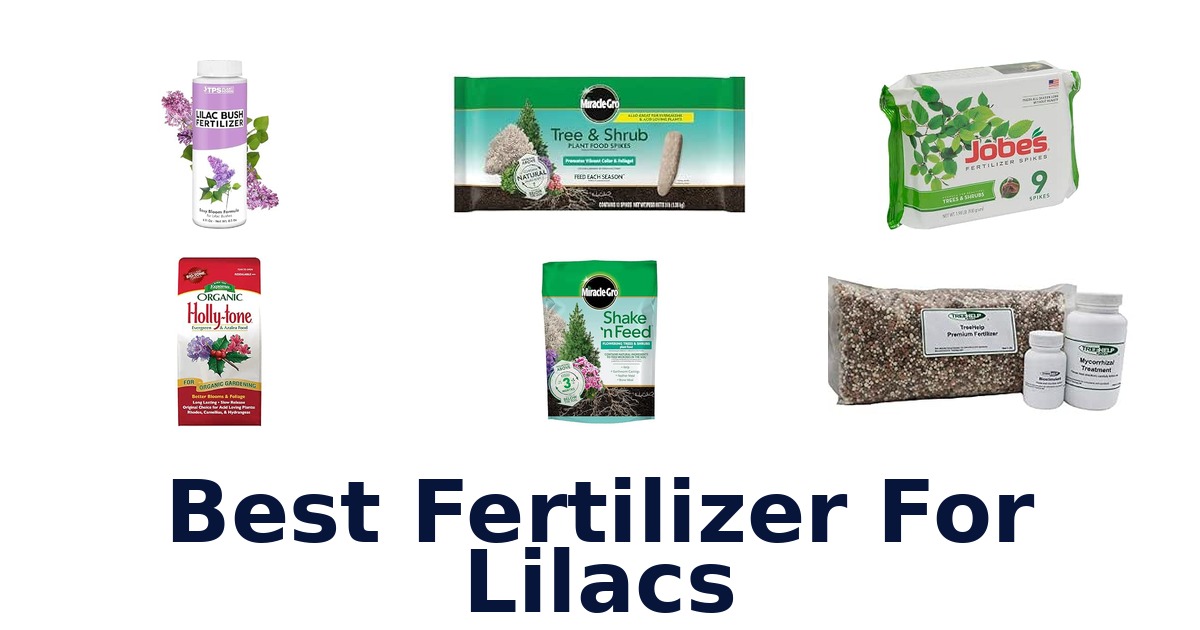
A strong fertilizer choice for lilacs provides nutrients suited to flowering shrubs, in a format you can apply consistently; TPS NUTRIENTS Lilac Fertilizer is the most direct match for lilac bushes. This roundup compares nine options, including a lilac-specific liquid, a care kit made for lilac trees, and general flowering-shrub and acid-loving plant foods. Their application styles range from spikes and slow-release granules to water-soluble powder and liquid feed.
That difference matters: some products are formulated specifically for lilacs, while others list broader shrub or acid-loving plant uses. Check the label for application directions and suitability for your plant before using any fertilizer.
The comparisons below focus on the listed lilac relevance, formulation, and practical details rather than assuming that every shrub product is interchangeable.
TPS NUTRIENTS Lilac Fertilizer is the best overall choice because it is explicitly made for lilac bushes and is a liquid plant food that supports root development, foliage, and blooms. For a broader care package, TreeHelp Annual Care Kit for Lilac is another direct-match option; it includes premium fertilizer, mycorrhizal treatment, and a biostimulant. If you prefer spikes or granular feeding, the flowering-tree and shrub products offer alternatives, but their listed use is broader than lilacs specifically.
Our Top Picks
 Best Overall
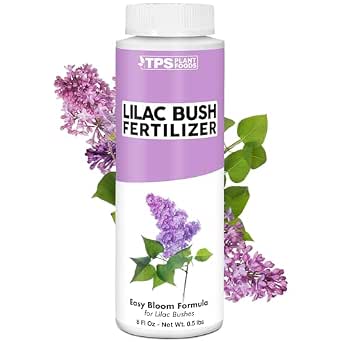
TPS NUTRIENTS Lilac Fertilizer
Made specifically for lilac bushes, this 8-ounce liquid supports root development, healthy foliage, and abundant blooms.
View on Amazon Best Care Kit
Designed for lilac trees, the kit combines 1.5 kg of premium fertilizer with mycorrhizal treatment and a biostimulant.
View on Amazon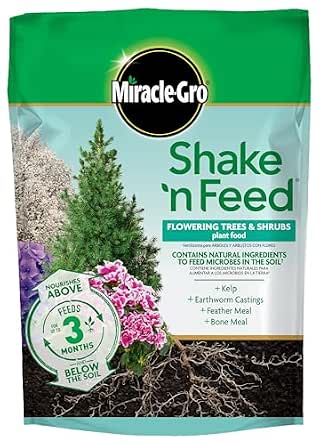 Longest Feeding
Made for flowering trees and shrubs, these granules provide continuous-release feeding for up to three months and suit containers or beds.
View on Amazon- Root-Directed Spikes Miracle-Gro Tree & Shrub Spikes
- Frequent Liquid Feed Miracle-Gro LiquaFeed
Compare Lilac Fertilizer Options
| # | Product | Form | Weight | Buy |
|---|---|---|---|---|
| 1 | 1. TPS NUTRIENTS Lilac FertilizerBest Overall | Liquid | — | View on Amazon |
| 2 | 2. TreeHelp Lilac Care KitBest Care Kit | Granules, Liquid | 1.5 kg | View on Amazon |
| 3 | 3. Miracle-Gro Shake 'N FeedLongest Feeding | Granules | 8 oz | View on Amazon |
| 4 |  4. Miracle-Gro Tree & Shrub SpikesRoot-Directed Spikes | Sticks | 3 lb | View on Amazon |
| 5 |  5. Jobe's Tree and Shrub SpikesPremeasured shrub root feeding | Sticks | 3.68 oz | View on Amazon |
| 6 |  6. Miracle-Gro LiquaFeedFrequent Liquid Feed | Liquid | 2.6 lb | View on Amazon |
| 7 |  7. Espoma Holly-ToneOrganic feeding for acid-loving shrubs | Granules | 4.1 lb | View on Amazon |
| 8 |  8. FoxFarm Happy FrogGentle feeding for acidic gardens | Powder | 4 lb | View on Amazon |
| 9 |  9. Miracle-Gro Water Soluble Azalea FoodFast water-soluble shrub feeding | Powder | 5 lb | View on Amazon |
Detailed Reviews: Best Fertilizer For Lilacs
#1 · Best Overall
1. TPS NUTRIENTS Lilac Fertilizer
- Form: Liquid
Best for: Liquid feeding for lilac beds.
Why it ranks #1: Made specifically for lilac bushes, this 8-ounce liquid supports root development, healthy foliage, and abundant blooms.
A lilac-specific liquid formula pairs support for root development with fuller foliage and more colorful blooms. That focus makes it a direct option for gardeners tending lilac shrubs in outdoor beds, borders, or decorative landscapes, while supporting fresh leaf and stem growth for a fuller-looking bush.
The liquid form suits gardeners who want a plant food specifically labeled for lilacs rather than a general shrub blend. Its stated support for deep roots can help the plant take up water and nutrients, while balanced nutrients are intended to encourage flowering and lush foliage. Use is positioned for outdoor beds, borders, and landscapes, so the product fits in-ground lilac plantings; the supplied information does not provide an application schedule or dilution directions.
- Formulated specifically for lilacs
- Liquid plant-food form
- Supports root development and water and nutrient uptake
- Targets blooms, foliage, and fresh stem growth
- Application rate and feeding schedule are not provided in the supplied product information.
Skip it if you need a listed dilution rate or feeding calendar; the product information provides neither for this liquid formula.
Choose this for an outdoor lilac shrub when lilac-specific root, foliage, and bloom support matters. It is a straightforward fit for beds and borders, but gardeners needing explicit mixing and timing directions should consider that those details are not supplied here.
Full product details
| Brand | TPS NUTRIENTS |
|---|---|
| Item Form | Liquid |
| Manufacturer | TPS Nutrients |
| Model Number | TPS-LILACBUSHFERT-8OZ |
Listed on Amazon as: Lilac Fertilizer – Liquid Plant Food for Blooms, Fragrance & Growth, 8 oz
View on Amazon#2 · Best Care Kit
2. TreeHelp Lilac Care Kit
- Form: Granules, Liquid
- Weight: 1.5 kg
Best for: Complete care for multiple lilacs.
Why it ranks #2: Designed for lilac trees, the kit combines 1.5 kg of premium fertilizer with mycorrhizal treatment and a biostimulant.
A bundled lilac care kit combines mycorrhizal treatment, premium fertilizer, and biostimulant, extending its scope beyond a single fertilizer ingredient. The package is stated to treat one large lilac tree or two to three smaller or newly planted trees, making it useful for gardeners managing several lilacs.
The combination of mycorrhizal treatment, fertilizer, and biostimulant brings several care components together, while the stated purpose includes root development and long-term vitality for all types of lilac trees. Coverage is specified for one large tree or two to three smaller or newly planted trees, which helps match the kit to a planting. Instructions are included, and application is allowed during the growing season, but late fall and winter are excluded.
- Includes mycorrhizal treatment, fertilizer, and biostimulant
- Supports root development and long-term lilac vitality
- Treats one large tree or two to three smaller trees
- Instructions are included
- Application should avoid late fall and winter.
Skip it if you need to feed in late fall or winter; this kit is intended for growing-season application, not those periods.
This kit fits lilac owners who want several care components together and have one large tree or a few smaller plants. Its seasonal boundary matters: plan application during the growing season and avoid late fall and winter.
Full product details
| Brand | TreeHelp |
|---|---|
| Item Form | Granules, Liquid |
| Item Weight | 1.5 kg |
| Manufacturer | TreeHelp |
Listed on Amazon as: TreeHelp Annual Care Kit for Lilac
View on Amazon#3 · Longest Feeding
3. Miracle-Gro Shake 'N Feed
- Form: Granules
- Weight: 8 oz
Best for: Season-long flowering shrub feeding.
Why it ranks #3: Made for flowering trees and shrubs, these granules provide continuous-release feeding for up to three months and suit containers or beds.
Continuous-release feeding for up to three months is the central appeal of this granular plant food for flowering trees and shrubs. Its listed use includes acid-loving plants and both in-ground and container plantings, so lilac growers can choose it across different garden setups while targeting foliage and colorful blooms.
Granules make this an option for gardeners who want a longer feeding interval than a weekly routine: the product states continuous release for up to three months. Natural ingredients feed soil microbes, and the formula is described as nourishing plants above and below the soil. Because use is listed for containers as well as in-ground plantings, it can suit a potted lilac or a garden shrub, with deep green foliage and colorful blooms as its stated goals.
- Continuous-release feeding for up to three months
- For flowering trees, shrubs, and acid-loving plants
- Suitable for in-ground and container use
- Natural ingredients feed soil microbes
- The stated feeding period is limited to up to three months, so continued seasonal feeding may require another application.
Skip it if you prefer a liquid feed applied every one to two weeks; Miracle-Gro LiquaFeed Flowering Trees & Shrubs follows that schedule.
Choose this for a lilac grower seeking granular feeding that can cover a stretch of the season, including in containers. Its stated release period is up to three months, so it is not an all-season, single-application promise.
Full product details
| Brand | Miracle-Gro |
|---|---|
| Included Components | Plant Food |
| Item Form | Granules |
| Item Weight | 8 ounces |
| Manufacturer | The Scotts Company LLC |
| Model Number | 3002410 |
| Additional Information | Important information Ingredients natural ingredients |
Listed on Amazon as: Miracle-Gro Shake 'N Feed Flowering Trees & Shrubs Plant Food, 8 lb.
View on Amazon#4 · Root-Directed Spikes
4. Miracle-Gro Tree & Shrub Spikes
- Form: Sticks
- Weight: 3 lb
Best for: Root-zone feeding for shrubs.
Why it ranks #4: These 15-5-10 spikes release nutrients near shrub roots and are listed for flowering trees and acid-loving plants.
Slow-release spikes deliver nutrients directly to the roots, making this Miracle-Gro option a practical choice for lilacs among other shrubs. Its listed use also includes flowering trees and acid-loving plants, while the spike format puts feeding below the soil surface rather than requiring a liquid application.
The root-directed spike format suits gardeners who prefer placing fertilizer around a shrub’s drip line instead of applying a surface feed. Preparation involves softening the soil with water, then spacing spikes at least three feet apart and driving them below the surface. The label chart determines the number needed, so placement requires some setup, but slow-release nutrients and the stated support for vibrant color and foliage make it relevant to established yard plantings.
- Slow-release nutrients are placed near roots
- Listed for shrubs and flowering trees
- Also suitable for acid-loving plants
- Promotes vibrant color and foliage
- Using the spikes requires softened soil and placement around the drip line at least three feet apart.
Skip it if you want a liquid feed without spike placement; TPS Nutrients Lilac Fertilizer is a lilac-specific liquid alternative.
Pick these spikes for a lilac in a yard planting where root-zone placement and slow-release feeding suit your routine. They also cover other listed shrub types, but application involves preparing soil and setting spikes around the drip line.
Full product details
| Brand | Miracle-Gro |
|---|---|
| Included Components | plant food spikes |
| Item Form | Sticks |
| Item Weight | 3 pounds |
| Manufacturer | The Scotts Company LLC |
| Model Number | 4851012 |
| Additional Information | Important information Safety Information Keep it away from children Ingredients natural ingredients |
Listed on Amazon as: Miracle-Gro Tree & Shrub Plant Food Spikes, 12 Spikes
View on Amazon#5
5. Jobe's Tree and Shrub Spikes
- Form: Sticks
- Weight: 3.68 oz
Best for: Premeasured shrub root feeding.
Why it ranks #5: The 15-3-3 spikes provide a slow-release option for trees and shrubs, with label directions calling for spring and fall applications.
Premeasured spikes supply a stated 15-3-3 NPK formula below the soil surface, targeting the active root zone with a continuous nutrient supply. This format suits lilac owners who want measured applications for shrubs and acid-loving plants, with feeding scheduled twice yearly rather than as a frequent liquid routine.
The spike format places nutrients below the surface where active shrub roots are growing, and premeasured units remove the need to portion out each dose. The listed routine is twice a year, in early spring and late fall, with spikes driven one to two inches below ground using a hammer and plastic cap. These steps make the feeding plan easy to schedule, though installation requires working each spike into the soil.
- Premeasured spikes simplify portioning
- 15-3-3 NPK formula
- Nutrients supplied below the soil surface
- Listed twice-yearly application schedule
- Application requires driving each spike one to two inches into the ground.
Skip it if you want to avoid driving fertilizer into the soil; Miracle-Gro Shake 'N Feed Flowering Trees & Shrubs is a granular alternative.
These spikes suit lilac and other shrub owners who favor premeasured, twice-yearly root-zone feeding. They are less suited to gardeners avoiding installation work, since each spike must be driven below the soil surface.
Full product details
| Brand | Jobe's Organics |
|---|---|
| Included Components | Fertilizer Spike (9) |
| Item Form | Sticks |
| Item Weight | 3.68 ounces |
| Manufacturer | Easy Gardener |
| Model Number | 01310 |
| Additional Information | Important information Ingredients Nitrogen, Phosphorus, Potassium Directions Fertilizer spikes are to be used twice a year in early spring and late fall. Using a hammer and plastic spike cap, drive spikes 1-2 inches below the ground surface, evenly spacing the spikes in a circle at the tree's drip line. Do not insert the spikes closer than 30" to the trunk. |
Listed on Amazon as: Jobe’s Slow Release Tree and Shrub Fertilizer Spikes, Easy Plant Care for Oak, Maple, Dogwood, Boxwood, and Many More Acid Loving Trees and Shrubs, 9 Count
View on Amazon#6 · Frequent Liquid Feed
6. Miracle-Gro LiquaFeed
- Form: Liquid
- Weight: 2.6 lb
Best for: Hose-fed flowering shrub routine.
Why it ranks #6: This flowering-tree and shrub liquid feed is applied every one to two weeks and each bottle feeds up to 400 square feet.
A LiquaFeed feeder turns application into watering, with feedings scheduled every one to two weeks. This liquid formula is specially formulated for acid-loving plants and can be used on flowering shrubs in containers or in-ground gardens, giving lilac growers a hose-connected option when they already use the compatible feeder.
The stated workflow depends on the Miracle-Gro LiquaFeed Feeder: attach a garden hose to the feeder and apply the liquid food while watering. Feeding every one to two weeks gives a regular cadence, while coverage of up to 400 square feet per bottle helps plan larger planting areas. The formula is listed for acid-loving and flowering shrubs, including container and in-ground gardens; this convenience therefore depends on having the feeder rather than using a watering can alone.
- Feeding is combined with watering
- Listed for acid-loving plants
- Use in containers or in-ground gardens
- Each bottle feeds up to 400 square feet
- Requires a Miracle-Gro LiquaFeed Feeder for application.
Skip it if you do not have a LiquaFeed Feeder; Miracle-Gro Water Soluble Azalea, Camellia, Rhododendron Plant Food can be applied with a watering can.
Choose this for lilac and other flowering-shrub plantings when you own a LiquaFeed Feeder and want hose-connected feeding every one to two weeks. Without that feeder, the listed application method is not a fit.
Full product details
| Brand | Miracle-Gro |
|---|---|
| Included Components | Plant Food |
| Item Form | Liquid |
| Item Weight | 2.6 pounds |
| Manufacturer | The Scotts Company LLC |
| Model Number | 1004402 |
| Additional Information | Important Information Proposition 65 Warning for California Consumers WARNING: Cancer and Reproductive Harm – www.P65Warnings.ca.gov |
Listed on Amazon as: Miracle-Gro LiquaFeed Flowering Trees & Shrubs Plant Food, 2-Pack Refills
View on Amazon#7
7. Espoma Holly-Tone
- Form: Granules
- Weight: 4.1 lb
Best for: Organic feeding for acid-loving shrubs.
Why it ranks #7: This 4-3-4 organic granular food is intended for acid-loving plants and is directed for flowering shrubs in spring and fall.
Slow-breaking natural and organic ingredients create a long-lasting nutrient reservoir in Espoma Holly-Tone, a plant food listed for acid-loving shrubs. Lilac growers seeking a broader shrub formula can use its stated spring and fall timing for flowering shrubs, while also feeding other listed plants in acidic soils.
The granular formula’s ingredients break down slowly, providing a reservoir of nutrients rather than a liquid feed applied with each watering. Holly-Tone is listed for hydrangeas, rhododendrons, evergreens, and other acid-loving plants, which can suit a mixed shrub bed alongside lilacs. Its directions identify spring and fall as the preferred timing for flowering and evergreen shrubs, giving the gardener two seasonal checkpoints; consult the package for application details and safety instructions.
- Natural and organic ingredients break down slowly
- Listed for acid-loving plants and flowering shrubs
- Spring and fall timing is provided for shrubs
- Granular form suits soil application
- The supplied directions give seasonal timing but no specific application rate.
Skip it if you need a stated application rate before feeding; Miracle-Gro Tree & Shrub Plant Food Spikes directs users to its label chart for spike quantity.
Choose Holly-Tone for a lilac in a mixed acidic-soil shrub bed when slow-breaking organic ingredients and spring-and-fall timing fit your routine. The supplied details do not state an application rate, so check its package directions.
Full product details
| Brand | Espoma |
|---|---|
| Item Form | Granules |
| Item Weight | 4.1 pounds |
| Manufacturer | Espoma |
| Model Number | HT4 |
| Additional Information | Important information Safety Information Refer to the packaging for safety instructions and warnings Directions 1. Best to use Holly-tone fertilizer in spring and fall on flowering & evergreen shrubs. For berries use in the early and late spring. 2. Apply to the soil around the drip line of the plant. 3. Water thoroughly after application. |
Listed on Amazon as: Espoma Organic Holly-Tone 4-3-4 Natural & Organic Evergreen & Azalea Plant Food; 4 lb. Bag; The Original & Best Fertilizer for All Acid Loving Plants Including Rhododendrons & Hydrangeas
View on Amazon#8
8. FoxFarm Happy Frog
- Form: Powder
- Weight: 4 lb
Best for: Gentle feeding for acidic gardens.
Why it ranks #8: The 4-pound slow-release powder is designed for low-pH-loving plants and includes mycorrhizal fungi and soil microbes.
Gentle slow-release feeding paired with beneficial soil microbes makes this FoxFarm formula an option for lilacs in low-pH gardens. The product is aimed at acid-loving plants and states that its microbes may enhance nutrient uptake and water absorption, connecting soil support with a measured feeding approach.
For gardeners growing lilacs alongside other acid-loving plants, the low-pH focus can make this powder relevant beyond one shrub. Its gentle feedings are described as helping avoid overwhelming plants, while the included soil microbes may support nutrient uptake and water absorption. Directions specify two tablespoons per gallon of soil for container preparation, giving a concrete mixing reference for potting; this is a soil-mix direction, not a stated recurring schedule for established garden shrubs.
- Formulated for low-pH-loving plants
- Slow-release fertilizer provides gentle feedings
- Contains beneficial soil microbes
- Container soil directions specify two tablespoons per gallon
- The supplied directions describe soil preparation, not a recurring feeding schedule for established shrubs.
Skip it if you need a listed recurring schedule for established lilacs; Espoma Holly-Tone specifies spring and fall use on flowering shrubs.
Consider this for a lilac in an acidic garden or a container soil mix when gentle feeding and soil microbes are priorities. The provided directions give a mixing rate for soil preparation, not a repeat schedule for established shrubs.
Full product details
| Brand | FoxFarm |
|---|---|
| Included Components | FoxFarm Happy Frog Acid Loving Plant Fertilizer, Slow-Release Fertilizer for Rho |
| Item Form | Powder |
| Item Weight | 4 pounds |
| Manufacturer | FoxFarm |
| Model Number | FX14610 |
| Warranty Description | Warranty |
Listed on Amazon as: FoxFarm Happy Frog Acid Loving Plants Fertilizer – Slow Release Fertilizer for Azaleas, Rhododendrons, Blueberries & More – Contains Mycorrhizal Fungi & Soil Microbes – OMRI Listed – 4 lb
View on Amazon#9
9. Miracle-Gro Water Soluble Azalea Food
- Form: Powder
- Weight: 5 lb
Best for: Fast water-soluble shrub feeding.
Why it ranks #9: This water-soluble powder targets acid-loving plants such as azaleas and hydrangeas, but its listed use does not specifically mention lilacs.
Instant feeding through a water-soluble formula gives this Miracle-Gro plant food a different routine from granular and spike options. It is listed for acid-loving plants, including several flowering shrubs, and can be used indoors or outdoors with a watering can, making it adaptable to lilacs in gardens or planters.
The powder dissolves for application with a watering can, and the listed repeat interval is every seven to fourteen days. That schedule gives gardeners a clear recurring routine for acid-loving plants, while the indoor and outdoor use claims cover houseplants and garden planters as well as outdoor beds. Since the listed plant examples include hydrangeas and gardenias, it is a broad acid-loving-plant formula rather than a lilac-specific product; the supplied information does not state a mixing rate.
- Water-soluble powder instantly feeds plants
- Listed for acid-loving plants and flowers
- Can be applied with a watering can
- Suitable for indoor and outdoor plants
- The supplied product information gives no mixing rate for preparing each watering-can application.
Skip it if you prefer a lilac-specific formula rather than a broad acid-loving-plant food; TPS Nutrients Lilac Fertilizer is labeled for lilacs.
This fits gardeners who want a water-soluble feed for acid-loving plants indoors or outdoors and can follow a seven-to-fourteen-day routine. It is not lilac-specific, and the supplied information does not give a mixing rate.
Full product details
| Brand | Miracle-Gro |
|---|---|
| Item Form | Powder |
| Item Weight | 5 pounds |
| Manufacturer | The Scotts Company LLC |
| Model Number | 3039806 |
Listed on Amazon as: Miracle-Gro Water Soluble Azalea, Camellia, Rhododendron Plant Food, 5 lb.
View on AmazonWhy a shrub fertilizer may not be a lilac-specific choice
A product labeled for flowering shrubs is a broader match than one explicitly formulated for lilacs. TPS NUTRIENTS Lilac Fertilizer and TreeHelp Lilac Care Kit name lilacs directly, while Miracle-Gro Shake ‘N Feed Flowering Trees & Shrubs and Miracle-Gro Tree & Shrub Spikes list wider plant groups. That distinction is useful when choosing, but it does not establish that a general shrub formula is unsuitable: follow its label and confirm lilac use there.
Another potential mismatch is assuming that an acid-loving plant formula is automatically the best option for every lilac. Several products in this lineup target acid-loving plants, including Espoma Holly-Tone and FoxFarm Happy Frog, but the supplied descriptions do not give a preferred lilac soil pH or soil-test results.
Avoid choosing solely from the phrase acid-loving; consider the plant’s growing conditions and product directions.
Match application format to the plant and routine
The format affects how you apply fertilizer, so check that it fits your lilac’s setting and your maintenance routine. Liquids such as TPS NUTRIENTS Lilac Fertilizer and Miracle-Gro LiquaFeed are applied with watering; LiquaFeed calls for repeat feeding every one to two weeks and requires a Miracle-Gro feeder. Spikes are placed around the shrub’s drip line: Miracle-Gro Tree & Shrub Spikes directions specify softened soil, spacing at least three feet apart, and using the label chart to determine the number.
Jobe’s Tree and Shrub Spikes instead state spring and late-fall application. Granules and powders have their own directions, so do not transfer one product’s schedule or dose to another.
For a care package, TreeHelp Lilac Care Kit includes three components and treats one large tree or two to three smaller or newly planted trees; its listing also says to avoid late-fall and winter application.
How to Choose Fertilizer for Lilacs
Lilac-specific versus broader shrub use
Look first for whether the product names lilacs or only a wider plant group. TPS NUTRIENTS Lilac Fertilizer and TreeHelp Lilac Care Kit are explicitly lilac-focused; Miracle-Gro Shake ‘N Feed is for flowering trees and shrubs, while Espoma Holly-Tone lists acid-loving plants. Broader labels can suit shoppers seeking one fertilizer for mixed beds, but the supplied listings do not confirm every product’s lilac-specific directions.
If a direct match is your priority, favor the first two and verify the label instructions. If you also feed other flowering or acid-loving shrubs, a broader product may fit that routine, provided its package confirms use on lilacs.
Application format and feeding routine
Choose a format you can apply according to its own directions, since the products range from liquids to spikes and dry feeds. TPS NUTRIENTS Lilac Fertilizer is liquid; Miracle-Gro LiquaFeed is also liquid and calls for feeding every one to two weeks with its feeder. Jobe’s Tree and Shrub Spikes are applied twice yearly, in early spring and late fall, while Miracle-Gro Shake ‘N Feed provides continuous-release feeding for up to three months.
These schedules are not interchangeable. Frequent watering-based feeding may suit someone comfortable with repeat applications, while the stated slow-release options suit buyers looking for fewer scheduled applications.
Always follow the selected product’s label, including where and how to apply it.
Coverage and included care components
Check how much plant area or how many shrubs a package is intended to treat before buying. TreeHelp Lilac Care Kit states that it treats one large tree or two to three smaller or newly planted trees and includes fertilizer, mycorrhizal treatment, and a biostimulant. Miracle-Gro LiquaFeed says each bottle feeds up to 400 square feet, while TPS NUTRIENTS Lilac Fertilizer is an 8-ounce bottle and the listing does not provide a coverage figure.
If you want a multi-component lilac-focused package, TreeHelp offers the clearest stated scope. For a larger planted area, LiquaFeed has a listed coverage figure, but account for its required feeder and repeat application schedule.
Which Fertilizer Should I Choose for My Lilac?
Choose TPS NUTRIENTS Lilac Fertilizer if you want a liquid product explicitly made for lilac bushes and focused on roots, foliage, and blooms. For a more complete lilac-specific package, TreeHelp Lilac Care Kit treats one large tree or two to three smaller or newly planted trees and adds mycorrhizal treatment and a biostimulant. If you prefer dry, continuous-release feeding for flowering shrubs, Miracle-Gro Shake ‘N Feed offers up to three months of feeding; for spikes, consider Miracle-Gro Tree & Shrub Spikes or Jobe’s Tree and Shrub Spikes, following each label’s distinct directions.
Choose Miracle-Gro LiquaFeed if its watering-based method and stated coverage of up to 400 square feet fit your routine. For every broader-use product, confirm lilac suitability on its label before applying.
Frequently Asked Questions
When should I fertilize lilacs, and how often should I apply fertilizer?
Apply fertilizer according to its label, since timing and frequency vary by product and formulation. Avoid assuming that more feeding will improve blooms; excess fertilizer can encourage foliage rather than flowers. If a lilac is growing and flowering well, it may not need routine feeding.
Check plant response before repeating an application.
Should I test my soil before choosing fertilizer for a lilac bush?
Yes. A soil test can help identify whether the lilac needs nutrients or whether another soil condition may be limiting growth. Use the results to guide product choice rather than selecting fertilizer only by plant-food category.
If choosing a broader-use product, confirm its label says it is suitable for lilacs before applying.
How can I tell whether a lilac needs fertilizer or has another growing problem?
Look at the whole plant and its growing conditions before feeding. Poor growth or flowering can have causes other than nutrient shortage, so check soil moisture, drainage, light, and signs of damage or disease. A soil test can help clarify nutrient needs; avoid adding fertilizer as a remedy without evidence that feeding is needed.
Should I choose liquid fertilizer, granules, or spikes for a lilac?
Choose the format that suits your application routine and follow its label. The lilac-specific liquid food is intended for lilacs, while the listed flowering-tree and shrub products offer broader-use options in granular, liquid, or spike forms. Confirm lilac suitability for broader-use products, and do not assume their directions are interchangeable.
What should I check before using a flowering-tree fertilizer on lilacs?
Check the product label for lilac suitability and its specific application directions. The flowering-tree and shrub options listed here have broader stated uses than lilacs specifically, so do not assume they are appropriate without label confirmation. If you want a direct match, the roundup identifies a lilac-specific liquid food and a lilac care kit.
Final Words
For a direct lilac match, choose TPS NUTRIENTS Lilac Fertilizer: it is explicitly made for lilac bushes and supports roots, foliage, and blooms. Pick TreeHelp Annual Care Kit for Lilac if you want a broader package with mycorrhizal treatment and a biostimulant. Prefer dry feeding or spikes?
Compare the listed formats, but confirm lilac suitability and follow each product’s label before applying.