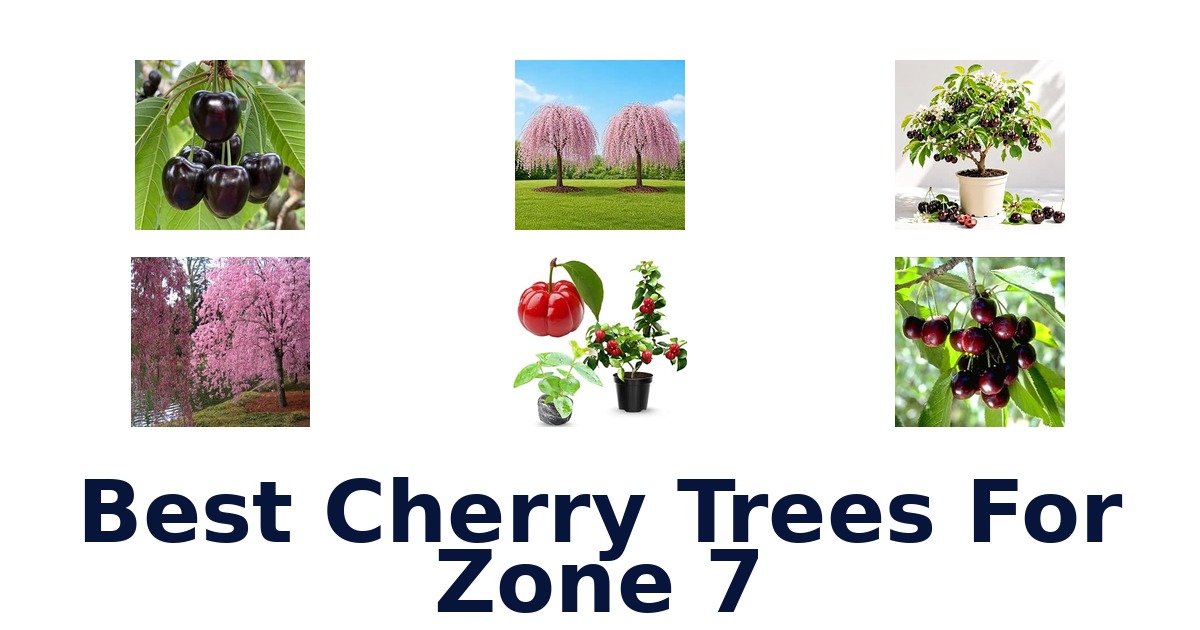
A strong cherry tree for zone 7 offers a compatible hardiness range, a growth form suited to your space, and fruit or blossoms that match your goal. The DMOH cherry plant is a practical fruit-tree starting point: its listing gives zones 5–8, a mature height of 12–15 feet, and a recommendation to plant a second cherry nearby for fruit set. This roundup also compares a larger potted tree, multi-plant offerings, a dwarf tart cherry, and ornamental flowering trees.
Check the listed zone range carefully: not every product fits zone 7, and some listings describe a different cherry type or a decorative rather than edible tree. Plant size, sun, soil drainage, pollination needs, and shipping restrictions can all affect whether a tree suits your yard.
Use the comparisons below to narrow the options.
The DMOH Black Cherry Plant is the leading pick for zone 7 because its listing specifies USDA zones 5–8, a mature height of 12–15 feet, and full sun with loose, well-drained soil. It is described as a Rainier cherry with honey-sweet yellow fruit blushed red, although it arrives as a starter plant without fruit. The seller recommends planting a second cherry nearby for fruit set, so it suits gardeners prepared to plan for pollination rather than buyers seeking an immediate harvest.
Our Top Picks
 Best Overall
Its listed zones 5–8 include zone 7, and the 12–15-foot mature size plus sun and soil guidance make it a useful fruit-tree choice.
View on Amazon Largest Starter Tree
This fruit-bearing tree is rated zones 5–8 and ships 2–3 feet tall in a 3-gallon pot, with a stated mature height of 15–30 feet.
View on Amazon Two-Plant Pack
Both plants are listed for zones 4–8, covering zone 7; the pair offers two 12–18-inch dormant seedlings and fruit said to ripen in late June.
View on Amazon- Broad Zone Range HARINI Black Cherry
- Dwarf Tart Cherry GURNEY'S Romeo Cherry
Compare the cherry trees and plants
| # | Product | Buy |
|---|---|---|
| 1 | 1. DMOH Cherry PlantBest Overall | View on Amazon |
| 2 | 2. TAZGO Dark Red CherryLargest Starter Tree | View on Amazon |
| 3 | 3. AKTRD Black Cherry PairTwo-Plant Pack | View on Amazon |
| 4 |  4. HARINI Black CherryBroad Zone Range | View on Amazon |
| 5 |  5. GURNEY'S Romeo CherryDwarf Tart Cherry | View on Amazon |
| 6 |  6. AKTRD Black Cherry Tall PairLate-June black cherry pair | View on Amazon |
| 7 |  7. DAS Farms Higan CherryGround-planted blossom focal point | View on Amazon |
| 8 |  8. GINGERGLOW Weeping CherryPair for spring landscape color | View on Amazon |
| 9 |  9. AKTRD Black Cherry SeedlingsTwo black cherries for colder zones | View on Amazon |
| 10 |  10. ELLA'S HOMES Surinam CherryWarm-zone Surinam cherry option | View on Amazon |
Detailed Reviews: Best Cherry Trees For Zone 7
#1 · Best Overall
1. DMOH Cherry Plant
Best for: Sunny-yard Rainier grower.
Why it ranks #1: Its listed zones 5–8 include zone 7, and the 12–15-foot mature size plus sun and soil guidance make it a useful fruit-tree choice.
Rainier’s large yellow cherries with a red blush and honey-sweet flavor give this DMOH starter a clear fresh-fruit appeal. It is listed for USDA zones 5–8, a range that includes zone 7, and its summer fruiting makes it a candidate for an outdoor garden with suitable sun and soil.
Plan for a sunny, well-drained spot: the listing calls for at least six hours of direct sun and loose, well-drained soil, which gives planting a concrete starting point. The tree matures to 12–15 feet, so its eventual size matters when choosing a location. DMOH says to plant a second cherry tree nearby for fruit set; that makes this a better fit for gardeners able to accommodate more than one tree. It arrives as a starter plant without fruit.
- Listed for USDA zones 5–8, including zone 7.
- Rainier cherries are described as large, yellow with a red blush, and honey-sweet.
- The listing specifies at least six hours of direct sun and loose, well-drained soil.
- Matures to a stated height of 12–15 feet.
- The starter plant arrives without fruit, and the listing recommends a second nearby cherry tree for fruit set.
Skip it if you need fruit immediately or cannot plant a second nearby cherry tree; this arrives as a starter without fruit.
Choose this DMOH plant if your zone 7 garden has a sunny, well-drained location and room for a 12–15-foot tree plus a nearby cherry. Its Rainier fruit profile is the draw; plan for a starter, not an instant harvest.
Full product details
| Brand | DMOH |
|---|---|
| Color | Black |
| Manufacturer | DMOH |
Listed on Amazon as: Black Cherry Tree in Quart Pot, Cherries Fruit Plant for Outdoor Garden
View on Amazon#2 · Largest Starter Tree
2. TAZGO Dark Red Cherry
Best for: Larger dark-red orchard tree.
Why it ranks #2: This fruit-bearing tree is rated zones 5–8 and ships 2–3 feet tall in a 3-gallon pot, with a stated mature height of 15–30 feet.
A 2–3-foot plant in a 3-gallon pot gives this TAZGO dark red cherry a more substantial starting size than the small seedlings in this roundup. It is listed for zones 5–8, including zone 7, and can reach approximately 15–30 feet at maturity.
The 3-gallon pot and 2–3-foot height provide a larger starting plant for a home orchard or edible garden, both uses named in the listing. Its eventual 15–30-foot height calls for careful placement with room for a large tree. TAZGO specifies six to eight hours of direct sun, well-draining loamy or sandy soil, and moderate watering to keep soil evenly moist without waterlogging. The stated zones 5–8 include zone 7.
- Listed for zones 5–8, including zone 7.
- Arrives 2–3 feet tall in a 3-gallon pot.
- Suitable for home orchards and edible gardens, according to the listing.
- Sun, soil, and moderate-watering guidance are provided.
- Its stated mature height of approximately 15–30 feet requires substantial space.
Skip it if you have limited room for a large tree; GURNEY'S Romeo is specifically described as a dwarf, no-ladder cherry.
Choose this TAZGO plant for a zone 7 edible garden with room for a 15–30-foot tree and the listed sun and soil conditions. Its larger potted starting size is useful, but the mature footprint is the main boundary.
Full product details
| Brand | TAZGO |
|---|---|
| Color | Red |
| Manufacturer | TAZGO |
| Style | Dark Red Cherry |
| Style Name | Dark Red Cherry |
Listed on Amazon as: Dark Red Cherry Live Plant, Fruit Bearing Tree, 2-3 Ft Tall, 3 Gallon Pot
View on Amazon#3 · Two-Plant Pack
3. AKTRD Black Cherry Pair
Best for: Two-tree late-June planting.
Why it ranks #3: Both plants are listed for zones 4–8, covering zone 7; the pair offers two 12–18-inch dormant seedlings and fruit said to ripen in late June.
Two 12–18-inch black cherry plants arrive as a pair, giving growers more than one young tree to establish from the outset. AKTRD lists them for zones 4–8, which includes zone 7, and says the medium-sized purple-black sweet cherries ripen in late June.
The pair format and 12–18-inch height offer a starting point for gardeners establishing multiple plants, while the listed zones 4–8 include zone 7. The fruit is described as medium-sized, purple-black, and sweet, with late-June ripening that helps set expectations for harvest timing. These are dormant bareroot plants, so buyers should be prepared to plant and establish them rather than expect foliage or fruit on arrival. AKTRD describes the plants as straightforward to grow.
- Includes two black cherry live plants.
- Listed for zones 4–8, including zone 7.
- Fruit is described as sweet and purple-black.
- Ripens in late June, according to the listing.
- The plants are dormant bareroots, so they arrive without active foliage.
Skip it if you want a potted tree or a flowering ornamental; DAS Farms’ Higan arrives 3–4 feet tall and is sold for pink blossoms.
A zone 7 gardener seeking two young fruiting black cherries can consider this pair for a late-June crop. Choose it with the dormant bareroot form in mind, and allow time for establishment before expecting fruit.
Full product details
| Brand | AKTRD |
|---|---|
| Color | Black Cherry Tree |
| Manufacturer | AKTRD |
| Part Number | Be-L6-anhkhiem-blackcherry-lp1 |
Listed on Amazon as: 2 Black Cherry Live Plants, Well-Rooted Fruit Tree, 12-18 Inch Tall
View on Amazon#4 · Broad Zone Range
4. HARINI Black Cherry
Best for: Broad-zone black cherry starter.
Why it ranks #4: Its stated USDA range of 3–9 includes zone 7, and the listing specifies full sun, well-draining soil, and regular water during establishment.
A USDA hardiness range of zones 3–9 places this 6–12-inch HARINI black cherry starter within zone 7 and across a broad climate span. Its care notes also specify full sun and well-draining soil, with regular watering during the first one to two years to establish roots.
The quart-pot, 6–12-inch starter is a compact planting to establish, and the listed full-sun requirement helps identify a suitable site before planting. Well-draining soil is specified, while regular watering during the first one to two years gives new owners a clear early-care commitment. Its zones 3–9 range includes zone 7, and spring is the stated blooming season. The listing calls it dormant in winter, so winter appearance differs from its growing-season state.
- Listed for USDA zones 3–9, including zone 7.
- Quart-pot starter measures 6–12 inches tall.
- Full sun and well-draining soil are specified.
- Regular watering during the first one to two years is stated for root establishment.
- The listing calls for regular watering through the first one to two years.
Skip it if you cannot keep up with regular watering during establishment; TAZGO’s listing specifies moderate watering instead of a stated one-to-two-year schedule.
For a zone 7 gardener with a full-sun site and well-draining soil, this is a small black cherry starter with a broad listed hardiness range. Its early-care fit depends on providing regular water while roots establish.
Full product details
| Brand | HARINI |
|---|---|
| Color | Green |
| Item Weight | 8 ounces |
| Manufacturer | Harini |
| Style Name | Live Starter Seedlings |
Listed on Amazon as: Black Cherry Plant Live for Planting, Sweet Cherry Fruit Tree, Fast Growing Sweet Fruit Tree in Home Garden, 6-12 Inch Tall, Quart Pot, Dormant in Winter
View on Amazon#5 · Dwarf Tart Cherry
5. GURNEY'S Romeo Cherry
Best for: Cold-hardy dwarf fruit grower.
Why it ranks #5: Romeo is a dwarf bush cherry described as exceptionally cold hardy, with fruit for fresh eating, baking, canning, and juice; its zone range is not stated.
Romeo’s dwarf habit is described as a true no-ladder tart cherry tree, making it the listed choice for growers who want fruit within reach. GURNEY'S highlights glossy deep-crimson cherries for fresh eating, baking, canning, juice, or wine, and says the plant can handle temperatures down to -45°F.
The dwarf, no-ladder description speaks to easier fruit access than a tall tree, while the glossy deep-crimson cherries are listed for several kitchen uses, including juice and baking. GURNEY'S calls Romeo exceptionally hardy and gives -45°F as its cold tolerance, a relevant detail for growers facing severe winter conditions. It arrives as one plant in a 4-inch pot, and the listing calls for well-drained conditions. Shipping is restricted in five named states.
- Dwarf habit is described as a no-ladder cherry tree.
- Listed cold tolerance reaches -45°F.
- Deep-crimson fruit is offered for fresh eating, baking, canning, juice, and wine.
- One plant is grown in a 4-inch pot.
- Shipping is unavailable to California, Colorado, Idaho, Oregon, and Washington.
Skip it if you live in California, Colorado, Idaho, Oregon, or Washington; the listing excludes those states from shipping.
This suits zone 7 growers seeking a compact tart cherry for accessible picking and multiple processing uses. Check the stated shipping restriction first, and provide well-drained conditions; its cold tolerance is a listed strength, not a substitute for site care.
Full product details
| Brand | GURNEY'S |
|---|---|
| Color | Red |
| Manufacturer | Gardens Alive! |
| Part Number | 62508 |
| Material Feature | Organic |
| Material Features | Organic |
| Model Number | 62508 |
| Care Instructions | well-drained |
Listed on Amazon as: Romeo Cold Hardy Dwarf Bush Cherry Tree – Grown in a 4" Pot – Due to regulations Can't Ship to CA, CO, ID, OR, or WA
View on Amazon#6
6. AKTRD Black Cherry Tall Pair
Best for: Late-June black cherry pair.
Why it ranks #6: The two 1.5–2-foot plants are listed for zones 4–8 and produce sweet purple-black cherries, making them a zone-7 option despite limited planting guidance.
Two 1.5–2-foot black cherry plants make this AKTRD listing a taller paired start than its 12–18-inch counterpart. The listing says the purple-black sweet cherries ripen in late June and gives a zones 4–8 range, which includes zone 7 for outdoor planting.
The stated 1.5–2-foot height gives buyers a clear starting size, and the two-plant quantity supports establishing a pair rather than a single tree. AKTRD describes the fruit as medium-sized, purple-black, and sweet, with late-June ripening to guide harvest expectations. These are bareroot plants listed as having no leaves, so planting plans should account for a dormant arrival. The zones 4–8 range includes zone 7, and the listing characterizes the plants as straightforward to grow.
- Includes two black cherry plants.
- Plants are listed at 1.5–2 feet tall.
- Listed for zones 4–8, including zone 7.
- Sweet purple-black cherries are said to ripen in late June.
- The bareroot plants are listed as having no leaves on arrival.
Skip it if you want a leafy potted tree on arrival; HARINI’s black cherry is listed in a quart pot rather than as a bare root.
This pair fits zone 7 gardeners who want two black cherry plants and a stated late-June ripening period. Be prepared for dormant, leafless bareroot arrivals and allow the plants time to establish before expecting fruit.
Full product details
| Brand | AKTRD |
|---|---|
| Color | Black Cherry Tree |
| Manufacturer | AKTRD |
| Part Number | Be-L6-Will-Tartariancherry-8 |
| Material Feature | Heirloom |
| Material Features | Heirloom |
Listed on Amazon as: 2 Black Cherry Trees Plants Live, Cold Hardy Cherry Tree, 1.5-2 Ft Tall
View on Amazon#7
7. DAS Farms Higan Cherry
Best for: Ground-planted blossom focal point.
Why it ranks #7: This 3–4-foot weeping Higan is rated zones 4–8 and suits full to part sun, but it is presented for pink blossoms rather than fruit.
Cascading branches and delicate pink Higan blossoms give this 3–4-foot plant an ornamental role rather than a fruit-harvest focus. DAS Farms lists it for zones 4–8, including zone 7, and says it should be planted directly in the ground on arrival, not moved to another container.
The shipped height of 3–4 feet gives buyers a clear sense of the plant’s starting scale, while the ground-only instruction shapes the installation plan: select the permanent outdoor spot before arrival. Full to part sun and zones 4–8 provide site guidance for a zone 7 garden. As a deciduous tree, it loses its leaves in winter; its stated appeal is delicate pink flowers and cascading branches, not listed edible fruit.
- Listed for zones 4–8, including zone 7.
- Ships at a stated height of 3–4 feet.
- Pink Higan blossoms and cascading branches provide ornamental interest.
- The listing supports full to part sun.
- It must be planted in the ground and should not be transplanted into another container.
Skip it if you need an edible cherry crop or want to keep a tree in a container; GURNEY'S Romeo is listed for eating and processing fruit.
Choose this Higan for a zone 7 landscape where pink spring blossoms and cascading form matter more than fruit. Have its permanent ground location ready; the listing specifically rules out transplanting it into another container.
Full product details
| Brand | DAS Farms |
|---|---|
| Color | Green |
| Item Weight | 6 pounds |
| Manufacturer | DAS FarmsTM |
| Material Feature | Organic |
| Material Features | Organic |
| Special Features | Attracts Pollinators |
| Care Instructions | Water |
| Special Feature | Attracts Pollinators |
Listed on Amazon as: Pink Japanese Weeping Cherry Tree 'Higan' – Live Plant Shipped 3 to 4 Feet Tall by DAS Farms
View on Amazon#8
8. GINGERGLOW Weeping Cherry
Best for: Pair for spring landscape color.
Why it ranks #8: The two 6–12-inch plants offer ornamental spring blossoms, but the supplied details do not state a hardiness zone for confirming zone-7 fit.
Two weeping cherry plants, each approximately 6–12 inches tall, make this GINGERGLOW listing a paired ornamental starting point. Its stated appeal is seasonal pink or white spring blossoms and graceful shape, bringing color and structure to a yard or garden rather than a specified edible harvest.
The two-plant quantity can help gardeners plan a paired landscape display, while the 6–12-inch size means these are small plants to establish rather than mature specimens. GINGERGLOW describes seasonal pink or white blooms in spring and identifies the style as weeping, connecting the flowering display with a graceful form. The plants are prepared for transplanting into garden soil or outdoor containers, giving buyers two stated placement options for their outdoor growing plan.
- Includes two live cherry plants.
- Plants are approximately 6–12 inches tall.
- Weeping style adds graceful shape to an outdoor landscape.
- The listing describes seasonal pink or white spring blossoms.
- The listing focuses on ornamental flowers and does not specify edible fruit.
Skip it if you want a listed edible harvest; AKTRD’s 12–18-inch black cherry pair is described as producing sweet fruit.
This pair suits a gardener looking for small weeping cherries to establish in outdoor soil or containers for seasonal spring color. Choose it for ornamental structure, and do not rely on the listing for an edible-fruit harvest.
Full product details
| Brand | GINGERGLOW |
|---|---|
| Color | Pink |
| Manufacturer | GINGERGLOW |
| Style | Weeping |
| Style Name | Weeping |
Listed on Amazon as: 2 Weeping Cherry Tree Plant, 6-12 Inch Tall, Easy Care, Hardy Ornamental Flowering Cherry Tree, Ideal for Yard, Garden & Landscape
View on Amazon#9
9. AKTRD Black Cherry Seedlings
Best for: Two black cherries for colder zones.
Why it ranks #9: This pair is offered as 12–18-inch plants, but its stated zones 3–6 exclude zone 7, so it is a poor match for this search.
This AKTRD set supplies two 12–18-inch black cherry plants, with dark purple-black fruit and foliage stated in the listing. Its zones 3–6 range does not include zone 7, however, so the pair’s climate specification is a key limitation for shoppers choosing a tree specifically for this roundup.
The two-plant quantity and 12–18-inch size offer a defined starting scale for a home orchard or landscape, uses named in the listing. Dark purple-black fruits are specified, and the dormant bareroot form means the plants arrive without active growth. The stated zones 3–6 are the decisive site-fit detail: they do not cover zone 7. AKTRD describes the plants as simple to grow, but that does not extend the listed hardiness range.
- Includes two black cherry seedlings.
- Plants are listed at 12–18 inches tall.
- The listing identifies dark purple-black fruit and foliage.
- Home orchards and landscapes are named uses.
- Its stated zones 3–6 exclude zone 7.
Skip it if you need a tree explicitly listed for zone 7; AKTRD’s other black cherry pair, B0D7W2VDR7, is rated for zones 4–8.
This pair may suit a grower within the listed zones 3–6 seeking black cherries for an orchard or landscape. For a zone 7 purchase, the stated range is a mismatch, so choose a tree whose listing includes your zone.
Full product details
| Brand | AKTRD |
|---|---|
| Color | Black Cherry Tree Plants |
| Manufacturer | AKTRD |
| Part Number | Be-L6-SupWill-Sandcherry-6 |
Listed on Amazon as: 2 Black Cherry Trees Plants Live, Outdoor Garden Tree, 12-18 Inch Tall
View on Amazon#10
10. ELLA'S HOMES Surinam Cherry
Best for: Warm-zone Surinam cherry option.
Why it ranks #10: Its listed zones 9–11 do not include zone 7, making it unsuitable for the requested climate despite its edible fruit.
A stated cold-hardiness range of zones 9–11 is the defining constraint for this ELLA'S HOMES Surinam cherry, placing it outside zone 7. The listing offers a 5–7-inch live plant and describes sweet fruit for fresh eating, jams, or preserves, but its climate range does not match this roundup’s target zone.
The small 5–7-inch height makes this a young planting rather than an established tree, while the listing identifies it as a live, bareroot plant. Its stated zones 9–11 and winter dormancy are important for site selection: they point to a warm-climate use case, not an outdoor zone 7 planting. Sweet cherries are described as suitable for fresh eating, jams, and preserves, so the fruit has several stated uses if grown within its listed climate range.
- Live Surinam cherry plant is listed at 5–7 inches tall.
- The listing describes sweet cherry fruit.
- Fruit is presented for fresh eating, jams, or preserves.
- Winter dormancy is explicitly noted.
- Its stated zones 9–11 do not include zone 7.
Skip it if you garden in zone 7 and need a tree listed for that climate; DMOH’s Rainier cherry is rated for zones 5–8.
This is for a grower in the listed zones 9–11 who wants a small Surinam cherry plant and fruit for fresh use or preserving. Zone 7 gardeners should treat the hardiness mismatch as decisive rather than assume winter suitability.
Full product details
| Brand | ELLA'S HOMES |
|---|---|
| Color | Red |
| Manufacturer | ELLA'S HOMES |
Listed on Amazon as: Surinam Cherry Fruit Tree Live Plant, Landscape Fruit Tree, 5-7 Inch Tall
View on AmazonAvoiding a fruit-set mismatch
A cherry tree can grow well in zone 7 yet still disappoint if its pollination needs are overlooked. The DMOH listing explicitly says to plant a second cherry nearby for fruit set, so buyers should not assume one starter plant guarantees a harvest. The product is also described as a Rainier cherry, while its title calls it a black cherry; confirm the plant identity and pollination compatibility with the seller before relying on it as a specific cultivar.
The AKTRD listings offer pairs, but the supplied facts do not establish that the two plants are compatible pollinizers or explain whether either is self-fertile. Romeo is described as a dwarf tart cherry, but its listing likewise gives no pollination details.
Treat pack count as a planting convenience, not proof of fruiting compatibility. If fruit is the priority, verify pollination requirements and plan space for any additional tree before ordering.
Choose fruit trees versus blossom trees
The key trade-off is whether you want edible fruit or a seasonal ornamental display, because the two goals are not interchangeable. DMOH, TAZGO, and the AKTRD black cherry listings describe fruit-bearing trees; the DAS Farms Higan and GINGERGLOW products are presented primarily for their pink or white spring flowers and landscape shape. The Higan has a stated zone range of 4–8 and arrives 3–4 feet tall, while the GINGERGLOW listing offers two smaller 6–12-inch plants but does not provide a zone range in the supplied facts.
Those differences matter for both climate confidence and the time required to establish a visible feature. A flowering cherry may suit a yard where blossom display is the goal, but do not select it as a substitute for a documented fruit tree.
Conversely, fruit-tree listings should not be assumed to deliver the same cascading ornamental form as a weeping variety.
How to Choose a Cherry Tree for Zone 7
Hardiness range and zone confirmation
Look first for a listed hardiness range that includes zone 7, rather than relying on a general claim of cold hardiness. DMOH and TAZGO list zones 5–8; the AKTRD pair and DAS Farms Higan list zones 4–8; HARINI lists zones 3–By contrast, the AKTRD seedling listing for B0CTZVLJCH stops at zone 6, and ELLA’S HOMES Surinam Cherry starts at zone 9.
Romeo is called very cold hardy but has no zone range in the supplied details. Choose a clearly overlapping range when climate fit is your priority, and treat missing or conflicting range information as something to verify before purchase.
This is especially important when a listing emphasizes a common name without identifying the exact variety.
Fruit production or ornamental bloom
Decide whether harvest or spring flowers matter more, because the listings include both edible and ornamental cherry trees. DMOH describes sweet Rainier fruit, TAZGO describes a dark red fruit-bearing tree, and Romeo offers tart cherries for eating and preserving. The DAS Farms Higan is a weeping ornamental known for pink flowers, while GINGERGLOW emphasizes seasonal blossoms and landscape structure.
If you want fruit, prioritize a listing that explicitly describes edible cherries and check its pollination needs; DMOH specifically recommends a second nearby cherry. If visual display is the goal, the Higan offers a stated 3–4-foot shipped size and zones 4–8.
Avoid assuming that an ornamental cherry is an edible fruit producer or that a fruit tree will have a weeping shape.
Starting size and space available
Match the shipped plant size and expected mature dimensions to your planting space and patience. DMOH states a mature height of 12–15 feet, while TAZGO gives a broader mature height of 15–30 feet and arrives 2–3 feet tall in a 3-gallon pot. HARINI is listed at 6–12 inches, and the AKTRD offers include pairs of 12–18-inch or 1.5–2-foot plants.
Romeo is specifically described as a dwarf bush cherry, though the listing provides no mature dimensions. A larger, potted tree may suit buyers who want a more established starting point and have room for a full-size tree; smaller plants or a dwarf form may suit limited space, provided their eventual size and care needs are confirmed.
Which Cherry Tree Should You Choose for Zone 7?
For a zone-7 fruit tree with a clearly stated compatible range and practical growing details, choose DMOH Cherry Plant: it is rated zones 5–8, reaches 12–15 feet, and specifies full sun and well-drained soil. Choose TAZGO Dark Red Cherry if you want a larger shipped plant in a 3-gallon pot and can allow for its stated 15–30-foot mature size. For two listed plants, AKTRD Black Cherry Pair has a zone 4–8 range and 12–18-inch seedlings.
Pick DAS Farms Higan Cherry when blossoms and a weeping ornamental form matter more than fruit. Romeo suits buyers seeking a dwarf tart cherry, but verify its zone range and pollination needs.
Avoid the zone 3–6 AKTRD seedlings and zone 9–11 Surinam cherry for zone 7.
Frequently Asked Questions
Do cherry trees need a second tree nearby to produce fruit?
Some cherry trees need a compatible second tree for pollination, while others can fruit alone. The DMOH listing recommends planting a second cherry nearby, so plan for pollination rather than expecting fruit from one starter plant. Check each tree’s pollination requirements and choose a compatible partner before planting.
How much sun and water do cherry trees need after planting?
Choose a sunny planting site with loose, well-drained soil; the DMOH listing specifies full sun and well-drained soil. Water the newly planted tree thoroughly, then keep the soil evenly moist while it establishes without leaving it waterlogged. Adjust watering to rainfall and soil conditions, and follow the plant’s care instructions.
When should I plant a cherry tree in zone 7?
Planting during dormancy—typically in fall or early spring—can give a cherry tree time to establish before demanding summer conditions. In zone 7, avoid planting when the ground is frozen or saturated, and water the tree after planting. Check the listing’s growing-zone range and local conditions before choosing a planting date.
Will a starter cherry plant arrive with fruit?
No. The DMOH Black Cherry Plant is described as a starter plant that arrives without fruit, so it is not an immediate-harvest choice. Fruit production depends on the tree establishing and maturing, as well as suitable growing conditions and pollination.
Plan for a growing period rather than expecting cherries on arrival.
How much space should I allow for a cherry tree?
Use the listed mature size to plan the planting site. DMOH is described as reaching 12–15 feet, while TAZGO Dark Red Cherry is listed at 15–30 feet. Allow room around the selected tree for its expected growth, and confirm the mature dimensions for any listing that does not state them.
Final Words
For a zone-7 fruit tree with the clearest stated growing guidance, choose the DMOH Black Cherry Plant: its listed zones are 5–8, with a 12–15-foot mature height and full-sun, well-drained-soil requirements. Choose TAZGO if you can accommodate its 15–30-foot size, or DAS Farms Higan for ornamental blossoms. Romeo is a dwarf tart-cherry option, but verify its zone and pollination needs.
Avoid the zone 3–6 seedlings and zone 9–11 Surinam cherry.