
Article generation failed: Error code: 402 – {‘error’: {‘message’: ‘Insufficient credits. Add more using https://openrouter.ai/settings/credits’, ‘code’: 402}}
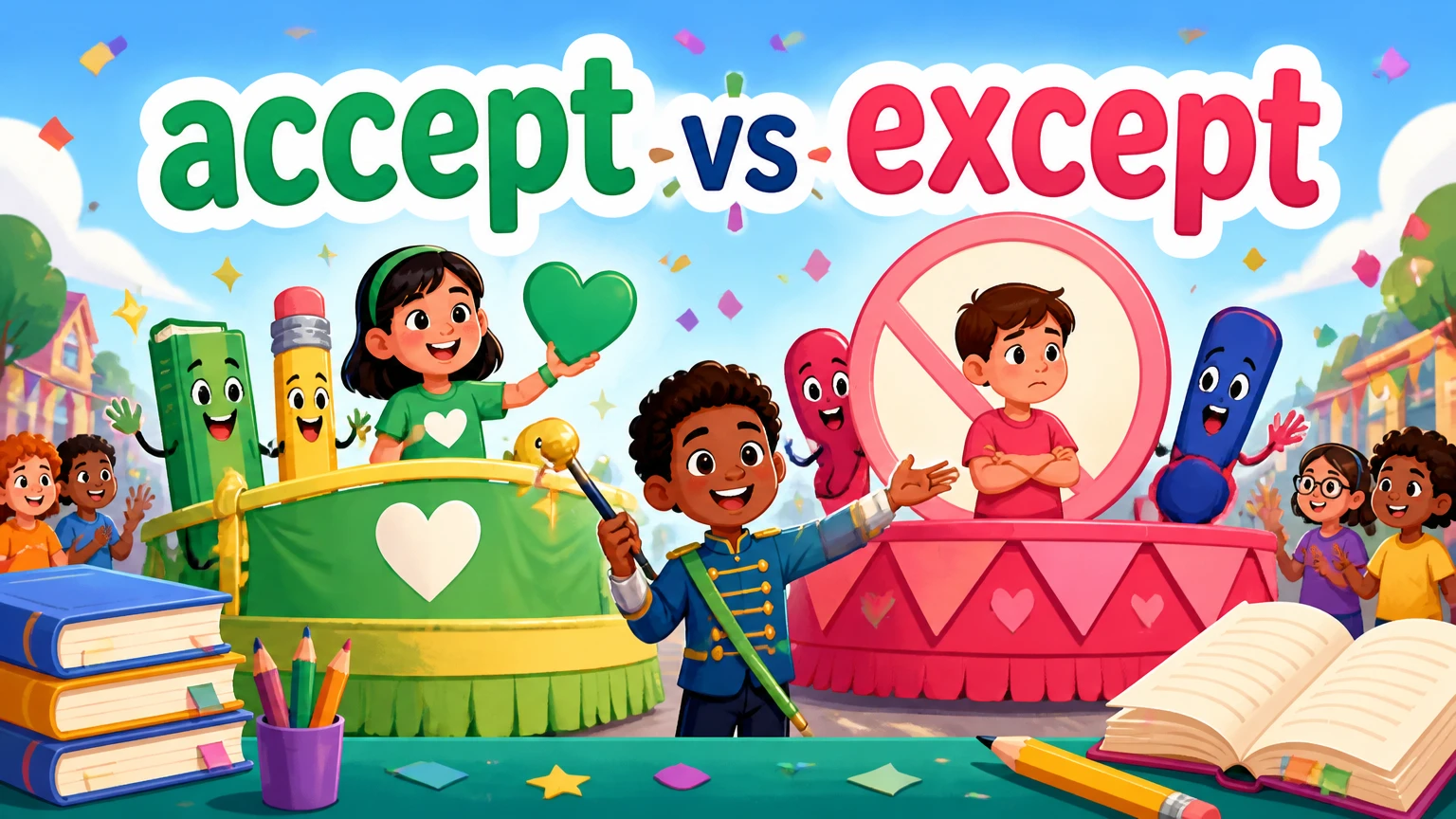
In the English language, certain words are frequently confused because they sound remarkably similar but have entirely different meanings and grammatical functions. One of the most common pairings is **accept** and **except**. While they may sound nearly identical in casual conversation, using the wrong one in writing can change the entire meaning of your sentence.
Table of Contents
Understanding “Accept”
The word accept is almost always used as a verb. It originates from the Latin word acceptare, meaning “to take or receive willingly.” When you accept something, you are saying “yes” to it or acknowledging its validity.
Common Meanings of Accept:
- To receive something offered: “She decided to accept the job offer.”
- To admit as true or suitable: “The scientist’s theory was widely accepted by his peers.”
- To take on responsibility: “He must accept the consequences of his actions.”
- To tolerate or resign oneself to: “We have to accept that the weather will be cold in January.”
Understanding “Except”
The word except is most commonly used as a preposition or a conjunction. It is used to indicate an exclusion or an omission. If you are leaving something out of a group or a statement, you use “except.”
Common Meanings of Except:
- Preposition (Not including): “Everyone was invited to the party except Jerry.”
- Conjunction (But for the fact that): “I would go for a run, except it is raining outside.”
- Verb (To exclude – rare): “Present company excepted.”
Key Differences at a Glance
| Feature | Accept | Except |
|---|---|---|
| Part of Speech | Verb | Preposition / Conjunction |
| Primary Meaning | To receive or agree to | To exclude or leave out |
| Action | Bringing something in | Leaving something out |
| Synonyms | Receive, Welcome, Admit | Excluding, But, Barring |
Memory Tricks (Mnemonics)
If you struggle to remember which word to use, try these simple mental shortcuts:
The “A” Trick: Accept starts with A, just like Agree. If you Agree to something, you Accept it.
The “Ex” Trick: Except starts with Ex, just like Exclude. Use Except when you are Excluding something.
Common Mistakes and Examples
Mixing these two up is a common “typo of the mind.” Here is how to spot and fix them:
- I except your apology.
I accept your apology. (You are receiving the apology.) - I like all vegetables accept broccoli.
I like all vegetables except broccoli. (You are excluding broccoli.)
Practice Exercises
Choose the correct word (accept or except) for each sentence below:
- Please ________ this small gift as a token of my appreciation.
- I have finished all my chores ________ for the laundry.
- It is hard for him to ________ help from others.
- The museum is free for everyone ________ tourists.
- Will you ________ the terms and conditions?
Answers:
- accept
- except
- accept
- except
- accept