
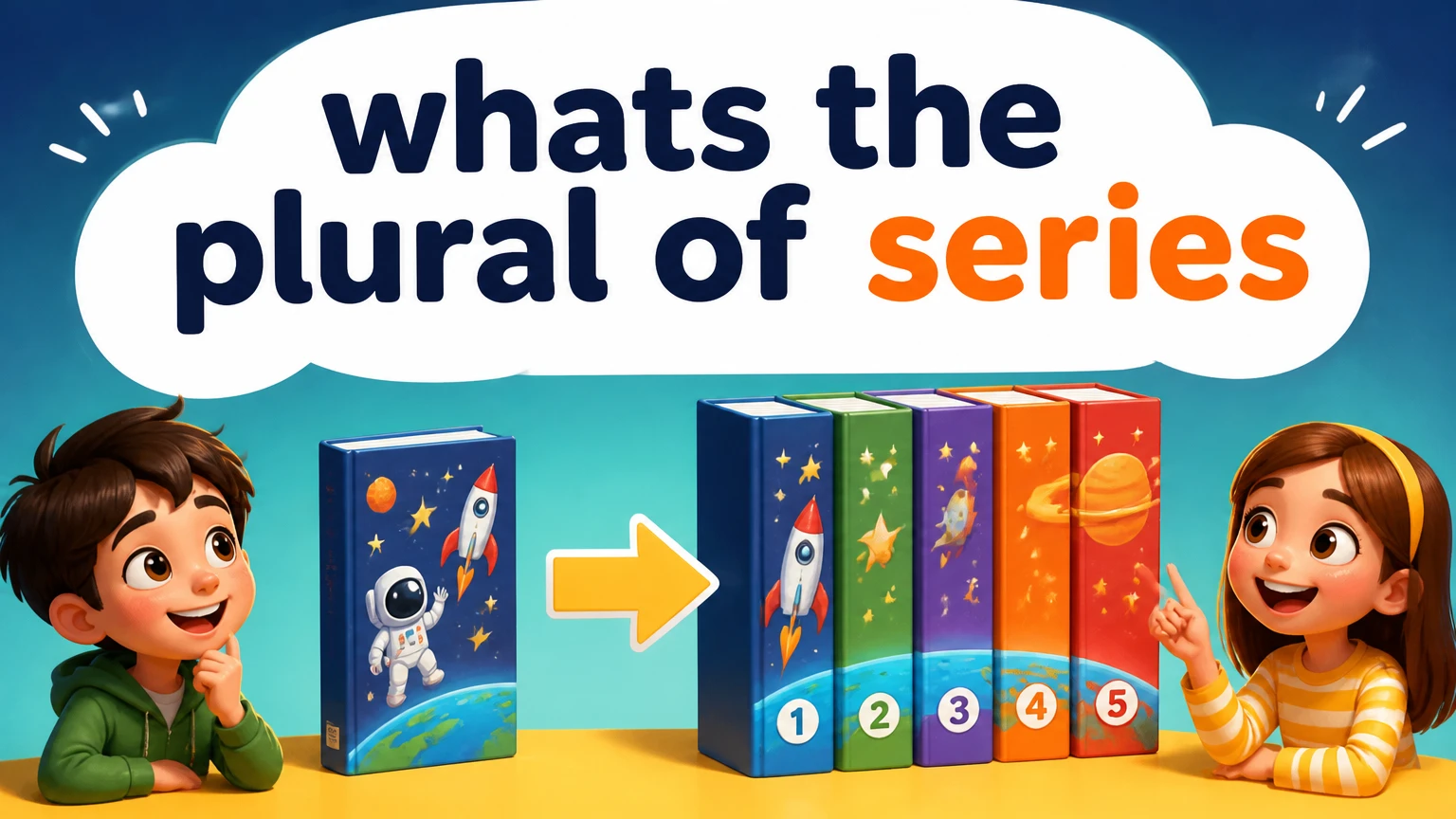
The plural of series is series. Write “one series,” “two series,” and “several series.” The spelling does not change when the number changes.
Because the form is identical, use context, determiners, and verb agreement to show whether you mean one set or more than one.
Singular and plural examples
| Meaning | Example |
|---|---|
| One set | This series is complete. |
| More than one set | These series are complete. |
| One set in the past | The series was popular. |
| Several sets in the past | The two series were popular. |
Do not assume a word ending in s must be plural. In “A series is available,” a and is mark a singular noun phrase.
What series means
A series is a group of related things occurring in a sequence or sharing a connection. It can refer to books, lessons, events, broadcasts, or other linked items.
A series of interviews is normally one organised sequence: “The series of interviews begins on Monday.” Interviews is plural, but series is the head of the subject.
Series versus items in the series
“One series contains six episodes” distinguishes the collection from its members. “Two series contain twelve episodes altogether” counts two collections.
If you mean individual events, name them directly. “Three interviews were recorded” is clearer than “three series were recorded” when no separate sets are intended.
Television terminology varies
British English often uses series for a run of television episodes where American English may use season. Series can also name an entire programme. Check context rather than assuming the two words always map exactly.
For international readers, “the second season” or “the full programme” can clarify what you mean when the distinction matters.
Common mistakes
Do not add another plural ending: serieses is not standard. Serie is not the ordinary singular of series in English, although similar forms exist in other languages.
Do not add an apostrophe to make the plural. When possession is awkward, use “the ending of the series” or “the endings of the two series.”
Practice
Choose the verb: “This series (is/are) new.” “These three series (has/have) different presenters.”
Answers: is; have.
A series of events versus several events
“A series of workshops is planned” treats the sequence as one organised set. “Several workshops are planned” names the individual events directly. The underlying events may be similar, but the grammatical head and emphasis differ.
“Two series of workshops are planned” refers to two organised sets and uses plural agreement with two series.
Use a number word when clarity matters
“The series starts next week” normally suggests one set. “The two series start next week” makes the plural explicit. If a paragraph shifts from one set to several, add a determiner rather than expecting the unchanged noun to do all the work.
Correct the whole phrase
Edit “These series is popular,” “A serie begins today,” and “One of the series are complete.”
Answers: “These series are popular”; “A series begins today”; “One of the series is complete.” The third subject is headed by one, even though the of phrase refers to a larger group. Check the head of the phrase before choosing the verb.
Frequently asked questions
Is a series of followed by a singular verb?
Usually, when series is the head and means one sequence: “A series of talks is planned.” Do not agree automatically with the plural noun after of.