Article generation failed: Error code: 402 – {‘error’: {‘message’: ‘Insufficient credits. Add more using https://openrouter.ai/settings/credits’, ‘code’: 402}}
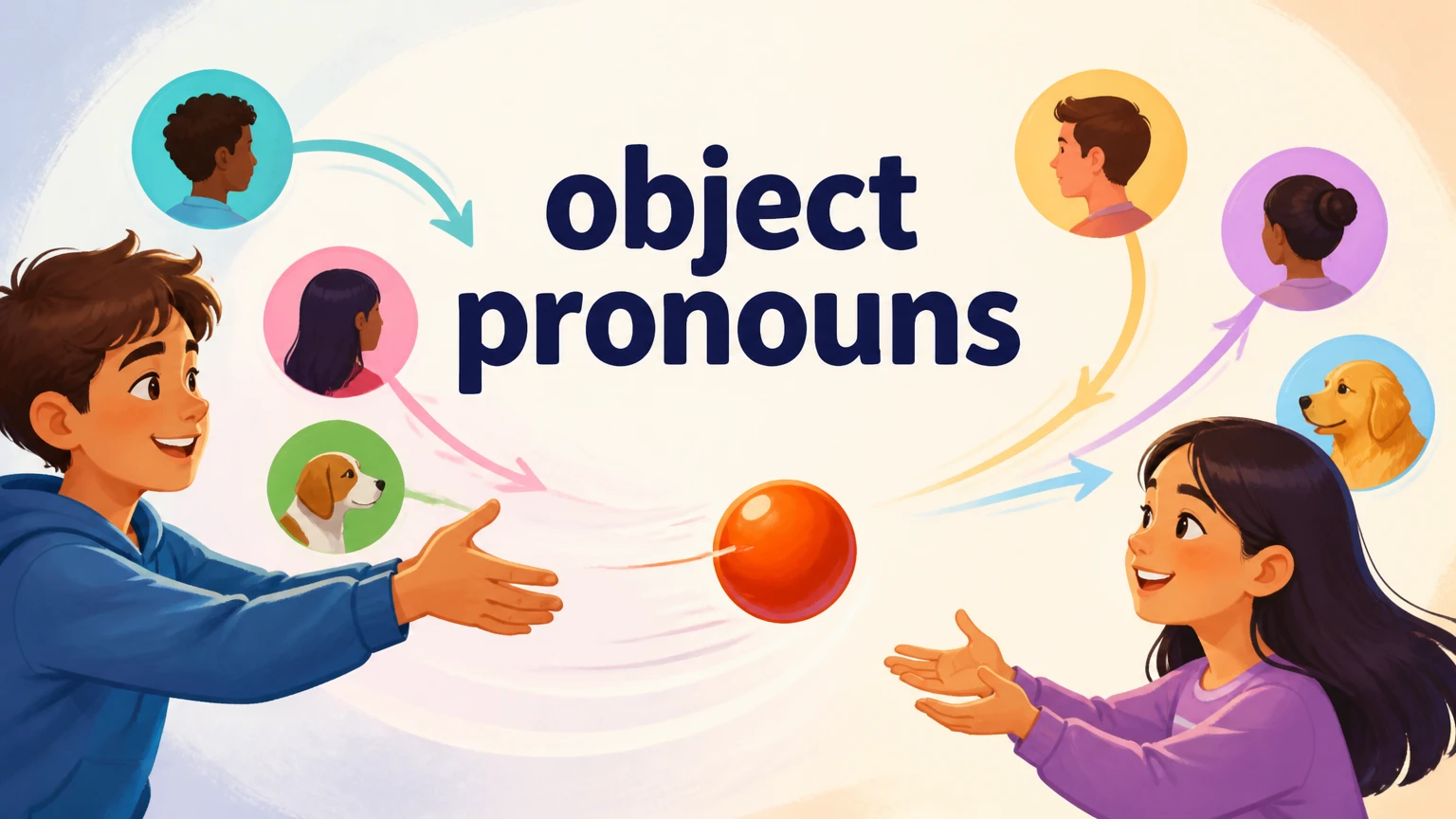
Object pronouns are a fundamental part of English grammar used to replace nouns that receive the action of a verb or follow a preposition. By using object pronouns, we avoid repetitive language and make our sentences flow more naturally.
Table of Contents
What are Object Pronouns?
In a sentence, the subject is the person or thing performing the action, while the object is the person or thing receiving the action. Object pronouns are used specifically in the object position. For example, instead of saying “Sarah called John,” you can say “Sarah called him.”
List of Object Pronouns
Each subject pronoun has a corresponding object pronoun. The table below outlines these pairs:
| Subject Pronoun | Object Pronoun | Example Sentence |
|---|---|---|
| I | me | She invited me to the party. |
| You | you | I will call you later. |
| He | him | We saw him at the library. |
| She | her | Give the book to her. |
| It | it | I found it on the floor. |
| We | us | They helped us with the move. |
| They | them | Please tell them the news. |
Usage Rules and Placement
Object pronouns typically appear in two main locations within a sentence: after a verb or after a preposition.
1. After the Verb
When the pronoun is the direct or indirect object of an action, it follows the main verb.
(The verb is “praised”; the recipients are “them”.)
Object Pronouns after Prepositions
Whenever a pronoun follows a preposition (such as for, to, with, at, by, from, between), you must use the object form.
- This gift is for me.
- Are you coming with us?
- Is there a secret between them?
Common Mistakes to Avoid
Even native speakers sometimes struggle with the distinction between subject and object pronouns, especially in compound structures.
Incorrect: She gave the tickets to Mike and I.
Correct: She gave the tickets to Mike and me.
Tip: Remove “Mike” to test the sentence. You wouldn’t say “She gave the tickets to I.”
Practice Exercises
Fill in the blanks with the correct object pronoun:
- My parents are very kind. I love ________ (they) very much.
- Where is my phone? I can’t find ________ (it).
- We are lost. Can you help ________ (we)?
- If you see Mark, please tell ________ (he) I called.
- I’m busy. Can you call ________ (I) back in ten minutes?
Frequently Asked Questions
Can “you” and “it” be both subject and object?
Yes. “You” and “it” are unique because their forms do not change regardless of whether they are the subject or the object of the sentence.
Is it “It is I” or “It is me”?
In formal, traditional grammar, “It is I” is technically correct (using a subject pronoun after a linking verb). However, in modern spoken English, “It is me” is the standard and most widely accepted version.