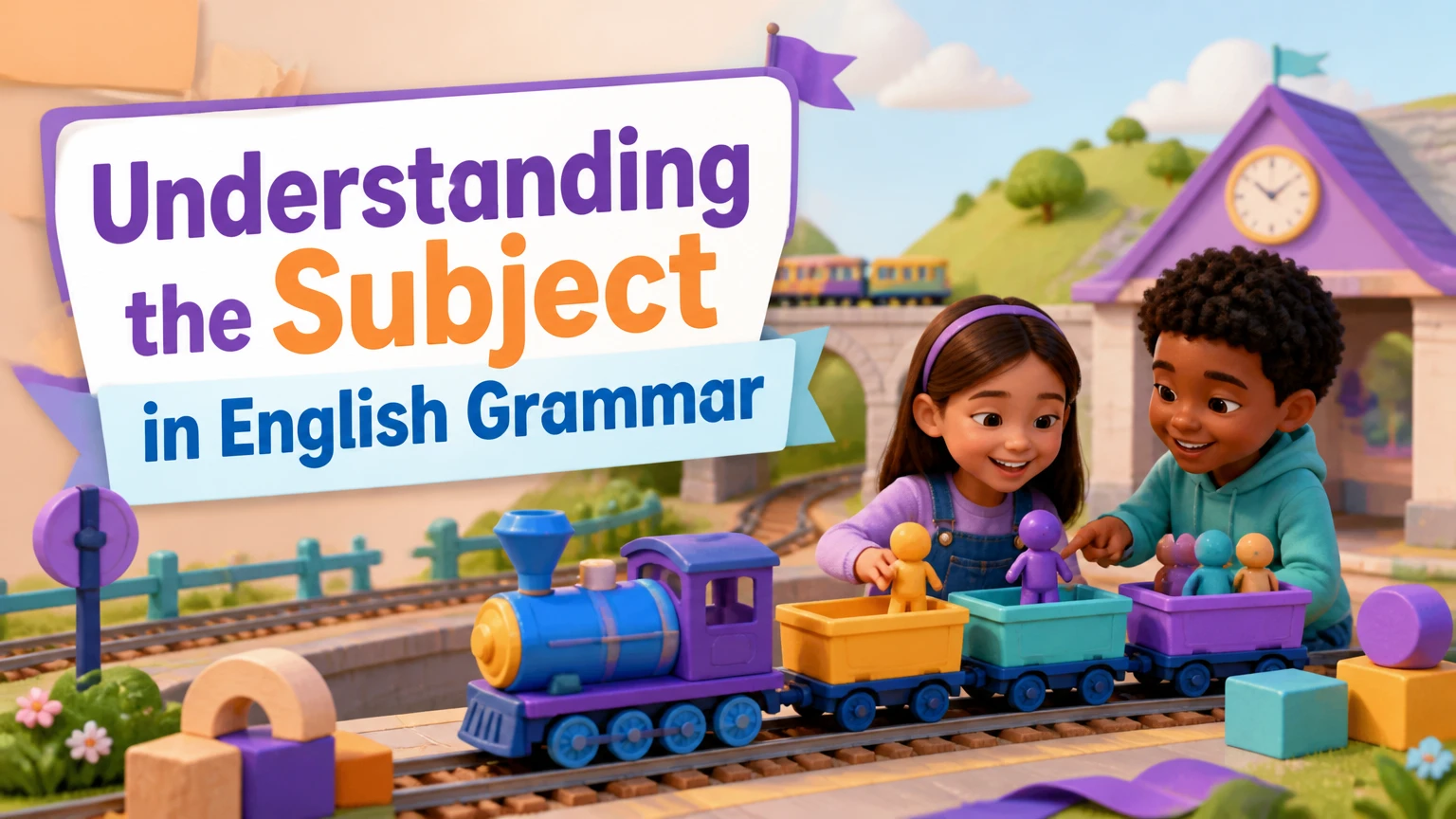
The subject of a sentence is the noun, pronoun, or noun phrase that performs the action or is described by the verb. Identifying the subject is crucial for understanding sentence structure and meaning. Subjects can be simple, like dog or she, or complex, like the big brown dog or the student who won the award. Mastering subject identification is essential for constructing grammatically correct and clear sentences, benefiting students, writers, and anyone looking to improve their English language skills.
For example, in the sentence “The cat sleeps,” the subject is “The cat.” In “They are running,” the subject is “They.” Recognizing subjects like these is the first step to understanding the relationships between words in a sentence. Understanding subjects, including compound subjects and implied subjects, ensures clarity and precision in both writing and speech.
Table of Contents
- Definition of the Subject
- Structural Breakdown of the Subject
- Types of Subjects
- Examples of Subjects
- Usage Rules for Subjects
- Common Mistakes with Subjects
- Practice Exercises
- Advanced Topics
- Frequently Asked Questions
- Conclusion
Definition of the Subject
The subject of a sentence is the noun, pronoun, or noun phrase that performs the action or is described by the verb. It is one of the two main parts of a sentence, the other being the predicate. The subject tells us who or what the sentence is about. Identifying the subject is essential for understanding the sentence’s meaning and grammatical structure. Subjects can range from a single word, such as a pronoun like I or a noun like bird, to a longer phrase, such as the old man with the hat.
In simple terms, the subject answers the question “Who?” or “What?” before the verb. For example, in the sentence “The children play in the park,” the subject “The children” answers the question “Who plays in the park?” Understanding the role of the subject is fundamental to constructing grammatically correct and meaningful sentences. A sentence can have a simple subject, a compound subject (two or more subjects joined by a conjunction), or a complex subject (a subject with modifiers). The subject can also be implied, as in imperative sentences (commands).
Structural Breakdown of the Subject
Understanding the structure of the subject involves recognizing its various components and how they function within a sentence. The subject typically appears before the verb, although this order can be inverted in questions or certain sentence structures. The core of the subject is usually a noun or pronoun, which can be modified by adjectives, adjectival phrases, or clauses. A subject can be a single word or a group of words acting as a single unit. The subject must agree in number with the verb, meaning a singular subject takes a singular verb, and a plural subject takes a plural verb.
For example, consider the sentence “The tall, green tree swayed in the wind.” Here, the subject is “The tall, green tree.” The noun “tree” is the core of the subject, and the adjectives “tall” and “green” modify it. The article “The” specifies which tree is being referred to. The entire phrase functions as the subject and performs the action of “swayed.” Recognizing these structural elements helps in accurately identifying and understanding the subject of any sentence.
Another important aspect is understanding how prepositional phrases can sometimes be mistaken for part of the subject. For instance, in the sentence “The book on the table is mine,” the subject is “The book,” not “the table.” The phrase “on the table” is a prepositional phrase that modifies the noun “book.” Correctly identifying the subject is crucial for ensuring subject-verb agreement and overall grammatical accuracy.
Types of Subjects
Subjects can be categorized into several types based on their structure and function. These include simple subjects, compound subjects, complex subjects, and implied subjects. Each type plays a unique role in sentence construction and conveys different levels of information.
Simple Subject
A simple subject is a single noun or pronoun that performs the action or is described by the verb. It is the most basic type of subject and consists of only one word. Simple subjects are easy to identify and form the foundation of sentence structure. Examples include:
- John plays the guitar.
- She is a doctor.
- Dogs bark loudly.
- It is raining.
- We are going to the beach.
In each of these sentences, the underlined word is the simple subject. It is a single noun or pronoun that clearly identifies who or what is performing the action or being described. Simple subjects make sentences clear and direct, providing a straightforward understanding of the subject’s role.
Compound Subject
A compound subject consists of two or more nouns or pronouns joined by a coordinating conjunction such as and, or, or nor. Compound subjects perform the same action or are described by the same verb. They indicate that multiple entities are involved in the action or state of being. Examples include:
- John and Mary are going to the party.
- Cats or dogs make great pets.
- Neither he nor she is available.
- The book and the pen are on the table.
- My brother and I went to the movies.
In these sentences, the underlined phrases are compound subjects. They consist of two or more nouns or pronouns joined by a conjunction. When the subjects are joined by “and,” they usually take a plural verb. When they are joined by “or” or “nor,” the verb agrees with the subject closest to it.
Complex Subject
A complex subject includes a noun or pronoun along with modifiers, such as adjectives, adjectival phrases, or clauses that describe or identify the subject. These modifiers provide additional information about the subject, making the sentence more detailed and descriptive. Examples include:
- The tall man with the hat walked down the street.
- The book on the top shelf is very old.
- The student who won the award is very talented.
- The house with the blue door is for sale.
- The woman wearing the red dress is my sister.
In each of these sentences, the underlined phrase is a complex subject. It includes a noun and modifiers that provide more information about the subject. These modifiers can be adjectives, prepositional phrases, or relative clauses. Complex subjects add depth and detail to sentences, making them more informative.
Implied Subject
An implied subject is a subject that is not explicitly stated in the sentence but is understood from the context. This typically occurs in imperative sentences (commands or requests), where the subject is understood to be “you.” The verb is in its base form, and the subject is omitted. Examples include:
- (You) Close the door.
- (You) Be quiet.
- (You) Come here.
- (You) Please sit down.
- (You) Do your homework.
In these sentences, the implied subject is “you.” Although the word “you” is not explicitly stated, it is understood that the command or request is directed to the person being addressed. Implied subjects make imperative sentences concise and direct, conveying the command or request efficiently.
Examples of Subjects
To further illustrate the different types of subjects, here are several examples organized by category in table format. These examples demonstrate the variety of ways subjects can be used in sentences and highlight the importance of identifying them correctly.
The following table shows examples of Simple Subjects. Note how each subject is a single word, a noun or a pronoun.
| Category | Sentence | Subject |
|---|---|---|
| Nouns | Birds fly in the sky. | Birds |
| Nouns | The sun shines brightly. | The sun |
| Nouns | Mary is reading a book. | Mary |
| Pronouns | He is a teacher. | He |
| Pronouns | She sings beautifully. | She |
| Pronouns | It is a beautiful day. | It |
| Pronouns | We are going to the store. | We |
| Pronouns | They are playing soccer. | They |
| Nouns | Cats love to sleep. | Cats |
| Nouns | The rain is falling. | The rain |
| Pronouns | I am a student. | I |
| Nouns | Flowers bloom in the spring. | Flowers |
| Pronouns | You are my friend. | You |
| Nouns | The moon is shining. | The moon |
| Pronouns | Who is coming to the party? | Who |
| Nouns | The car is very fast. | The car |
| Pronouns | Everyone is invited. | Everyone |
| Nouns | Children play in the park. | Children |
| Pronouns | Someone is knocking at the door. | Someone |
| Nouns | The wind is blowing hard. | The wind |
| Pronouns | Nobody knows the answer. | Nobody |
| Nouns | The computer is broken. | The computer |
| Pronouns | Anybody can join. | Anybody |
| Nouns | The teacher is explaining the lesson. | The teacher |
| Pronouns | Each has their own opinion. | Each |
| Nouns | The bus is late. | The bus |
The next table shows examples of Compound Subjects. Notice how two or more nouns or pronouns are joined by a conjunction.
| Category | Sentence | Subject |
|---|---|---|
| Nouns | John and Mary are siblings. | John and Mary |
| Nouns | The cat and the dog are friends. | The cat and the dog |
| Pronouns | He and I are going to the concert. | He and I |
| Nouns | The book or the magazine is on the table. | The book or the magazine |
| Pronouns | Neither he nor she is interested. | Neither he nor she |
| Nouns | Coffee and tea are popular drinks. | Coffee and tea |
| Nouns | The car and the motorcycle are parked outside. | The car and the motorcycle |
| Pronouns | You and I should study together. | You and I |
| Nouns | The pen and the pencil are missing. | The pen and the pencil |
| Pronouns | She and he are dating. | She and he |
| Nouns | Pizza and pasta are Italian dishes. | Pizza and pasta |
| Nouns | The tree and the flowers are beautiful. | The tree and the flowers |
| Pronouns | We and they are on the same team. | We and they |
| Nouns | The sun and the moon are celestial bodies. | The sun and the moon |
| Pronouns | Both he and she are invited. | Both he and she |
| Nouns | The chair and the table are in the room. | The chair and the table |
| Pronouns | Either you or I will go. | Either you or I |
| Nouns | The students and the teacher are in the classroom. | The students and the teacher |
| Pronouns | Not you but he is responsible. | Not you but he |
| Nouns | The rain and the snow are falling. | The rain and the snow |
| Pronouns | Neither of us nor them is going. | Neither of us nor them |
| Nouns | The computer and the printer are working. | The computer and the printer |
| Pronouns | Each of us and them has a ticket. | Each of us and them |
| Nouns | The manager and the employee are discussing the project. | The manager and the employee |
| Pronouns | Someone and someone else will have to agree. | Someone and someone else |
| Nouns | The river and the lake are beautiful. | The river and the lake |
The following table provides examples of Complex Subjects, which include modifiers such as adjectives, prepositional phrases, or relative clauses.
| Category | Sentence | Subject |
|---|---|---|
| With Adjectives | The old, wooden house is for sale. | The old, wooden house |
| With Prepositional Phrases | The book on the shelf is mine. | The book on the shelf |
| With Relative Clauses | The student who studies hard will succeed. | The student who studies hard |
| With Adjectives | The tall, green tree swayed in the wind. | The tall, green tree |
| With Prepositional Phrases | The cat with the white fur is sleeping. | The cat with the white fur |
| With Relative Clauses | The movie that I watched last night was amazing. | The movie that I watched last night |
| With Adjectives | The small, red car is very fast. | The small, red car |
| With Prepositional Phrases | The flowers in the vase are beautiful. | The flowers in the vase |
| With Relative Clauses | The song that she sang was lovely. | The song that she sang |
| With Adjectives | The new, modern building is very tall. | The new, modern building |
| With Prepositional Phrases | The painting on the wall is very valuable. | The painting on the wall |
| With Relative Clauses | The person who helped me was very kind. | The person who helped me |
| With Adjectives | The delicious, chocolate cake was gone. | The delicious, chocolate cake |
| With Prepositional Phrases | The keys in my pocket are missing. | The keys in my pocket |
| With Relative Clauses | The idea that he proposed was innovative. | The idea that he proposed |
| With Adjectives | The bright, sunny day made everyone happy. | The bright, sunny day |
| With Prepositional Phrases | The letter from my friend arrived today. | The letter from my friend |
| With Relative Clauses | The question that he asked was difficult. | The question that he asked |
| With Adjectives | The quiet, peaceful village is a great place to live. | The quiet, peaceful village |
| With Prepositional Phrases | The picture on the screen is beautiful. | The picture on the screen |
| With Relative Clauses | The game that we played was fun. | The game that we played |
| With Adjectives | The clean, fresh air invigorated us. | The clean, fresh air |
| With Prepositional Phrases | The answer to the question is simple. | The answer to the question |
| With Relative Clauses | The reason that he gave was not convincing. | The reason that he gave |
| With Adjectives | The kind, helpful neighbor is highly appreciated. | The kind, helpful neighbor |
This table provides examples of sentences with Implied Subjects.
| Category | Sentence | Implied Subject |
|---|---|---|
| Commands | Close the door. | (You) |
| Requests | Please be quiet. | (You) |
| Instructions | Turn left at the corner. | (You) |
| Commands | Do your homework. | (You) |
| Requests | Help me with this. | (You) |
| Instructions | Mix the ingredients well. | (You) |
| Commands | Wash your hands. | (You) |
| Requests | Be careful. | (You) |
| Instructions | Read the instructions carefully. | (You) |
| Commands | Clean your room. | (You) |
| Requests | Listen to me. | (You) |
| Instructions | Follow the path. | (You) |
| Commands | Eat your vegetables. | (You) |
| Requests | Come here. | (You) |
| Instructions | Open the window. | (You) |
| Commands | Be on time. | (You) |
| Requests | Please sit down. | (You) |
| Instructions | Write your name here. | (You) |
| Commands | Stay calm. | (You) |
| Requests | Tell me the truth. | (You) |
| Instructions | Add salt to taste. | (You) |
| Commands | Speak clearly. | (You) |
| Requests | Forgive me. | (You) |
| Instructions | Check your email. | (You) |
| Commands | Be patient. | (You) |
Usage Rules for Subjects
Several rules govern the proper use of subjects in sentences. These rules ensure clarity, grammatical correctness, and effective communication. Key rules include subject-verb agreement, pronoun case, and the correct use of compound subjects.
Subject-Verb Agreement: The verb in a sentence must agree in number with its subject. A singular subject takes a singular verb, and a plural subject takes a plural verb. For example: The dog barks (singular) vs. The dogs bark (plural).
Pronoun Case: When using pronouns as subjects, it’s essential to use the correct case. Subject pronouns (I, he, she, it, we, they, you, who) are used when the pronoun is the subject of the verb. For example: She is a doctor (correct) vs. Her is a doctor (incorrect).
Compound Subjects: When a compound subject is joined by “and,” it generally takes a plural verb. For example: John and Mary are going to the party. However, if the parts of the compound subject refer to the same person or thing, a singular verb is used. For example: The singer and songwriter is performing tonight. When parts of a compound subject are joined by “or” or “nor,” the verb agrees with the subject closest to it. For example: Neither the students nor the teacher is here.
Collective Nouns: Collective nouns (e.g., team, family, committee) can be singular or plural depending on whether they are acting as a single unit or as individual members. If the group is acting as a single unit, use a singular verb. For example: The team is playing well. If the members of the group are acting individually, use a plural verb. For example: The family are all going their separate ways.
Indefinite Pronouns: Indefinite pronouns (e.g., everyone, someone, nobody, each) can be singular or plural. Some are always singular (e.g., each, everyone, someone, nobody), while others can be singular or plural depending on the context (e.g., some, all, none). For example: Everyone is invited. Some of the cake is gone. Some of the students are absent.
Common Mistakes with Subjects
Several common mistakes can occur when identifying and using subjects in sentences. Recognizing these errors and understanding how to correct them is crucial for improving grammatical accuracy.
Incorrect Subject-Verb Agreement: One of the most common mistakes is using a verb that does not agree in number with the subject. For example:
- Incorrect: The dogs is barking.
- Correct: The dogs are barking.
Misidentifying the Subject: Sometimes, prepositional phrases can be mistaken for part of the subject, leading to incorrect verb agreement. For example:
- Incorrect: The book on the table are mine.
- Correct: The book on the table is mine.
Incorrect Pronoun Case: Using the wrong pronoun case is another common error. For example:
- Incorrect: Her and I went to the store.
- Correct: She and I went to the store.
Compound Subject Agreement: Confusing the verb agreement with compound subjects can also lead to errors. For example:
- Incorrect: John and Mary is going to the party.
- Correct: John and Mary are going to the party.
Collective Noun Agreement: Misunderstanding whether a collective noun is acting as a single unit or as individual members can lead to incorrect verb agreement. For example:
- Incorrect: The team are playing well together. (when the team is acting as a unit)
- Correct: The team is playing well together.
Indefinite Pronoun Agreement: Using the wrong verb form with indefinite pronouns is another common mistake. For example:
- Incorrect: Everyone are invited.
- Correct: Everyone is invited.
Practice Exercises
Test your understanding of subjects with these practice exercises. Identify the subject in each sentence and indicate whether it is a simple, compound, complex, or implied subject.
Exercise 1: Identifying the Subject
| No. | Sentence | Subject | Type |
|---|---|---|---|
| 1 | The cat is sleeping on the couch. | ||
| 2 | John and Mary are going to the movies. | ||
| 3 | The book on the top shelf is very old. | ||
| 4 | Close the door. | ||
| 5 | She is a doctor. | ||
| 6 | The tall man with the hat walked down the street. | ||
| 7 | Do your homework. | ||
| 8 | Dogs bark loudly. | ||
| 9 | Coffee and tea are popular drinks. | ||
| 10 | The student who won the award is very talented. |
Exercise 1: Answers
| No. | Sentence | Subject | Type |
|---|---|---|---|
| 1 | The cat is sleeping on the couch. | The cat | Simple |
| 2 | John and Mary are going to the movies. | John and Mary | Compound |
| 3 | The book on the top shelf is very old. | The book on the top shelf | Complex |
| 4 | Close the door. | (You) | Implied |
| 5 | She is a doctor. | She | Simple |
| 6 | The tall man with the hat walked down the street. | The tall man with the hat | Complex |
| 7 | Do your homework. | (You) | Implied |
| 8 | Dogs bark loudly. | Dogs | Simple |
| 9 | Coffee and tea are popular drinks. | Coffee and tea | Compound |
| 10 | The student who won the award is very talented. | The student who won the award | Complex |
Exercise 2: Subject-Verb Agreement
Choose the correct verb form in each sentence to ensure subject-verb agreement.
| No. | Sentence | Options | Answer |
|---|---|---|---|
| 1 | The dog (barks/bark) loudly. | barks / bark | |
| 2 | John and Mary (is/are) going to the party. | is / are | |
| 3 | The team (is/are) playing well. | is / are | |
| 4 | Everyone (is/are) invited. | is / are | |
| 5 | The books on the shelf (is/are) mine. | is / are | |
| 6 | Neither John nor Mary (is/are) available. | is / are | |
| 7 | The cat and the dog (is/are) friends. | is / are | |
| 8 | Each of the students (has/have) a book. | has / have | |
| 9 | Some of the cake (is/are) gone. | is / are | |
| 10 | The committee (has/have) made a decision. | has / have |
Exercise 2: Answers
| No. | Sentence | Options | Answer |
|---|---|---|---|
| 1 | The dog (barks/bark) loudly. | barks / bark | barks |
| 2 | John and Mary (is/are) going to the party. | is / are | are |
| 3 | The team (is/are) playing well. | is / are | is |
| 4 | Everyone (is/are) invited. | is / are | is |
| 5 | The books on the shelf (is/are) mine. | is / are | are |
| 6 | Neither John nor Mary (is/are) available. | is / are | is |
| 7 | The cat and the dog (is/are) friends. | is / are | are |
| 8 | Each of the students (has/have) a book. | has / have | has |
| 9 | Some of the cake (is/are) gone. | is / are | is |
| 10 | The committee (has/have) made a decision. | has / have | has |
Advanced Topics
For advanced learners, understanding more complex aspects of subjects can further enhance their grammatical proficiency. These topics include inverted sentences, expletive constructions, and the use of gerunds and infinitives as subjects.
Inverted Sentences: In
most English sentences, the subject comes before the verb. However, in inverted sentences, the verb or part of the verb phrase comes before the subject. This often occurs in questions or for stylistic emphasis.
Expletive Constructions: Sentences beginning with “There” or “Here” are called expletive constructions. In these cases, “There” and “Here” are not the subjects; they are fillers. The true subject follows the verb.
- There are three apples on the table. (Subject: three apples)
- Here is your book. (Subject: your book)
Gerunds and Infinitives as Subjects: A subject does not always have to be a simple noun or pronoun. Verb forms acting as nouns can also serve as subjects.
- Gerund: Swimming is my favorite hobby.
- Infinitive: To err is human.
Frequently Asked Questions
1. Can a sentence have more than one subject?
Yes, a sentence can have a compound subject, which consists of two or more nouns or pronouns joined by a conjunction like “and” or “or.” For example: “The teacher and the students are in the hall.”
2. How do I find the subject in a long sentence?
The best way is to first find the main verb (the action or state of being). Then ask “Who?” or “What?” is performing that action. The answer to that question is your subject.
3. Is the subject always at the beginning of a sentence?
Usually, yes, but not always. In questions (“Are you ready?”) and inverted sentences (“In the corner sat an old man“), the subject appears later in the sentence.
4. Can the subject be invisible?
In imperative sentences (commands), the subject is implied. In the sentence “Sit down,” the subject is the understood “you.”
Conclusion
The subject is the heartbeat of the English sentence. Whether it is a single pronoun like “I” or a complex phrase like “The mysterious man in the shadows,” the subject provides the necessary context for the verb to make sense. By mastering the identification of subjects—including simple, compound, complex, and implied types—you can ensure perfect subject-verb agreement and clearer communication.
Remember that the subject is not just a word, but a functional role within the sentence structure. As you continue to practice, pay close attention to modifiers and prepositional phrases that might distract you from the true subject. With these tools and rules in mind, you are well on your way to grammatical mastery.