Article generation failed: Error code: 402 – {‘error’: {‘message’: ‘Insufficient credits. Add more using https://openrouter.ai/settings/credits’, ‘code’: 402}}
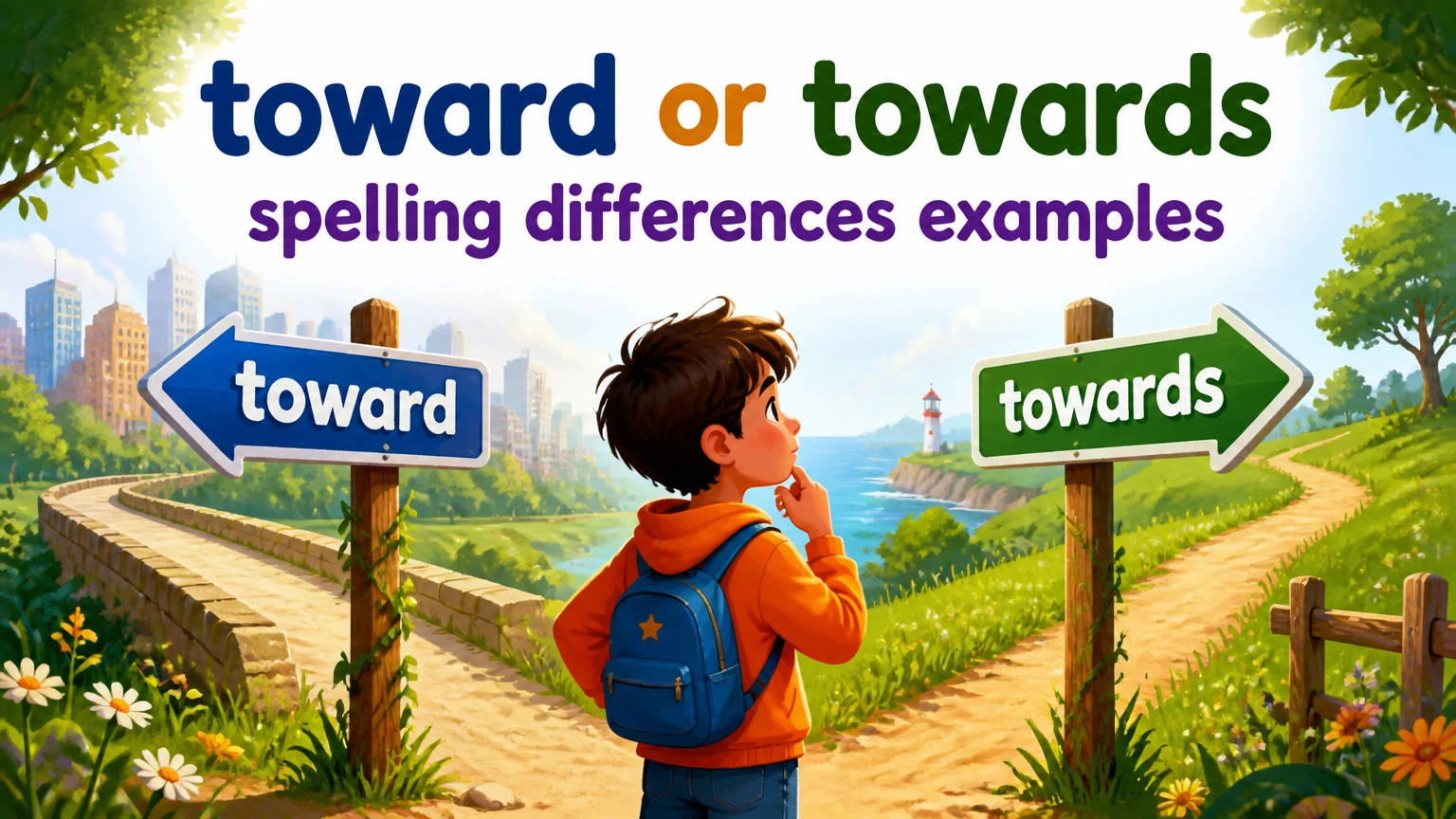
One of the most common questions in English grammar is whether to use “toward” or “towards.” While they may look different, they share the same meaning and function as prepositions. The primary distinction lies in geography and style guides rather than definitions.
Table of Contents
Definition and Usage
Both toward and towards are prepositions used to indicate a direction, a movement in the direction of someone or something, or a contribution to a goal. They can also refer to a point in time approaching a specific event.
Regional Differences: American vs. British English
The choice between these two spellings is largely determined by where you are writing or who your audience is. This is a classic example of the “S” suffix difference found in many English direction words (like forward/forwards or backward/backwards).
American English (Toward)
In the United States and Canada, toward (without the ‘s’) is the standard and preferred form. While “towards” is occasionally heard in speech, it is often seen as informal or non-standard in professional writing.
British English (Towards)
In the United Kingdom, Australia, and other Commonwealth nations, towards (with the ‘s’) is the predominant form. While “toward” is understood, it may appear dated or overly formal to a British ear.
Style Guide Preferences
If you are writing for a specific publication, it is best to follow their established style guide. Most major organizations have a clear preference:
- The Associated Press (AP) Stylebook: Recommends toward.
- The Chicago Manual of Style: Recommends toward.
- Oxford University Press: Generally favors towards.
- The Guardian Style Guide: Prefers towards.
Examples in Context
To better understand how these words are used, let’s look at some examples across different contexts.
US: “The puppy ran toward the park.”
UK: “The puppy ran towards the park.”
US: “Every dollar donated goes toward the scholarship fund.”
UK: “Every pound donated goes towards the scholarship fund.”
US: “The weather usually gets cooler toward the end of October.”
UK: “The weather usually gets cooler towards the end of October.”
Common Mistakes and Misconceptions
Wait! Before you start adding an ‘s’ to everything, remember these common pitfalls:
- Mixing Styles: The biggest mistake is inconsistency. If you start an essay using “toward,” do not switch to “towards” halfway through. Pick one and stick to it.
- The “Towards is Plural” Myth: Some believe “towards” is for plural objects and “toward” is for singular. This is false. The spelling has nothing to do with the number of objects involved.
- Formal vs. Informal: In American English, “towards” is sometimes perceived as more “literary” or “British,” but in formal academic writing, “toward” is still the safer bet for US audiences.
Summary Comparison Table
| Feature | Toward | Towards |
|---|---|---|
| Primary Region | North America (USA & Canada) | UK, Australia, NZ, South Africa |
| Meaning | In the direction of | In the direction of |
| Grammar Category | Preposition | Preposition |
| AP Style | Preferred | Avoid |
Frequently Asked Questions
Is “towards” grammatically incorrect in America?
No, it is not grammatically incorrect, but it is considered less common and may be flagged by editors or spell-checkers following American style rules.
Does the meaning change if I add the ‘s’?
No. The meaning remains exactly the same. Both words function as prepositions indicating direction, time, or purpose.
How do I remember which one to use?
A simple trick: American English ends in A (toward has no ‘s’), and British English often likes the extra S (towards). Or simply remember that “toward” is shorter, and American English often favors simplified spellings.
Quick Practice
Which version should you use for a paper being submitted to a New York-based university?
Answer: Toward
Which version is more likely to be found in a novel published in London?
Answer: Towards