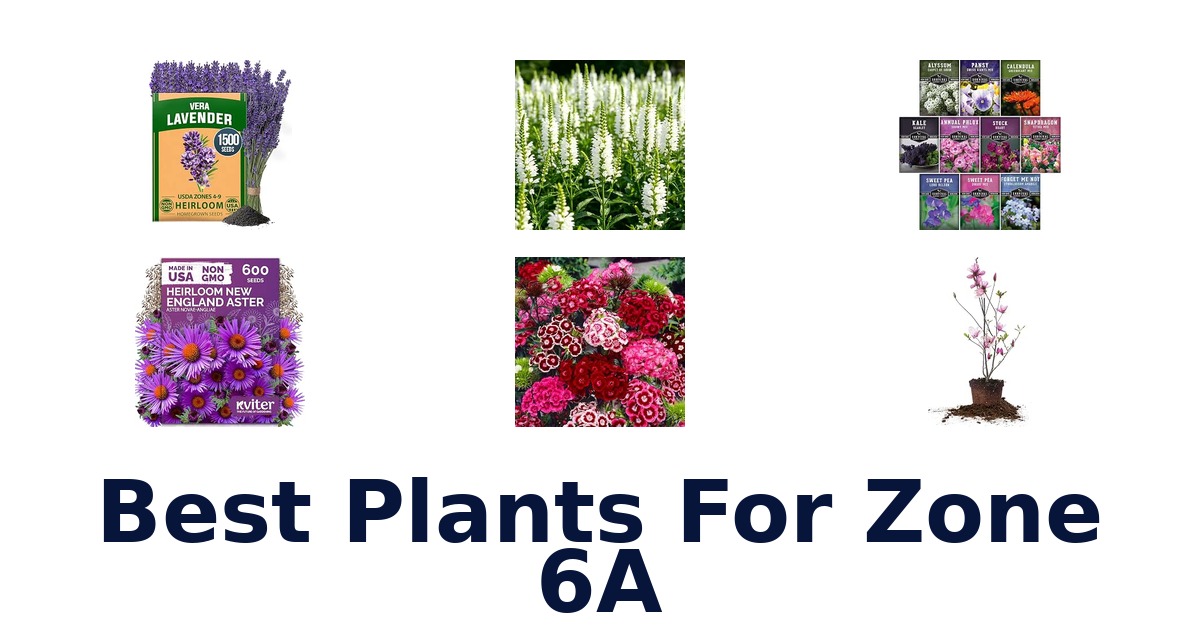
A strong choice for zone 6a is a plant whose listed hardiness range includes 6a and whose form suits your garden, whether you want edible fruit, flowers, or ground cover. This roundup compares ten seed and live-plant options, including hardy kiwi listed for zones 3a–8b, an Encore azalea rated for zones 6–10, and several perennial seed choices with broad zone ranges. The products differ in what they offer: some provide a named live plant, while others supply seeds that need sowing and establishment.
Check the listed zone range first, then consider sunlight, soil, bloom timing, and whether you want a single plant or a mixed planting. Zone compatibility is a useful starting point, not a guarantee of success in every garden.
Perfect Plants Autumn Bonfire Encore Azalea is the Best Overall pick because its listed zones are 6–10, explicitly including zone 6a, and it is a live, compact shrub with repeat blooms. It reaches about 3 feet in height and spread, keeps evergreen foliage, and prefers 4–6 hours of sun plus moist, well-drained, slightly acidic soil. For edible fruit rather than ornamental color, BuggyBeds Creeping Thyme Seeds or the hardy kiwi pair may suit different garden plans, but the azalea has the clearest combination of zone fit and specified landscape characteristics.
Our Top Picks
 Best Overall
Perfect Plants Autumn Bonfire Azalea
Its zones 6–10 explicitly include 6a, and the live shrub combines repeat blooms, evergreen foliage, and a compact mature size of about 3 feet.
View on Amazon Best Edible Vine
The listed growing zones explicitly include 6a, and the Anna female and Meader male pair is intended for edible, grape-sized kiwi fruit.
View on Amazon Best Ground Cover
BuggyBeds Creeping Thyme Seeds
This drought-tolerant perennial is listed for zones 5–9, including 6a, and is described as low-maintenance ground cover that suppresses weeds.
View on Amazon- Best Seed Mix Eden Brothers Perennial Wildflower Mix
- Best Aster KVITER New England Aster Seeds
Compare the plants by garden use and listed zone fit
| # | Product | Material Feature | Care Instructions | Material Features | Buy |
|---|---|---|---|---|---|
| 1 | 1. Perfect Plants Autumn Bonfire AzaleaBest Overall | — | Fertilize as Needed. | — | View on Amazon |
| 2 | 2. Generic Hardy Kiwi PairBest Edible Vine | — | — | — | View on Amazon |
| 3 | 3. BuggyBeds Creeping Thyme SeedsBest Ground Cover | Drought-Tolerant | Low-Maintenance | Drought-Tolerant | View on Amazon |
| 4 |  4. Eden Brothers Perennial Wildflower MixBest Seed Mix | — | — | — | View on Amazon |
| 5 |  5. KVITER New England Aster SeedsBest Aster | GMO Free, Heirloom | Detailed Step-By-Step Growing Guide on every… | GMO Free, Heirloom | View on Amazon |
| 6 |  6. Mixrug Sweet William SeedsFragrant Biennial Border Growers | GMO Free | — | GMO Free | View on Amazon |
| 7 |  7. Survival Garden Seeds Cool Season MixCool-Season Color Mix Planners | GMO Free, Heirloom | Each variety in this non-GMO, heirloom seed… | GMO Free, Heirloom | View on Amazon |
| 8 |  8. Home Grown English Lavender SeedsEnglish Lavender Seed Growers | GMO Free | — | GMO Free | View on Amazon |
| 9 |  9. Carpet Creeping Obedient Plant SeedsWhite-Spike Pollinator Border Planners | GMO Free, Heirloom | water | GMO Free, Heirloom | View on Amazon |
| 10 |  10. Perfect Plants Jane MagnoliaEarly-Blooming Magnolia Seekers | — | — | — | View on Amazon |
Detailed Reviews: Best Plants For Zone 6A
#1 · Best Overall
1. Perfect Plants Autumn Bonfire Azalea
- Care Instructions: Fertilize as Needed.
Best for: Compact Repeat-Bloom Shrub Buyers.
Why it ranks #1: Its zones 6–10 explicitly include 6a, and the live shrub combines repeat blooms, evergreen foliage, and a compact mature size of about 3 feet.
Repeat flowering from spring to winter is the defining feature of the Autumn Bonfire Encore Azalea, extending its bright-red display across much of the growing season. Its compact three-foot mature size makes it a candidate for zone 6a gardeners seeking a flowering shrub for an accent or mass planting.
The evergreen foliage stays green year-round, so the shrub provides a leafy presence outside its stated flowering period. Its mature height and spread of three feet help buyers plan placement in beds or groupings, while the listed preference for four to six hours of sun and moist, well-drained, slightly acidic soil gives useful site requirements. The zone 6–10 range includes zone 6a, but soil and light still need to suit the plant.
- Hardy in zones 6–10, including zone 6a
- Bright-red flowers repeat from spring to winter
- Evergreen foliage remains green year-round
- Compact mature height and spread of three feet
- Requires moist, well-drained, slightly acidic soil and four to six hours of sun.
Skip it if you cannot provide moist, well-drained, slightly acidic soil and four to six hours of sun for this azalea.
Pick this azalea for a zone 6a garden needing evergreen structure and repeat red blooms in a compact footprint. Its site fit depends on the specified sun exposure and slightly acidic, well-drained soil.
Full product details
| Brand | PERFECT PLANTS |
|---|---|
| Color | Red |
| Item Weight | 4 pounds |
| Manufacturer | Perfect Plants |
| Special Features | Attracts Pollinators, Compact, Deer Resistant, Low Maintenance, Pest Resistant |
| Care Instructions | Fertilize as Needed. |
| Special Feature | Attracts Pollinators, Compact, Deer Resistant, Low Maintenance, Pest Resistant |
Listed on Amazon as: Perfect Plants Autumn Bonfire Encore Azalea, 1 Gallon, Live Plant
View on Amazon#2 · Best Edible Vine
2. Generic Hardy Kiwi Pair
Best for: Zone 6a Edible-Vine Gardeners.
Why it ranks #2: The listed growing zones explicitly include 6a, and the Anna female and Meader male pair is intended for edible, grape-sized kiwi fruit.
The Anna female and Meader male pairing gives zone 6a gardeners two hardy kiwi plants together, rather than a single vine. These rooted plants are listed for zones 3–8 and produce grape-sized kiwi berries with smooth, edible skin, making them a fruit-vine option for a compatible planting space.
The female Anna and male Meader varieties are supplied as a pair, giving buyers both named plant types in one purchase. Their stated zones 3–8 include zone 6a, and the description identifies the fruit as grape-sized with smooth edible skin. The plants arrive rooted in grower pots, although they may be dormant from November through April. Seasonal dormancy is relevant when planning delivery and evaluating a plant before spring growth resumes.
- Includes Anna female and Meader male plants
- Listed for growing zones 3–8
- Produces grape-sized fruit with smooth edible skin
- Rooted plants supplied in grower pots
- Plants are dormant from November through April.
Skip it if you want visible active growth during winter; these hardy kiwi plants are listed as dormant from November through April.
This pair suits zone 6a gardeners with room for a vigorous deciduous fruit vine and interest in kiwi berries. Account for winter dormancy when receiving plants, and note that California shipments are bare-root.
Full product details
| Brand | Generic |
|---|---|
| Color | Male-Meader & Female-Anna |
| Item Weight | 907 g |
| Manufacturer | Steep Hill Garden |
| Part Number | 2-HK-MF-Pa |
| Model Number | 2-HK-MF-Pa |
Listed on Amazon as: Hardy Kiwi Live Plants – Edible Fruit Vine, Zones 3–8: 1 Anna Female 4"+ and 1 Meader Male 4"+ Pair (2 Plants in 2.5" Pots)
View on Amazon#3 · Best Ground Cover
3. BuggyBeds Creeping Thyme Seeds
- Material Feature: Drought-Tolerant
- Care Instructions: Low-Maintenance
- Material Features: Drought-Tolerant
Best for: Zone 6a Ground-Cover Growers.
Why it ranks #3: This drought-tolerant perennial is listed for zones 5–9, including 6a, and is described as low-maintenance ground cover that suppresses weeds.
Hardiness across USDA zones 5–9 makes BuggyBeds creeping thyme a perennial ground-cover option for zone 6a gardens. The seeds grow into a fragrant carpet that returns year after year, giving gardeners a low-maintenance way to cover open ground once plants are established.
The listed drought tolerance and low-maintenance care suit gardeners seeking ground cover without frequent attention after establishment. Creeping thyme’s stated weed-suppressing carpet can help occupy open spaces, while its fragrant growth adds sensory interest. Its zone 5–9 hardiness range includes zone 6a and supports perennial return through varying seasonal temperatures. This is a seed-starting choice rather than an instant carpet, so it fits buyers able to establish plants before expecting continuous coverage.
- Hardy in USDA zones 5–9, including zone 6a
- Perennial plants return year after year
- Fragrant ground-cover growth
- Low-maintenance and drought-tolerant features
- Coverage depends on establishing plants from seed before the carpet develops.
Skip it if you need an immediately filled bed; these seeds must grow into the ground cover before providing coverage.
Choose these seeds if your zone 6a plan calls for fragrant, drought-tolerant perennial ground cover and you can wait for establishment. Their appeal is spreading coverage, not an already-grown plant or instant weed suppression.
Full product details
| Brand | BuggyBeds |
|---|---|
| Color | multi-color |
| Manufacturer | BuggyBeds |
| Material Feature | Drought-Tolerant |
| Material Features | Drought-Tolerant |
| Special Features | Ground Cover Plants, High Germination Rate, Low Maintenance |
| Care Instructions | Low-Maintenance |
| Special Feature | Ground Cover Plants, High Germination Rate, Low Maintenance |
| Style Name | Ground Cover Plants |
Listed on Amazon as: 17500+ Creeping Thyme Herb Seeds
View on Amazon#4 · Best Seed Mix
4. Eden Brothers Perennial Wildflower Mix
Best for: Multi-Species Pollinator Gardeners.
Why it ranks #4: Its listed zones 3–10 include 6a, and 19 perennial species offer a broad mix with pollinator appeal for a varied planting.
Nineteen perennial species make this Eden Brothers mix a diverse seed choice for zone 6a, rather than a single-flower planting. The collection includes familiar options such as Shasta Daisy, Purple Coneflower and Black Eyed Susan, and is listed for zones 3–10, including zone 6.
The mix’s 19 named perennial species give gardeners a varied planting palette, while its zone 3–10 range covers zone 6a. Listed varieties include Siberian Wallflower, Lance Leaf Coreopsis, Perennial Lupine and Gayfeather, alongside the familiar daisies and coneflowers. The product also states that the mix attracts pollinators, including bees and butterflies, making it relevant for gardeners seeking wildlife interest. Because it is a mixed seed product, the resulting garden includes multiple species rather than one uniform flower variety.
- Includes 19 perennial flower species
- Listed for zones 3–10, including zone 6a
- Contains named varieties such as Shasta Daisy and Purple Coneflower
- Stated to attract bees and butterflies
- A mixed-species planting will not produce a single uniform flower variety.
Skip it if you want one flower species across the bed; this package combines 19 different perennial varieties.
Choose this mix for a zone 6a gardener who wants a varied perennial planting with pollinator appeal. It is best suited to buyers comfortable with a multi-species display rather than a controlled single-variety bed.
Full product details
| Brand | Eden Brothers |
|---|---|
| Color | Mixed |
| Manufacturer | Eden Brothers |
| Style | All Perennial |
| Style Name | All Perennial |
Listed on Amazon as: Eden Brothers All Perennial Wildflower Mixed Seeds for Planting, 1 oz, Seeds with Lupine, Shasta Daisy | Attracts Pollinators, Plant in Spring or Fall, for Zones 3, 4, 5, 6, 7, 8, 9, 10
View on Amazon#5 · Best Aster
5. KVITER New England Aster Seeds
- Material Feature: GMO Free, Heirloom
- Care Instructions: Detailed Step-By-Step Growing Guide on every…
- Material Features: GMO Free, Heirloom
Best for: Cold-Stratification Aster Seed Starters.
Why it ranks #5: The aster is listed for USDA zones 2–8, including 6a, and its purple blooms attract bees and butterflies after cold stratification.
An eight-week cold-stratification step is the defining preparation for these New England aster seeds, which are listed for zones 2–8 and suit zone 6a. The heirloom purple-flowering perennial can be sown in fall or spring, offering flexibility for gardeners planning a pollinator-friendly bed.
The cold-stratification requirement gives seed starters a specific preparation step before sowing. After that, the listed sowing directions call for planting just under one-eighth inch deep in moist soil, whether using containers, pods or outdoor beds. Its zone 2–8 range includes zone 6a, and the product states that the flowers attract bees and butterflies. A growing guide is included, supporting buyers who want guidance for this staged seed-starting process.
- Listed for USDA zones 2–8, including zone 6a
- Heirloom, GMO-free seed
- Can be sown in fall or spring
- Flowers attract bees and butterflies
- Seeds require eight weeks of cold stratification before sprouting.
Skip it if you cannot plan for eight weeks of cold stratification; these aster seeds list that step before sprouting.
These seeds suit zone 6a gardeners who can schedule cold stratification and want purple perennial flowers for a pollinator planting. The preparation period and shallow sowing directions are central to the growing plan.
Full product details
| Brand | KVITER |
|---|---|
| Color | Purple |
| Manufacturer | KVITER |
| Material Feature | GMO Free, Heirloom |
| Material Features | GMO Free, Heirloom |
| Special Features | Attracts Pollinators, Compact, Growing Guide Included, Low Maintenance, Made in the USA |
| Care Instructions | Detailed Step-By-Step Growing Guide on every seed packet — plant with confidence and watch it thrive. See more |
| Special Feature | Attracts Pollinators, Compact, Growing Guide Included, Low Maintenance, Made in the USA |
| Style Name | New England Aster |
Listed on Amazon as: 600 New England Aster Heirloom Flower Seeds, Aster Novae-Angliae
View on Amazon#6
6. Mixrug Sweet William Seeds
- Material Feature: GMO Free
- Material Features: GMO Free
Best for: Fragrant Biennial Border Growers.
Why it ranks #6: The listing gives zones 4–10, including 6a, and describes fragrant clusters, pollinator appeal, and flowers suited to beds, borders, and cutting.
Sweet William’s clusters of fragrant flowers arrive the year after planting, giving zone 6a gardeners a clear timing expectation for this biennial. The listed flowers span white, pink, purple, red and violet, while its 12–24-inch height suits beds and borders or a cut-flower garden.
The plant’s biennial cycle means flowering is listed for the year after sowing, in mid-spring to mid-summer, so it is not an immediate first-season flower. Its stated 12–24-inch height and 6–12-inch width help with spacing decisions in borders. Full sun and good drainage are listed growing requirements. The fragrant flower clusters and stated attraction to beneficial insects, including butterflies and bumblebees, add scent and pollinator interest to a suitable zone 6a site.
- Listed for zones 4–10, including zone 6a
- Fragrant clusters bloom in mid-spring to mid-summer
- Flowers come in white, pink, purple, red and violet
- Suitable for beds, borders and cut flowers
- As a biennial, it blooms the year after planting rather than the first year.
Skip it if you need flowers in the first growing year; this biennial is listed to bloom the year after planting.
Sweet William fits zone 6a gardeners planning a sunny, well-drained border or cut-flower patch and willing to wait for its second-year bloom. Its biennial timing is the key fit consideration.
Full product details
| Brand | Mixrug |
|---|---|
| Color | Gazania |
| Manufacturer | Mixrug |
| Part Number | LYJ-1021-GS03905-02 |
| Material Feature | GMO Free |
| Material Features | GMO Free |
| Special Features | Attracts Pollinators |
| Special Feature | Attracts Pollinators |
Listed on Amazon as: 5000+ Sweet William Seeds Perennial for Planting-Dianthus Seeds Sweetness Flower Non-GMO Heirloom for Outdoor Garden Hardy to USDA Zones 3-9
View on Amazon#7
7. Survival Garden Seeds Cool Season Mix
- Material Feature: GMO Free, Heirloom
- Care Instructions: Each variety in this non-GMO, heirloom seed…
- Material Features: GMO Free, Heirloom
Best for: Cool-Season Color Mix Planners.
Why it ranks #7: This collection supplies ten cool-season flower varieties for spring and fall color, but its supplied details do not specify a USDA hardiness range.
Ten cool-season flower varieties give this seed collection a broader palette for spring and fall color in zone 6a. The assortment includes alyssum, calendula, pansy, snapdragon, stock and two sweet pea varieties, making it a fit for gardeners who want varied seasonal planting rather than one flower type.
The collection combines ten named cool-weather ornamentals, including Forget-Me-Not, ornamental kale, annual phlox and two sweet pea varieties. That range of flower types and textures supports a mixed planting plan, while the product specifically positions the seeds for spring and fall garden color. Its heirloom and GMO-free features may matter to seed buyers choosing those attributes. Since the mix includes annual phlox and ornamental kale alongside other varieties, it is not an all-perennial collection.
- Includes ten cool-season flower varieties
- Specified for spring and fall garden color
- Includes alyssum, calendula, pansy and snapdragon
- Listed as heirloom and GMO-free
- The collection includes annual varieties, so it is not an all-perennial mix.
Skip it if you want only perennial flowers; this cool-season collection includes annual phlox and other non-perennial varieties.
Choose this assortment for zone 6a seasonal beds where a mix of cool-season colors and textures is welcome. It suits spring-and-fall planting plans, but not gardeners seeking an exclusively perennial collection.
Full product details
| Brand | SURVIVAL GARDEN SEEDS |
|---|---|
| Color | Multicolor |
| Manufacturer | JD Hardware LLC |
| Part Number | SGSCoolWeather10OrnamentalsCollection-A |
| Material Feature | GMO Free, Heirloom |
| Material Features | GMO Free, Heirloom |
| Special Features | Attracts Pollinators, Extended Bloom Time, Fragrant, High Germination Rate, Low Maintenance |
| Care Instructions | Each variety in this non-GMO, heirloom seed collection comes in a professionally detailed packet designed to be your complete growing guide. Our packets provide precise, variety-specific instructions for planting depth, soil temperature, sunlight requirements, and moisture needs. You will also find |
| Special Feature | Attracts Pollinators, Extended Bloom Time, Fragrant, High Germination Rate, Low Maintenance |
Listed on Amazon as: Cool Season Flower Seeds for Planting – Survival Garden Seeds
View on Amazon#8
8. Home Grown English Lavender Seeds
- Material Feature: GMO Free
- Material Features: GMO Free
Best for: English Lavender Seed Growers.
Why it ranks #8: The English lavender seed listing highlights fragrance and recommends 2–4 weeks of cold stratification, but provides no hardiness-zone range.
The Vera variety is identified as true English lavender, distinguishing these HOME GROWN seeds from French lavender. For zone 6a gardeners interested in its classic fragrance, the listing recommends cold stratifying seeds for two to four weeks before planting indoors or outdoors to improve germination.
The stated two-to-four-week cold stratification is a practical preparation step for buyers starting the seeds, and the listing says it can improve germination. Vera is presented as an heirloom English lavender with an authentic aroma, intended for gardens, patios and indoor spaces. The product also includes an online growing guide to support seed starting. However, the supplied information does not give a hardiness-zone range, so zone 6a suitability is not established by the listing.
- Identified as the Vera English lavender variety
- Cold stratification guidance specifies two to four weeks
- Can be started indoors or outdoors
- Includes an online growing guide
- The supplied listing does not state a hardiness-zone range.
Skip it if you require a stated zone 6a hardiness range; the supplied lavender listing does not provide one.
This seed pack suits growers prioritizing Vera English lavender’s classic fragrance and willing to follow stratification guidance. For a zone 6a planting decision, the absent zone range in the supplied facts is a meaningful limitation.
Full product details
| Brand | HOME GROWN |
|---|---|
| Color | Multi |
| Item Weight | 0.05 kg |
| Manufacturer | HOME GROWN |
| Material Feature | GMO Free |
| Material Features | GMO Free |
| Special Features | A practical, garden-themed gift designed for plant lovers of any skill level. Suitable for birthdays, holidays, and everyday giving, making it a perfect gift idea for any occasion.Includes a Comprehensive Online Grow Guide Designed to Maximize Yields and Support Confident Growing, Attracts Pollinato |
| Special Feature | A practical, garden-themed gift designed for plant lovers of any skill level. Suitable for birthdays, holidays, and everyday giving, making it a perfect gift idea for any occasion.Includes a Comprehensive Online Grow Guide Designed to Maximize Yields and Support Confident Growing, Attracts Pollinato |
| Style Name | Lavender |
Listed on Amazon as: HOME GROWN English Lavender Seeds, 1,500+ Seeds, Lavandula antustifolia
View on Amazon#9
9. Carpet Creeping Obedient Plant Seeds
- Material Feature: GMO Free, Heirloom
- Care Instructions: water
- Material Features: GMO Free, Heirloom
Best for: White-Spike Pollinator Border Planners.
Why it ranks #9: The native perennial offers white flower spikes from mid-summer into early fall, but the supplied details do not identify its hardiness zones.
Obedient plant’s movable flowers can be twisted into position on each spike and stay there, giving zone 6a gardeners an unusual interactive feature alongside white blooms. The native perennial flowers from mid-summer through early fall, extending color across several weeks in borders, meadows or pollinator gardens.
The listed 18–36-inch height helps buyers plan its place in a border or meadow, while spikes open from the bottom upward and bloom for weeks from mid-summer through early fall. Individual flowers can be repositioned on the spike, adding an interactive detail for visitors and gardeners. The product identifies the plant as native and pollinator-attracting, with low-maintenance care. The supplied facts do not give a hardiness-zone range, so they do not verify zone 6a suitability.
- Native perennial with white tubular flower spikes
- Flowers from mid-summer through early fall
- Plants grow 18–36 inches tall
- Flowers can be twisted into position on the spike
- The supplied listing does not specify a hardiness-zone range.
Skip it if you need a stated hardiness range for zone 6a; this obedient plant listing does not provide one.
Consider these seeds for a pollinator border or meadow where white, long-blooming spikes and movable flowers appeal. The supplied listing supports those uses, but leaves zone 6a hardiness unspecified.
Full product details
| Brand | Carpet Creeping |
|---|---|
| Color | Obedient Plant Seeds |
| Manufacturer | Carpet Creeping |
| Part Number | Obedient Plant Seeds 1000 |
| Material Feature | GMO Free, Heirloom |
| Material Features | GMO Free, Heirloom |
| Special Features | Attracts Pollinators, Extended Bloom Time, Low Maintenance |
| Care Instructions | water |
| Special Feature | Attracts Pollinators, Extended Bloom Time, Low Maintenance |
Listed on Amazon as: CarpetC1000+ Obedient Plant Seeds for Planting, Native Perennial Long-Lasting Low Maintenance for Cut Flowers, Pollinator Gardens, Borders and Meadows
View on Amazon#10
10. Perfect Plants Jane Magnolia
Best for: Early-Blooming Magnolia Seekers.
Why it ranks #10: This live magnolia is described as an early bloomer with pink flowers, but its supplied details do not specify a growing-zone range for 6a.
Jane Magnolia’s early flowers can begin as early as January, offering zone 6a gardeners a winter-to-spring display when many garden plants are not flowering. Clusters of taffy-pink blooms contrast with dark-green foliage, making this live tree an option for a lawn or garden focal point.
The listing describes Jane Magnolia as one of the first plants to flower each year, with delicate flowers appearing from late winter and clusters of pink blooms reported as early as January. That timing makes its seasonal role distinct from summer-flowering plants. Dark-green foliage provides a contrasting backdrop for blooms, while the stated lawn-or-garden placement makes it suitable as a landscape feature. The supplied listing also notes a Magnolia food inclusion for mixing with the tree’s soil.
- Early flowering can begin as early as January
- Clusters of taffy-pink flowers
- Dark-green foliage contrasts with the blooms
- Magnolia food is included for mixing with soil
- The listing does not provide a growing-zone range for assessing zone 6a suitability.
Skip it if you need a listed hardiness-zone range before selecting a tree; this listing does not specify one.
Consider Jane Magnolia if early pink flowers and a lawn or garden focal point are priorities. Since the supplied listing gives no hardiness range, zone 6a buyers should weigh that uncertainty before choosing it.
Full product details
| Brand | PERFECT PLANTS |
|---|---|
| Color | Includes Care Guide |
| Manufacturer | PERFECT PLANTS |
| Model Number | Jane |
Listed on Amazon as: Perfect Plants Jane Magnolia Tree, 1 Gallon, Live Plant
View on AmazonWhy zone compatibility is not the whole planting plan
A plant listed for zone 6a can still struggle if its site conditions do not match its needs. The clearest example here is Perfect Plants Autumn Bonfire Azalea: its zone range includes 6a, but it also prefers 4–6 hours of sun and moist, well-drained, slightly acidic soil. A compatible winter range does not make unsuitable soil or exposure irrelevant.
Seed products add another establishment step: KVITER New England Aster Seeds calls for eight weeks of cold stratification, while Home Grown English Lavender Seeds recommends 2–4 weeks. Skipping a preparation step may affect germination even where the climate is suitable.
Also distinguish a live plant from seeds: the kiwi pair arrives as rooted plants, while several flower choices need sowing and time to establish. Use the zone as a screening tool, then check site and starting requirements before choosing.
Fruit set and plant count can change your choice
For hardy kiwi, the listed pair matters because it includes one Anna female and one Meader male, rather than two interchangeable fruiting plants. The product description identifies them as a pair for an edible fruit vine, so buyers should preserve those labels when planning placement. This is a different decision from choosing a single ornamental shrub or a packet of mixed flower seeds.
Seed mixes also trade predictability for variety: Eden Brothers lists 19 perennial species, while Survival Garden Seeds includes ten cool-season varieties. A mixed packet can provide diverse flowers, but it does not promise a particular single-species display.
When space is limited or a specific outcome matters, favor the named live plant or a clearly identified pair. For a broader planting, mixes may be a better fit, provided you are comfortable sowing multiple varieties and following their individual growing needs.
How to Choose Plants for Zone 6a
Listed hardiness range
Look for a stated growing range that includes zone 6a, and treat missing range information as uncertainty rather than proof of incompatibility. Perfect Plants Autumn Bonfire Azalea is listed for zones 6–10; BuggyBeds Creeping Thyme Seeds are listed for zones 5–9; and the hardy kiwi pair covers zones 3a–8b. The Eden Brothers perennial mix spans zones 3–10, while KVITER New England Aster Seeds are listed for zones 2–8.
Those broad ranges offer clear zone overlap, but do not replace checking the garden’s exposure and soil. If you want the strongest documented match, favor a product that names 6a or a range that plainly contains it.
If a listing omits zones, seek more growing information before relying on it.
Seeds or established live plants
Choose between seeds and live plants based on how much establishment work you want to take on. Perfect Plants Autumn Bonfire Azalea, Jane Magnolia, and the hardy kiwi pair are sold as live plants; the kiwi listing describes rooted plants in grower pots, while the azalea is a one-gallon plant. In contrast, the thyme, aster, lavender, and flower selections are seed products.
Some seeds have extra preparation needs: the aster calls for eight weeks of cold stratification, and the lavender listing recommends 2–4 weeks. A live shrub or vine may suit someone seeking a named plant to place in the landscape; seeds better suit gardeners who want multiple plants or a broader sowing project and can manage germination.
Garden purpose and growing conditions
Match the plant’s stated purpose and care needs to the space you have. Creeping thyme is presented as drought-tolerant, low-maintenance ground cover, while the azalea is a compact flowering shrub with a mature height and spread of about 3 feet. The hardy kiwi pair suits an edible-vine plan, and its male and female plants need space as a pair.
For flower displays, Eden Brothers offers 19 perennial species, whereas Survival Garden Seeds provides ten cool-season varieties for spring and fall color. Sun and soil details matter too: the azalea prefers 4–6 hours of sun and moist, well-drained, slightly acidic soil; Sweet William calls for full sun and good drainage.
Choose the shrub when its site conditions fit, or choose seeds and mixes for a planting suited to your available space.
Which Zone 6a Plant Should I Choose?
For a clearly zone-matched ornamental shrub, choose Perfect Plants Autumn Bonfire Azalea: its zones 6–10 include 6a, and it stays compact at about 3 feet. For edible fruit, choose Generic Hardy Kiwi Pair, whose Anna female and Meader male plants are listed for zones 3a–8b. For a weed-suppressing ground cover, BuggyBeds Creeping Thyme Seeds are the stronger fit, with zones 5–9 and drought-tolerant, low-maintenance traits.
Gardeners wanting a varied perennial sowing can choose Eden Brothers Perennial Wildflower Mix; those seeking a single purple pollinator flower can consider KVITER New England Aster Seeds, remembering its cold-stratification requirement. If you favor a live early-blooming tree, Perfect Plants Jane Magnolia is an option, but its supplied details do not confirm its zone range.
Related Buying Guides
Frequently Asked Questions
When should I plant seeds or live plants in zone 6a?
The supplied listings do not give a zone 6a planting calendar. The perennial wildflower mix is listed for planting in spring or fall, but timing for the other seeds and live plants is not specified here. Check each plant’s guidance and local conditions before choosing a planting date.
How much sun and water do these plants need in a zone 6a garden?
The azalea’s listed preferences are 4–6 hours of sun and moist, well-drained, slightly acidic soil. Creeping thyme is described as drought-tolerant, but its exact sun and watering needs are not supplied. The listings do not provide comparable care details for every other plant, so check its individual instructions.
Which plants need a pollinator partner or more than one plant to fruit?
The hardy kiwi is the clear pairing: the listing includes one Anna female and one Meader male plant, giving the pair both sexes for fruiting. The supplied details do not identify a required pollinator partner for the other plants. Wildflower and aster listings mention pollinators as a garden benefit, not as a fruiting requirement.
Is the Jane Magnolia’s zone suitability confirmed?
No zone range is provided in the supplied Jane Magnolia details, so its suitability for zone 6a cannot be confirmed from this information. If you want a clearly zone-matched ornamental shrub, the Autumn Bonfire Encore Azalea is listed for zones 6–10, including 6a. Consider the magnolia only after checking its zone guidance.
What should I know before sowing New England aster seeds?
The New England aster is a single purple pollinator flower option, but its seeds require cold stratification. Plan for that preparation before sowing rather than treating the seeds as ready to plant immediately. The supplied details do not specify the stratification duration or method, so consult the seed’s instructions for those steps.
Final Words
For the clearest zone 6a fit and a compact ornamental shrub, choose the Autumn Bonfire Encore Azalea: its listed zones include 6a, and it offers repeat blooms and evergreen foliage at about 3 feet tall and wide. Choose the hardy kiwi pair for edible fruit, or creeping thyme for a drought-tolerant ground cover. For seed variety, consider the wildflower mix; verify zone guidance for the Jane Magnolia before buying.