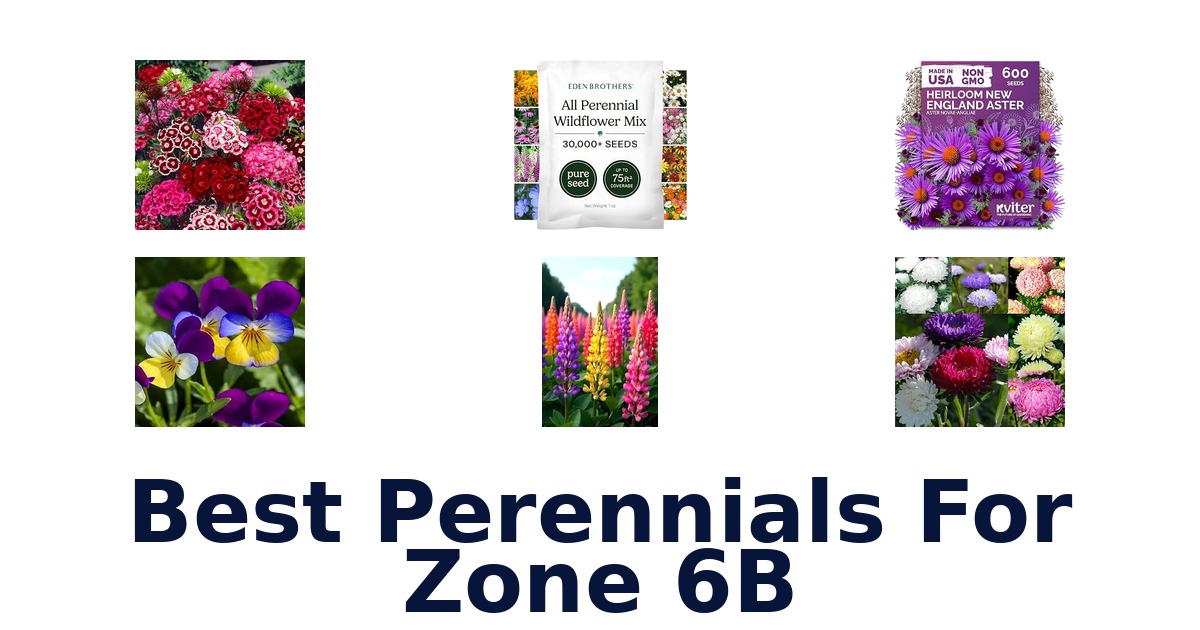
A strong perennial choice for zone 6b should list a hardiness range that includes zone 6 and match your garden’s space, sunlight, and planting style. These options include ready-to-plant live flowers, individual seed varieties, and a multi-species wildflower mix, so they suit different levels of planning and patience. Perennial Farm Goldsturm leads because it is a live plant rated for zones 4–9, with a defined height and summer-to-fall bloom period.
Other picks offer broad zone coverage, pollinator appeal, or compact ground-cover growth. Check each listing’s instructions before planting: some seeds call for cold stratification, and Sweet William is described as a biennial despite its perennial framing.
Zone compatibility is a useful starting point, not a guarantee of success; local conditions and care still matter.
Perennial Farm Goldsturm is the strongest all-around pick for a zone 6b gardener who wants an established plant rather than starting from seed. It is listed as hardy in zones 4–9, grows about 2 feet tall, and blooms golden-yellow flowers from July through September. That range includes zone 6, while its live-plant format and stated long-lived, easy-to-grow nature make it a clear choice for sunny beds or cut flowers.
Consider the listed shipping restrictions before ordering.
Our Top Picks
 Best Overall
This live black-eyed Susan is hardy in zones 4–9, grows about 2 feet tall, and blooms July through September; it also handles any soil.
View on Amazon Best Live Color Mix
Perennial Farm Cheyenne Spirit
This live coneflower is rated for zones 4–8 and grows 24–30 inches tall, with a range of flower colors and pollinator appeal.
View on Amazon Broadest Zone Range
Its 19-species perennial mix is listed for zones 3–10, including zone 6, and combines named flowers such as lupine, Shasta daisy, and coneflower.
View on Amazon- Aster Seed Pick KVITER New England Aster
- Best Ground Cover BuggyBeds Creeping Thyme
Compare These Zone 6b Perennial Options
| # | Product | Material Feature | Material Features | Buy |
|---|---|---|---|---|
| 1 | 1. Perennial Farm GoldsturmBest Overall | Live Plant | Live Plant | View on Amazon |
| 2 | 2. Perennial Farm Cheyenne SpiritBest Live Color Mix | Organic | Organic | View on Amazon |
| 3 | 3. Eden Brothers Wildflower MixBroadest Zone Range | — | — | View on Amazon |
| 4 |  4. KVITER New England AsterAster Seed Pick | GMO Free, Heirloom | GMO Free, Heirloom | View on Amazon |
| 5 |  5. BuggyBeds Creeping ThymeBest Ground Cover | Drought-Tolerant | Drought-Tolerant | View on Amazon |
| 6 |  6. Sprouticus Lupine MixTall-spike seed gardeners | Drought Tolerant once established, GMO Free… | Drought Tolerant once established, GMO Free… | View on Amazon |
| 7 |  7. Mixrug Aster MixMixed-color cold-hardy aster sowers | Organic | Organic | View on Amazon |
| 8 |  8. Outsidepride Johnny Jump UpCompact containers and hanging baskets | GMO Free, Heirloom | GMO Free, Heirloom | View on Amazon |
| 9 |  9. Mixrug Sweet WilliamFragrant cut-flower bed gardeners | GMO Free | GMO Free | View on Amazon |
| 10 |  10. HOME GROWN Moss VerbenaLarge-count moss verbena seed starters | GMO Free, Heirloom | GMO Free, Heirloom | View on Amazon |
Detailed Reviews: Best Perennials For Zone 6B
#1 · Best Overall
1. Perennial Farm Goldsturm
- Material Feature: Live Plant
- Material Features: Live Plant
Best for: Sunny native perennial bed growers.
Why it ranks #1: This live black-eyed Susan is hardy in zones 4–9, grows about 2 feet tall, and blooms July through September; it also handles any soil.
Three-to-four-inch golden flowers with dark cones bring a bold summer focal point to this live Goldsturm Black-Eyed Susan. It blooms from July through September, grows about two feet tall, and is listed as hardy in Zones 4–9, making it a season-spanning perennial option for Zone 6b.
As a live plant in a #1 container, Goldsturm offers an established perennial starting point rather than a packet of seeds. Its roughly two-foot height and large golden flowers can anchor a sunny border or provide stems for cutting; the listing describes it as a great cut flower. It is reported to handle any soil and to be long-lived, which may simplify placement across varied garden soils. Note the stated restricted-shipping states before ordering.
- Live perennial supplied in a #1 container
- Blooms July through September
- Golden flowers measure 3–4 inches across
- Listed as long-lived and tolerant of any soil
- Shipping is restricted to AK, AZ, CA, CO, ID, MT, NV, OR, UT, WA, and HI.
Skip it if you live in AK, AZ, CA, CO, ID, MT, NV, OR, UT, WA, or HI; shipping is restricted there.
For Zone 6b gardeners wanting a live, golden-flowered perennial for summer borders or cut arrangements, Goldsturm offers a defined two-foot stature. Check the listed state restriction before ordering, and plan around its July-to-September bloom.
Full product details
| Brand | Perennial Farm Marketplace |
|---|---|
| Color | Golden Yellow Flowers |
| Manufacturer | Perennial Farm Marketplace |
| Part Number | Rudbeckia f. 'Goldsturm' |
| Material Feature | Live Plant |
| Material Features | Live Plant |
| Model Number | Rudbeckia f. 'Goldsturm' |
| Special Features | Attracts Pollinators |
| Special Feature | Attracts Pollinators |
| Style Name | Rudbeckia f. 'Goldsturm' |
Listed on Amazon as: Rudbeckia f. ‘Goldsturm’ (Black-Eyed Susan) Native Live Perennial, Size-#1 Container, Golden Yellow Summer Flowers, Zones 3-9
View on Amazon#2 · Best Live Color Mix
2. Perennial Farm Cheyenne Spirit
- Material Feature: Organic
- Material Features: Organic
Best for: Mixed-color pollinator border planters.
Why it ranks #2: This live coneflower is rated for zones 4–8 and grows 24–30 inches tall, with a range of flower colors and pollinator appeal.
A broad mix of magenta, orange, red, purple, white, and yellow flowers gives Cheyenne Spirit coneflower a varied summer palette. This live perennial reaches an upright 24–30 inches, is listed for Zones 4–8, and provides nectar and seed heads that support bees, butterflies, and songbirds.
The #1-container live plant gives gardeners a ready perennial rather than a seed-starting project. Its upright, well-branched 24–30-inch habit can add height to sunny borders, cottage gardens, and pollinator habitats, while grouping plants is suggested for a fuller range of colors. Long-lasting daisy-like blooms provide visual interest, and the listed nectar and seed heads support wildlife. Plants shipped from November 1 through March 1 may be dormant and trimmed, so arrival appearance can vary seasonally.
- Live perennial in a #1 container
- Mixed blooms include six listed color groups
- Upright, well-branched growth reaches 24–30 inches
- Nectar and seed heads support pollinators and songbirds
- Winter shipments from November 1 through March 1 may arrive dormant and trimmed.
Skip it if you require leafy growth on arrival during winter; shipments in the stated period may be dormant and trimmed.
Choose Cheyenne Spirit for a Zone 6b sunny border or wildlife planting where mixed colors and upright growth fit the plan. Group plants for a fuller color range, and account for seasonal dormancy when ordering.
Full product details
| Brand | Perennial Farm Marketplace |
|---|---|
| Color | Mix Colors |
| Manufacturer | Perennial Farm Marketplace |
| Part Number | Echinacea x 'Cheyenne Spirit' |
| Material Feature | Organic |
| Material Features | Organic |
| Model Number | Echinacea x 'Cheyenne Spirit' |
| Special Features | Air Purification |
| Special Feature | Air Purification |
| Style Name | Cheyenne Spirit |
Listed on Amazon as: Echinacea purpurea ‘Cheyenne Spirit’ (Coneflower) Live Perennial, Size-#1 Container, Mixed Color Summer Flowers, USDA Zones 4-8
View on Amazon#3 · Broadest Zone Range
3. Eden Brothers Wildflower Mix
Best for: Multi-species wildflower bed sowers.
Why it ranks #3: Its 19-species perennial mix is listed for zones 3–10, including zone 6, and combines named flowers such as lupine, Shasta daisy, and coneflower.
Nineteen perennial species make Eden Brothers’ wildflower mix a broad-choice seed option, combining flowers such as lupine, Shasta daisy, and purple coneflower. The mix is listed for Zones 3–10, including 6b, and is intended to attract bees, butterflies, and birds to the yard.
A mixed planting can offer more variety than choosing a single perennial: the listed species include Sweet William, blanket flower, blue flax, black-eyed Susan, and blazing star. The 1-ounce package is described as pure, non-GMO seed with no fillers, while the broad Zone 3–10 range includes Zone 6b. Spring or fall planting is specified, giving gardeners two seasonal windows to start a pollinator-oriented wildflower area. Individual species are not separately quantified in the supplied details.
- Includes 19 perennial species
- Listed for Zones 3–10
- Spring or fall planting options
- Attracts bees, butterflies, and birds
- The supplied details do not specify the quantity of each species in the mix.
Skip it if you need a precise count for each flower species; the supplied listing does not break down species quantities.
This mix suits Zone 6b gardeners who want varied perennial flowers and pollinator activity from one seed selection. Choose it for a mixed planting rather than a precisely proportioned species layout, since individual seed quantities are not specified.
Full product details
| Brand | Eden Brothers |
|---|---|
| Color | Mixed |
| Manufacturer | Eden Brothers |
| Style | All Perennial |
| Style Name | All Perennial |
Listed on Amazon as: Eden Brothers All Perennial Wildflower Mixed Seeds for Planting, 1 oz, Seeds with Lupine, Shasta Daisy | Attracts Pollinators, Plant in Spring or Fall, for Zones 3, 4, 5, 6, 7, 8, 9, 10
View on Amazon#4 · Aster Seed Pick
4. KVITER New England Aster
- Material Feature: GMO Free, Heirloom
- Material Features: GMO Free, Heirloom
Best for: Cold-stratifying aster seed starters.
Why it ranks #4: This New England aster is listed for zones 2–8, covering zone 6, and its instructions call for eight weeks of cold stratification.
An eight-week cold-stratification step distinguishes KVITER’s New England aster seeds and gives patient growers a clear starting routine. The purple perennial is listed for USDA Zones 2–8, covering Zone 6b, and can be sown in fall or spring in containers, seed pods, or outdoor beds.
After cold stratification, sow the seeds just under 1/8 inch deep in moist soil, a shallow placement that supports a straightforward container or bed start. Fall and spring sowing provide seasonal options, while the included step-by-step growing guide on each packet offers directions during setup. The listing identifies the flowers as attracting bees and butterflies, so they can add pollinator interest once established. Zone 2–8 hardiness includes Zone 6b.
- Perennial hardiness spans Zones 2–8
- Fall or spring sowing options
- Can grow in containers, pods, or outdoor beds
- Packet includes a step-by-step growing guide
- Requires an eight-week cold-stratification period before sprouting.
Skip it if you want to sow directly without a cold-treatment step; the listed stratification takes eight weeks.
This suits Zone 6b gardeners who can plan ahead for cold stratification and want purple aster flowers with pollinator appeal. Choose a container, seed pod, or outdoor bed that can be kept moist during sowing.
Full product details
| Brand | KVITER |
|---|---|
| Color | Purple |
| Manufacturer | KVITER |
| Material Feature | GMO Free, Heirloom |
| Material Features | GMO Free, Heirloom |
| Special Features | Attracts Pollinators, Compact, Growing Guide Included, Low Maintenance, Made in the USA |
| Care Instructions | Detailed Step-By-Step Growing Guide on every seed packet — plant with confidence and watch it thrive. See more |
| Special Feature | Attracts Pollinators, Compact, Growing Guide Included, Low Maintenance, Made in the USA |
| Style Name | New England Aster |
Listed on Amazon as: 600 New England Aster Heirloom Flower Seeds, Aster Novae-Angliae
View on Amazon#5 · Best Ground Cover
5. BuggyBeds Creeping Thyme
- Material Feature: Drought-Tolerant
- Material Features: Drought-Tolerant
Best for: Low-maintenance ground-cover sowing.
Why it ranks #5: Creeping thyme is rated for zones 5–9 and offered as a low-maintenance, drought-tolerant ground-cover seed option.
Creeping thyme is offered as a ground-cover seed for gardeners seeking a fragrant carpet that can suppress weeds once established. BuggyBeds lists it as a drought-tolerant perennial hardy in Zones 5–9, a range that includes Zone 6b, and emphasizes low-maintenance care.
The ground-cover habit gives these seeds a different role from upright border flowers: they are intended to create broad, low coverage. The listing says the fragrant carpet naturally suppresses weeds and needs minimal care once established, which may reduce routine attention after establishment. Drought tolerance is also specified, and Zones 5–9 hardiness includes 6b. The product is sold as seeds, so gardeners should plan to establish the coverage rather than expect an instant finished carpet.
- Perennial hardiness includes Zones 5–9
- Listed as drought tolerant
- Ground-cover growth can suppress weeds
- Low maintenance once established
- Sold as seeds, so ground coverage must be established over time.
Skip it if you need an instant finished ground-cover carpet; this listing supplies seeds to establish the planting.
Choose creeping thyme seeds for a Zone 6b area where low ground cover, fragrance, and weed suppression are desired. The seed format calls for patience while the carpet establishes, despite the low-maintenance claim for established plants.
Full product details
| Brand | BuggyBeds |
|---|---|
| Color | multi-color |
| Manufacturer | BuggyBeds |
| Material Feature | Drought-Tolerant |
| Material Features | Drought-Tolerant |
| Special Features | Ground Cover Plants, High Germination Rate, Low Maintenance |
| Care Instructions | Low-Maintenance |
| Special Feature | Ground Cover Plants, High Germination Rate, Low Maintenance |
| Style Name | Ground Cover Plants |
Listed on Amazon as: 17500+ Creeping Thyme Herb Seeds
View on Amazon#6
6. Sprouticus Lupine Mix
- Material Feature: Drought Tolerant once established, GMO Free…
- Material Features: Drought Tolerant once established, GMO Free…
Best for: Tall-spike seed gardeners.
Why it ranks #6: This multicolor lupine mix is perennial in zones 4–8 and grows up to 3 feet, with spring or fall planting and cold treatment advised.
Flower spikes reaching up to three feet give this multicolor lupine mix vertical presence, with pink, purple, yellow, and white blooms. The perennial seeds are listed for Zones 4–8, including 6b, and can be planted in early spring after the last frost or in fall.
The tall spikes can add height behind shorter garden plants, while the four listed colors create a varied display. Spring sowing follows the last frost; fall sowing is also offered for Zones 4–8, with cold stratification strongly advisable. The listing says lupines grow in poor soils and need minimal care once established, and notes drought tolerance after establishment. Butterflies, bees, and other pollinators are also attracted, making the mix suitable for pollinator-focused spaces.
- Flower spikes reach up to three feet
- Mix includes pink, purple, yellow, and white
- Spring or fall planting options
- Drought tolerant once established
- Cold stratification is strongly advisable for germination.
Skip it if you cannot plan for cold treatment; stratification is strongly advisable for these seeds.
This mix fits Zone 6b gardeners seeking tall, multicolored spikes and pollinator activity, especially where established plants can receive minimal care. Plan for the advised cold stratification, and choose spring or fall sowing accordingly.
Full product details
| Brand | Sprouticus Maximus |
|---|---|
| Color | Multicolor |
| Item Weight | 0.86 g |
| Manufacturer | Sprouticus Maximus |
| Material Feature | Drought Tolerant once established, GMO Free seeds, Perennial in zones 4-8, Planting instructions on the package, Stratification (cold treatment) strongly advisable See more |
| Material Features | Drought Tolerant once established, GMO Free seeds, Perennial in zones 4-8, Planting instructions on the package, Stratification (cold treatment) strongly advisable |
| Special Features | Attracts Pollinators, Easy to Grow and Low Maintenance, Non-GMO, Spring or Fall Planting, Tall Multicolor Flower Mixture |
| Special Feature | Attracts Pollinators, Easy to Grow and Low Maintenance, Non-GMO, Spring or Fall Planting, Tall Multicolor Flower Mixture See more |
Listed on Amazon as: Seeds Multicolor Tall Lupine Mix 50+ Seeds to Grow Perennial in Zones 4-8 to Plant in Spring or Fall
View on Amazon#7
7. Mixrug Aster Mix
- Material Feature: Organic
- Material Features: Organic
Best for: Mixed-color cold-hardy aster sowers.
Why it ranks #7: The mixed New England aster seeds are described as cold-hardy for zones 3–8, with purple, pink, white, and lavender flowers.
More than 1,000 mixed aster seeds offer a large starting quantity for a perennial display in deep purple, pink, white, and lavender. Mixrug lists New England aster varieties for Zones 3–8, including Zone 6b, with cold hardiness suited to northern gardens.
The range of purple, pink, white, and lavender flowers can create a more varied aster display than a single-color planting, while the listed yellow centers preserve a classic daisy-like look. The 1,000-plus seed quantity gives gardeners material for a larger sowing. These perennial varieties are described as surviving harsh winters in Zones 3–8 and returning each spring with increased vigor. Extended bloom time is listed as a special feature, though exact bloom dates are not provided.
- More than 1,000 seeds per packet
- Mixed purple, pink, white, and lavender colors
- Perennial hardiness spans Zones 3–8
- Listed with extended bloom time
- Exact bloom dates are not specified in the supplied details.
Skip it if you need a stated flowering calendar; the listing does not provide exact bloom dates.
Choose this Mixrug aster seed mix for a Zone 6b garden seeking a cold-hardy, multicolor perennial sowing. Its large seed quantity suits broader planting, while gardeners needing a precise bloom calendar should note that dates are not given.
Full product details
| Brand | Mixrug |
|---|---|
| Color | Mixed |
| Manufacturer | Mixrug |
| Part Number | LYJ-1107-CJS8320093 |
| Material Feature | Organic |
| Material Features | Organic |
| Special Features | Extended Bloom Time |
| Special Feature | Extended Bloom Time |
Listed on Amazon as: 1000+ Mix Aster Flower Seeds Perennial,New England Asters Seeds for Planting Cold Hardy & Pollinator Friendly Non-GMO Heirloom Seed for Home Outdoor Garden
View on Amazon#8
8. Outsidepride Johnny Jump Up
- Material Feature: GMO Free, Heirloom
- Material Features: GMO Free, Heirloom
Best for: Compact containers and hanging baskets.
Why it ranks #8: Johnny Jump Up grows just 6–8 inches tall and is promoted for extended spring-to-fall color, but the supplied listing gives no hardiness zone.
A compact 6–8-inch growth habit makes Outsidepride Johnny Jump Up a practical viola seed choice for containers, borders, and hanging baskets. Its blooms are listed from spring through fall in a mix of colors, extending seasonal display across multiple parts of a Zone 6b garden.
The low 6–8-inch stature helps fit this viola into small spaces, where the listing recommends borders, containers, and hanging baskets. Spring-through-fall flowering can provide color over an extended period rather than a brief seasonal flush. The seeds are described as compact and hardy perennial, and the product care information specifies moist conditions. That moisture requirement matters when choosing a container or basket, where watering can be managed as part of routine care.
- Compact plants grow 6–8 inches tall
- Blooms from spring through fall
- Suitable for borders, containers, and hanging baskets
- Heirloom and GMO-free seed listing
- Product care instructions specify moist conditions.
Skip it if you need a planting that can be kept dry; the listed care instruction calls for moist conditions.
Pick these seeds for a Zone 6b container, basket, or small border where low growth and long-season color are priorities. They suit gardeners able to maintain moist conditions rather than a dry planting site.
Full product details
| Brand | Outsidepride |
|---|---|
| Color | Multi |
| Item Weight | 9.07 g |
| Manufacturer | Outsidepride |
| Part Number | OUT-3151 |
| Material Feature | GMO Free, Heirloom |
| Material Features | GMO Free, Heirloom |
| Special Features | Extended Bloom Time |
| Care Instructions | moist |
| Special Feature | Extended Bloom Time |
| Style Name | Johnny-jump Up |
#9
9. Mixrug Sweet William
- Material Feature: GMO Free
- Material Features: GMO Free
Best for: Fragrant cut-flower bed gardeners.
Why it ranks #9: Sweet William is listed for zones 4–10, but the product describes it as a biennial that blooms the year after planting, not a dependable perennial.
Fragrant flower clusters in white, pink, purple, red, and violet give Mixrug Sweet William a varied mid-spring-to-mid-summer display, with blooms suitable for cutting. The seeds suit USDA Zones 4–10, including 6b, and the plants reach about 12–24 inches tall, making this a colorful choice for beds and borders.
Sweet William blooms the year after planting, so it fits gardeners willing to establish a biennial rather than seeking flowers in the first season. Its 12–24-inch height and 6–12-inch width provide useful scale for beds and borders, while fragrant, multicolored clusters also supply cut flowers. Full sun and good drainage are the stated growing conditions. Pollinator attraction is listed, including butterflies and bumblebees, adding garden activity alongside the seasonal display.
- Fragrant clusters in five listed color ranges
- Suitable for beds, borders, and cut flowers
- Attracts butterflies and bumblebees
- Hardy in Zones 4–10, including 6b
- Blooms the year after planting, not in its first season.
Skip it if you need flowers in the planting year; this biennial blooms the following year.
Choose these seeds if you want fragrant, colorful cut flowers and pollinator visits in a sunny Zone 6b bed. Allow for the biennial timeline, and provide good drainage for the plants to thrive.
Full product details
| Brand | Mixrug |
|---|---|
| Color | Gazania |
| Manufacturer | Mixrug |
| Part Number | LYJ-1021-GS03905-02 |
| Material Feature | GMO Free |
| Material Features | GMO Free |
| Special Features | Attracts Pollinators |
| Special Feature | Attracts Pollinators |
Listed on Amazon as: 5000+ Sweet William Seeds Perennial for Planting-Dianthus Seeds Sweetness Flower Non-GMO Heirloom for Outdoor Garden Hardy to USDA Zones 3-9
View on Amazon#10
10. HOME GROWN Moss Verbena
- Material Feature: GMO Free, Heirloom
- Material Features: GMO Free, Heirloom
Best for: Large-count moss verbena seed starters.
Why it ranks #10: Moss verbena is presented as a perennial seed option, but the supplied product details do not specify a USDA hardiness zone for checking zone 6b fit.
A 6,000-plus seed quantity is the clearest draw of HOME GROWN Moss Verbena, giving gardeners many seeds for a multicolored perennial planting. The listing identifies Verbena tenuisecta, non-GMO seed, compact growth, and an online growing guide, though it does not specify a USDA hardiness zone.
The large seed count may suit a gardener planning a broader sowing, while the listed compact growth points toward a lower-profile planting rather than a tall flower display. The multicolored mix provides visual variation, and the online grow guide offers growing support during setup. The product is described as low maintenance and made in the USA. Because no USDA zone range or specific sowing season appears in the supplied details, Zone 6b suitability is not established here.
- More than 6,000 seeds listed
- Multicolored Moss Verbena mix
- Compact growth is specified
- Comprehensive online grow guide included
- No USDA hardiness zone range is specified.
Skip it if you need confirmed Zone 6b hardiness; this listing does not state a USDA zone range.
This seed pack suits gardeners interested in compact, multicolored Verbena tenuisecta and a large planting quantity with online guidance. For a Zone 6b perennial plan, verify hardiness from another reliable source because no zone range is listed.
Full product details
| Brand | HOME GROWN |
|---|---|
| Color | Multi |
| Manufacturer | HOME GROWN |
| Material Feature | GMO Free, Heirloom |
| Material Features | GMO Free, Heirloom |
| Special Features | High Germination Rate, Includes a Comprehensive Online Grow Guide Designed to Maximize Yields and Support Confident Growing, Low Maintenance, Proudly Made in the USA |
| Care Instructions | Comes with a BONUS grow guide that walks you through detailed steps from sowing to harvest! |
| Special Feature | High Germination Rate, Includes a Comprehensive Online Grow Guide Designed to Maximize Yields and Support Confident Growing, Low Maintenance, Proudly Made in the USA See more |
| Style Name | Moss Verbena Mix |
Listed on Amazon as: HOME GROWN Verbena Moss Seeds, 6,000+ Seeds, Verbena tenuisecta
View on AmazonAvoid the perennial-versus-biennial label trap
Check the stated life cycle as well as the word perennial: Mixrug Sweet William is called a lovely biennial and is said to bloom the year after planting. That distinction matters if you expect the same plant to return reliably in later seasons. Seed mixes also create a different kind of uncertainty: Eden Brothers Wildflower Mix lists 19 species, so the listing does not promise that every included flower will establish equally in your particular bed.
Individual varieties give you a clearer target, while mixes trade that specificity for diversity. The live Goldsturm and Cheyenne Spirit listings identify a plant and a hardiness range, but they still do not guarantee performance in every site.
Read the full listing and growing instructions before treating a product title or broad range as a promise of bloom timing or repeat growth.
Plan for seed preparation and available space
Seed preparation and mature size can change whether a perennial is practical for your garden. KVITER New England Aster calls for an eight-week cold stratification period, while Sprouticus Lupine says cold treatment is strongly advisable; planting without following such guidance may undermine the result. By contrast, Goldsturm is sold as a live plant, which avoids starting that variety from seed, though the listing notes seasonal condition and possible dormancy for Cheyenne Spirit shipments during part of the year.
Match size to the site, too: Johnny Jump Up is listed at 6–8 inches, Goldsturm around 2 feet, and lupine up to 3 feet. Those figures are not interchangeable spacing instructions, but they help screen out obvious mismatches.
Check the package or plant instructions for spacing, sowing depth, and local planting timing.
How to Choose Perennials for Zone 6b
Hardiness range and life cycle
Look for a stated USDA hardiness range that includes zone 6, and verify whether the plant is truly described as perennial. Goldsturm is rated for zones 4–9, Cheyenne Spirit for 4–8, and Eden Brothers Wildflower Mix for 3–Those listings all include zone 6.
Mixrug Sweet William is described as a biennial even though its title says perennial, so it is a less certain fit if you want plants returning year after year. HOME GROWN Moss Verbena does not provide a zone range in the supplied details.
Buyers who prioritize explicit compatibility should favor the clearly zoned options; those willing to research locally can investigate listings with missing or conflicting information.
Seed or live-plant format
Choose between a live plant for a more established start and seeds for a broader or more specific planting project. Goldsturm and Cheyenne Spirit are live plants in #1 containers; the remaining products here are seed offerings, including a 19-species perennial mix and individual flower types. Seed instructions vary: KVITER New England Aster specifies eight-week cold stratification, and Sprouticus Lupine recommends cold treatment.
Goldsturm is suited to buyers who prefer to skip seed germination for that variety, while seed packs suit gardeners prepared to sow and wait. Check seasonal shipping notes for live plants and the package directions for seed preparation before choosing.
Height, spread, and garden role
Match the plant’s listed size and intended role to the space you have, rather than choosing by flower color alone. Outsidepride Johnny Jump Up is compact at 6–8 inches, Goldsturm is about 2 feet tall, and Sprouticus Lupine reaches up to 3 feet. BuggyBeds Creeping Thyme is positioned as ground cover, while the Eden Brothers mix combines many species rather than one uniform form.
Small containers or low borders may favor the compact viola; taller displays may suit lupine, and ground-cover plans point toward creeping thyme. The listings do not supply complete spacing figures for every product, so use these heights as an initial filter and consult the full growing instructions before laying out a bed.
Which perennial should you choose for zone 6b?
For a clearly zoned live flower with a defined summer bloom window, choose Perennial Farm Goldsturm: it is rated for zones 4–9 and blooms July through September. If you want a live plant with multiple flower colors, Perennial Farm Cheyenne Spirit is rated for zones 4–For variety in a seed planting, Eden Brothers Wildflower Mix includes 19 species and covers zones 3–10.
Choose BuggyBeds Creeping Thyme for a low-maintenance ground-cover direction, or Outsidepride Johnny Jump Up when compact 6–8-inch growth and long seasonal color are priorities. If you are comfortable with seed preparation, KVITER New England Aster specifies cold stratification.
Confirm site conditions and growing instructions before planting; zone range alone does not determine success.
Related Buying Guides
Frequently Asked Questions
When is the best time to plant perennials in zone 6b?
Spring or fall can be suitable, depending on the plant and its instructions. Several listed seed products specifically say to plant in spring or fall, but that does not apply to every option. Check each product’s growing guidance and any shipping restrictions, then choose a planting time that fits those instructions.
How much sun and water do perennials in zone 6b need?
Sun and water needs vary by plant, and the supplied product information does not give specific requirements for every option. Check the growing instructions for the plant or seed you select rather than applying one schedule to all ten. The listed Goldsturm is identified for sunny beds, but confirm its full site and care guidance.
Should I start perennial seeds indoors or sow them directly outside?
Use the seed packet’s directions to decide, because the supplied listings do not specify an indoor-starting method for every seed. One listed option, KVITER New England Aster, specifies cold stratification, so account for that preparation if choosing it. If you prefer to avoid starting from seed, the roundup also includes live plants.
Which option is suitable if I want a live perennial instead of seeds?
The roundup includes live Goldsturm and Cheyenne Spirit plants, both listed in #1 containers. The editorial verdict favors Goldsturm as the strongest all-around choice for zone 6b, with a stated zone range of 4–9 and a July-through-September bloom window. Cheyenne Spirit is listed for zones 4–8 and has mixed-color flowers.
What should I check before ordering a perennial for zone 6b?
Check that the listed hardiness range includes zone 6, then review the product’s growing instructions and shipping restrictions. Zone range alone does not determine success. For example, the wildflower mix lists zones 3–10, while the Goldsturm listing notes shipping restrictions that should be considered before ordering.
Final Words
For an established plant with a defined summer bloom window, choose Goldsturm: the editorial verdict lists it for zones 4–9, with golden flowers from July through September. Choose Cheyenne Spirit if mixed flower colors matter more, or the Eden Brothers mix for a seed planting with 19 species. For other options, weigh seed preparation, growth habit, site conditions, and shipping restrictions against your plans before ordering.