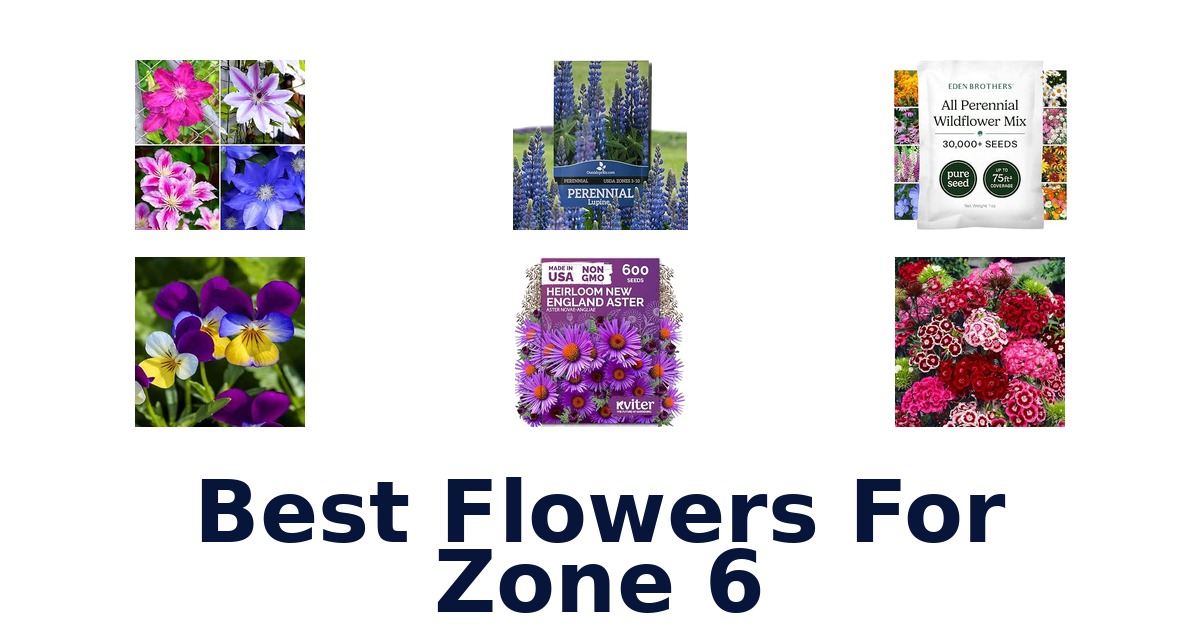
A strong Zone 6 flower choice pairs a suitable hardiness range with the bloom style and planting area you want, whether you’re filling a broad bed or adding a single vertical accent. The All Perennial Wildflower Seed Mix is the most versatile starting point here: its listed Zones 3–10 include Zone 6, and its 18 species are intended to cover 250–500 square feet. Other options suit more specific plans, including blue lupine for tall spikes, New England aster for fall color, and Johnny Jump Up for compact containers.
Check each listing’s zone range and planting needs before sowing; a perennial label alone does not confirm Zone 6 suitability. These picks include mixes and individual varieties, so compare coverage, height, and intended use as well as hardiness.
The All Perennial Wildflower Seed Mix leads because its listed Zones 3–10 explicitly include Zone 6, and its 18 perennial species are intended to cover 250–500 square feet. It’s a useful choice for gardeners seeking varied blooms and pollinator appeal across a larger area. For a single tall flower, Outsidepride Wild Blue Lupine Seeds list Zones 3–9; for compact seasonal color, Outsidepride Johnny-jump Up offers 6–8-inch plants, though its supplied listing does not state a zone range.
Our Top Picks
 Best Overall
Generic Perennial Wildflower Mix
Its listed Zones 3–10 include Zone 6, and 18 perennial species provide varied blooms with stated coverage of 250–500 square feet.
View on Amazon Broadest Species Mix
The 19-species perennial mix lists Zone 6 among its supported zones and includes pollinator-attracting flowers such as lupine and Shasta daisy.
View on Amazon Best Tall Blooms
Its listed Zones 3–9 include Zone 6; the lupines grow 36 inches tall and suit full sun to partial shade.
View on Amazon- Best Aster Pick KVITER New England Aster
- Best Compact Blooms Outsidepride Johnny-jump Up
Compare the Zone 6 flower seed options
| # | Product | Material Feature | Material Features | Buy |
|---|---|---|---|---|
| 1 | 1. Generic Perennial Wildflower MixBest Overall | GMO Free, Heirloom | GMO Free, Heirloom | View on Amazon |
| 2 | 2. Eden Brothers Perennial MixBroadest Species Mix | — | — | View on Amazon |
| 3 | 3. Outsidepride Blue LupineBest Tall Blooms | Heirloom | Heirloom | View on Amazon |
| 4 |  4. KVITER New England AsterBest Aster Pick | GMO Free, Heirloom | GMO Free, Heirloom | View on Amazon |
| 5 |  5. Mixrug Sweet WilliamFragrant Border Planting | GMO Free | GMO Free | View on Amazon |
| 6 |  6. Outsidepride Johnny-jump UpBest Compact Blooms | GMO Free, Heirloom | GMO Free, Heirloom | View on Amazon |
| 7 |  7. Survival Garden Cool Season MixCool-Season Color Mix | GMO Free, Heirloom | GMO Free, Heirloom | View on Amazon |
| 8 |  8. Generic Painted DaisyCut-Flower Garden Beds | Heirloom | Heirloom | View on Amazon |
| 9 |  9. Mixrug Gazania MixSunny Compact Ground Cover | GMO Free | GMO Free | View on Amazon |
| 10 |  10. CarpetC Mixed ClematisTrellis and Arbor Vines | GMO Free, Heirloom | GMO Free, Heirloom | View on Amazon |
Detailed Reviews: Best Flowers For Zone 6
#1 · Best Overall
1. Generic Perennial Wildflower Mix
- Material Feature: GMO Free, Heirloom
- Material Features: GMO Free, Heirloom
Best for: Broad Perennial Coverage.
Why it ranks #1: Its listed Zones 3–10 include Zone 6, and 18 perennial species provide varied blooms with stated coverage of 250–500 square feet.
Eighteen perennial species in one mix let you sow a range of wildflowers across a stated 250–500 square feet. The selection includes familiar flowers such as Shasta Daisy, Purple Coneflower, and Black Eyed Susan, and is listed for zones 3–10, including zone 6.
The species mix combines plants with differing names and forms, including perennial lupine, dwarf columbine, lance leaf coreopsis, and moss verbena, for a varied perennial planting rather than a single-flower bed. Its stated coverage of 250–500 square feet helps with planning larger ground areas. Spring and fall planting are listed, while the biodegradable packaging and non-GMO, no-filler seed description provide useful sourcing details.
- Includes 18 perennial flower species
- Listed for zones 3–10
- Spring and fall planting options
- Stated ground coverage of 250–500 square feet
- The broad species mix offers less control over a single flower type or color.
Skip it if you want a single-flower planting; Outsidepride Blue Lupine Seeds focus on lupines rather than this 18-species mix.
Pick this mix for a zone 6 gardener who wants broad perennial variety across a sizable planting area. Its species range suits a mixed wildflower look, not a tightly controlled single-species display.
Full product details
| Brand | Generic |
|---|---|
| Color | Multicolored Blooms |
| Manufacturer | Paper Street Seed Company |
| Material Feature | GMO Free, Heirloom |
| Material Features | GMO Free, Heirloom |
| Special Features | Biodegradable |
| Special Feature | Biodegradable |
Listed on Amazon as: All Perennial Wildflower Seed Mix 1/4lb, 500sq-ft, 93,750+ Seeds Lupine Shasta Daisy Attract Pollinators, Spring and Fall Planting, Zones 3, 4, 5, 6, 7, 8, 9, 10 Earth-Friendly Packaging
View on Amazon#2 · Broadest Species Mix
2. Eden Brothers Perennial Mix
Best for: Mixed Perennial Garden Beds.
Why it ranks #2: The 19-species perennial mix lists Zone 6 among its supported zones and includes pollinator-attracting flowers such as lupine and Shasta daisy.
Nineteen perennial species bring multiple flower types into one seed mix, including Shasta Daisy, Sweet William, Foxglove, and Purple Coneflower. Listed for zones 3–10 and spring or fall planting, it offers zone 6 gardeners a broad palette for mixed beds and pollinator interest.
This mix pairs recognizable flowers such as Shasta Daisy and Black Eyed Susan with Lance Leaf Coreopsis, Blue Flax, and Gayfeather, creating a broader planting than a single-variety seed choice. Its perennial classification and zones 3–10 listing make it relevant to zone 6 gardens. The product states that it attracts pollinators, including bees and butterflies, supporting a planting meant to welcome insects and birds.
- Includes 19 perennial species
- Listed for USDA Zones 3–10
- Spring or fall planting
- Attracts bees, butterflies, and birds
- The mixed 19-species selection does not provide a single-variety planting.
Skip it if you want a focused species rather than a varied bed; Outsidepride Blue Lupine Seeds offer a specific lupine planting.
This Eden Brothers mix suits zone 6 gardeners planning a varied perennial bed with pollinator appeal. Choose it when a broad mix is welcome; its many species are less suited to a uniform, single-flower layout.
Full product details
| Brand | Eden Brothers |
|---|---|
| Color | Mixed |
| Manufacturer | Eden Brothers |
| Style | All Perennial |
| Style Name | All Perennial |
Listed on Amazon as: Eden Brothers All Perennial Wildflower Mixed Seeds for Planting, 1 oz, Seeds with Lupine, Shasta Daisy | Attracts Pollinators, Plant in Spring or Fall, for Zones 3, 4, 5, 6, 7, 8, 9, 10
View on Amazon#3 · Best Tall Blooms
3. Outsidepride Blue Lupine
- Material Feature: Heirloom
- Material Features: Heirloom
Best for: Tall Blue Lupine Spikes.
Why it ranks #3: Its listed Zones 3–9 include Zone 6; the lupines grow 36 inches tall and suit full sun to partial shade.
Violet-blue Russell Lupine flower spikes reach 36 inches, bringing vertical color to a zone 6 bed while offering a tall form for fall planting. The listing gives a 12–16-inch spread and describes these perennials as cold hardy, frost tolerant, and suitable for USDA Zones 3–9.
A 36-inch height paired with a 12–16-inch spread makes this lupine a taller, more upright choice than compact flowers, so it can add height within a sunny to partly shaded planting. Its listed deer resistance and low-maintenance description may suit gardeners seeking a resilient perennial. The seeds are described as self-sowing and pollinator-attracting, including for hummingbirds; water is the stated care instruction.
- Violet-blue perennial blooms
- Grows 36 inches tall with a 12–16-inch spread
- Listed as deer-resistant and frost-tolerant
- Self-sowing and attracts pollinators, including hummingbirds
- At 36 inches tall, it may not suit gardeners seeking a compact flower for small containers.
Skip it if you need a compact container flower; Outsidepride Johnny Jump Up grows 6–8 inches tall and is listed for containers and hanging baskets.
Choose Outsidepride lupines for a zone 6 gardener seeking tall violet-blue flowers, pollinator interest, and fall planting potential. Reserve room for their height and give them full sun to partial shade.
Full product details
| Brand | Outsidepride |
|---|---|
| Color | Blue |
| Manufacturer | Outsidepride |
| Part Number | OUT-3169 |
| Material Feature | Heirloom |
| Material Features | Heirloom |
| Special Features | Seeds |
| Care Instructions | Water |
| Special Feature | Seeds |
| Style Name | Blue Lupine |
Listed on Amazon as: Outsidepride Wild Blue Perennial Lupine Seeds – 500 Pcs. Self-Sowing, Cold Hardy & Frost Tolerant Wildflower Seeds for Fall Planting, Ideal for Attracting Pollinators & Hummingbirds
View on Amazon#4 · Best Aster Pick
4. KVITER New England Aster
- Material Feature: GMO Free, Heirloom
- Material Features: GMO Free, Heirloom
Best for: Cold-Stratified Aster Growers.
Why it ranks #4: The listing gives USDA Zones 2–8, including Zone 6, and describes purple pollinator-attracting blooms after eight-week cold stratification.
New England Aster seeds use an eight-week cold-stratification step before sprouting, a defined preparation method for gardeners planning ahead. The listing gives USDA Zones 2–8, which includes zone 6, and describes purple starry blossoms that attract bees and butterflies.
The cold-stratification requirement means this seed choice calls for advance preparation rather than immediate sowing without a temperature treatment. Once ready, the seeds can be sown in fall or spring just under 1/8 inch deep in moist soil. The listing names containers, pods, and outdoor beds as options, and includes a detailed step-by-step growing guide on each seed packet to support the sowing process.
- Listed for USDA Zones 2–8
- Purple starry New England Aster blooms
- Fall or spring sowing options
- Growing guide included on each seed packet
- Seeds require eight weeks of cold stratification before sprouting.
Skip it if you want to sow without a cold-treatment step; the Painted Daisy listing allows direct sowing in early spring or fall.
Choose KVITER New England Aster if you want purple perennial flowers in a zone 6 garden and can plan for cold stratification. Its stated sowing depth and packet guide help with preparation.
Full product details
| Brand | KVITER |
|---|---|
| Color | Purple |
| Manufacturer | KVITER |
| Material Feature | GMO Free, Heirloom |
| Material Features | GMO Free, Heirloom |
| Special Features | Attracts Pollinators, Compact, Growing Guide Included, Low Maintenance, Made in the USA |
| Care Instructions | Detailed Step-By-Step Growing Guide on every seed packet — plant with confidence and watch it thrive. See more |
| Special Feature | Attracts Pollinators, Compact, Growing Guide Included, Low Maintenance, Made in the USA |
| Style Name | New England Aster |
Listed on Amazon as: 600 New England Aster Heirloom Flower Seeds, Aster Novae-Angliae
View on Amazon#5
5. Mixrug Sweet William
- Material Feature: GMO Free
- Material Features: GMO Free
Best for: Fragrant Border Planting.
Why it ranks #5: The title lists Zones 3–9 and the description lists Zones 4–10; either range includes Zone 6, with fragrant spring-to-summer blooms.
Clusters of fragrant blooms in white, pink, purple, red, and violet give Sweet William a colorful mid-spring-to-mid-summer display the year after planting. Its listed hardiness reaches USDA Zones 3–9, making it a zone 6 option for gardeners who can plan around its biennial flowering schedule.
At 12–24 inches tall and 6–12 inches wide, Sweet William can fill beds and borders without requiring the space of a larger flowering plant. Full sun and good drainage are its stated growing needs, so choose a sunny, well-drained spot. The flowers are also listed for cut-flower use and attract butterflies, bumblebees, ladybugs, and hummingbirds, combining garden color with pollinator interest.
- Hardy to USDA Zones 3–9
- Fragrant clusters in five listed colors
- Suitable for beds, borders, and cut flowers
- Attracts butterflies, bumblebees, ladybugs, and hummingbirds
- Biennial plants bloom the year after planting, not in their first year.
Skip it if you want flowers in the first season; these biennials bloom the year after planting, while the Johnny Jump Up seeds are listed for spring-to-fall bloom.
Choose these Mixrug Sweet William seeds if a fragrant, multicolored border or cut-flower planting suits your zone 6 garden. Allow for the biennial schedule and provide full sun with good drainage.
Full product details
| Brand | Mixrug |
|---|---|
| Color | Gazania |
| Manufacturer | Mixrug |
| Part Number | LYJ-1021-GS03905-02 |
| Material Feature | GMO Free |
| Material Features | GMO Free |
| Special Features | Attracts Pollinators |
| Special Feature | Attracts Pollinators |
Listed on Amazon as: 5000+ Sweet William Seeds Perennial for Planting-Dianthus Seeds Sweetness Flower Non-GMO Heirloom for Outdoor Garden Hardy to USDA Zones 3-9
View on Amazon#6 · Best Compact Blooms
6. Outsidepride Johnny-jump Up
- Material Feature: GMO Free, Heirloom
- Material Features: GMO Free, Heirloom
Best for: Compact Spring-to-Fall Color.
Why it ranks #6: Its 6–8-inch height and spring-to-fall bloom period suit small spaces, but the supplied product details do not give a hardiness zone.
Johnny Jump Up violas grow just 6–8 inches tall and bloom from spring through fall, combining a compact footprint with a long listed flowering season. The listing names garden beds, borders, containers, and hanging baskets, making them adaptable to smaller zone 6 spaces.
Their 6–8-inch height makes Johnny Jump Ups a practical choice where taller flowers could crowd a border or container. The spring-through-fall bloom period can provide color across multiple seasons, while the listed uses include hanging baskets as well as beds and containers. The product describes the seeds as hardy and easy to grow, and gives moist conditions as the care instruction, which helps clarify their basic placement and upkeep needs.
- Compact 6–8-inch plant height
- Listed bloom period runs spring through fall
- Suitable for beds, borders, containers, and hanging baskets
- Described as hardy and easy to grow
- The listed care instruction calls for moist conditions.
Skip it if you prefer a flower whose established plants need minimal watering; the Painted Daisy listing says mature plants need minimal watering.
Choose Outsidepride Johnny Jump Ups for compact zone 6 beds, borders, containers, or hanging baskets with color from spring through fall. Keep their listed need for moist conditions in mind.
Full product details
| Brand | Outsidepride |
|---|---|
| Color | Multi |
| Item Weight | 9.07 g |
| Manufacturer | Outsidepride |
| Part Number | OUT-3151 |
| Material Feature | GMO Free, Heirloom |
| Material Features | GMO Free, Heirloom |
| Special Features | Extended Bloom Time |
| Care Instructions | moist |
| Special Feature | Extended Bloom Time |
| Style Name | Johnny-jump Up |
#7
7. Survival Garden Cool Season Mix
- Material Feature: GMO Free, Heirloom
- Material Features: GMO Free, Heirloom
Best for: Cool-Season Color Mix.
Why it ranks #7: Ten varieties, including pansy, snapdragon, and alyssum, offer spring and fall color, but the listing provides no USDA zone range.
Ten cool-season flower varieties, including pansy, snapdragon, calendula, and two sweet peas, give this collection a broad spring-and-fall planting palette. It is identified as non-GMO and heirloom, with listed features including fragrance, extended bloom time, pollinator attraction, and low maintenance.
The collection combines ornamental choices such as Swiss Giant Pansy, Annual Phlox, and Snapdragon Tetra Mix with Alyssum and Calendula, giving gardeners several forms and colors to work into cool-weather displays. Its spring-and-fall color focus can help organize planting around cooler seasons. The listed fragrance and pollinator-attracting features add sensory and wildlife interest, while the ten-variety assortment suits gardeners who want several flower types together.
- Includes 10 cool-season flower varieties
- Offers spring and fall garden color
- Listed as fragrant and pollinator-attracting
- Non-GMO and heirloom seed collection
- The collection includes ornamental kale, so not every variety is a conventional flower.
Skip it if you want only conventional flowers; this collection includes ornamental kale, while the all-perennial wildflower mixes list flower species.
This Survival Garden Seeds collection fits zone 6 gardeners planning varied cool-season displays for spring and fall. Choose it for a mix of flower forms and textures, keeping in mind that ornamental kale is included.
Full product details
| Brand | SURVIVAL GARDEN SEEDS |
|---|---|
| Color | Multicolor |
| Manufacturer | JD Hardware LLC |
| Part Number | SGSCoolWeather10OrnamentalsCollection-A |
| Material Feature | GMO Free, Heirloom |
| Material Features | GMO Free, Heirloom |
| Special Features | Attracts Pollinators, Extended Bloom Time, Fragrant, High Germination Rate, Low Maintenance |
| Care Instructions | Each variety in this non-GMO, heirloom seed collection comes in a professionally detailed packet designed to be your complete growing guide. Our packets provide precise, variety-specific instructions for planting depth, soil temperature, sunlight requirements, and moisture needs. You will also find |
| Special Feature | Attracts Pollinators, Extended Bloom Time, Fragrant, High Germination Rate, Low Maintenance |
Listed on Amazon as: Cool Season Flower Seeds for Planting – Survival Garden Seeds
View on Amazon#8
8. Generic Painted Daisy
- Material Feature: Heirloom
- Material Features: Heirloom
Best for: Cut-Flower Garden Beds.
Why it ranks #8: The listing describes perennial, drought-tolerant flowers for borders and cut arrangements, but gives no USDA zone range or plant height.
Long stems and durable blooms make these painted daisies suitable for fresh bouquets and dried floral crafts, adding a practical harvest use beyond garden color. Their listed shades include pink, red, white, and purple, and the seeds can be direct-sown in early spring or fall.
Full sun and well-drained soil are the stated planting conditions, while established plants require minimal watering once mature, a useful fit for gardeners who prefer less routine watering after establishment. The listing also names containers and borders as planting uses and describes the flowers as pollinator-attracting. Their combination of bouquet-ready stems, multiple colors, and direct-sowing options supports both garden displays and cutting projects.
- Long stems suited to fresh bouquets
- Durable blooms for dried floral crafts
- Pink, red, white, and purple color range
- Established plants need minimal watering once mature
- Plants require full sun and well-drained soil.
Skip it if you lack a sunny, well-drained planting spot; the cool-season flower collection includes several varieties for spring and fall color.
Pick these painted daisies if you want colorful border or container flowers that can also supply bouquets and dried crafts. Their fit depends on having full sun and well-drained soil.
Full product details
| Brand | Generic |
|---|---|
| Color | Mix color |
| Manufacturer | Generic |
| Material Feature | Heirloom |
| Material Features | Heirloom |
| Special Features | Low Maintenance |
| Special Feature | Low Maintenance |
Listed on Amazon as: 1100+ Painted Daisy Flower Seeds – Vibrant Color Mix Perennial Seeds, High Germination Rate, Attracts Pollinators, Container & Border Planting, Low-Maintenance Ornamental
View on Amazon#9
9. Mixrug Gazania Mix
- Material Feature: GMO Free
- Material Features: GMO Free
Best for: Sunny Compact Ground Cover.
Why it ranks #9: Compact 8–10-inch plants and 4-inch blooms fit sunny beds or containers, but the supplied details do not establish Zone 6 hardiness.
Four-inch multicolored Gazania flowers sit on compact 8–10-inch plants that spread 6–8 inches, a low-growing format for sunny beds and containers. The listing also names hanging baskets and patio containers, giving gardeners several ways to use this heat- and drought-tolerant flower.
The compact plant height and stated spread make Gazania suited to grouped ground-cover planting, where clusters can fill a bed without the taller profile of a climbing or upright flower. Its large, multicolored blooms provide a strong visual display on the small plants. The listing describes the seeds as heat- and drought-tolerant and identifies sunny patio containers and hanging baskets as alternatives to garden beds.
- Large multicolored flowers measure 4 inches
- Compact plants grow 8–10 inches tall
- Plants spread 6–8 inches for grouped ground cover
- Listed for beds, hanging baskets, and patio containers
- Its listed use centers on sunny locations, limiting fit for shaded planting areas.
Skip it if you need a flower for shade; Outsidepride Johnny Jump Up is listed for beds, containers, and hanging baskets without a sun requirement in its supplied details.
Choose Mixrug Gazania for a sunny zone 6 bed, patio container, or hanging basket where compact growth and colorful blooms suit the space. The listed use favors sunny placements.
Full product details
| Brand | Mixrug |
|---|---|
| Color | Gazania |
| Manufacturer | Mixrug |
| Part Number | LYJ-1107-GS03905016 |
| Material Feature | GMO Free |
| Material Features | GMO Free |
| Special Features | Attracts Pollinators |
| Special Feature | Attracts Pollinators |
Listed on Amazon as: 300 Perennial Mix Gazania Seeds Heat-Perennial Ground Cover Seeds-Drought Tolerant Garden Wild Flowers Seed for Gardens Outdoor
View on Amazon#10
10. CarpetC Mixed Clematis
- Material Feature: GMO Free, Heirloom
- Material Features: GMO Free, Heirloom
Best for: Trellis and Arbor Vines.
Why it ranks #10: This climbing vine reaches 6–12 feet and offers vertical blooms, but the supplied listing does not state a USDA zone range.
Clematis vines reach 6–12 feet and climb naturally with leaf tendrils, giving trellises, arbors, fences, and pergolas a vertical flowering option. The mixed varieties produce large, star-shaped blooms in a range of colors and forms from spring through fall, depending on variety.
The stated vine length and natural tendril climbing make this seed mix a fit for gardeners who can provide a structure for vertical growth. Trellises, arbors, fences, and pergolas are all named uses, while the long spring-through-fall flowering window offers seasonal interest depending on variety. Once established, the vines tolerate dry periods and require moderate watering, a maintenance detail to consider when planning their location.
- Vines grow 6–12 feet long
- Climbs with leaf tendrils on named garden structures
- Large star-shaped blooms in varied colors and forms
- Tolerates dry periods once established
- Needs a trellis, arbor, fence, pergola, or other climbing support for its listed vertical use.
Skip it if you have no structure for a climbing vine; Outsidepride Johnny Jump Up offers compact growth for beds, containers, and hanging baskets.
This clematis mix suits zone 6 gardeners with a trellis, arbor, fence, or pergola to cover with vertical growth. Allow space for 6–12-foot vines and account for variety-dependent bloom timing.
Full product details
| Brand | Carpet Creeping |
|---|---|
| Color | Mixed Clematis Vine |
| Manufacturer | Carpet Creeping |
| Part Number | Mixed Clematis Vine Seeds 300 |
| Material Feature | GMO Free, Heirloom |
| Material Features | GMO Free, Heirloom |
| Special Features | Attracts Pollinators, Disease Resistant, Extended Bloom Time |
| Care Instructions | water |
| Special Feature | Attracts Pollinators, Disease Resistant, Extended Bloom Time |
Listed on Amazon as: CarpetC 200+ Mixed Clematis Seeds for Planting, Perennial Climbing Vine Large Blooms, Non-GMO Heirloom Flower Seeds for Trellises, Arbors & Garden Fences
View on AmazonWhy a Zone 6 label is not the whole planting plan
A compatible hardiness range does not by itself tell you when to sow or whether a flower will bloom in its first season. Sweet William is described as a biennial that blooms the year after planting, while KVITER New England Aster calls for eight-week cold stratification. Those are different planning needs even though both listings include Zone 6 in their stated ranges.
The mixed perennial seed options also require attention to the package’s planting instructions; the Generic Perennial Wildflower Mix explicitly says to follow them closely. A common failure mode is treating every seed packet as a direct-sow, same-season flower.
Check the instructions for sowing depth, timing, and any cold-treatment requirement before planting, and allow for delayed blooms when a variety is biennial. The product details do not specify exact local frost dates, so use your area’s calendar rather than assuming a universal date.
Match plant height and spread to the space
The listed sizes reveal a meaningful trade-off between ground coverage, compact color, and vertical interest. The Generic Perennial Wildflower Mix is positioned for 250–500 square feet, while Outsidepride Blue Lupine reaches 36 inches tall with a 12–16-inch spread. Johnny Jump Up is much shorter at 6–8 inches, and Mixrug Gazania grows 8–10 inches tall and spreads 6–8 inches.
CarpetC Mixed Clematis takes a different approach: its vines reach 6–12 feet and need a trellis, arbor, fence, or similar support to make use of that height. Don’t treat seed quantity or a broad coverage claim as a guaranteed finished density; the supplied product data do not give a shared sowing rate.
For a small container, prioritize the compact listings; for a large bed, consider the stated wildflower coverage; for a bare wall or arbor, account for the clematis’s climbing habit and support.
How to Choose Zone 6 Flower Seeds
Listed hardiness range
Look for a stated USDA range that includes Zone 6, rather than relying on a general perennial label. The Generic Perennial Wildflower Mix lists Zones 3–10, Eden Brothers lists Zones 3–10, Outsidepride Blue Lupine lists Zones 3–9, and KVITER New England Aster lists Zones 2–Mixrug Sweet William’s title says Zones 3–9, while its feature text says Zones 4–10; both include Zone 6, but the discrepancy is worth noting.
Several other listings provide no zone range, so their suitability cannot be confirmed from the supplied details. Choose an explicitly compatible listing when winter hardiness is your main concern; consider an unspecified-range product only after checking its full growing instructions for your location.
Coverage, height, and available space
Choose a format that fits the area you want to plant, and compare stated dimensions rather than seed counts alone. The Generic Perennial Wildflower Mix lists 250–500 square feet of coverage. Blue Lupine grows 36 inches tall with a 12–16-inch spread, Johnny Jump Up reaches 6–8 inches, and Gazania grows 8–10 inches tall with a 6–8-inch spread.
Clematis grows as a 6–12-foot vine, so its vertical habit suits a fence or arbor better than an open, low border. A large bed may favor the wildflower mix; a container or front edge can favor compact options; and a support structure makes the climbing vine more practical.
The supplied listings do not provide a consistent spacing rate, so use the packet directions to plan final density.
Bloom timing and preparation
Check when a variety blooms and whether it needs preparation before choosing based on a particular season. Sweet William blooms the year after planting, from mid-spring to mid-summer; Johnny Jump Up is listed as flowering from spring through fall. KVITER New England Aster requires eight-week cold stratification, and the cool-season collection is framed for spring and fall color.
The mixed perennial wildflower products allow spring or fall planting, but their descriptions do not promise a specific bloom date for each included species. Choose Johnny Jump Up when extended seasonal color is the aim, Sweet William when you can wait for its second-year bloom, or a prepared aster seed when you can plan for stratification.
For mixed packets, follow variety-specific instructions rather than assuming every seed shares one schedule.
Which Zone 6 flower seeds should you choose?
For a broad planting with an explicitly listed Zone 6 range, choose Generic Perennial Wildflower Mix: it includes 18 species and states coverage of 250–500 square feet. If you want a 19-species mix with a listed Zones 3–10 range, Eden Brothers Perennial Mix is a close alternative. For tall, blue flower spikes in a sunny-to-partly-shaded spot, pick Outsidepride Blue Lupine; for purple blooms and a stated Zones 2–8 range, consider KVITER New England Aster if you can provide its eight-week cold stratification.
Small-space gardeners may prefer Outsidepride Johnny-jump Up, whose plants grow 6–8 inches, but its listing does not specify a zone range. Choose Mixrug Sweet William for fragrant blooms if you’re prepared for its second-year flowering.
Check local sowing timing and packet instructions before planting.
Related Buying Guides
Frequently Asked Questions
When should I sow flower seeds in Zone 6?
Sow according to each packet’s directions and your local conditions. Spring is a common time for sowing, while some listings also allow fall planting. For tender flowers, wait until frost risk has passed; hardy seeds may have different timing or preparation needs.
Check the forecast and instructions before planting.
Which flowers can handle a Zone 6 winter and return the next year?
The All Perennial Wildflower Seed Mix lists Zones 3–10, so its range includes Zone 6; the Wild Blue Lupine listing states Zones 3–These are perennial options, but survival and return depend on growing conditions. Check each packet, since several other listings do not provide a zone range.
How much sun and water do these flowers need in Zone 6?
Needs vary by flower, so follow the packet for the selected seeds. As a general starting point, many flowering plants do best with ample light and evenly moist soil while establishing, rather than waterlogged ground. Check soil moisture regularly, and adjust watering for rainfall, drainage, and local heat.
Should I choose a seed mix or a single flower?
Choose a mix for varied blooms across a larger planting, or a single type when you want a more focused look. The All Perennial Wildflower Seed Mix lists 18 species and coverage of 250–500 square feet. For a single tall flower, the Wild Blue Lupine listing gives a Zone 3–9 range.
What should I check before planting seeds?
Check the packet for sowing depth, spacing, light, watering, and any seed-preparation steps. Listings vary in the details they provide, so do not assume one flower’s instructions apply to another. Also verify the zone range where available and confirm that the planting location suits the flower’s expected size.
Final Words
For varied blooms and pollinator appeal across a larger area, the All Perennial Wildflower Seed Mix is the strongest overall choice: its listed Zones 3–10 include Zone 6, and its 18 species are intended to cover 250–500 square feet. Choose Wild Blue Lupine for a single tall flower, or Johnny-jump-up for compact color. Before sowing, check local timing and each packet’s planting instructions.