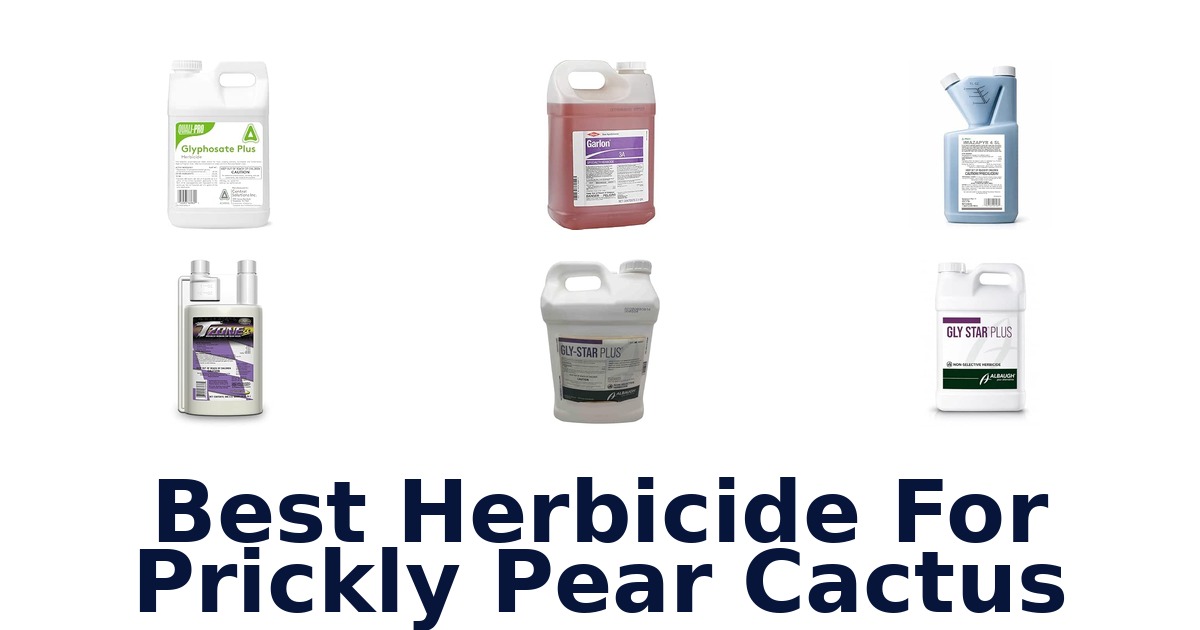
A strong candidate for prickly pear control should be labeled for the intended site and target, and offer an application approach suited to the infestation; this list is for landowners comparing brush and broad-spectrum herbicides. Alligare Imazapyr Herbicide 4 SL leads because its product information identifies rangeland use, broad-spectrum weed and brush control, and several application methods. That does not establish that it is labeled for prickly pear cactus, so verify the current label before purchase or use.
The list also includes triclopyr brush products and non-selective glyphosate concentrates, which differ in target descriptions, formulation details, and stated use settings. Treat the rankings as a comparison of supplied product facts, not proof of cactus-specific performance.
Protect desirable plants and follow all label directions and local restrictions.
Alligare Imazapyr Herbicide 4 SL ranks first because its listed facts combine broad-spectrum weed and brush control, rangeland use, and broadcast, targeted handgun, low-volume, cut-stump, or basal application methods. The supplied information does not confirm a prickly pear-specific label or efficacy. Before using it—or any product here—check the current label for cactus, site, application method, and restrictions.
Its warnings about drift and run-off also make protecting nearby desirable plants essential.
Our Top Picks
 Best Overall
Lists rangeland use, broad-spectrum weed and brush control, and broadcast, targeted handgun, low-volume, cut-stump, and basal application methods.
View on Amazon Woody Brush Focus
Its listed targets include 55 woody plants and more than 25 broadleaf weeds, with use described for forests, grazing areas, and rights-of-way.
View on Amazon Brush Combination
Lists 2,4-D plus triclopyr and describes the product as a weed and brush herbicide; the provided facts do not confirm cactus labeling.
View on Amazon- High-Load Glyphosate Honcho K6 Glyphosate
Compare the options by label fit and application method
| # | Product | Form | Weight | Buy |
|---|---|---|---|---|
| 1 | 1. Alligare Imazapyr 4 SLBest Overall | Liquid | 2 lb | View on Amazon |
| 2 | 2. Dow Garlon 4 UltraWoody Brush Focus | Liquid,Containers | — | View on Amazon |
| 3 |  3. Dow Garlon 3ALiquid herbicide listing | Liquid | — | View on Amazon |
| 4 | 4. TENKOZ Crossbow ConcentrateBrush Combination | Liquid | 11 lb | View on Amazon |
| 5 |  5. Honcho K6 GlyphosateHigh-Load Glyphosate | Liquid | — | View on Amazon |
| 6 |  6. Quali-Pro Glyphosate 4+Nonselective spot-treatment planners | Liquid | 11.52 kg | View on Amazon |
| 7 |  7. Gly-Star Plus GlyphosateFarm and nonresidential vegetation control | Liquid | 15 lb | View on Amazon |
| 8 | 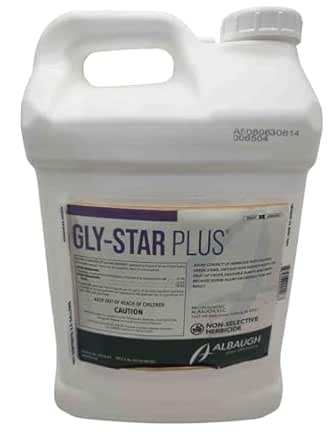 8. Albaugh Gly Star PlusSystemic weed and brush control | Spray | — | View on Amazon |
| 9 |  9. Albaugh Gly Star PlusLarge-volume glyphosate buyers | Liquid | 15 lb | View on Amazon |
| 10 |  10. PBI Gordon TZone SECool-weather turf weed control | Liquid | 2.4 lb | View on Amazon |
Detailed Reviews: Best Herbicide For Prickly Pear Cactus
#1 · Best Overall
1. Alligare Imazapyr 4 SL
- Form: Liquid
- Weight: 2 lb
Best for: Brush and rangeland applicators.
Why it ranks #1: Lists rangeland use, broad-spectrum weed and brush control, and broadcast, targeted handgun, low-volume, cut-stump, and basal application methods.
Multiple application methods are the clearest advantage of Alligare Imazapyr 4 SL: broadcast, targeted handgun, low-volume, cut-stump, and basal applications give land managers options for treating different vegetation and site conditions. The listing identifies broad-spectrum control of weeds, vines, and hardwood brush, with rangeland and site preparation among its stated uses.
Its liquid concentrate comes in a 32-ounce bottle, while the range of listed application methods lets users choose broadcast coverage or more targeted approaches such as handgun, cut-stump, and basal treatment. That flexibility suits forestry and rangeland work involving varied vegetation, and the stated use for bare-ground and site preparation adds another fit. The listing warns that drift and runoff may harm nearby plants, so application near desirable vegetation or water calls for particular care and label attention.
- Listed for broad-spectrum control of weeds, vines, and hardwood brush
- Supports broadcast and targeted handgun application
- Also lists low-volume, cut-stump, and basal application
- Stated uses include rangeland, bare-ground, and site preparation
- Drift and runoff may be hazardous to nearby plants and water.
Skip it if you need a product listing that specifies prickly-pear directions or a mixing rate; this listing gives no cactus-specific rate.
Rangeland and forestry users who need several application approaches for brush and other vegetation may value its flexibility. Its listing does not give prickly-pear-specific directions, and drift precautions matter around desirable plants and water.
Full product details
| Brand | ALLIGARE |
|---|---|
| Included Components | one 32oz bottle of Alligare Imazapyr 4 SL |
| Item Form | Liquid |
| Item Weight | 2 pounds |
| Manufacturer | ALLIGARE |
| Model Number | 32449 |
#2 · Woody Brush Focus
2. Dow Garlon 4 Ultra
- Form: Liquid,Containers
Best for: Rights-of-way brush managers.
Why it ranks #2: Its listed targets include 55 woody plants and more than 25 broadleaf weeds, with use described for forests, grazing areas, and rights-of-way.
Garlon 4 Ultra lists 55 woody plants and more than 25 tough broadleaf weeds as targets, setting it apart for noncrop brush management. Its stated use sites include roadsides, railroads, pipelines, industrial areas, forests, grazing areas, and rights-of-way, giving professional land managers a detailed picture of its listed settings.
The product's non-petroleum, plant-derived methylated seed oil solvent is described alongside increased efficacy on multiple woody species, including mesquite, sweetgum, and Scotch broom. That formulation detail connects to its stated broad-spectrum brush and broadleaf weed control, while the listed roadsides, railroads, forests, and rights-of-way clarify its noncrop fit. The low-odor formulation is another stated handling characteristic. The listing does not name prickly pear, so buyers should consult the complete package label before choosing it for cactus.
- Lists 55 woody plant targets
- Lists more than 25 tough annual and perennial broadleaf weeds
- Use sites include roadsides, forests, and rights-of-way
- Features a plant-derived methylated seed oil solvent
- Prickly pear is not among the supplied target examples.
Skip it if you need explicit prickly-pear directions; Alligare Imazapyr 4 SL lists vines and hardwood brush, though its supplied facts also do not name cactus.
Land managers treating listed noncrop sites and woody brush may find the extensive target and site information useful. Prickly pear is not identified in the supplied examples, so confirm the label covers the intended cactus and site.
Full product details
| Brand | Dow AgroSciences |
|---|---|
| Item Form | Liquid,Containers |
| Manufacturer | Dow AgroSciences |
Listed on Amazon as: Dow AgroSciences Garlon 4 Ultra Herbicide 2.5 GL
View on Amazon#3
3. Dow Garlon 3A
- Form: Liquid
Best for: Liquid herbicide listing.
Why it ranks #3: A liquid herbicide in the Garlon line, but the supplied listing gives no target, site, active ingredient, or application details to establish cactus fit.
The listing identifies Dow AgroSciences Garlon 3A as a liquid herbicide, making its product form the only concrete application-related detail provided. That limited information may help buyers who are already evaluating this named product, but the supplied listing does not describe target plants, application methods, or use sites.
Dow AgroSciences is the named brand, and liquid is the listed form; those are the only supplied product details beyond the Garlon 3A name. The listing provides no active ingredient, container size, target vegetation, application method, or site information to connect the product to a prickly pear treatment plan. Buyers should therefore rely on the product label and fuller product documentation to determine whether it fits their intended use, rather than infer a cactus use from the name alone.
- Identifies the product as Garlon 3A
- Names Dow AgroSciences as the brand
- Lists the item form as liquid
- Provides a specific product name for label lookup
- The supplied listing gives no target plants or application directions.
Skip it if you need listed target pests, mixing directions, or a container size; the supplied product details identify only its liquid form and brand.
This is a fit only for shoppers already seeking the specifically named Garlon 3A and prepared to consult its label for use details. The supplied listing alone does not establish suitability for prickly pear.
Full product details
| Brand | Dow AgroSciences |
|---|---|
| Item Form | Liquid |
Listed on Amazon as: Dow AgroSciences Garlon 3A Herbicide 2.5 GL
View on Amazon#4 · Brush Combination
4. TENKOZ Crossbow Concentrate
- Form: Liquid
- Weight: 11 lb
Best for: Brush-treatment label seekers.
Why it ranks #4: Lists 2,4-D plus triclopyr and describes the product as a weed and brush herbicide; the provided facts do not confirm cactus labeling.
The named combination of 2,4-D and triclopyr, together with the description as a low-volatile weed and brush herbicide, is the clearest differentiator for this Crossbow concentrate. It comes as a one-gallon liquid jug, but the supplied product information does not describe target species or application rates.
Its 2,4-D plus triclopyr formulation and low-volatile description identify the product as a weed and brush herbicide, while the one-gallon liquid jug specifies the supplied container format. Those details can help buyers identify the formulation they are evaluating, but they do not establish a prickly pear use or explain how to apply it. The listing also names states where shipment is restricted, so location can affect availability; consult the product label for permitted sites and directions.
- Contains 2,4-D and triclopyr
- Described as a low-volatile weed and brush herbicide
- Supplied as a liquid concentrate
- One-gallon jug is listed
- The supplied details give no target species or application rate.
Skip it if you need documented target species or rates before selecting a brush herbicide; this listing supplies neither.
Buyers already seeking a low-volatile 2,4-D and triclopyr brush herbicide may use the formulation details to narrow choices. The supplied listing does not confirm prickly pear control, and shipment restrictions apply in named states.
Full product details
| Brand | TENKOZ |
|---|---|
| Included Components | 1 Gallon Jug |
| Item Form | Liquid |
| Item Weight | 11 pounds |
| Manufacturer | TENKOZ |
| Additional Information | Important information Safety Information Seller is not responsible for purchasers failure to follow all safety regulations and laws stated in product label. This product is not able to be shipped to the following states Alaska, Hawaii, DC, Arizona, New Mexico , Maine, Utah. Directions Refer to product label for detailed usage instructions. |
Listed on Amazon as: Crossbow Herbicide Concentrate, 2,4-D + Triclopyr, 1 Gallon, Brush & Weed Killer
View on Amazon#5 · High-Load Glyphosate
5. Honcho K6 Glyphosate
- Form: Liquid
Best for: Farmstead glyphosate users.
Why it ranks #5: Lists a 48.7% potassium glyphosate formulation for post-emergent control of weeds, brush, vines, and woody plants, with no soil residual effect.
A 48.7% potassium glyphosate formulation distinguishes Honcho K6 in this group, with listed post-emergent systemic control for weeds, brush, vines, and woody plants. Its description also states compatibility with Roundup Ready crops, giving agricultural buyers a specific context for selective broad-spectrum use alongside non-selective farmstead applications.
The concentrated, water-soluble formulation is described for mixing with water or other carriers and application through industrial or field sprayers, which helps identify its intended equipment workflow. Systemic post-emergent action is described as foliage absorption and movement through plants, while the listing says there is no residual soil effect. Compatibility with Roundup Ready crops applies in the stated crop context; the product can harm desired plants, and the supplied facts do not name prickly pear.
- Lists 48.7% potassium glyphosate
- Targets weeds, brush, vines, and woody plants
- Describes use with industrial or field sprayers
- States compatibility with Roundup Ready crops
- Can harm or kill desired plants.
Skip it if you need a product listed specifically for prickly pear; this listing names broad vegetation targets but no cactus-specific directions.
Agricultural and farmstead users with suitable sprayer equipment may value its listed target range and Roundup Ready crop compatibility. It remains capable of harming desired plants, and cactus-specific use is not established by the supplied details.
Full product details
| Brand | Generic |
|---|---|
| Included Components | (1) 2.5 Gallon Jug of Honcho K6 |
| Item Form | Liquid |
| Manufacturer | Bayer Crop Science |
| Additional Information | Important information Safety Information This product contains a strong herbicide that can harm or kill desired plants. It is not safe for use in OR, WA, WY. Always follow the instructions on the label and use protective equipment when handling and applying the product. Directions Refer to label for complete directions before use. |
Listed on Amazon as: Honcho K6 Glyphosate Herbicide 48.7% Post-Emergent Systemic Weed Killer for Brush, Vines & Farmstead Use
View on Amazon#6
6. Quali-Pro Glyphosate 4+
- Form: Liquid
- Weight: 11.52 kg
Best for: Nonselective spot-treatment planners.
Why it ranks #6: Lists 41% glyphosate with surfactant and broad-spectrum, non-selective post-emergent use; the directions caution against drift onto desirable vegetation.
A supplied mixing direction—2 ounces per gallon of water—gives buyers of Quali-Pro Glyphosate 4+ a concrete starting point for general application. The listing identifies 41% glyphosate with surfactant and describes broad-spectrum, non-selective post-emergent weed control, making protection of nearby desirable plants an important part of its use.
The 41% glyphosate formulation with surfactant is described as a systemic, non-selective post-emergent herbicide, and the listing names cracks, driveways, flower beds, and fence rows as use settings. Its general direction to mix 2 ounces per gallon provides a stated preparation rate, while the drift warning makes careful targeting relevant wherever desirable vegetation is nearby. The supplied facts do not specify prickly pear control, so buyers should check the label for that particular target and application.
- Lists 41% glyphosate with surfactant
- Described as systemic and post-emergent
- Names cracks, driveways, flower beds, and fence rows as settings
- Provides a general mix rate of 2 ounces per gallon
- Non-selective action can harm desirable vegetation contacted by drift.
Skip it if you need a listing that names prickly pear as a target; this product's supplied details describe broad-spectrum weed control without cactus-specific directions.
Buyers seeking a listed glyphosate concentrate and a stated general mixing rate may find its directions useful for unwanted vegetation. Its non-selective nature and drift warning make it a poor fit around plants they intend to keep.
Full product details
| Brand | Quali-Pro |
|---|---|
| Item Form | Liquid |
| Item Weight | 11.52 kg |
| Manufacturer | ALLIGARE |
| Additional Information | Important information Safety Information Care should be taken to ensure that non-target vegetation is protected from drift Directions 1. Mix Glyphosate 4+ at a rate of 2 ounces per gallon of water. 2. Treat unwanted vegetation. 3. Avoid contact with desirable foliage and ornamentals. |
Listed on Amazon as: Glyphosate 4 + Plus Herbicide – 41% Glyphosate with Surfactant – 2.5 Gallon Credit 41 Extra
View on Amazon#7
7. Gly-Star Plus Glyphosate
- Form: Liquid
- Weight: 15 lb
Best for: Farm and nonresidential vegetation control.
Why it ranks #7: Lists 41% glyphosate with surfactant for broad-spectrum weeds, woody brush, and trees, but notes it is not labeled for residential use.
Visible effects are listed within 2–4 days on most annual weeds, giving this Gly-Star Plus formulation a specific timing detail for buyers planning vegetation control. The 41% glyphosate concentrate is described as non-selective and systemic, with broad-spectrum targets including annual and perennial weeds, woody brush, and trees.
The product is a 2.5-gallon liquid jug with a fully loaded surfactant system, linking its concentrate format to larger-scale application planning. Its post-emergent systemic action is described as affecting emerged weeds, with visible effects stated at 2–4 days for most annual weeds and seven or more days for most perennial weeds. No soil residual activity is listed, while the safety information says it is not labeled for residential use; follow label directions and protective-equipment requirements.
- Contains 41% glyphosate
- Fully loaded surfactant system is listed
- Visible effects stated in 2–4 days on most annual weeds
- No soil residual activity is described
- Not labeled for residential use.
Skip it if you need a residential-use product; for listed residential, commercial, and golf sites, PBI / Gordon TZONE SE names those settings.
Nonresidential users managing emerged annual or perennial weeds, brush, and trees may value the stated systemic action and timing details. It is explicitly not labeled for residential use, and the supplied facts do not name prickly pear.
Full product details
| Brand | Generic |
|---|---|
| Included Components | (1) 2.5 Gallon Jug of Glyphosate 4 Extra |
| Item Form | Liquid |
| Item Weight | 15 pounds |
| Manufacturer | Albaugh, LLC. |
Listed on Amazon as: Gly-Star Plus Herbicide (2.5 Gallons) Glyphosate Concentrate (41%) with Surfactant – Non-Selective Broadleaf Weed and Grass Control
View on Amazon#8
8. Albaugh Gly Star Plus
- Form: Spray
Best for: Systemic weed and brush control.
Why it ranks #8: Lists 41% glyphosate with surfactant and systemic post-emergent control of weeds and woody plants, but provides no cactus-specific direction.
Gly Star Plus combines listed 41% glyphosate with surfactant, and its description identifies systemic post-emergent action against targeted weeds. The supplied information also names annual and perennial weeds, shrubs, trees, and woody plants, making broad vegetation control its stated role; it does not identify prickly pear specifically.
The surfactant is included in the product, so buyers are not looking at a listing that describes a separate surfactant purchase. Its post-emergent systemic action is described as soaking into targeted plants, and the stated range extends from annual and perennial weeds to shrubs, trees, and woody plants. Those details support consideration for emerged vegetation, but the listing does not give a mixing rate or cactus-specific directions. Drift onto desirable plants and water sources is explicitly cautioned against.
- Lists 41% glyphosate
- Surfactant is included in the product
- Described as post-emergent and systemic
- Named targets include weeds, shrubs, trees, and woody plants
- The supplied details do not provide a mixing rate.
Skip it if you need a stated application rate or prickly-pear-specific direction; the supplied listing gives neither.
Buyers looking for a surfactant-containing systemic product for emerged weeds and woody plants may find the listed target range relevant. Check the label for application rates and cactus directions, and avoid drift onto desirable plants or water.
Full product details
| Brand | Generic |
|---|---|
| Item Form | Spray |
| Manufacturer | Albaugh |
Listed on Amazon as: Gly Star Plus Herbicide (2.5 Gallons)- by Albaugh, 41% Glyphosate Herbicide with Surfactant
View on Amazon#9
9. Albaugh Gly Star Plus
- Form: Liquid
- Weight: 15 lb
Best for: Large-volume glyphosate buyers.
Why it ranks #9: Describes non-selective systemic control of weeds, brush, and trees with no soil residual activity, but gives fewer specific formulation facts than similar listings.
A 2.5-gallon container is the clearest differentiating specification for this Gly Star Plus listing, which describes a 41% glyphosate concentrate with surfactant. Its supplied description identifies non-selective, post-emergent systemic control of annual and perennial weeds, woody brush, and trees, making it a broad vegetation-control option rather than a cactus-specific listing.
The listed 2.5-gallon liquid format gives buyers a defined container size for planning storage and handling, while the 41% glyphosate concentrate with surfactant identifies the formulation. Its description says the product is non-selective and systemic, with broad-spectrum control of annual and perennial weeds, woody brush, and trees; weeds must be emerged at application. No soil residual activity is stated. The supplied information does not specify a mixing rate or name prickly pear as a target.
- Lists a 2.5-gallon container
- Lists 41% glyphosate concentrate
- Surfactant is included in the described formulation
- Targets include annual and perennial weeds, woody brush, and trees
- The supplied details do not provide a mixing rate.
Skip it if you need a stated mixing rate or listed cactus target; this product information provides neither.
Buyers seeking a larger liquid container of systemic glyphosate for emerged weeds and woody vegetation may find the listed formulation relevant. Verify label rates and prickly-pear directions before use; the supplied listing does not specify either.
Full product details
| Brand | Generic |
|---|---|
| Item Form | Liquid |
| Item Weight | 15 pounds |
| Manufacturer | Albaugh, LLC |
Listed on Amazon as: Gly Star Plus Herbicide (2.5 Gallons)- by Albaugh, Glyphosate Concentrate (41%) Herbicide with Surfactant
View on Amazon#10
10. PBI Gordon TZone SE
- Form: Liquid
- Weight: 2.4 lb
Best for: Cool-weather turf weed control.
Why it ranks #10: Designed for residential, commercial, and golf sites and lists turf-focused broadleaf ingredients; the supplied facts do not indicate cactus or brush use.
A stated cool-weather use down to 50°F distinguishes TZONE SE from products whose supplied details focus on brush or broad-spectrum vegetation control. Its four listed active ingredients and yellow nutsedge suppression make it a candidate for residential, commercial, and golf-site broadleaf weed programs, rather than a cactus-specific selection.
The triclopyr, 2,4-D, dicamba, and sulfentrazone combination is listed for tough weeds, while the stated cool-weather option down to 50°F gives users a defined temperature threshold for planning. Yellow nutsedge suppression adds a specific target, and the described residential, commercial, and golf-site uses help identify its intended settings. The supplied details do not identify prickly pear as a target, so buyers should not treat the turf-focused listing as confirmation of cactus control.
- Four active ingredients are named in the listing
- Provides yellow nutsedge suppression
- Listed for residential, commercial, and golf sites
- Cool-weather weed control option stated as low as 50°F
- The supplied target information does not identify prickly pear.
Skip it if you need listed cactus or brush targets; Alligare Imazapyr 4 SL specifically lists vines and hardwood brush, though not prickly pear.
Turf managers seeking broadleaf weed control across residential, commercial, or golf sites may appreciate the stated cool-weather option and nutsedge suppression. Buyers targeting prickly pear should verify label directions because cactus control is not listed.
Full product details
| Brand | PBI / Gordon |
|---|---|
| Item Form | Liquid |
| Item Weight | 2.4 pounds |
| Manufacturer | PBI Gordon |
| Model Number | T-Zone Turf Herbicide – 1 Quart |
Listed on Amazon as: TZONE SE Broadleaf Herbicide for Tough Weeds – 1 Quart
View on AmazonWhy cactus-specific labeling matters
A general brush or broad-spectrum claim does not confirm that a product may legally or effectively be used on prickly pear cactus. The products here describe targets such as weeds, brush, woody plants, or broadleaf weeds, but none of the supplied listings explicitly names prickly pear. Do not infer cactus control from a product’s active ingredient or from a listing’s broad target language.
Check the current container label for the target plant, approved site, permitted application method, and any local restrictions before treating. This is especially important where desirable plants are nearby: Alligare Imazapyr 4 SL warns that drift and run-off may be hazardous to plants in adjacent water, while glyphosate listings also caution about non-target vegetation.
If the label does not cover the target and site, choose a product and treatment approach that does rather than improvising a rate or method.
Avoid confusing systemic action with lasting soil control
A systemic, post-emergent description means the product is taken up by emerged vegetation; it does not by itself promise control of cactus roots or future regrowth. Several glyphosate entries describe systemic action, and Honcho K6 and Gly-Star Plus describe no soil residual effect. That distinction matters when buyers expect one treatment to prevent new growth: the supplied facts do not establish that outcome.
Imazapyr, by contrast, is described as providing lasting protection, but its listing also warns about injury to plants through drift or run-off, and the exact approved target and site still need label verification. Match expectations to the label, not just to a phrase such as broad-spectrum or systemic.
For established cactus, confirm whether the product directions address the plant and whether repeat treatment or follow-up is specified; do not invent a rate or assume results from claims about other weeds.
How to Choose a Herbicide for Prickly Pear
Target and site on the label
Look first for a label that expressly covers the target plant and the place you plan to treat. In this set, Alligare Imazapyr 4 SL lists forestry and rangeland, while Dow Garlon 4 Ultra lists forests, grazing areas, roadsides, and rights-of-way; TZone SE is described for residential, commercial, and golf sites. These descriptions do not confirm prickly pear is an approved target.
A buyer treating rangeland should investigate the rangeland-oriented listings first, while a residential buyer should not assume an agricultural or noncrop product is suitable. Verify current label directions and jurisdictional limits before deciding.
Application-method detail
Prefer a product whose label method fits the scale and access of the infestation. Alligare Imazapyr 4 SL’s listing names broadcast, targeted handgun, low-volume, cut-stump, and basal application, offering the most varied stated methods in this group. Most other entries provide little or no application-method detail in the supplied facts; glyphosate products generally say to mix or apply to unwanted vegetation without establishing a cactus-specific technique.
A buyer comparing broad-area versus targeted treatment can start with the more detailed listing, but must confirm the label allows that method for cactus and site. Do not assume that a listed method is appropriate for every plant or setting.
Formulation and handling warnings
Compare the stated formulation and warnings, because these affect handling and the need to protect neighboring vegetation. The listings include liquids, a spray, glyphosate concentrates with 41% glyphosate, and Honcho K6 with 48.7% potassium glyphosate. Concentration alone does not show which is best for prickly pear or establish a mixing rate.
Alligare warns about drift and run-off; Quali-Pro Glyphosate 4+ warns users to protect non-target vegetation; and Gly-Star Plus notes that it is not labeled for residential use. Buyers near gardens, water, or desirable plants should prioritize the current label’s site and drift instructions.
Use the label’s protective equipment and application directions rather than comparing concentrations as if they were interchangeable.
Which Herbicide Should I Choose for Prickly Pear?
Start with label fit: none of these supplied listings explicitly confirms prickly pear treatment, so do not buy or apply a product until its current label covers the target and site. For a rangeland or brush-control comparison, Alligare Imazapyr 4 SL is the leading option because it lists rangeland use and five application methods. Dow Garlon 4 Ultra is a relevant alternative when its label fits, with listed coverage of woody plants and use in forests and grazing areas.
For a buyer considering non-selective systemic products, Honcho K6 Glyphosate lists brush and woody plants, while Quali-Pro Glyphosate 4+ lists 41% glyphosate with surfactant and warns about drift. Choose by approved target, setting, and method—not by broad-spectrum wording alone.
Frequently Asked Questions
Does the product label specifically allow treatment of prickly pear cactus at my site?
Check the current product label before buying or applying; the supplied listings do not explicitly confirm prickly pear treatment. Verify that the label names the target cactus, permits use at your site, and allows the intended application method. Follow all label directions and restrictions; broad-spectrum or brush-control wording alone does not establish approval.
Which application method is appropriate for an isolated cactus versus a larger patch?
Use only a method the current label permits for prickly pear and your site. The first-ranked product lists broadcast, targeted handgun, low-volume, cut-stump, and basal methods, but the supplied information does not establish which is appropriate for cactus. Confirm the target and method on the label before treating an isolated plant or a patch.
How can I reduce herbicide drift or damage to nearby desirable plants?
Follow the label’s application directions and drift precautions, and do not apply when conditions could carry herbicide onto desirable plants. The supplied information specifically warns about drift for some products and drift and run-off for the first-ranked option. Check the label for restrictions that apply to your site and chosen method.
What should I compare when choosing among these herbicides?
Compare whether the current label covers prickly pear at your site, then consider the listed uses and application methods. The first-ranked option lists rangeland use and several methods; other listings mention brush, woody plants, or non-selective weed control. Those descriptions are comparison clues, not confirmation that cactus treatment is allowed.
What should I do if the label does not mention prickly pear?
Do not assume the product is suitable or apply it to the cactus. The supplied listings do not confirm prickly pear-specific treatment, so contact the manufacturer or an appropriate local weed-control authority to clarify label coverage. Choose a product only when its current label permits the target, site, and intended application method.
Final Words
Start by checking the current label: none of the supplied listings explicitly confirms prickly pear treatment, so do not buy or apply a product until target, site, method, and restrictions fit. For comparing rangeland or brush-control options, Alligare Imazapyr 4 SL leads on listed uses and application methods, but that is not proof of cactus efficacy. Consider alternatives only when their labels match your situation, and protect nearby desirable plants from drift and run-off.