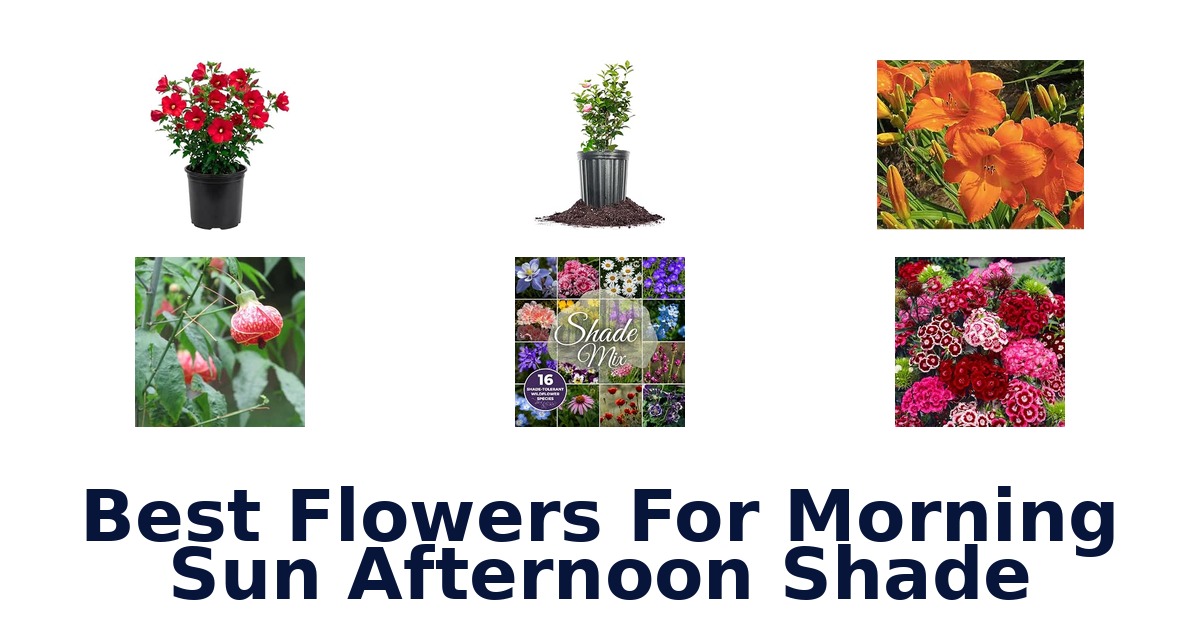
A strong choice for morning sun and afternoon shade is a plant explicitly listed for that exposure, which makes Perfect Plants Pink Perfection Camellia the clearest fit for gardeners seeking a flowering shrub. This roundup also includes partial-shade shrubs, perennials, live plants, and seed mixes for different spaces and growing preferences. Check each listing carefully: some flowers here call for full sun, while others are described for shade without confirming the specific morning-sun pattern.
Plant size, hardiness zones, soil, and whether you want seeds or an established plant all affect the match. The rankings prioritize the stated light requirements first, then consider useful details such as bloom season, mature dimensions, and the number or form of plants included.
Perfect Plants Pink Perfection Camellia is the best match because its listing specifically says it grows best with morning sun and afternoon partial shade. It produces pale pink, fully double flowers from late winter through early spring and remains evergreen. Allow for its mature size of 7–12 feet tall and 5–8 feet wide, and provide moist, acidic, well-draining soil.
It is suited to USDA zones 7–10, so confirm your climate and planting space before choosing it.
Our Top Picks
 Best Overall
Perfect Plants Pink Perfection Camellia
Its listing explicitly recommends morning sun and afternoon partial shade; the evergreen shrub blooms in late winter to early spring and reaches 7–12 feet.
View on Amazon Best Part-Shade Shrub
The listing specifies full sun to part shade and zones 5–9, making this deciduous shrub a flexible choice for a partly shaded landscape.
View on Amazon Best Hanging Vine
This live flowering plant prefers full sun to partial shade and is described as a trailing hanging vine; it is hardy in zones 8–11.
View on Amazon- Best Cold-Hardy Perennial Marde Ross Mauna Loa Daylily
- Best Cool-Season Pick ELLA'S HOMES Pansies
Compare these flowers and seed mixes
| # | Product | Buy |
|---|---|---|
| 1 | 1. Perfect Plants Pink Perfection CamelliaBest Overall | View on Amazon |
| 2 | 2. UIOTER Purple Rose of SharonBest Part-Shade Shrub | View on Amazon |
| 3 | 3. TANKDA Pink AbutilonBest Hanging Vine | View on Amazon |
| 4 |  4. Marde Ross Mauna Loa DaylilyBest Cold-Hardy Perennial | View on Amazon |
| 5 |  5. ELLA'S HOMES PansiesBest Cool-Season Pick | View on Amazon |
| 6 |  6. Lawn Seed Feed Partial Shade MixShady-bed resealable seed pouch | View on Amazon |
| 7 |  7. Generic Red Rose of SharonAdaptable red flowering shrub | View on Amazon |
| 8 |  8. Paper Street Perennials Shade Wildflower MixWoodland pollinator seed mix | View on Amazon |
| 9 |  9. ELLA'S HOMES Creeping PhloxLow-care sunny rock-garden plant | View on Amazon |
| 10 |  10. Mixrug Sweet William SeedsFragrant pollinator cut-flower seed | View on Amazon |
Detailed Reviews: Best Flowers For Morning Sun Afternoon Shade
#1 · Best Overall
1. Perfect Plants Pink Perfection Camellia
Best for: Evergreen shaded-border specimen.
Why it ranks #1: Its listing explicitly recommends morning sun and afternoon partial shade; the evergreen shrub blooms in late winter to early spring and reaches 7–12 feet.
Pale pink, fully double flowers bloom from late winter through early spring, bringing layered color to a garden when many plants are not flowering. This camellia specifically grows best with morning sun and afternoon partial shade, making its stated light preference a direct match for the roundup.
Glossy deep green foliage remains evergreen year-round, so the shrub contributes structure beyond its flowering season. Its mature size of 7–12 feet tall and 5–8 feet wide suits a substantial specimen or accent spot rather than a small container display. Growth of 1–2 feet per year gives a sense of how it may fill that space, while spring pruning after flowering helps maintain shape and encourage the next year's blooms. It prefers moist, acidic, well-draining soil.
- Best growth stated for morning sun and afternoon partial shade
- Pale pink, fully double flowers with overlapping petals
- Late-winter to early-spring bloom period
- Evergreen foliage and a specified mature size
- Its 7–12-foot height requires room for a large shrub.
Skip it if you need a compact planting; the 7–12-foot Red Rose of Sharon from Generic is a better-sized alternative only if its unspecified mature dimensions suit you.
Choose this camellia if you have room for an evergreen specimen and want pale, layered blooms in late winter or early spring. It fits morning sun and afternoon partial shade, but needs moist, acidic, well-draining soil.
Full product details
| Brand | PERFECT PLANTS |
|---|---|
| Color | Pink |
| Manufacturer | Perfect Plants |
| Special Features | Fragrant |
| Special Feature | Fragrant |
Listed on Amazon as: Perfect Plants Pink Perfection Camellia Live Plant, 1 Gallon
View on Amazon#2 · Best Part-Shade Shrub
2. UIOTER Purple Rose of Sharon
Best for: Part-shade flowering hedge shrub.
Why it ranks #2: The listing specifies full sun to part shade and zones 5–9, making this deciduous shrub a flexible choice for a partly shaded landscape.
Rose of Sharon is listed for full sun to part shade and can be used as a flower hedge, giving this purple shrub a stated role in a mixed-light landscape. Its hibiscus-like blooms appear during warmer months, adding seasonal color to a shrub planting.
The medium-moisture, well-drained soil preference helps define the site and watering conditions for this live plant. Its Zones 5–9 range gives a clear hardiness guide, while the part-shade listing makes it relevant to gardens that do not receive full sun all day. As a deciduous flowering shrub, it will not keep foliage year-round; its warmer-month blooms and hedge use make it better suited to seasonal landscape structure than an evergreen screen.
- Listed for full sun to part shade
- Can be used as a flower hedge
- Hibiscus-like blooms appear in warmer months
- USDA Zones 5–9 and soil needs are stated
- It is deciduous, so it does not provide year-round evergreen foliage.
Skip it if you want evergreen foliage through winter; PERFECT PLANTS Pink Perfection Camellia is described as evergreen year-round and suits afternoon partial shade.
Choose this Rose of Sharon for a part-shade landscape hedge with warmer-season blooms, provided your site has medium moisture and well-drained soil. Its deciduous habit is the boundary for anyone seeking year-round foliage.
Full product details
| Brand | UIOTER |
|---|---|
| Color | Purple Rose of Sharon |
| Manufacturer | UIOTER |
| Part Number | Be-L18-scale-althea-oitr |
Listed on Amazon as: Purple Live Rose of Sharon Plant, Landscape Flower Shrub, 6-13 Inch Tall
View on Amazon#3 · Best Hanging Vine
3. TANKDA Pink Abutilon
Best for: Indoor-outdoor hanging vine pair.
Why it ranks #3: This live flowering plant prefers full sun to partial shade and is described as a trailing hanging vine; it is hardy in zones 8–11.
Two live Abutilon plants arrive at a listed height of 5–8 inches, and the listing identifies them as lantern trailing hanging flower vines. Their full-sun to partial-shade preference gives them a potential place in mixed-light gardens, while cooler-zone growers can consider houseplant use.
The plants prefer well-draining soil with moderate moisture, giving buyers clear growing conditions for either indoor or outdoor placement. Their USDA Zones 8–11 hardiness range marks the outdoor climate boundary; the listing says they are often grown as houseplants in cooler zones. The stated full-sun to partial-shade exposure can accommodate some afternoon shade, but no more specific schedule is supplied. The pair format also offers two plants to place together or in separate suitable spaces.
- Two live Abutilon plants included
- Listed as lantern trailing hanging flower vines
- Full sun to partial shade preference
- Houseplant use noted for cooler zones
- Outdoor hardiness is limited to USDA Zones 8–11.
Skip it if you garden outdoors in cooler zones and do not want a houseplant; Marde Ross & Company Mauna Loa Daylily is listed as hardy in Zone 3.
This pair suits someone seeking trailing Abutilon plants for indoor or outdoor growing and who can provide moderate moisture and well-draining soil. Outside Zones 8–11, the listing points to houseplant use rather than outdoor hardiness.
Full product details
| Brand | TANKDA |
|---|---|
| Color | Pink |
| Manufacturer | TANKDA |
| Part Number | Be-T1-JOE-orangeabutilon-oq1 |
Listed on Amazon as: 2 Pink Abutilon Live Plants, Perennial Flower Bush, 5-8 Inch Tall
View on Amazon#4 · Best Cold-Hardy Perennial
4. Marde Ross Mauna Loa Daylily
Best for: Cold-hardy orange border perennial.
Why it ranks #4: The listing allows full sun or partial shade and describes a hardy perennial for zone 3, with bright orange flowers for borders and landscapes.
Bright orange Mauna Loa Daylily flowers add a defined color accent to borders and landscapes, while the listing identifies the perennial as hardy in Zone 3. Its suitability for full sun or partial shade makes it relevant to a garden with afternoon shade.
The full-sun-or-partial-shade guidance gives this daylily a wider light range than a full-sun-only choice, though it does not specify a particular daily sun schedule. Its Zone 3 hardiness is useful for colder-climate planning, and the bare-root format means the buyer receives a plant rather than a seed mix or established potted plant. The listing describes it as low maintenance and pollinator-attracting, supporting a border or landscape role with orange blooms.
- Bright orange flowers for borders and landscape accents
- Listed as hardy in USDA Zone 3
- Suitable for full sun or partial shade
- Low maintenance and pollinator-attracting
- The listing gives no precise morning-sun and afternoon-shade schedule.
Skip it if you need an explicitly specified morning-sun, afternoon-shade preference; PERFECT PLANTS Pink Perfection Camellia lists that exact light pattern.
Consider this daylily for a cold-climate border or landscape accent where partial shade is available and orange flowers fit the plan. Its light guidance is broad, so it does not confirm a precise daily exposure schedule.
Full product details
| Brand | Marde Ross & Company |
|---|---|
| Color | Orange |
| Item Weight | 1.6 ounces |
| Manufacturer | Rising Phoenix |
| Material Feature | GMO Free |
| Material Features | GMO Free |
| Special Features | Attracts Pollinators |
| Special Feature | Attracts Pollinators |
Listed on Amazon as: Mauna Loa Daylily – Bare Root Plant, Hardy Perennial for Zone 3, Vibrant Orange Blooms, Low Maintenance, Ideal for Full Sun or Partial Shade, Perfect for Garden Borders & Landscapes
View on Amazon#5 · Best Cool-Season Pick
5. ELLA'S HOMES Pansies
Best for: Compact cool-season color pair.
Why it ranks #5: These live pansies grow in full sun to partial shade and flower in cooler periods, including fall and spring; the listing includes two plants.
Two live pansy plants, each listed at 3–5 inches tall, provide a compact start for cool-season color in assorted hues. Their full-sun-to-partial-shade light range and cooler-season flowering make them a relevant option for a garden with morning sun and afternoon shade.
Pansies are listed as flowering in fall, winter in mild climates, and spring, so they can bring color during cooler growing periods rather than only warm-season months. Their full sun to partial shade preference covers the target exposure, while well-drained soil and consistent moisture define their care needs. The compact 3–5-inch current size helps with placement in smaller spaces, and the two-plant quantity supports a small grouping without implying a specific mature spread.
- Two live pansy plants included
- Full sun to partial shade light preference
- Flowers in fall, mild-climate winter, and spring
- Compact 3–5-inch current height
- Consistent moisture is required, so the planting needs regular attention to watering.
Skip it if you want a larger shrub rather than compact cool-season plants; UIOTER Purple Rose of Sharon is listed as a flowering shrub for landscape hedges.
Choose these pansies for a compact planting that can flower through cooler periods and receive partial shade. They suit the specified light pattern, but plan for well-drained soil and consistent moisture as part of their care.
Full product details
| Brand | ELLA'S HOMES |
|---|---|
| Color | Multi Color |
| Manufacturer | ELLA'S HOMES |
| Special Features | Cold Hardy, Compact, Extended Bloom Time, Low Maintenance |
| Special Feature | Cold Hardy, Compact, Extended Bloom Time, Low Maintenance |
Listed on Amazon as: 2 Pansies Plants Live, Mix Pansy Plants, 3-5 Inc Tall, Assorted Colors
View on Amazon#6
6. Lawn Seed Feed Partial Shade Mix
Best for: Shady-bed resealable seed pouch.
Why it ranks #6: The seed mix is labeled for partial shade and sunlight, with low-maintenance care described once established; its listing presents it for beds and fence lines.
A resealable pouch helps shield this partial-shade wildflower mix from moisture, air, and light between uses. That storage feature is useful when planting a garden bed, yard, or fence line in stages rather than sowing the entire 2-ounce pouch at once.
The mix is listed for sun to partial-shade conditions, so it can suit brighter garden edges while offering an option for shadier spaces. Its 2-ounce quantity gives buyers a defined amount for planning, and the resealable pouch helps protect unused seeds from moisture that can cause premature germination or mold, as well as exposure to air and light. The product states minimal watering once established, which can reduce ongoing care after plants take hold.
- Partial-shade wildflower mix
- Resealable pouch helps protect unused seeds
- Listed for yards, garden beds, and fence lines
- Minimal watering once established
- It still requires sun to partial shade, not a fully shaded planting site.
Skip it if you have a fully shaded site; Paper Street Perennials Shade Wildflower Seed Mix is selected for shade and partially shaded locations.
This is a practical choice for someone planting a partial-shade bed or fence line who may sow in stages. Its resealable pouch supports storage, but the listed growing conditions still call for sun to partial shade.
Full product details
| Brand | Lawn Seed Feed |
|---|---|
| Color | Multiple |
| Manufacturer | Lawn Seed Feed |
| Material Feature | Organic |
| Material Features | Organic |
| Special Features | Shade Resistant |
| Care Instructions | Low maintenance, requires minimal watering once established. Plant in sun to partial shade conditions. See more |
| Special Feature | Shade Resistant |
| Style Name | Partial Shade |
#7
7. Generic Red Rose of Sharon
Best for: Adaptable red flowering shrub.
Why it ranks #7: This flowering shrub is listed for zones 5–9 and described as adaptable, but its light exposure is not specified, so fit is less certain.
Its stated adaptability and USDA Zones 5–9 range give this Red Rose of Sharon a broad climate fit for garden planting. The red flowering shrub is supplied as one plant in a quart pot, offering a live-plant starting point for landscaping where a red bloom is wanted.
The listing identifies this plant as Red Althea and describes it as suitable for landscaping and garden planting, so it can serve as a shrub choice rather than a seed-starting project. Its stated steady growth over time supports a longer-term garden role, while the Zones 5–9 range helps determine regional suitability. Early-spring trimming is recommended to shape the plant and support new growth. The listing does not specify its light preference, so it cannot confirm a morning-sun, afternoon-shade match.
- Red Rose of Sharon flowering shrub
- Listed for landscaping and garden planting
- USDA Zones 5–9 suitability
- Early-spring trimming supports shaping and new growth
- No light requirements are supplied, so its fit for this sun-and-shade pattern is unconfirmed.
Skip it if you require a confirmed morning-sun and afternoon-shade preference; PERFECT PLANTS Pink Perfection Camellia explicitly lists those conditions.
Consider this plant if you want a red Rose of Sharon for landscaping and can use the stated Zones 5–9 range. Because its light needs are not listed, choose it only if your site can be assessed separately.
Full product details
| Brand | Generic |
|---|---|
| Color | Red |
| Manufacturer | Generic |
| Special Features | Fragrant, Low Maintenance |
| Special Feature | Fragrant, Low Maintenance |
Listed on Amazon as: Red Rose of Sharon Live Plant, Vibrant Flowering Shrub, 8-10 Inch Tall
View on Amazon#8
8. Paper Street Perennials Shade Wildflower Mix
Best for: Woodland pollinator seed mix.
Why it ranks #8: Its 16 annual and perennial species are selected for partially shaded woodland edges, but the listing does not confirm tolerance of morning sun.
Sixteen annual and perennial species are selected for shade, unlike traditional wildflower mixes intended for full sun. That makes this blend relevant for woodland edges, beneath trees, and other lower-light garden areas where a varied meadow-style planting is the goal.
The annual-and-perennial combination is described as providing season-long color, diverse bloom forms, and pollinator value, giving a planting more variety than a single-species patch. Its shade focus suits partially shaded locations, though the listing does not specify a precise morning-sun or afternoon-shade schedule. The 1/8-pound size is stated to cover up to 400 square feet, a useful planning figure for sizing a woodland-meadow project. The mix is also identified as non-GMO and without fillers.
- Sixteen annual and perennial species
- Selected for shade and partially shaded locations
- Season-long color and diverse bloom forms stated
- 1/8 pound covers up to 400 square feet
- The listing targets shade broadly, not a specific morning-sun and afternoon-shade schedule.
Skip it if you need a live shrub with a specified morning-sun, afternoon-shade preference; PERFECT PLANTS Pink Perfection Camellia lists those conditions.
Pick this mix for a shaded woodland edge or beneath trees when you want a multi-species, pollinator-friendly meadow effect. Its coverage figure helps plan an area, but its light guidance is broad rather than schedule-specific.
Full product details
| Brand | Paper Street Perennials |
|---|---|
| Color | Multicolored Blooms |
| Item Weight | 2.08 ounces |
| Manufacturer | Paper Street Ventures, LLC |
| Special Features | Pollinator Friendly, Shade Tolerant, Annual & Perennial Blend, Non-GMO, No Fillers, Woodland Garden Mix |
| Special Feature | Pollinator Friendly, Shade Tolerant, Annual & Perennial Blend, Non-GMO, No Fillers, Woodland Garden Mix See more |
Listed on Amazon as: Shade Wildflower Seed Mix – 16 Annual & Perennial Species, Wildflowers for Shade, Pollinator-Friendly, Non-GMO Seeds, 1/8lb Covers Up to 400 Sq Ft Woodland Meadows
View on Amazon#9
9. ELLA'S HOMES Creeping Phlox
Best for: Low-care sunny rock-garden plant.
Why it ranks #9: The listing calls for full sun and well-drained soil rather than partial shade, making it a weaker match despite its perennial habit and zones 3–9 range.
This creeping phlox is listed for flower beds, borders, rock gardens, and hanging baskets, allowing one low-growing perennial to serve several planting styles. Its full-sun requirement is the key limitation for a morning-sun, afternoon-shade garden, so site exposure should guide the choice.
The listing says the plant thrives in full sun and well-drained soil, a clear site requirement that makes it less suited to afternoon shade than plants with a partial-shade preference. Minimal watering, pruning, and maintenance can simplify care once placed in an appropriate spot. It grows in Zones 3–9 and is said to provide interest throughout the year. The listing identifies two live plants measuring 4–7 inches tall, a small starting size to consider when planning its placement.
- Suitable for beds, borders, rock gardens, and hanging baskets
- Requires minimal watering, pruning, and maintenance
- Listed for USDA Zones 3–9
- Two live plants, 4–7 inches tall
- Thrives in full sun, not the afternoon-shade conditions sought here.
Skip it if you need a confirmed partial-shade plant; UIOTER Purple Rose of Sharon is listed for full sun to part shade.
This suits a buyer who wants a low-maintenance perennial for a sunny rock garden, border, or basket. Its listed full-sun preference is a meaningful boundary for a bed that receives shade in the afternoon.
Full product details
| Brand | ELLA'S HOMES |
|---|---|
| Color | Stripe |
| Manufacturer | ELLA'S HOMES |
Listed on Amazon as: 2 Stripe Creeping Phlox Live Plants, Perennial Flower Plant, 4-7 Inch Tall
View on Amazon#10
10. Mixrug Sweet William Seeds
Best for: Fragrant pollinator cut-flower seed.
Why it ranks #10: Sweet William is listed as requiring full sun and good drainage, so its stated light needs do not suit a site shaded in the afternoon.
Sweet William produces clusters of fragrant flowers in white, pink, purple, red, and violet, with blooms attracting a range of beneficial insects. Its vivid color range and cut-flower use make it an appealing seed choice, but its full-sun requirement is important for this roundup's afternoon-shade setting.
The listing describes a biennial that blooms the year after planting, from mid-spring to mid-summer, so buyers should plan for delayed flowering rather than immediate color. Plants reach 12–24 inches tall and 6–12 inches wide, useful dimensions for beds and borders. The stated full-sun requirement and good drainage are central site considerations: this is not a direct match for afternoon shade. It is listed for USDA Zones 4–10 and attracts butterflies, bumblebees, ladybugs, and hummingbirds.
- Fragrant clusters in several listed colors
- Attracts a range of beneficial insects
- Suitable for beds, borders, and cut flowers
- Height and width ranges provided for placement
- Requires full sun, making it a poor fit for an afternoon-shade site.
Skip it if you need flowers for afternoon shade; PERFECT PLANTS Pink Perfection Camellia is specifically listed for morning sun and afternoon partial shade.
Choose Sweet William if your planting area receives full sun and you can wait until the year after sowing for blooms. Its fragrant clusters suit beds, borders, and cutting, but its light requirement rules out shaded afternoons.
Full product details
| Brand | Mixrug |
|---|---|
| Color | Gazania |
| Manufacturer | Mixrug |
| Part Number | LYJ-1021-GS03905-02 |
| Material Feature | GMO Free |
| Material Features | GMO Free |
| Special Features | Attracts Pollinators |
| Special Feature | Attracts Pollinators |
Listed on Amazon as: 5000+ Sweet William Seeds Perennial for Planting-Dianthus Seeds Sweetness Flower Non-GMO Heirloom for Outdoor Garden Hardy to USDA Zones 3-9
View on AmazonAvoid the afternoon-shade mismatch
Do not assume that a flower labeled shade tolerant will necessarily thrive with morning sun and afternoon shade. The clearest match here is Perfect Plants Pink Perfection Camellia, whose listing explicitly names that exposure. By contrast, Paper Street Perennials Shade Wildflower Mix targets woodland edges and partially shaded locations but does not specify morning sun.
Lawn Seed Feed Partial Shade Mix is described for sun to partial shade, yet that broad phrase does not establish how much direct morning light it needs. Check the planting spot through the day and compare those conditions with the individual plant listing.
Also avoid reversing a plant’s stated preference: Mixrug Sweet William Seeds and ELLA’S HOMES Creeping Phlox are listed for full sun, so placing them in a shaded afternoon location may not meet their stated requirements. The product descriptions do not provide exact hours of sunlight.
Plan for mature size, not just the shipped plant
A small live plant or seed packet does not tell you how much garden space the mature planting needs. Perfect Plants Pink Perfection Camellia is listed at 7–12 feet tall and 5–8 feet wide, so it needs substantially more room than a compact flower bed might offer. The Rose of Sharon listings provide starting plant heights—8–10 inches for Generic Red Rose of Sharon and 6–13 inches for UIOTER Purple Rose of Sharon—but do not give mature dimensions.
Seed mixes create a different planning challenge: Paper Street Perennials Shade Wildflower Mix says its 1/8-pound size covers up to 400 square feet, so match the selected bag size to the intended area rather than sowing by packet appearance. For live plants with no mature measurements, verify the expected size before placing them near paths, walls, or other plants.
How to Choose Flowers for Morning Sun
Match the stated light exposure
Look first for a listing that names morning sun and afternoon shade, rather than relying on a general shade-tolerant label. Perfect Plants Pink Perfection Camellia is the only product here that explicitly names that exact pattern. UIOTER Purple Rose of Sharon, TANKDA Pink Abutilon, Marde Ross Mauna Loa Daylily, and ELLA’S HOMES Pansies are listed for full sun to partial shade or full sun or partial shade, offering broader exposure guidance.
The two wildflower mixes focus on shade or partial shade without giving exact hours. Choose the camellia when your site matches its stated pattern; choose a broader partial-shade option when conditions vary, and avoid full-sun Sweet William for a reliably shaded afternoon.
Choose a live plant or seeds
Decide whether you want an established plant to place in the garden or seeds that need sowing and growing. The listings include live plants such as the one-gallon Perfect Plants Pink Perfection Camellia, two TANKDA Pink Abutilon plants, and two ELLA’S HOMES Pansies. Seed options include Paper Street Perennials Shade Wildflower Mix, a 16-species annual and perennial blend, and Mixrug Sweet William Seeds, which blooms the year after planting.
A live plant may suit a gardener wanting an immediate planting project, while seed mixes suit those planning a broader patch. Consider the specified timing: Sweet William blooms in mid-spring to mid-summer in the year after planting, whereas pansies are described as cool-season flowers.
Check climate and growing conditions
Compare the listed hardiness zones and soil needs with your garden before choosing a flower. Perfect Plants Pink Perfection Camellia suits zones 7–10 and prefers moist, acidic, well-draining soil; Marde Ross Mauna Loa Daylily is described as hardy in zone 3, and Rose of Sharon listings specify zones 5–TANKDA Pink Abutilon is hardy in zones 8–11 and may be grown as a houseplant in cooler zones.
For soil, the daylily listing highlights hardiness but does not give the same detailed soil guidance as the camellia. Favor the camellia where its acidity and moisture preferences can be met, and consider a product with a wider or more suitable zone range for colder climates.
Zone ranges do not replace checking local conditions.
Which flower should I choose for my garden?
Choose Perfect Plants Pink Perfection Camellia if your garden has morning sun, afternoon partial shade, acidic well-draining soil, and room for a shrub reaching 7–12 feet. For a part-shade landscape shrub in zones 5–9, choose UIOTER Purple Rose of Sharon; its listing also mentions use as a flower hedge. TANKDA Pink Abutilon suits someone looking for a trailing plant and a full-sun-to-partial-shade option in zones 8–11.
If you want a hardy perennial, Marde Ross Mauna Loa Daylily is listed for partial shade and zone Choose ELLA’S HOMES Pansies for cooler-season color, or Lawn Seed Feed Partial Shade Mix to sow a shaded bed.
Avoid Mixrug Sweet William Seeds where afternoon shade is a fixed condition because its listing requires full sun.
Frequently Asked Questions
How many hours of morning sun do flowers need before afternoon shade?
Many flowers suited to partial shade can grow with several hours of direct morning light followed by shade later in the day. The exact amount varies by plant, so check each listing’s light requirements. For example, the camellia listing specifically calls for morning sun and afternoon partial shade.
Can flowers in afternoon shade still bloom well in a container?
Yes, flowers that tolerate partial shade can bloom in containers if they receive suitable light and have room for their roots. Choose a container with drainage, use an appropriate potting mix, and monitor moisture because containers can dry differently from garden beds. Follow the selected plant’s care guidance.
How should I prepare soil for flowers planted beneath trees?
Start by checking the soil’s drainage and the plant’s soil preferences. Beneath trees, avoid cutting major roots or piling soil against trunks; loosen only the planting area you need. Add suitable organic matter if appropriate, then water thoroughly and monitor moisture, since tree roots may compete with new flowers.
What should I check before choosing a flowering shrub for partial shade?
Check the shrub’s light needs, mature dimensions, climate suitability, and soil preferences before planting. The Pink Perfection Camellia, for example, is suited to USDA zones 7–10 and needs acidic, well-draining soil, with room for a mature shrub 7–12 feet tall and 5–8 feet wide.
How can I choose between plants and seeds for a shaded bed?
Choose live plants when you want an established individual plant, and consider seed mixes when you want to sow a broader area. Check each listing for light requirements and planting guidance. The shade wildflower mixes are presented for shaded spaces, while the Sweet William listing requires full sun.
Final Words
For a garden with morning sun, afternoon partial shade, acidic well-draining soil, and room for a large shrub, Perfect Plants Pink Perfection Camellia is the strongest match. Check that your climate falls within zones 7–10 before planting. For other needs, consider Purple Rose of Sharon as a landscape shrub, Mauna Loa Daylily as a hardy perennial, or pansies for cooler-season color.
Skip Sweet William where afternoon shade is fixed.