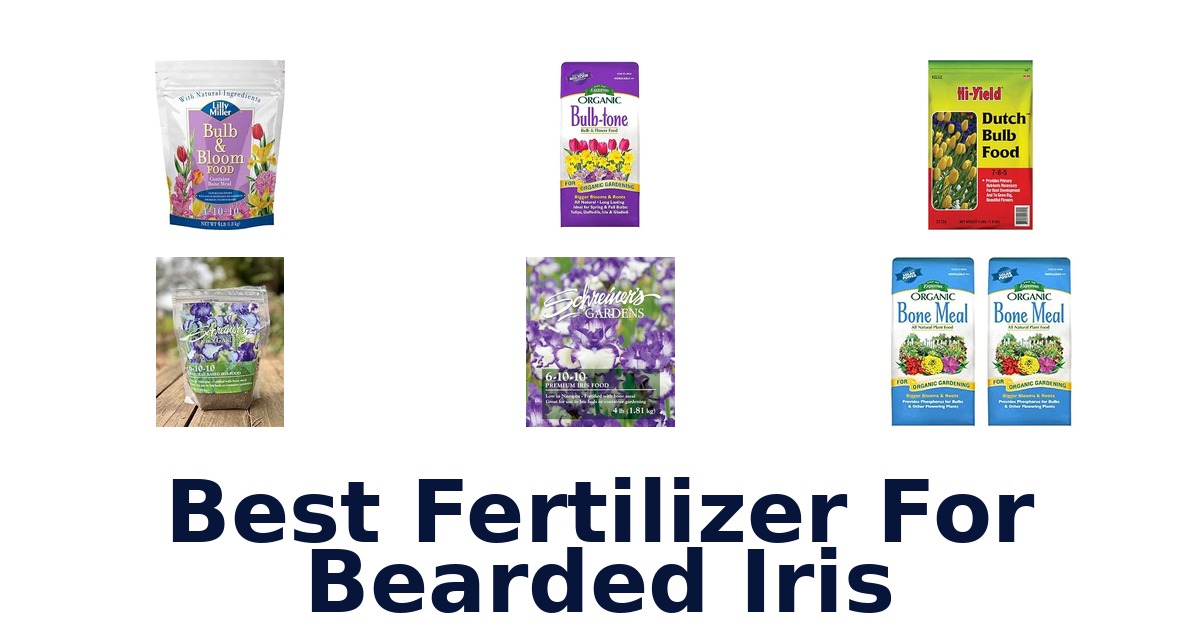
A strong fertilizer for bearded iris supplies measured nutrients without relying on excessive nitrogen, and suits gardeners who want to feed established plants or newly planted rhizomes. The clearest matches here are Schreiner’s Iris Gardens 6-10-10 Natural Based Iris Food and 6-10-10 Premium Iris Food: both are low-nitrogen granules formulated specifically for iris. Other options include a liquid iris plant food, general bulb fertilizers, and organic products for bulbs and flowering plants.
Those broader choices can suit gardeners seeking a particular format or organic ingredients, but their listings do not establish that they are formulated specifically for bearded iris. Compare the label, form, and directions before applying; the products vary in nutrient analysis and intended use, so they are not interchangeable by scoop or schedule.
Schreiner’s Iris Gardens 6-10-10 Natural Based Iris Food leads because it is explicitly formulated for iris, uses a low-nitrogen 6-10-10 analysis, and lists application one month before and one month after bloom. Its granule form and targeted directions make it the clearest match for someone seeking fertilizer specifically for bearded iris. If you need a larger bag, 6-10-10 Premium Iris Food shares the same analysis and iris-focused use, in a four-pound package.
Our Top Picks
 Best Overall
Formulated specifically for iris, this low-nitrogen 6-10-10 granule includes directions to apply one month before and after bloom.
View on Amazon Largest Iris-Specific Bag
This four-pound bag matches the iris-specific 6-10-10 formula and low-nitrogen positioning, making it a practical alternative for larger beds.
View on Amazon Liquid Iris Formula
The 32-ounce liquid is explicitly presented as iris fertilizer and is described as supporting roots and vibrant blooms.
View on Amazon- Explicit Iris Use Hi-Yield Dutch Bulb Food
- Slow-Release Bulb Food Lilly Miller Bulb & Bloom Food
Compare fertilizer options for bearded iris
| # | Product | Weight | Form | Buy |
|---|---|---|---|---|
| 1 | 1. Schreiner's 6-10-10 Iris FoodBest Overall | 16 oz | Granules | View on Amazon |
| 2 | 2. Premium 6-10-10 Iris FoodLargest Iris-Specific Bag | 4 lb | Granules | View on Amazon |
| 3 | 3. TPS Nutrients Iris FertilizerLiquid Iris Formula | 2.2 lb | Liquid | View on Amazon |
| 4 |  4. Hi-Yield Dutch Bulb FoodExplicit Iris Use | 49.2 lb | Granules | View on Amazon |
| 5 |  5. Lilly Miller Bulb & Bloom FoodSlow-Release Bulb Food | 4 lb | Powder | View on Amazon |
| 6 |  6. Cz Garden 4-10-10 Bulb FertilizerMicronutrient bulb-bed feeding | 4 lb | Granules | View on Amazon |
| 7 |  7. Espoma Organic Bulb-ToneOrganic bulb-bed planting | 4 lb | Granules | View on Amazon |
| 8 | 8. Espoma Organic Bulb-Tone PackOrganic bulb-food multipack | 4.3 lb | Granules | View on Amazon |
| 9 |  9. Espoma Organic Bone Meal 8 lbOrganic bone meal for planting | 8 lb | Powder | View on Amazon |
| 10 |  10. Espoma Bone Meal PackOrganic bone meal multipack | 4 lb | Granules | View on Amazon |
Detailed Reviews: Best Fertilizer For Bearded Iris
#1 · Best Overall
1. Schreiner's 6-10-10 Iris Food
- Weight: 16 oz
- Form: Granules
Best for: Scheduled feeding for irises.
Why it ranks #1: Formulated specifically for iris, this low-nitrogen 6-10-10 granule includes directions to apply one month before and after bloom.
A low-nitrogen 6-10-10 formula and explicit timing around bloom distinguish Schreiner's Iris Gardens Iris Food. Apply it one month before and one month after flowering, giving iris growers a clear seasonal feeding window. Its granular form also suits gardeners who prefer a solid fertilizer for iris beds.
The controlled-release 6-10-10 fertilizer is specially formulated for iris, and the directions call for application one month before and one month after bloom. That timing gives gardeners a defined routine rather than an unspecified feeding window. The product is also described as suitable for newly planted rhizomes after planting or division, making it relevant when refreshing an iris bed. Use protective equipment when handling, and store it out of reach of children and pets.
- Low-nitrogen 6-10-10 formula
- Granular form for iris beds
- Application timing specified around bloom
- Described as a boost for newly planted rhizomes
- The 16-ounce package is smaller than the supplied four-pound iris-food option.
Skip it if you need a four-pound package for a larger bed; the Generic 6-10-10 Premium Iris Food is supplied in that size.
This is a fitting choice for iris growers who want low-nitrogen granular food and a stated schedule tied to flowering. It also suits newly planted or divided rhizomes, but the 16-ounce package may be limiting for larger beds.
Full product details
| Brand | Schreiner's Iris Gardens |
|---|---|
| Item Form | Granules |
| Item Weight | 16 ounces |
| Manufacturer | Marion Ag Services |
| Additional Information | Important information Safety Information Use protective equipment when handling. Store in a safe place, out of reach of children and pets. Follow local regulations for fertilizer disposal. Directions Apply one month before and one month after bloom. When planting new iris or dividing existing iris beds, apply to newly planted rhizomes. |
Listed on Amazon as: 6-10-10 Natural Based Iris Food
View on Amazon#2 · Largest Iris-Specific Bag
2. Premium 6-10-10 Iris Food
- Weight: 4 lb
- Form: Granules
Best for: Four-pound iris-bed feeding.
Why it ranks #2: This four-pound bag matches the iris-specific 6-10-10 formula and low-nitrogen positioning, making it a practical alternative for larger beds.
A four-pound bag of low-nitrogen 6-10-10 granular food makes this Generic Premium Iris Food a practical option for gardeners tending a larger iris planting. Its formula is specially described for iris, with stated support for bloom and plant health, and the product notes coverage for the bag.
This controlled-release granular fertilizer is formulated specifically for iris, linking its 6-10-10 analysis to the needs of an iris bed rather than presenting it as a general flower food. The four-pound bag typically covers a stated area, though the supplied description cuts off before giving the coverage figure. Application is recommended one month before and one month after bloom, and the product is also presented as a boost for newly planted or divided rhizomes.
- Low-nitrogen 6-10-10 formula
- Granular controlled-release form
- Four-pound bag
- Timing guidance covers before and after bloom
- The supplied coverage description ends before stating the area covered.
Skip it if you require a fully stated coverage figure before buying; Schreiner's Iris Gardens 6-10-10 provides a smaller package with clear bloom timing.
Consider this fertilizer for an iris grower seeking a larger granular package and a schedule linked to bloom. Its iris-specific formula suits established beds and new rhizomes, but the supplied coverage information is incomplete.
Full product details
| Brand | Generic |
|---|---|
| Item Form | Granules |
| Item Weight | 4 pounds |
| Manufacturer | Marion Ag Services |
Listed on Amazon as: 6-10-10 Premium Iris Food
View on Amazon#3 · Liquid Iris Formula
3. TPS Nutrients Iris Fertilizer
- Weight: 2.2 lb
- Form: Liquid
Best for: Liquid feeding for iris beds.
Why it ranks #3: The 32-ounce liquid is explicitly presented as iris fertilizer and is described as supporting roots and vibrant blooms.
A fast-absorbing liquid formula gives this TPS NUTRIENTS iris food a practical advantage for gardeners who want nutrient delivery in liquid form. Its iris-specific positioning connects feeding with both flowering and underground growth, supporting fuller, brighter blooms alongside root and bulb development in bearded iris plantings.
The liquid form is described as fast-absorbing, so it suits gardeners who prefer a liquid feeding routine over working granules into a bed. Its stated focus on vibrant blooms and consistent flowering addresses the visible side of iris care, while support for roots and bulb development covers plant structure below ground. That combination makes it a targeted option for bearded iris growers; the supplied details do not provide a dilution rate or application schedule.
- Liquid form is fast-absorbing
- Specifically identified as iris fertilizer
- Supports fuller, brighter blooms
- Supports root and bulb development
- Application rate and feeding schedule are not specified in the supplied details.
Skip it if you prefer a granular fertilizer with a stated feeding schedule; Schreiner's Iris Gardens 6-10-10 provides timing guidance around bloom.
Choose this liquid iris food if you want a product explicitly aimed at bearded iris blooms as well as root and bulb development. Its supplied details do not specify dilution or timing, so it best fits growers comfortable following product directions when available.
Full product details
| Brand | TPS NUTRIENTS |
|---|---|
| Item Form | Liquid |
| Item Weight | 2.2 pounds |
| Manufacturer | TPS Nutrients |
Listed on Amazon as: Iris Fertilizer – Liquid Plant Food for More Blooms, 32 oz
View on Amazon#4 · Explicit Iris Use
4. Hi-Yield Dutch Bulb Food
- Weight: 49.2 lb
- Form: Granules
Best for: Measured feeding for iris beds.
Why it ranks #4: Among general bulb foods, this 7-8-5 granule specifically names iris and provides application guidance for new and established plantings.
Hi-Yield Dutch Bulb Food explicitly includes iris among its flowering-bulb uses, and its directions give a measured rate of one teaspoon per square foot for new and established plantings. The 7-8-5 granules suit gardeners who want a stated application method for bulb beds.
The granular 7-8-5 analysis provides nitrogen, phosphate, and soluble potash, while the listed purpose connects those primary nutrients with root development and flower growth. For new plantings, the product is mixed with soil; for established beds, directions give a rate of one rounded teaspoon per square foot. Iris is named alongside tulips, gladiolus, and peonies, making this a relevant choice for mixed flowering-bulb areas. Its directions also address planting in spring and fall.
- Iris is explicitly listed among suitable flowers
- 7-8-5 granular formula
- Measured application rate for established beds
- Directions cover new and established plantings
- The supplied package size is four pounds, which may be more than needed for a small bed.
Skip it if you want a fertilizer formulated specifically for iris with a schedule tied to bloom; Schreiner's Iris Gardens 6-10-10 provides those details.
Choose this for iris and other flowering bulbs when measured granular application and guidance for both new and established beds matter. Its broader bulb use suits mixed plantings, though its directions focus on planting and bed area rather than timing around iris bloom.
Full product details
| Brand | Hi-Yield |
|---|---|
| Item Form | Granules |
| Item Weight | 49.2 pounds |
| Manufacturer | Hi-Yield |
| Model Number | 21724 |
Listed on Amazon as: Hi-Yield (21724) Dutch Bulb Food 7-8-5, 4 lbs
View on Amazon#5 · Slow-Release Bulb Food
5. Lilly Miller Bulb & Bloom Food
- Weight: 4 lb
- Form: Powder
Best for: Slow-release bulb and bloom food.
Why it ranks #5: Its 4-10-10 analysis and slow-release feeding are relevant to bloom-focused bulb care, though the listing does not specifically name iris.
Slow-release feeding is the defining feature of Lilly Miller Bulb & Bloom Food, a 4-10-10 powder whose phosphorus and potassium are associated with bright, vigorous blooms. For iris growers who also tend other bulbs, it offers a broader bulb-and-bloom option rather than a formula described specifically for iris.
The 4-10-10 analysis combines phosphorus and potassium, which the product description connects to bright, vigorous blooms. Slow-release feeding means the fertilizer is presented as a gradual-feeding option, a useful distinction for gardeners choosing how to manage bulb beds. Its powder form is supplied in a four-pound package, while the listing does not name iris specifically or provide an iris feeding schedule. Follow the listed handling guidance, including protective equipment and avoiding inhalation during application.
- 4-10-10 analysis
- Slow-release feeding
- Phosphorus and potassium linked to vigorous blooms
- Four-pound package
- The supplied description does not identify iris as a specific use.
Skip it if you want an iris-specific formula and bloom schedule; Schreiner's Iris Gardens 6-10-10 is explicitly formulated for iris.
This suits gardeners who want slow-release 4-10-10 bulb food and also grow flowers beyond iris. Its bloom-focused nutrient description is relevant to flowering beds, but buyers seeking iris-specific directions should choose a product with those details.
Full product details
| Brand | Lilly Miller |
|---|---|
| Item Form | Powder |
| Item Weight | 4 pounds |
| Manufacturer | Lilly Miller |
| Model Number | 100099089 |
Listed on Amazon as: Lilly Miller Bulb & Bloom Food 4-10-10 4lb
View on Amazon#6
6. Cz Garden 4-10-10 Bulb Fertilizer
- Weight: 4 lb
- Form: Granules
Best for: Micronutrient bulb-bed feeding.
Why it ranks #6: This four-pound 4-10-10 granule includes iron and micronutrients and targets bulbs and flowers, but is not specifically formulated for iris.
Added iron and micronutrients distinguish Cz Garden Supply's 4-10-10 Bulb and Bloom fertilizer from a basic NPK formula. The granular food is intended for flower bulbs and indoor or outdoor flowers, offering iris gardeners a broader flower-bed option with a resealable pouch for storing fertilizer between uses.
The 4-10-10 analysis supplies nitrogen, phosphorus, and potassium alongside micronutrients, including 2% iron, which gives gardeners a broader nutrient profile for flower beds. Its listed uses span bulbs and indoor or outdoor flowers, so it can fit a mixed planting rather than only an iris bed. Granules pour from a resealable, heavy-duty four-pound pouch, letting users store the remainder after measuring out an application. Iris-specific timing is not provided in the supplied details.
- 4-10-10 NPK analysis
- Includes 2% iron and micronutrients
- Listed for bulbs and indoor or outdoor flowers
- Resealable, easy-pour four-pound pouch
- No iris-specific application schedule is provided in the supplied details.
Skip it if you want a fertilizer formulated specifically for iris with timing around flowering; Schreiner's Iris Gardens 6-10-10 supplies both.
Pick this for a mixed flower garden where a 4-10-10 granular fertilizer with iron and micronutrients is useful beyond irises. Its broad listed uses suit varied beds, while iris growers should note that no specific feeding schedule is supplied.
Full product details
| Brand | Cz Garden Supply |
|---|---|
| Item Form | Granules |
| Item Weight | 4 pounds |
| Manufacturer | Cz Garden Supply |
| Model Number | Cz4-10-10 |
Listed on Amazon as: 4-10-10 Bulb and Bloom Fertilizer – Made in USA – 2% Iron + Micronutrients Plant Food for Indoor/Outdoor Flower Gardens and Trees
View on Amazon#7
7. Espoma Organic Bulb-Tone
- Weight: 4 lb
- Form: Granules
Best for: Organic bulb-bed planting.
Why it ranks #7: The 3-5-3 organic granule is intended for spring and fall bulbs, but its listed examples do not specifically include iris.
Espoma Bulb-tone pairs a 3-5-3 analysis with 6% calcium and an organic ingredient blend, giving bulb gardeners a distinct nutrient profile for planting or post-bloom feeding. It is listed for spring and fall bulbs, including gladioli and lilies, though iris is not named in the supplied use list.
The organic ingredient blend is enhanced with Espoma's Bio-tone formula and contains no sludges or fillers, while the 3-5-3 analysis includes 6% calcium. Those features set it apart from higher-analysis iris-specific foods for gardeners choosing a bulb fertilizer by ingredients and nutrient profile. Its stated use covers fall bulbs and spring bulbs such as gladioli and lilies, with guidance for planting or feeding after spring bloom. The supplied use list does not name iris.
- Natural and organic ingredient blend
- 3-5-3 fertilizer analysis
- Contains 6% calcium
- Listed for planting or post-bloom feeding of bulbs
- Iris is not named among the supplied examples of suitable bulbs.
Skip it if you need a fertilizer explicitly listed for iris; Hi-Yield Dutch Bulb Food names iris among its flowering-bulb uses.
Consider Bulb-tone if you choose organic bulb food by its 3-5-3 analysis, calcium content, and planting or post-bloom use. It is listed for several spring and fall bulbs, but the supplied examples do not specifically include iris.
Full product details
| Brand | Espoma |
|---|---|
| Included Components | Espoma – BT4 |
| Item Form | Granules |
| Item Weight | 4 pounds |
| Manufacturer | Espoma |
| Model Number | Espoma – BT4 #2 |
| Additional Information | Important information Ingredients organic ingredients |
Listed on Amazon as: Espoma Organic Bulb-Tone 3-5-3 Natural & Organic Fertilizer and Plant Food for All Spring and Fall Bulbs. 4 lb. Bag. Use for Planting & Feeding to Promote Vibrant Blooms
View on Amazon#8
8. Espoma Organic Bulb-Tone Pack
- Weight: 4.3 lb
- Form: Granules
Best for: Organic bulb-food multipack.
Why it ranks #8: This pack of two shares Bulb-Tone's 3-5-3 organic formula for bulbs, although the listed examples do not establish an iris-specific use.
Two bags of Espoma Bulb-tone give gardeners a multipack of organic 3-5-3 fertilizer with 6% calcium for spring and fall bulb care. Its Bio-tone-enhanced ingredient blend and planting or post-bloom use make it relevant to bulb gardeners, though the listed examples do not name iris.
Bulb-tone combines natural and organic ingredients with Espoma's Bio-tone formula, and its 3-5-3 analysis includes 6% calcium. It is listed for fall bulbs such as tulips, daffodils, crocus, and hyacinths, and spring bulbs including gladioli and lilies. The stated timing covers planting or feeding after spring flowering, giving users two points in the bulb-care routine. This pack of two suits gardeners who want multiple bags, but the supplied plant list does not specifically mention iris.
- Pack of two Bulb-tone bags
- Natural and organic ingredient blend
- 3-5-3 analysis with 6% calcium
- Use listed for planting and post-bloom feeding
- The supplied suitable-bulb examples do not specifically include iris.
Skip it if you need an organic bone meal explicitly listed for bulbs and perennial flowers; Espoma Organic Bone Meal 4-12-0 names both uses.
Choose this multipack if you care for listed spring and fall bulbs and want Espoma's organic 3-5-3 blend for planting or post-bloom feeding. For bearded iris, note that iris is not included in the supplied examples.
Full product details
| Brand | Espoma |
|---|---|
| Included Components | 1 |
| Item Form | Granules |
| Item Weight | 4.3 pounds |
| Manufacturer | Espoma |
Listed on Amazon as: Espoma Organic Bulb-Tone 3-5-3 Natural & Organic Fertilizer and Plant Food for All Spring and Fall Bulbs. 4 lb. Bag. Use for Planting & Feeding to Promote Vibrant Blooms – Pack of 2
View on Amazon#9
9. Espoma Organic Bone Meal 8 lb
- Weight: 8 lb
- Form: Powder
Best for: Organic bone meal for planting.
Why it ranks #9: The all-natural 4-12-0 bone meal is listed for bulbs and perennial flowers, but offers no iris-specific analysis or feeding schedule.
A 100% natural domestic bone meal with no fillers or additives gives this Espoma fertilizer a clear ingredient distinction for organic gardeners. Its 4-12-0 analysis supplies nitrogen and phosphorus, and its listed use includes spring and fall bulbs as well as annual and perennial flowers.
Espoma recommends mixing the bone meal into soil at planting, making it a planting-time option rather than a product with a supplied post-bloom routine. Its 4-12-0 analysis and description as a source of nitrogen, phosphorus, and calcium connect the product to flowering plants and bulbs. The all-natural domestic bone meal contains no fillers or additives and is approved for organic gardening as a registered Organic Input Material. The eight-pound powder package suits gardeners preparing multiple planting areas.
- 100% natural domestic bone meal
- No fillers or additives
- 4-12-0 analysis with nitrogen, phosphorus, and calcium
- Approved for organic gardening
- Directions specify mixing into soil at planting, not a post-bloom feeding schedule.
Skip it if you need a granular bulb food with stated use for iris; Hi-Yield Dutch Bulb Food explicitly includes iris among its listed flowers.
This fits organic gardeners preparing bulb or flower planting areas who want bone meal mixed into soil at planting. Its eight-pound powder package and broad flower use are useful, but it is not presented with a post-bloom schedule.
Full product details
| Brand | Espoma |
|---|---|
| Included Components | fertilizers |
| Item Form | Powder |
| Item Weight | 8 pounds |
| Manufacturer | Espoma |
| Model Number | 4-12-0 |
| Warranty Description | Warranty |
| Additional Information | Important information Ingredients Bone Meal |
Listed on Amazon as: Espoma Organic Bone Meal Fertilizer 4-12-0. All-Natural Plant Food Source of Nitrogen and Phosphorus for Organic Gardening. for Bulbs & Other Flowering Plants. 8 lb. Bag. Pack of 1
View on Amazon#10
10. Espoma Bone Meal Pack
- Weight: 4 lb
- Form: Granules
Best for: Organic bone meal multipack.
Why it ranks #10: This bone meal is a broad nitrogen and phosphorus source for bulbs and gardens, without product details specifically addressing bearded iris.
Two four-pound bags of Espoma Organic Bone Meal provide a combined eight pounds of all-natural nitrogen-and-phosphorus plant food for bulb and flower gardeners. The 4-12-0 product is intended for organic gardening and offers a multipack format for gardeners preparing several planting areas.
The bone meal is described as an all-natural source of phosphorus and nitrogen, with a 4-12-0 analysis, making it a planting amendment option for bulbs and other flowering plants. The listing provides a direction of 10 pounds per 100 square feet for bulbs and gardens, helping gardeners calculate application by area. Its two four-pound bags allow the contents to be handled in separate portions. Keep the fertilizer away from children and pets, and avoid skin and eye contact during handling.
- Two four-pound bags
- 4-12-0 bone meal
- All-natural source of phosphorus and nitrogen
- Directions state a rate for bulbs and gardens
- The supplied directions call for a 10-pound rate per 100 square feet, exceeding the combined eight-pound package.
Skip it if you need one eight-pound package and directions for mixing at planting; Espoma Organic Bone Meal 8 lb. gives that application guidance.
This is suited to organic gardeners feeding bulbs or flower beds who prefer two separate four-pound bags and an area-based rate. The product is bone meal rather than an iris-specific fertilizer, so consider that fit when planning a bearded iris routine.
Full product details
| Brand | Espoma |
|---|---|
| Item Form | Granules |
| Item Weight | 4 pounds |
| Manufacturer | Espoma |
| Model Number | BM04 |
Listed on Amazon as: Espoma Organic Bone Meal Fertilizer 4-12-0. All-Natural Plant Food Source of Nitrogen and Phosphorus for Organic Gardening. for Bulbs & Other Flowering Plants. 4 lb. Bag; Pack of 2
View on AmazonWhy general bulb fertilizer is not the same as iris food
A bulb fertilizer is not automatically a close match for bearded iris, because the listings vary in whether they name iris at all. Schreiner’s Iris Gardens 6-10-10 Natural Based Iris Food and Premium 6-10-10 Iris Food are explicitly formulated for iris and described as low in nitrogen. Hi-Yield Dutch Bulb Food also names iris among its uses, but its 7-8-5 analysis differs.
By contrast, Lilly Miller Bulb & Bloom Food and Espoma Organic Bulb-Tone list bulb or flower applications without specifically naming iris in the supplied details. Bearded iris grow from rhizomes, so do not assume a product’s directions for other bulbs translate directly to iris placement or timing.
Check the package directions for the actual plant and application method, and avoid treating nutrient ratios as interchangeable. This distinction matters most when a gardener wants a product selected specifically for iris rather than a general flowering-bulb fertilizer.
Granules and liquid have different application trade-offs
The main format trade-off is between a ready-to-measure liquid and granular or powdered products with different listed use directions. TPS Nutrients Iris Fertilizer is a 32-ounce liquid described as fast-absorbing, while the iris-specific Schreiner’s and Premium products are granules. Other granular choices include Hi-Yield Dutch Bulb Food, which supplies a rate of one teaspoon per square foot for new and established plants, and Espoma Organic Bone Meal, which gives planting-time guidance.
These directions are product-specific; do not convert a teaspoon-per-area instruction into a liquid dose or assume the same timing applies to every formula. The label also matters when choosing for an established bed versus newly planted or divided rhizomes: Schreiner’s directions specify feeding around bloom, while the bone meal listing says to mix it into soil at planting.
Choose format based on the directions you can follow accurately, not an assumption that liquid or granules are inherently better.
How to Choose Bearded Iris Fertilizer
Iris-specific formulation
Look first for a label that explicitly names iris if your priority is feeding bearded iris rather than a mixed flower bed. Schreiner’s Iris Gardens 6-10-10 Natural Based Iris Food and Premium 6-10-10 Iris Food are described as low-nitrogen formulas specially formulated for iris; Hi-Yield Dutch Bulb Food also names iris but is a broader bulb product with a 7-8-5 analysis. TPS Nutrients Iris Fertilizer is also iris-specific, but its supplied details do not give an NPK analysis.
General products such as Bulb-Tone and bulb-and-bloom foods list other bulbs or flowers without specific iris claims. Choose a named iris formula when direct relevance matters most; a broader product may suit a garden containing several listed bulb types.
Nutrient analysis
Compare the printed analysis rather than assuming all bloom fertilizers provide the same nutrients. The two iris-specific granules are 6-10-10; other options include 4-10-10, 7-8-5, Espoma Bulb-Tone at 3-5-3, and bone meal at 4-12-The supplied description characterizes the 6-10-10 iris foods as low in nitrogen, while the 4-10-10 products highlight phosphorus and potassium for blooms.
Bone meal supplies nitrogen and phosphorus but has no listed potash. Choose 6-10-10 when you want the listed iris-specific analysis, or compare broader formulas when feeding multiple kinds of flowers.
The product facts do not establish a universal best ratio for every soil or garden, so use a soil test and package directions to guide the final choice.
Form and application directions
Choose a form whose directions fit your planting situation and that you can measure consistently. Most options here are granules or powder: Schreiner’s iris food gives timing one month before and after bloom, while Hi-Yield lists one teaspoon per square foot for established beds and new plantings. Espoma Organic Bone Meal says to mix it into soil at planting.
TPS Nutrients Iris Fertilizer is a 32-ounce liquid and is described as fast-absorbing, but the supplied details do not include a dilution rate. Granules may be the easier choice for gardeners following bed-area rates, while liquid may appeal to someone specifically seeking a liquid iris product.
Always follow the exact label for dosage and timing; these products’ directions cannot be substituted for one another.
Which Fertilizer Should I Choose for Bearded Iris?
For a targeted granular fertilizer with a stated schedule, choose Schreiner’s 6-10-10 Iris Food: it is explicitly formulated for iris and directs application around bloom. If you want the same listed 6-10-10 iris-focused formula in a four-pound bag, choose Premium 6-10-10 Iris Food. For a liquid product specifically labeled for iris, TPS Nutrients Iris Fertilizer is the clearest fit, though the supplied details do not state a dose.
Choose Hi-Yield Dutch Bulb Food if you want a multi-bulb fertilizer that explicitly includes iris and provides a per-square-foot rate. For a general bulb-and-flower product or organic ingredients, consider Lilly Miller Bulb & Bloom Food or Espoma Organic Bulb-Tone, recognizing that their listings do not establish a bearded-iris-specific formula.
Follow the selected package directions.
Frequently Asked Questions
When should bearded iris be fertilized during the growing season?
For the iris-specific 6-10-10 option, the listed schedule is to apply fertilizer one month before bloom and one month after bloom. Other products may have different directions, so follow the instructions on the package you select rather than assuming the same timing applies to every formula.
How much fertilizer should I apply around an iris rhizome?
Use the amount stated on the selected product’s package; the supplied details do not give a universal dose for bearded iris. Hi-Yield Dutch Bulb Food lists a per-square-foot rate, while the liquid iris fertilizer details do not state a dose. Do not substitute one product’s rate for another.
Should fertilizer be kept off exposed bearded iris rhizomes?
Follow the selected fertilizer’s label for placement, and avoid piling product directly on an exposed rhizome. The supplied product details do not give a shared placement rule for all ten options. Because application directions vary, use the instructions for the specific fertilizer rather than assuming every product should be applied identically.
Which option is specifically formulated for iris?
Schreiner’s 6-10-10 Natural Based Iris Food is explicitly formulated for iris and lists application one month before and one month after bloom. Its granule form and targeted directions make it the clearest match in this selection. The Premium 6-10-10 option shares the listed analysis and iris-focused use.
What should I choose if I prefer a liquid or organic fertilizer?
For a liquid product labeled for iris, consider TPS Nutrients Iris Fertilizer, but the supplied details do not state a dose. For an organic bulb product, Espoma Organic Bulb-Tone is an option; its listing describes use for spring and fall bulbs, not a bearded-iris-specific formula. Follow its package directions.
Final Words
For a fertilizer specifically aimed at iris, choose Schreiner’s 6-10-10 Natural Based Iris Food and follow its schedule of one month before and one month after bloom. Choose the four-pound Premium 6-10-10 option if you want the same listed analysis in that package size. For liquid, organic, or multi-bulb alternatives, match the product to your preference and follow its own label; not every listing establishes a bearded-iris-specific formula.