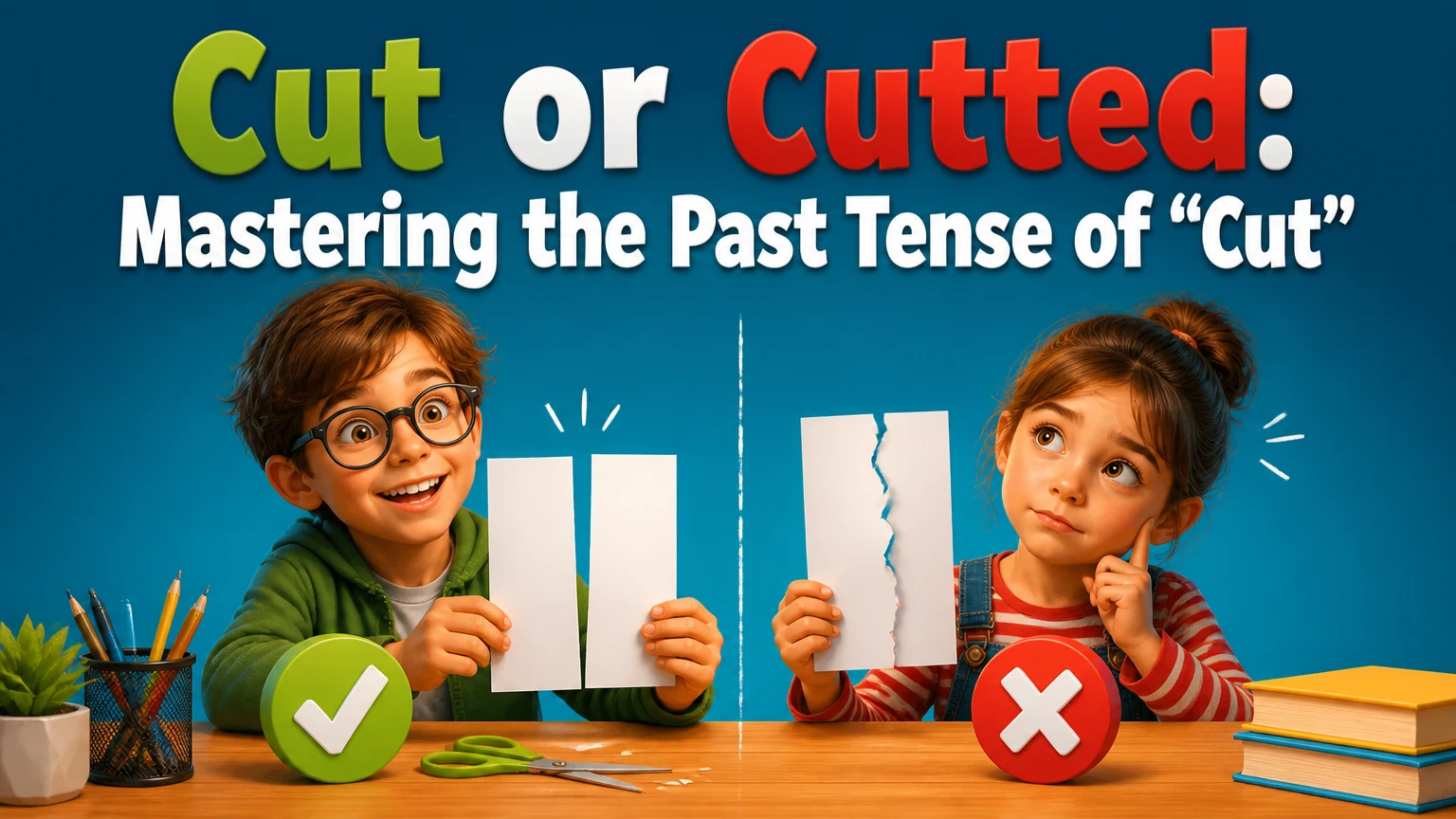
Understanding irregular verbs in English can sometimes feel like navigating a maze. One common point of confusion arises with verbs like “cut,” where the past tense and past participle forms are identical to the base form. This means that instead of adding a typical “-ed” ending, as with regular verbs like “walk” (walked) or “talk” (talked), the verb “cut” remains unchanged across different tenses. For example, we say “I cut the paper,” “I cut the paper yesterday,” and “I have cut the paper.” This article will explore the intricacies of using “cut” correctly, clarifying why “cutted” is generally considered incorrect and providing numerous examples to solidify your understanding.
Mastering the correct use of “cut” is crucial for clear and accurate communication. Whether you’re writing emails, giving presentations, or simply conversing with others, knowing the proper tense ensures your message is effectively conveyed. This guide is designed for English language learners of all levels, from beginners to advanced speakers, aiming to provide a comprehensive overview of this frequently encountered verb.
Table of Contents
- Definition of “Cut”
- Structural Breakdown
- Types of “Cut” Usage
- Examples of “Cut” in Different Tenses
- Usage Rules for “Cut”
- Common Mistakes with “Cut”
- Practice Exercises
- Advanced Topics
- FAQ
- Conclusion
Definition of “Cut”
The verb “cut” has several meanings, but at its core, it means to penetrate something with a sharp-edged instrument or to divide something with such an instrument. It can also refer to reducing something, such as cutting costs, or to intersecting something, such as a road cutting across a field. Grammatically, “cut” is classified as an irregular verb, which means its past tense and past participle forms do not follow the standard “-ed” ending rule. Instead, all three forms – the base form, the past tense, and the past participle – are identical: cut, cut, cut.
The function of “cut” in a sentence varies based on its meaning and the surrounding words. It can act as a transitive verb, requiring a direct object (e.g., “She cut the bread”), or as an intransitive verb, not requiring a direct object (e.g., “The knife cuts well”). Understanding these nuances is essential for using “cut” accurately in different contexts.
Structural Breakdown
The structural simplicity of “cut” can be deceiving. While the form itself doesn’t change, its function and meaning can vary greatly depending on the sentence structure. Consider these key aspects:
- Base Form: “Cut” – This is the form used in the present tense (except for the third-person singular, which becomes “cuts”) and with modal verbs (e.g., “can cut,” “will cut”).
- Past Tense: “Cut” – Identical to the base form, used to describe actions completed in the past. The context of the sentence usually clarifies that the action occurred in the past (e.g., “Yesterday, I cut the grass”).
- Past Participle: “Cut” – Also identical to the base form, used with auxiliary verbs like “have” or “be” to form perfect tenses (e.g., “I have cut the cake”) or passive voice constructions (e.g., “The tree was cut down”).
The surrounding words, particularly auxiliary verbs and adverbs of time, are crucial in determining the tense and meaning of “cut.” For example, the presence of “have” indicates a perfect tense, while words like “yesterday” or “last week” clearly place the action in the past.
Types of “Cut” Usage
The verb “cut” can be used in various contexts, each slightly altering its meaning. Here are some common categories:
Physical Cutting
This is the most literal usage, referring to the act of dividing or penetrating something with a sharp object. Examples include cutting paper, cutting vegetables, or cutting wood.
Reduction or Removal
In this sense, “cut” means to reduce the size, amount, or extent of something. Examples include cutting costs, cutting taxes, or cutting a cake into slices.
Intersections and Pathways
“Cut” can also describe a path or route that shortens a distance or intersects with another path. Examples include a shortcut that cuts through the park or a road that cuts across the desert.
Editing and Manipulation
In the context of film, writing, or music, “cut” refers to editing or removing parts of the original work. Examples include cutting scenes from a movie or cutting words from a manuscript.
Abandoning or Disconnecting
This refers to ceasing a relationship or connection. For example, cutting ties with someone or cutting off communication.
Examples of “Cut” in Different Tenses
To illustrate the correct usage of “cut,” let’s examine examples across different tenses and contexts. Remember, the form of “cut” remains consistent, but the surrounding words provide crucial clues about the timing and meaning.
Present Tense
In the present tense, “cut” is used to describe actions happening now or habitual actions. Note the third-person singular form “cuts.”
| Subject | Verb Form | Example Sentence |
|---|---|---|
| I | cut | I cut the grass every weekend. |
| You | cut | You cut the vegetables too thin. |
| He/She/It | cuts | He cuts the bread before serving it. |
| We | cut | We cut our expenses to save money. |
| They | cut | They cut the ribbon at the ceremony. |
| I | cut | I always cut my finger when I use that knife. |
| You | cut | You cut right through that piece of wood! |
| He/She/It | cuts | She cuts her hair short every summer. |
| We | cut | We cut corners to finish the project on time. |
| They | cut | They cut production costs by streamlining the process. |
| I | cut | I carefully cut out the picture from the magazine. |
| You | cut | You cut the cake into perfect slices. |
| He/She/It | cuts | The machine cuts metal with precision. |
| We | cut | We cut down on sugar for health reasons. |
| They | cut | They cut the budget for the department. |
| I | cut | I cut my workload by delegating tasks. |
| You | cut | You cut a deal that benefits everyone. |
| He/She/It | cuts | He cuts his own hair to save money. |
| We | cut | We cut the rope to free the boat. |
| They | cut | They cut through the red tape to get the project approved. |
Past Tense
In the past tense, “cut” describes actions that were completed in the past. Contextual clues, such as adverbs of time, are essential for understanding the timing.
| Subject | Verb Form | Example Sentence |
|---|---|---|
| I | cut | I cut my finger yesterday. |
| You | cut | You cut the cake for the party last night. |
| He/She/It | cut | She cut her hair short last year. |
| We | cut | We cut down the old tree last week. |
| They | cut | They cut the price of the product last month. |
| I | cut | I cut class once in high school. |
| You | cut | You cut through the crowd to get to the front. |
| He/She/It | cut | He cut the power to the building during the storm. |
| We | cut | We cut our losses and sold the failing business. |
| They | cut | They cut the scene from the movie during editing. |
| I | cut | I cut the wire by accident. |
| You | cut | You cut a fine figure in that suit. |
| He/She/It | cut | She cut the tension with a joke. |
| We | cut | We cut the meeting short to finish early. |
| They | cut | They cut the deal just before the deadline. |
| I | cut | I cut across the field to save time. |
| You | cut | You cut a rug at the dance last night. |
| He/She/It | cut | He cut the engine and coasted to a stop. |
| We | cut | We cut through the ice to go fishing. |
| They | cut | They cut the cake after the ceremony concluded. |
Past Participle
The past participle “cut” is used with auxiliary verbs to form perfect tenses (e.g., “have cut”) or passive voice constructions (e.g., “was cut”).
| Subject | Auxiliary Verb | Verb Form | Example Sentence |
|---|---|---|---|
| I | have | cut | I have cut the ribbon before. |
| You | have | You have cut the grass perfectly. | |
| He/She/It | has | She has cut her ties with her former employer. | |
| We | have | We have cut our expenses significantly. | |
| They | have | They have cut the project short due to lack of funding. | |
| The tree | was | cut | The tree was cut down by the storm. |
| The cake | was | cut | The cake was cut into equal slices. |
| My finger | has been | cut | My finger has been cut by the sharp knife. |
| Our budget | has been | cut | Our budget has been cut due to the economic downturn. |
| The movie | was | cut | The movie was cut for time constraints. |
| I | had | cut | I had already cut the vegetables before you arrived. |
| You | had | cut | You had cut the power before the electrician arrived. |
| He/She/It | has | cut | She has cut through the red tape to get the approval. |
| We | have | cut | We have cut a deal that benefits both parties. |
| They | had | cut | They had cut the price of their product before their competitor did. |
| The grass | has been | cut | The grass has been cut, and the garden looks much neater. |
| The cake | had been | cut | The cake had been cut before the guests arrived. |
| The costs | have been | cut | The costs have been cut significantly to improve profitability. |
| The film | was | cut | The film was cut to remove the violent scenes. |
| The ties | have been | cut | The ties have been cut, and they are no longer in contact. |
Future Tense
To express future actions with “cut,” use auxiliary verbs like “will” or “be going to.”
| Subject | Auxiliary Verb | Verb Form | Example Sentence |
|---|---|---|---|
| I | will | cut | I will cut the cake tomorrow. |
| You | are going to | cut | You are going to cut the ribbon at the opening ceremony. |
| He/She/It | will | cut | She will cut her hair next week. |
| We | are going to | cut | We are going to cut our expenses next year. |
| They | will | cut | They will cut the price of the product next month. |
| I | am going to | cut | I am going to cut across the park to get home faster. |
| You | will | cut | You will cut a striking figure at the party. |
| He/She/It | is going to | cut | He is going to cut the long grass in the backyard. |
| We | will | cut | We will cut the meeting short if it runs too long. |
| They | are going to | cut | They are going to cut the budget to save money. |
| I | will | cut | I will cut back on social media to focus on my studies. |
| You | are going to | cut | You are going to cut a deal with the supplier. |
| He/She/It | will | cut | She will cut the fabric for the new dress. |
| We | are going to | cut | We are going to cut the rope to free the trapped animal. |
| They | will | cut | They will cut through the bureaucracy to get the project off the ground. |
Usage Rules for “Cut”
The primary rule to remember is that “cutted” is generally considered incorrect. The past tense and past participle of “cut” are both “cut.” However, there are nuances to consider:
- Consistency: Always use “cut” for both the past tense and past participle forms.
- Context is Key: Rely on context and auxiliary verbs to determine the tense.
- Avoid “Cutted”: In almost all standard English contexts, “cutted” is not accepted.
- Phrasal Verbs: Pay attention to phrasal verbs using “cut,” such as “cut off” (to disconnect), “cut out” (to remove), and “cut down” (to reduce). These phrasal verbs still follow the rule of “cut” in all tenses.
Common Mistakes with “Cut”
The most common mistake is using “cutted” instead of “cut” for the past tense or past participle. Here are some examples of correct and incorrect usage:
| Incorrect | Correct |
|---|---|
| I cutted the paper yesterday. | I cut the paper yesterday. |
| She has cutted her hair. | She has cut her hair. |
| They cutted the price last week. | They cut the price last week. |
| He had cutted the tree down. | He had cut the tree down. |
| We have cutted our expenses. | We have cut our expenses. |
Another potential mistake is misinterpreting the tense due to lack of context. Always ensure the sentence includes clear indicators of time or the use of auxiliary verbs to avoid ambiguity.
Practice Exercises
Test your understanding of “cut” with these practice exercises. Fill in the blanks with the correct form of “cut.”
Exercise 1: Simple Past Tense
| Question | Answer |
|---|---|
| Yesterday, I ______ my finger while cooking. | cut |
| Last week, she ______ her hair short. | cut |
| They ______ the ribbon at the grand opening. | cut |
| We ______ down the old tree in the backyard. | cut |
| He ______ the cake into equal slices. | cut |
| The gardener ______ the grass this morning. | cut |
| The director ______ the scene from the movie. | cut |
| The chef ______ the vegetables into small pieces. | cut |
| The company ______ prices to attract more customers. | cut |
| The surgeon ______ the skin to perform the operation. | cut |
Exercise 2: Present Perfect Tense
| Question | Answer |
|---|---|
| I ______ never ______ my hair this short before. | have, cut |
| She ______ already ______ the cake for the party. | has, cut |
| They ______ ______ their expenses to save money. | have, cut |
| We ______ ______ the project short due to budget constraints. | have, cut |
| He ______ ______ ties with his former business partner. | has, cut |
| The tailor ______ ______ the fabric for the suit. | has, cut |
| The editor ______ ______ several pages from the manuscript. | has, cut |
| The chef ______ ______ the ingredients into perfect portions. | has, cut |
| The team ______ ______ the rope to free the climber. | have, cut |
| The artist ______ ______ the design into the wood. | has, cut |
Exercise 3: Mixed Tenses
| Question | Answer |
|---|---|
| I ______ the grass every weekend, and yesterday I ______ it again. | cut, cut |
| She ______ her hair short last year, and she ______ it short again next week. | cut, will cut |
| They ______ the price of the product last month, and they ______ it again next month. | cut, will cut |
| We ______ down the old tree last week because it ______ dangerous. | cut, was |
| He ______ the cake into slices yesterday, and everyone ______ a piece. | cut, ate |
| The chef always ______ the vegetables carefully, and he ______ them finely last night. | cuts, cut |
| The editor ______ several pages from the manuscript, and he ______ more tomorrow. | cut, will cut |
| The team ______ the rope to save the climber, and they ______ him to safety. | cut, pulled |
| The artist ______ the design into the wood, and it ______ beautiful. | cut, looked |
| The company ______ expenses last year, and they plan to ______ them further this year. | cut, cut |
Advanced Topics
For advanced learners, consider these more complex aspects of “cut”:
- Figurative Language: Explore idiomatic expressions using “cut,” such as “cut to the chase” (to get to the point) or “cut someone some slack” (to be lenient).
- Historical Usage: Investigate the historical evolution of the verb “cut” and its irregular forms.
- Cross-Linguistic Comparisons: Compare how similar verbs are handled in other languages.
FAQ
Here are some frequently asked questions about the verb “cut”:
- Is “cutted” ever correct?
No, “cutted” is generally considered incorrect in standard English. The past tense and past participle of “cut” are always “cut.”
- How can I tell if “cut” is in the past tense?
Look for contextual clues such as adverbs of time (e.g., yesterday, last week) or the presence of auxiliary verbs (e.g., have, has, had) to determine the tense.
- What are some common phrasal verbs with “cut”?
Common phrasal verbs include “cut off” (to disconnect), “cut out” (to remove), “cut down” (to reduce), and “cut across” (to shorten a distance).
- Does “cut” have different meanings?
Yes, “cut” can refer to physical cutting, reduction, intersections, editing, or disconnection, depending on the context.
- Why is “cut” an irregular verb?
Irregular verbs do not follow the standard “-ed” ending rule for forming the past tense and past participle. The forms must be memorized.
- How do I use “cut” in the passive voice?
Use the past participle “cut” with the auxiliary verb “be” (e.g., “The tree was cut down”).
- Can “Cut” be used as a noun?
Yes, “cut” can also be used as a noun. For example, “That’s a deep cut” or “He took a cut of the profits”. The noun form refers to an incision or a share of something.
- What is the difference between “cut” and “slice”?
While both involve dividing something with a sharp object, “cut” is a more general term. “Slice” specifically refers to cutting something into thin, flat pieces.
Conclusion
Mastering the correct usage of “cut” requires understanding its irregular nature and relying on context to determine the tense. Remember that “cutted” is generally incorrect, and the form “cut” remains consistent across the base form, past tense, and past participle. By paying attention to surrounding words and practicing regularly, you can confidently use “cut” in various situations. Understanding irregular verbs, including those like ‘cut’ (past form ‘cut’, not ‘cutted’), ‘run’ (past form ‘ran’), and ‘swim’ (past form ‘swam’) is a testament to improving one’s understanding of the English language. Continue to practice and expand your vocabulary to further enhance your English language skills.