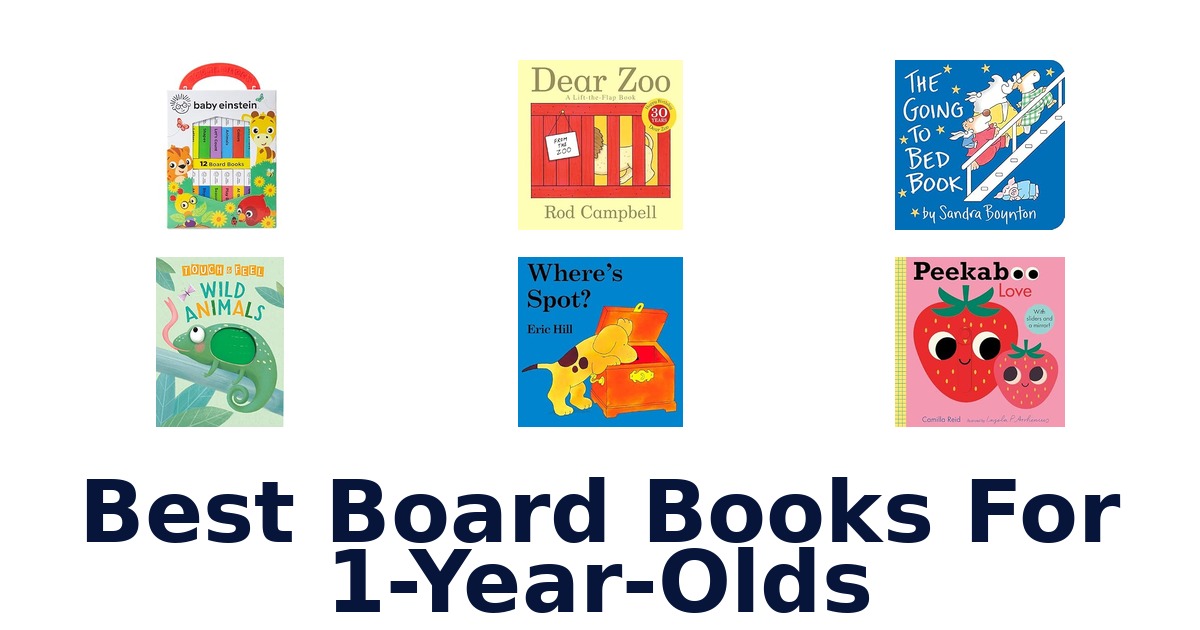
A strong board book for a 1-year-old offers sturdy pages and an activity a little reader can explore, whether that means lifting a flap, feeling a texture, or spotting a mirror. This roundup includes interactive titles, sensory books, a bedtime story, and boxed sets, so you can match the format to your child’s interests and your reading routine. Peekaboo: Love leads with a mirror and sliders to push, pull, or turn, while Where’s Spot?
and Dear Zoo invite flap-lifting. For tactile exploration, compare Wild Animals and Ocean Friends; for short, focused concepts, consider Babies Love Colors or the Baby Einstein library.
The best fit depends on which features you want to share and repeat, not on assuming every one-year-old enjoys the same kind of book.
Peekaboo: Love is the strongest all-around pick because it combines a mirror with sliders to push, pull, or turn in a board book designed for babies and toddlers. Those several kinds of interaction give a one-year-old different ways to engage during shared reading. Choose Where’s Spot?
instead if lift-the-flap play and first words are your priority, or Wild Animals if you specifically want five textures to touch.
Our Top Picks
 Best Overall
Its board-book format combines a mirror with sliders to push, pull, or turn, offering several concrete ways for babies and toddlers to interact.
View on Amazon Best Lift-the-Flap
This chunky board book invites children to help search for baby animals and includes 100 first words, pairing flap play with early vocabulary.
View on Amazon Best Touch-and-Feel
Five textures, including kitten fur and baby alligator skin, give tactile exploration a clear role in this educational board book.
View on Amazon- Best Book Set Baby Einstein Library
- Best Bedtime The Going To Bed Book
Compare the board books by their standout features
| # | Product | Buy |
|---|---|---|
| 1 | 1. Peekaboo: LoveBest Overall | View on Amazon |
| 2 | 2. Where’s Spot?Best Lift-the-Flap | View on Amazon |
| 3 | 3. Wild AnimalsBest Touch-and-Feel | View on Amazon |
| 4 |  4. Dear ZooSimple lift-the-flap reading | View on Amazon |
| 5 |  5. Babies Love ColorsColor learning with flaps | View on Amazon |
| 6 |  6. Peek-a Who?Peekaboo flap-book interaction | View on Amazon |
| 7 |  7. Ocean FriendsHands-on sensory story time | View on Amazon |
| 8 | 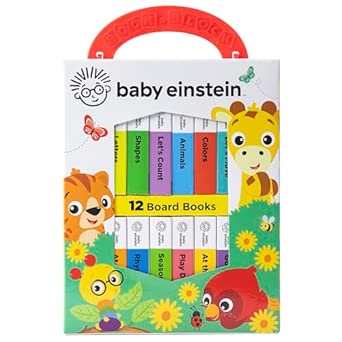 8. Baby Einstein LibraryBest Book Set | View on Amazon |
| 9 |  9. The Going To Bed BookBest Bedtime | View on Amazon |
| 10 |  10. Dr. Seuss Bright and Early SetFour-book Dr. Seuss collection | View on Amazon |
Detailed Reviews: Best Board Books For 1-Year-Olds
#1 · Best Overall
1. Peekaboo: Love
Best for: Peekaboo play with a mirror.
Why it ranks #1: Its board-book format combines a mirror with sliders to push, pull, or turn, offering several concrete ways for babies and toddlers to interact.
A mirror paired with sliders to push, pull, or turn gives this board book its hands-on focus, letting shared reading include simple actions as well as looking. Strawberry, rainbow, and ladybug artwork supplies familiar visual details, while the Peekaboo theme makes it a clear choice for short interactive moments.
The mirror creates a face-focused moment, and the sliders invite a child to push, pull, or turn parts of the book. Those actions give a caregiver concrete ways to pause and engage during a read-aloud instead of moving straight through the pages. Its board-book format suits the baby-and-toddler audience named in the title. The artwork includes a strawberry, rainbow, and ladybug, so the visual theme is playful and specific rather than a broad first-words reference book.
- Mirror adds a face-focused interaction
- Sliders can be pushed, pulled, or turned
- Board-book format for babies and toddlers
- Artwork features a strawberry, rainbow, and ladybug
- Its listed interactions center on peekaboo and love rather than broad first-word topics.
Skip it if you want a set of books covering letters and counting; Baby Einstein My First Library includes those topics across 12 books.
Choose this for a caregiver-led read-aloud where a mirror and movable sliders are the main attractions. It fits buyers seeking peekaboo play with illustrated details, but its stated focus is narrower than an early-learning library.
Listed on Amazon as: Peekaboo: Love: (An Interactive Board Book for Babies & Toddlers with Mirror & Sliders to Push, Pull, or Turn. Cute Artwork Includes a Strawberry, Rainbow, Ladybug, & More.) (Peekaboo You)
View on Amazon#2 · Best Lift-the-Flap
2. Where’s Spot?
Best for: Animal-search flap story.
Why it ranks #2: This chunky board book invites children to help search for baby animals and includes 100 first words, pairing flap play with early vocabulary.
Lift-the-flap searching gives Where’s Spot? an active story task: help Spot look for baby animals as he visits his dad working on a farm. Animal sounds add another point of interest, and the chunky board-book edition also introduces 100 first words, combining a familiar character with early vocabulary.
The search for baby animals gives each lift-the-flap interaction a story purpose, while animal sounds can prompt a caregiver and child to pause and listen together. The book’s stated 100 first words add a vocabulary element beyond the farm visit. Its chunky board-book format is suited to repeated handling during shared reading. Together, the flaps, sounds, and word-learning focus support an interactive session, though the supplied details do not describe the specific words included.
- Lift-the-flap search follows Spot looking for baby animals
- Farm visit features Spot’s dad at work
- Animal sounds pique Spot’s curiosity
- Includes 100 first words
- The supplied description does not identify which 100 first words are included.
Skip it if you prefer a bedtime routine over an animal search; Sandra Boynton’s The Going To Bed Book centers on winding down.
Choose this for a child who enjoys helping with a search, lifting flaps, and hearing animal sounds while encountering first words. Its farm-and-animal focus is specific, so it is not a general bedtime routine book.
Listed on Amazon as: Where's Spot?: A Lift-the-Flap Book
View on Amazon#3 · Best Touch-and-Feel
3. Wild Animals
Best for: Five-texture animal exploration.
Why it ranks #3: Five textures, including kitten fur and baby alligator skin, give tactile exploration a clear role in this educational board book.
Five textures—from a kitten’s soft fur to a baby alligator’s scaly skin—give Wild Animals a concrete touch-and-feel hook for curious hands. The board-book format pairs the tactile activity with an animal theme, making it a focused choice for caregivers who want exploration built into reading time.
The five stated textures give a child distinct surfaces to explore rather than a single tactile feature, and the examples—soft kitten fur and scaly baby-alligator skin—make the contrast clear. Because this is a board book, the format suits the children’s-book use described in the title. Little Hippo Books also says its interactive books encourage sensory play, fine motor skills, problem-solving, and early learning through tactile fun, supporting hands-on shared reading.
- Five textures to touch and explore
- Includes soft kitten-fur and scaly alligator-skin examples
- Board-book format
- Tactile activity supports sensory play and fine motor practice
- The stated interaction centers on five textures rather than flaps, sliders, or a mirror.
Skip it if you want a mirror and movable sliders; Camilla Reid’s Peekaboo: Love includes a mirror and push, pull, or turn actions.
This is a good fit for caregivers seeking animal-themed tactile exploration and a stated variety of five textures. Pick it for touch-led reading; look elsewhere if your child’s preferred interaction is moving flaps or sliders.
Listed on Amazon as: Wild Animals: A Touch and Feel Book – Children's Board Book – Educational
View on Amazon#4
4. Dear Zoo
Best for: Simple lift-the-flap reading.
Why it ranks #4: Its lift-the-flap format offers an interactive alternative to passive page-turning in a board book, a useful match for curious young readers.
Lift-the-flap interaction is the stated feature of Dear Zoo, giving caregivers a straightforward way to make page turns participatory. Its board-book format identifies it for young readers, while the concise title and single interactive format keep this option focused for families seeking a classic flap-book experience.
The listing identifies Dear Zoo as a lift-the-flap board book, so its practical appeal is the combination of a tactile page action and a format intended for handling during reading. A caregiver can use the flaps as a reason to pause and involve a child in turning through the story. The supplied product facts do not name the animals, page count, or other activities, so buyers should view it as a focused flap-book selection rather than assume additional features.
- Lift-the-flap format
- Board-book format
- Provides a hands-on page-turning action
- Focused single-title option for shared reading
- The supplied details specify flaps but no other interactive features.
Skip it if you want named animal textures and a stated count; Little Hippo Books Wild Animals lists five textures to explore.
This suits buyers looking for a board book with lift-the-flap interaction and a simple shared-reading format. The available description is brief, so choose it for the stated flap feature rather than a particular theme or extra activity.
Listed on Amazon as: Dear Zoo: A Lift-the-Flap Book
View on Amazon#5
5. Babies Love Colors
Best for: Color learning with flaps.
Why it ranks #5: The first lift-a-flap format focuses on learning about colors, giving families a simple early-learning theme paired with hands-on page interaction.
A first lift-a-flap format pairs directly with a colors theme in Babies Love Colors, giving young readers a page action alongside its stated learning subject. The title identifies babies and toddlers as its audience, making it a focused option for families looking to introduce colors through an interactive board-book read.
The lift-a-flap format gives a caregiver a simple pause point on each reading turn, while the colors subject keeps the book’s learning focus clear. Its first-book positioning for babies and toddlers makes it relevant to families beginning color exploration together. The product title identifies it as a board book, linking the interactive action with a format for young readers. The supplied facts do not specify the colors included or the number of flaps.
- Focuses on learning about colors
- Lift-a-flap interaction
- Positioned as a first book for babies and toddlers
- Board-book format
- The supplied details do not identify the colors or number of flaps.
Skip it if you want a story with a named animal search and 100 first words; Eric Hill’s Where’s Spot? includes those elements.
Choose this for a young child’s color-focused read-aloud when lift-a-flap interaction is the priority. Its subject is specific, and the listing does not enumerate colors, so buyers seeking a broader range of named topics may want another book.
Listed on Amazon as: Babies Love Colors – A First Lift-a-Flap Board Book for Babies and Toddlers Learning about Colors
View on Amazon#6
6. Peek-a Who?
Best for: Peekaboo flap-book interaction.
Why it ranks #6: This board book is identified as a lift-the-flap and interactive read-aloud book, making it a straightforward choice for shared participation.
A lift-the-flap format is the clear feature of Peek-a Who?, giving caregivers a built-in way to invite participation during an interactive read-aloud. The board-book designation suits its young-child audience, while the concise title signals a playful peekaboo approach rather than a broad reference or learning collection.
The flaps provide a physical action that can make shared reading more participatory, with a caregiver pausing for a child to lift each one. Its board-book format matches the interactive-books category stated in the title and supports use as a young-child read-aloud. The product facts supplied identify no additional themes, characters, sounds, or learning topics, so its appeal rests on the flap-book format and peekaboo framing rather than other specified activities.
- Lift-the-flap format
- Identified as an interactive book
- Board-book designation
- Peekaboo framing for read-aloud participation
- The supplied details do not specify a theme or additional activities beyond the flaps.
Skip it if you want a mirror and sliders in addition to peekaboo; Camilla Reid’s Peekaboo: Love lists both features.
This is a fit for caregivers seeking a board book whose stated appeal is lift-the-flap participation during read-alouds. Choose it for that focused interaction; the supplied description does not establish a broader learning theme or extra features.
Listed on Amazon as: Peek-a Who? (Lift the Flap Books, Interactive Books for Kids, Interactive Read Aloud Books)
View on Amazon#7
7. Ocean Friends
Best for: Hands-on sensory story time.
Why it ranks #7: A sensory board book with materials to touch suits families seeking tactile play, though the supplied details offer fewer specific features than Wild Animals.
Touch-and-feel pages make sensory exploration the central feature of Ocean Friends, giving a child something to handle during a shared book session. Little Hippo Books describes its interactive books as supporting sensory play, fine motor skills, problem-solving, and early learning through tactile activity, making this a tactile-first pick.
The touch-and-feel format turns reading into an opportunity to explore surfaces, while the board-book form is described as suitable for little hands to hold. Little Hippo Books connects its interactive books with sensory play, fine motor skills, problem-solving, and early learning, so the tactile element has a stated developmental purpose. The title identifies an ocean-friends theme, though the supplied description provides no specific list of ocean characters or materials.
- Touch-and-feel format encourages tactile exploration
- Board book described as suitable for little hands
- Interactive approach supports sensory play
- Publisher describes benefits for fine motor skills and problem-solving
- The supplied description does not specify the individual textures or ocean characters.
Skip it if you want a stated count of textures; Little Hippo Books Wild Animals identifies five different textures to explore.
Consider this for a one-year-old who enjoys exploring surfaces during a shared read-aloud, especially when a compact board-book format matters. The listing leaves the specific materials unspecified, so buyers wanting named textures should choose accordingly.
Listed on Amazon as: Ocean Friends – Touch and Feel Board Book – Sensory Board Book
View on Amazon#8 · Best Book Set
8. Baby Einstein Library
Best for: Early-learning book-set variety.
Why it ranks #8: The 12-book block set covers first words, letters, counting, and more, and the books are sized for little hands.
Twelve small board books gather first words, letters, counting, and more in one set, giving families several early-learning topics to rotate through. Their stated sizing for little hands supports independent handling during story time, while the collection format makes it easy to select a subject for a brief shared reading session.
The 12-book count provides a range of topics, including first words, letters, and counting, so caregivers can switch subjects without relying on one book’s theme. Board-book construction suits repeated handling, and the books are specifically described as sized for little hands. That pairing supports a simple routine: choose a topic, share a short read, and let the child hold the book. The listing does not identify the individual titles beyond the named learning areas.
- Set contains 12 board books
- Includes first-word topics
- Covers letters and counting
- Books are sized for little hands
- The listed details name broad learning areas but not the individual titles in the set.
Skip it if you want one tactile story with touchable surfaces; Little Hippo Books Wild Animals specifies five textures to explore.
This set suits families who want several early-learning subjects in a single collection and books sized for small hands. Choose it for topic variety; shoppers seeking a single, specifically described interactive story may prefer a focused title.
Listed on Amazon as: Baby Einstein – My First Library Board Book Block 12-Book Set – First Words, Letters, Counting, and More! – PI Kids
View on Amazon#9 · Best Bedtime
9. The Going To Bed Book
Best for: Silly animal bedtime routine.
Why it ranks #9: Its silly animal routine includes bathing and brushing teeth before bed, making this board book a clear fit for a winding-down read.
A group of animals scrubs in the tub and brushes their teeth, giving The Going To Bed Book a clear wind-down sequence with a joyful, silly tone. Its soundbook presentation, narrated by Sandra Boynton’s son Keith, adds an audible option for families settling into a bedtime read-aloud.
The bathing and toothbrushing actions give caregivers recognizable steps to share as the day winds down, while the playful animal group keeps the routine light. The listing identifies this as a soundbook narrated by Keith Boynton, so families can hear the story as well as read its pages. That combination fits an evening reading routine where an audio element is useful. The supplied details do not specify a volume control or other soundbook mechanics.
- Bedtime story for winding down
- Animals scrub in the tub and brush their teeth
- Joyful, silly group of animals
- Soundbook narrated by Keith Boynton
- Its stated subject is bedtime, rather than a broad collection of early-learning topics.
Skip it if you want letters, counting, and several topics; Baby Einstein My First Library gathers those areas across 12 books.
Pick this for a family wanting a silly animal story to accompany bedtime routines, with narration as part of the soundbook format. Its strongest fit is winding down, not covering a range of learning subjects.
Listed on Amazon as: The Going To Bed Book
View on Amazon#10
10. Dr. Seuss Bright and Early Set
Best for: Four-book Dr. Seuss collection.
Why it ranks #10: This four-book board-book set includes Fox in Socks, Mr. Brown Can Moo! Can You?, There’s a Wocket in My Pocket!, and Dr. Seuss’s ABC.
Four named Dr. Seuss board books come together in this boxed set: Fox in Socks, Mr. Brown Can Moo! Can You?, There’s a Wocket in My Pocket!, and Dr. Seuss’s ABC. That collection format gives families multiple titles to choose from when they want a familiar author’s books in one set.
The four-title selection lets a caregiver choose among distinct named books rather than repeat one story, making the set useful for rotating read-aloud choices. Dr. Seuss’s ABC is included alongside Fox in Socks, Mr. Brown Can Moo! Can You?, and There’s a Wocket in My Pocket!, providing a clearly identified alphabet title within the group. All are presented as Bright and Early board books, keeping the collection in the board-book format stated in the product title.
- Includes four named books
- Contains Dr. Seuss’s ABC
- Also includes Fox in Socks
- Presented as a board-book set
- The supplied details do not list activities or interactive features for the books.
Skip it if you want a single book with touchable textures; Little Hippo Books Wild Animals specifies five surfaces to explore.
This set suits families who want four Dr. Seuss titles in board-book format and appreciate choosing among several named books. Consider its collection focus when deciding whether a set or one hands-on story better fits your reading routine.
Listed on Amazon as: The Little Green Boxed Set of Bright and Early Board Books: Fox in Socks; Mr. Brown Can Moo! Can You?; There's a Wocket in My Pocket!; Dr. Seuss's ABC
View on AmazonAvoiding wear during interactive reading
Interactive features need a little more care than ordinary page-turning, especially when a young child wants to explore independently. Where’s Spot?, Dear Zoo, and Babies Love Colors use lift-the-flap formats, while Peekaboo: Love adds sliders and a mirror. These features make reading participatory, but they also create moving parts that a child may pull or handle roughly.
Try guiding the first few rounds: show where a flap opens or how a slider moves, then let your child take a turn. Keep the book within reach during shared reading rather than treating its moving pieces as a chew toy or unsupervised plaything.
If your child tends to tug hard, a simpler story such as The Going To Bed Book may be easier to read without managing flaps and sliders. The product details do not specify durability testing, so avoid assuming that any interactive mechanism is tear-proof.
Matching book interaction to the moment
The best interaction depends on whether you want your child to move, touch, listen, or follow a routine. Peekaboo: Love offers a mirror and sliders; Wild Animals presents five textures; and The Going To Bed Book follows animals through familiar bedtime activities. Those formats create different kinds of shared reading, not interchangeable features.
A child who wants to handle the book may enjoy sliders or flaps, while a tactile reader may be drawn to the textures in Wild Animals. For a calmer routine, the bathing and tooth-brushing sequence in The Going To Bed Book gives the read-aloud a bedtime theme.
The listed information does not provide page counts, book dimensions, or guidance on reading duration, so avoid choosing based on assumptions about how long a title will hold attention. Start with the kind of participation your child already enjoys, then rotate in another format when you want a change.
How to Choose a Board Book for a 1-Year-Old
Choose the interaction
Look for the kind of hands-on feature your child is ready to explore with you. Peekaboo: Love has a mirror and sliders to push, pull, or turn; Where’s Spot?, Dear Zoo, and Babies Love Colors use lift-the-flap formats; Wild Animals offers five textures. These are distinct ways to participate rather than a single measure of quality.
A child who enjoys moving pieces may prefer sliders or flaps, while one who likes exploring surfaces may gravitate toward Wild Animals. If you want a quieter shared story, The Going To Bed Book has a bedtime routine without a listed flap or texture feature.
Choose based on the interaction you expect to use together, and supervise moving parts as your child learns how to handle them.
Pick a learning or story focus
Choose a subject that suits your reading goal, from early concepts to a themed story. Babies Love Colors focuses on learning colors, Where’s Spot? includes 100 first words, and the Baby Einstein set covers first words, letters, counting, and more across 12 books.
For animal themes, compare Wild Animals and Dear Zoo; for bedtime, The Going To Bed Book follows animals through familiar activities. The Dr.
Seuss set supplies four titles, including Dr. Seuss’s ABC and Mr. Brown Can Moo!
Can You? A focused title suits a reader who wants one clear topic, while the Baby Einstein collection offers more listed subjects in one set.
The supplied details do not establish which concepts a particular child will learn, so treat themes as reading prompts rather than guaranteed outcomes.
Consider a single book or a set
Decide whether you want one activity to revisit or a collection with several titles and topics. Most options here are individual board books, including Peekaboo: Love, Wild Animals, and The Going To Bed Book. Baby Einstein Library contains 12 small board books covering first words, letters, counting, and more; Dr.
Seuss Bright and Early Set contains four titles. A single book can be a simple choice when you already know your child’s preferred format or theme.
A set may suit families who want multiple subjects available, but the product details do not specify storage dimensions or how the books are packaged beyond the Baby Einstein block set. Pick the individual title for a specific interest; consider a collection if variety across topics is your main priority.
Which board book should I choose?
Choose Peekaboo: Love if you want one interactive board book with a mirror and sliders to push, pull, or turn; it ranks first for its mix of hands-on features. For flap-based searching and a first-word angle, pick Where’s Spot?, which includes 100 first words. If touch is the priority, Wild Animals offers five textures.
Families seeking color learning can choose Babies Love Colors, while Dear Zoo and Peek-a Who? offer other lift-the-flap options.
Pick Baby Einstein Library for 12 small books covering first words, letters, counting, and more, or Dr. Seuss Bright and Early Set for four named titles. For an animal bedtime routine, The Going To Bed Book is the clearest match.
Ocean Friends is another tactile option, but its supplied feature details are less specific.
Frequently Asked Questions
How should I read a lift-the-flap book with a one-year-old?
Read together and let your child explore one flap at a time. Name what appears, pause for your child to look or respond, and help with the flap if needed. Keep the book within reach during your shared reading, and treat the activity as a chance to talk rather than a test.
Are touch-and-feel board books suitable for unsupervised play?
No—share touch-and-feel books with your one-year-old under adult supervision. Let your child explore the textures while you stay nearby, and check the book for damage before use. Supervised reading also gives you a chance to name what your child is touching and keep the experience interactive.
How many books should I offer during a one-year-old’s reading session?
Offer one book to start, then follow your child’s interest. A one-year-old may want to revisit a page, switch books, or finish quickly, so there is no required number. Short, enjoyable shared reading is a practical goal; stop or take a break when your child loses interest.
Which book is best for exploring textures?
Wild Animals is the clearest choice if textures are your priority: it offers five textures to touch. Ocean Friends is another touch-and-feel option, although its supplied feature details are less specific. Consider which theme your child is more likely to enjoy, and explore either book together.
Which option offers a set of multiple small books?
Baby Einstein – My First Library is a 12-book set covering first words, letters, counting, and more. The Dr. Seuss Bright and Early set includes four named titles.
Choose the former for a wider range of early topics in small books, or the latter for its four specific titles.
Final Words
For one interactive book with varied hands-on features, choose Peekaboo: Love, whose mirror and sliders make it the strongest all-around pick. Choose Where’s Spot? for lift-the-flap searching and first words, or Wild Animals for five touchable textures.
Babies Love Colors suits color learning, while the two boxed sets offer multiple books. For bedtime, The Going To Bed Book is the clearest fit.
Match the choice to the activity your child enjoys most.