

Acquiring a strong foundational vocabulary is the most critical step for any student learning English as a second language, as it provides the building blocks for every conversation and written intera...
The English language is filled with nuanced word pairs that often confuse even native speakers, particularly when those words share a common etymological root but have diverged in modern usage. Unders...
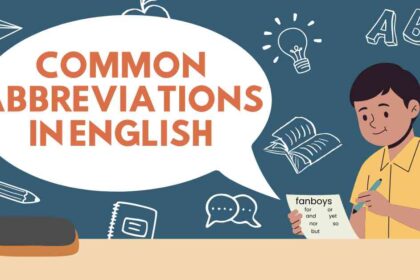
Abbreviations are shortened forms of words or phrases that allow for more efficient communication in both written and spoken English. These linguistic tools help speakers and writers save time and spa...

The English language is filled with irregular verbs that often leave learners and native speakers alike questioning the correct grammatical form to use in conversation and writing. When discussing wag...
Mastering the intricacies of the English language often requires a close examination of homophones and words that sound similar but possess vastly different meanings. One of the most common points of ...

Syntax is the branch of linguistics that governs the structure of sentences, determining how words and phrases are arranged to create well-formed, coherent thoughts. Proper syntax relies on specific p...
A sentence is the fundamental building block of the English language, serving as the primary vehicle for expressing a complete thought or idea. In its most basic form, a sentence must contain a subjec...
Writing a professional cover letter requires a precise blend of formal tone, persuasive rhetoric, and impeccable grammatical structure to effectively showcase your qualifications to potential employer...
Understanding the plural forms of words, particularly those derived from Latin or Greek, can sometimes be tricky. When dealing with words like “parenthesis,” which denotes a word, clause, ...
The simple past tense is a fundamental pillar of English grammar used to describe actions, states, or events that were completed at a specific point in time before the present. When we talk about hist...