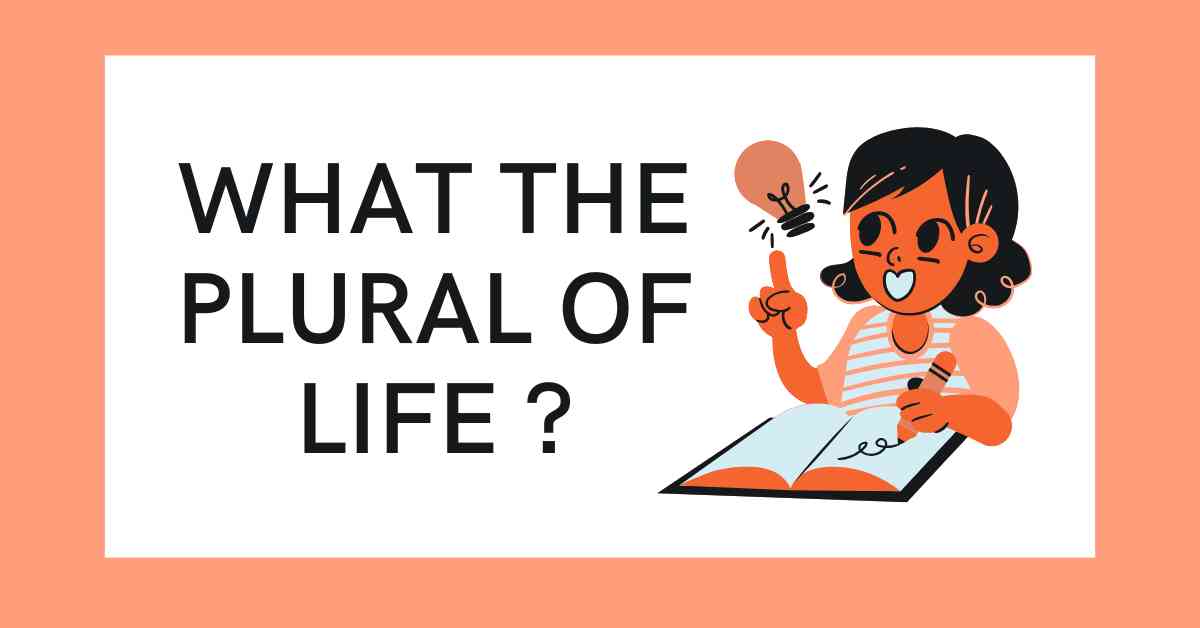
Understanding the plural forms of nouns is a fundamental aspect of English grammar. While many nouns follow simple rules by adding an “s” or “es,” some, like “life,” have irregular plural forms. The plural of “life” is “lives,” a change that reflects the noun’s etymological roots and historical evolution. Knowing how to correctly pluralize words such as “life,” “wife,” “knife,” “leaf,” “wolf,” and “shelf” demonstrates a strong command of English morphology. This knowledge is essential for clear and accurate communication, benefiting students, writers, and anyone seeking to improve their language skills.
Table of Contents
- Definition of Life and Its Plural
- Structural Breakdown: From Life to Lives
- Examples of “Life” and “Lives” in Sentences
- Usage Rules for “Life” and “Lives”
- Common Mistakes with “Life” and “Lives”
- Practice Exercises
- Advanced Topics: Life in Idioms and Expressions
- Frequently Asked Questions
- Conclusion
Definition of Life and Its Plural
The word “life” refers to the condition that distinguishes organisms from inorganic matter, encompassing the capacity for growth, reproduction, functional activity, and continual change preceding death. It is a singular noun representing a single instance or aspect of existence. In contrast, “lives” is the plural form of “life,” indicating multiple instances, existences, or biographies. Understanding this distinction is crucial for accurate and meaningful communication.
In scientific contexts, “life” might refer to the general phenomenon or study of living organisms, while “lives” could describe the individual life cycles of various species. Philosophically, “life” can represent the abstract concept of existence, whereas “lives” might allude to the collective experiences of many individuals. In everyday conversation, “life” is often used to discuss someone’s personal experiences or overall well-being, while “lives” typically refers to multiple people or creatures and their respective existences.
Structural Breakdown: From Life to Lives
The transformation of “life” into “lives” is a classic example of an irregular plural formation in English. This change involves replacing the “f” in “life” with “v” and adding “es” to create the plural form. This pattern is observed in several other English nouns that end in “f” or “fe.” The historical reason for this irregular pluralization lies in the phonetic evolution of the English language. Originally, the “f” sound in these words was pronounced as a voiced “v” sound when followed by a vowel in the plural form. Over time, this phonetic shift became standardized in spelling.
The rule generally applies to nouns ending in “f” or “fe,” but there are exceptions. Not all nouns ending in “f” or “fe” follow this pattern; some form their plurals by simply adding “s.” The words “chief,” “roof,” and “cliff,” for example, become “chiefs,” “roofs,” and “cliffs,” respectively. The inconsistency highlights the complex and sometimes unpredictable nature of English pluralization rules. Recognizing the common patterns and exceptions requires careful attention and practice.
Examples of “Life” and “Lives” in Sentences
The following tables provide examples of how “life” and “lives” are used in various contexts. The examples are categorized to illustrate the different meanings and applications of each word. These examples should help clarify the appropriate usage of singular and plural forms.
General Usage
This table illustrates the general usage of “life” and “lives” in everyday conversation and writing.
| Singular (“Life”) | Plural (“Lives”) |
|---|---|
| Life is full of surprises. | The firefighters saved many lives. |
| She dedicated her life to helping others. | Doctors work hard to improve the lives of their patients. |
| My life has been an adventure. | The war affected the lives of millions. |
| He wants to live a long and healthy life. | The choices we make impact our lives. |
| Life is a precious gift. | The pandemic claimed many lives. |
| The meaning of life is a philosophical question. | Animals also have lives that deserve respect. |
| Education can improve your life. | Technological advancements have transformed our lives. |
| She is enjoying her new life in the countryside. | Immigrants often seek better lives in new countries. |
| Life can be challenging at times. | The stories of their lives are truly inspiring. |
| He wants to make the most of his life. | Politicians make decisions that affect the lives of citizens. |
| Life is not always fair. | The soldiers risked their lives for their country. |
| She found happiness in her simple life. | The earthquake devastated the lives of countless people. |
| Life is a journey, not a destination. | The explorers documented the lives of indigenous tribes. |
| He is living his best life. | The new policies will improve the lives of many. |
| The purpose of life is to grow and learn. | The charity organization is dedicated to saving lives. |
| He reflected on his life’s achievements. | The new law will protect the lives of endangered species. |
| Life taught him many valuable lessons. | The program aims to enhance the lives of underprivileged children. |
| She cherished every moment of her life. | The documentary tells the stories of ordinary people’s lives. |
| Life is a continuous learning experience. | The advancements in medicine have prolonged our lives. |
| He believed in living life to the fullest. | The community worked together to rebuild their lives after the disaster. |
Scientific and Biological Contexts
This table shows how “life” and “lives” are used in scientific and biological contexts, referring to the study of living organisms and their individual existences.
| Singular (“Life”) | Plural (“Lives”) |
|---|---|
| The study of life is called biology. | Biologists study the lives of various organisms. |
| Life originated in the oceans billions of years ago. | Scientists are researching the lives of different species. |
| Scientists are searching for life on other planets. | The rainforest is home to countless lives. |
| The origin of life remains a mystery. | The researchers documented the lives of the animals in the ecosystem. |
| Life on Earth depends on sunlight. | The conservation efforts aim to protect the lives of endangered animals. |
| The cycle of life includes birth, growth, and death. | The study compared the lives of urban and rural populations. |
| Life adapts to its environment. | The project investigates the lives of marine creatures. |
| The diversity of life is astounding. | The report analyzed the impact of pollution on aquatic lives. |
| Life is sustained by essential nutrients. | The experiment examined the lives of plants under different conditions. |
| The evolution of life is a complex process. | The organization is dedicated to improving the lives of farm animals. |
| Life requires water to survive. | The research focused on the lives of insects in the garden. |
| The preservation of life is a priority. | The sanctuary provides a safe haven for rescued lives. |
| Life can be found in extreme environments. | The program studied the lives of birds in the forest. |
| The development of life is a fascinating topic. | The scientists analyzed the lives of bacteria in the soil. |
| Life is a delicate balance. | The project aimed to protect the lives of bees in the orchard. |
| The complexity of life is remarkable. | The researchers observed the lives of fish in the aquarium. |
| Life is a gift to be cherished. | The study investigated the lives of amphibians in the wetland. |
| The continuation of life is essential. | The conservationists worked to preserve the lives of turtles on the coast. |
| Life exists in various forms. | The biologists studied the lives of mammals in the savannah. |
| The sustainability of life is crucial. | The scientists researched the lives of microorganisms in the lab. |
Philosophical and Abstract Contexts
This table provides examples of how “life” and “lives” are used in philosophical and abstract discussions, exploring the meaning and collective experiences of existence.
| Singular (“Life”) | Plural (“Lives”) |
|---|---|
| The meaning of life is a question philosophers ponder. | History is a collection of human lives. |
| Life is a journey of self-discovery. | The book explores the interconnectedness of our lives. |
| Life’s challenges shape our character. | The artwork portrays the diversity of human lives. |
| The value of life is immeasurable. | The museum showcases the lives of historical figures. |
| Life is about making choices. | The play depicts the struggles and triumphs of ordinary lives. |
| Life can be seen as a series of moments. | The novel examines the complexities of modern lives. |
| Life teaches us valuable lessons. | The film tells the stories of inspiring lives. |
| Life is a continuous process of learning. | The exhibition celebrates the lives of artists and innovators. |
| Life is a mystery to be explored. | The research investigates the impact of technology on our lives. |
| Life’s purpose is often debated. | The conference addresses the challenges facing urban lives. |
| Life is a precious gift. | The foundation supports programs that improve children’s lives. |
| Life is a balance of joy and sorrow. | The community works to create better lives for its members. |
| Life is full of opportunities. | The organization advocates for the rights of marginalized lives. |
| Life’s experiences shape who we become. | The initiative aims to empower individuals to transform their lives. |
| Life is a test of resilience. | The project focuses on enhancing the quality of senior citizens’ lives. |
| Life is a canvas for our dreams. | The program strives to enrich the lives of people with disabilities. |
| Life is a story waiting to be written. | The study examines the social determinants of healthy lives. |
| Life is a journey worth taking. | The campaign promotes the importance of protecting vulnerable lives. |
| Life is a song to be sung. | The organization works to support and uplift the lives of refugees. |
| Life is a dance to be enjoyed. | The research aims to understand the factors that contribute to fulfilling lives. |
Usage Rules for “Life” and “Lives”
Understanding the proper usage of “life” and “lives” involves recognizing when to use the singular versus the plural form. “Life” is used when referring to a single existence, a general concept, or an uncountable noun. “Lives” is used when referring to multiple existences, biographies, or instances of life. The context of the sentence determines which form is appropriate.
Rule 1: Singular Reference Use “life” when referring to a single person’s existence or experience. Example: “Her life was filled with adventure.”
Rule 2: General Concept Use “life” when discussing the general concept of existence or the state of being alive. Example: “Life is precious.”
Rule 3: Plural Reference Use “lives” when referring to multiple people’s existences or experiences. Example: “The firefighters saved many lives.”
Rule 4: Compound Nouns In compound nouns, the singular form “life” is often used to describe something related to life. Example: “life insurance,” “life cycle.”
Rule 5: Possessive Form When using the possessive form, the rules for singular and plural still apply. “Life’s” refers to something belonging to a single life, while “lives'” refers to something belonging to multiple lives. Example: “Life’s challenges,” “The lives’ impact.”
Common Mistakes with “Life” and “Lives”
One of the most common mistakes is using “life” when “lives” is required, and vice versa. This often occurs when the speaker or writer does not clearly identify whether they are referring to a single instance or multiple instances. Another mistake is incorrectly applying the pluralization rule to other nouns that end in “f” or “fe.”
Here are some examples of common mistakes and their corrections:
| Incorrect | Correct | Explanation |
|---|---|---|
| The hero saved one life. | The hero saved one life. | Correct usage of singular “life.” |
| The hero saved many life. | The hero saved many lives. | “Lives” is needed to indicate multiple existences. |
| Life are full of surprises. | Life is full of surprises. | “Life” as a general concept requires the singular verb “is.” |
| The story of their life are inspiring. | The stories of their lives are inspiring. | “Lives” requires the plural verb “are.” |
| She dedicated her lifes to helping others. | She dedicated her life to helping others. | “Life” is correct when referring to a single, dedicated existence. |
| The knifes were sharp. | The knives were sharp. | Correct pluralization of “knife” to “knives.” |
| The leafs were green. | The leaves were green. | Correct pluralization of “leaf” to “leaves.” |
| He has a good life. | He has a good life. | Correct usage of singular “life.” |
| They live good lifes. | They live good lives. | “Lives” is needed to indicate multiple existences. |
| The wolfs howled at the moon. | The wolves howled at the moon. | Correct pluralization of “wolf” to “wolves.” |
Practice Exercises
Complete the following sentences by choosing the correct form, “life” or “lives.” These exercises will help reinforce your understanding of when to use the singular versus the plural form.
Exercise 1: Fill in the Blanks
- _____ is full of unexpected events.
- The doctor saved his _____.
- The firefighters risked their _____ to rescue the people inside.
- She dedicated her _____ to helping animals.
- He lived a long and happy _____.
- _____ can be challenging, but it’s also rewarding.
- Their _____ were changed forever after the accident.
- The new law will affect the _____ of many citizens.
- _____ is a precious gift that should be cherished.
- The choices we make shape our _____.
Answers:
- Life
- life
- lives
- life
- life
- Life
- lives
- lives
- Life
- lives
Exercise 2: Correct the Sentences
Correct the following sentences if they contain errors in the use of “life” or “lives.” If the sentence is already correct, write “Correct.”
- The hero saved many life.
- Life are full of surprises.
- She dedicated her lifes to helping others.
- He has a good life.
- They live good lifes.
- The story of their life are inspiring.
- Life is complicated.
- The firefighters saved their life.
- The new law will improve people’s life.
- Life’s challenges make us stronger.
Answers:
- The hero saved many lives.
- Life is full of surprises.
- She dedicated her life to helping others.
- Correct
- They live good lives.
- The stories of their lives are inspiring.
- Correct
- The firefighters saved their lives.
- The new law will improve people’s lives.
- Correct
Exercise 3: Multiple Choice
Choose the correct form of the word (“life” or “lives”) to complete each sentence.
- _____ is a journey, not a destination.
- a) Life
- b) Lives
- The doctor worked hard to save _____.
- a) life
- b) lives
- She wants to make the most of her _____.
- a) life
- b) lives
- The war affected the _____ of millions of people.
- a) life
- b) lives
- _____ is not always easy.
- a) Life
- b) Lives
- The choices we make impact our _____.
- a) life
- b) lives
- He wants to live a long and healthy _____.
- a) life
- b) lives
- The firefighters saved many _____.
- a) life
- b) lives
- _____ is precious.
- a) Life
- b) Lives
- The meaning of _____ is a philosophical question.
- a) life
- b) lives
Answers:
- a) Life
- b) lives
- a) life
- b) lives
- a) Life
- b) lives
- a) life
- b) lives
- a) Life
- a) life
Advanced Topics: Life in Idioms and Expressions
The word “life” appears in numerous idioms and expressions that add color and depth to the English language. Understanding these expressions can enhance your comprehension and fluency. Here are some common idioms and expressions with “life”:
- A way of life: A manner of living. Example: “Sustainable farming is a way of life for them.”
- Get a life: An impolite way of telling someone to find more interesting things to do. Example: “Stop bothering me and get a life!”
- Larger than life: Having an exaggerated or theatrical quality. Example: “The actor had a larger than life personality.”
- For the life of me: Used to emphasize that one cannot do something. Example: “I can’t remember his name for the life of me.”
- Take a life: To kill someone. Example: “The war took many lives.”
- That’s life: An expression used to show acceptance of something unpleasant that cannot be avoided. Example: “I lost my job, but that’s life.”
- Come to life: To become active, lively, or real. Example: “The garden comes to life in the spring.”
- Not on your life: Absolutely not. Example: “Will you lend him money? Not on your life!”
- The time of your life: A very enjoyable experience. Example: “She had the time of her life on vacation.”
- A matter of life and death: A situation that is extremely serious. Example: “The surgery was a matter of life and death.”
These idioms and expressions demonstrate the versatility and richness of the English language. Learning them will help you understand and use English more effectively.
Frequently Asked Questions
Here are some frequently asked questions about the plural of “life” and related grammar topics:
- Q: Why is the plural of “life” “lives” and not “lifes”?
A: The pluralization of “life” to “lives” is due to historical phonetic changes in the English language. Nouns ending in “f” or “fe” often changed the “f” sound to a “v” sound when pluralized, which is reflected in the spelling.
- Q: Are there other nouns like “life” that change “f” to “v” in the plural form?
A: Yes, several other nouns follow this pattern, including “wife” (wives), “knife” (knives), “leaf” (leaves), “wolf” (wolves), and “shelf” (shelves).
- Q: Do all nouns ending in “f” or “fe” change to “v” in the plural?
A: No, not all nouns ending in “f” or “fe” follow this rule. Some simply add “s” to form the plural, such as “chief” (chiefs), “roof” (roofs), and “cliff” (cliffs).
- Q: When should I use “life” versus “lives”?
A: Use “life” when referring to a single existence, a general concept, or an uncountable noun. Use “lives” when referring to multiple existences or instances of life.
- Q: What is the possessive form of “lives”?
A: The possessive form of “lives” is “lives’,” indicating something belonging to multiple lives. For example, “The lives’ impact on the community was significant.”
- Q: How can I remember which nouns ending in “f” or “fe” change to “v” in the plural?
A: Unfortunately, there’s no foolproof rule. The best approach is memorization through exposure and practice. Pay attention to these words as you read and write, and make a note of the correct plural forms.
- Q: Is it ever correct to use “lifes”?
A: No, “lifes” is not a standard plural form in modern English. The correct plural form is always “lives.” However, “life’s” is the possessive form of “life,” as in “life’s challenges.”
- Q: Can “life” be used as an adjective?
A: Yes, “life” can be used as an adjective, often in compound nouns, such as “life insurance,” “life cycle,” and “life sciences.”
Conclusion
Mastering the plural form of “life” and understanding its usage is essential for effective communication in English. While the irregular pluralization to “lives” may seem tricky at first, recognizing the pattern and practicing with examples can solidify your understanding. Remember that “life” refers to a single existence or a general concept, while “lives” indicates multiple existences. By paying attention to context and practicing regularly, you can confidently use “life” and “lives” correctly in your writing and speech. Also, remember that other words ending in ‘f’ or ‘fe’ follow this pattern, namely wife, knife, leaf, wolf, and shelf. Continue to explore the nuances of English grammar, and you will enhance your overall language proficiency.