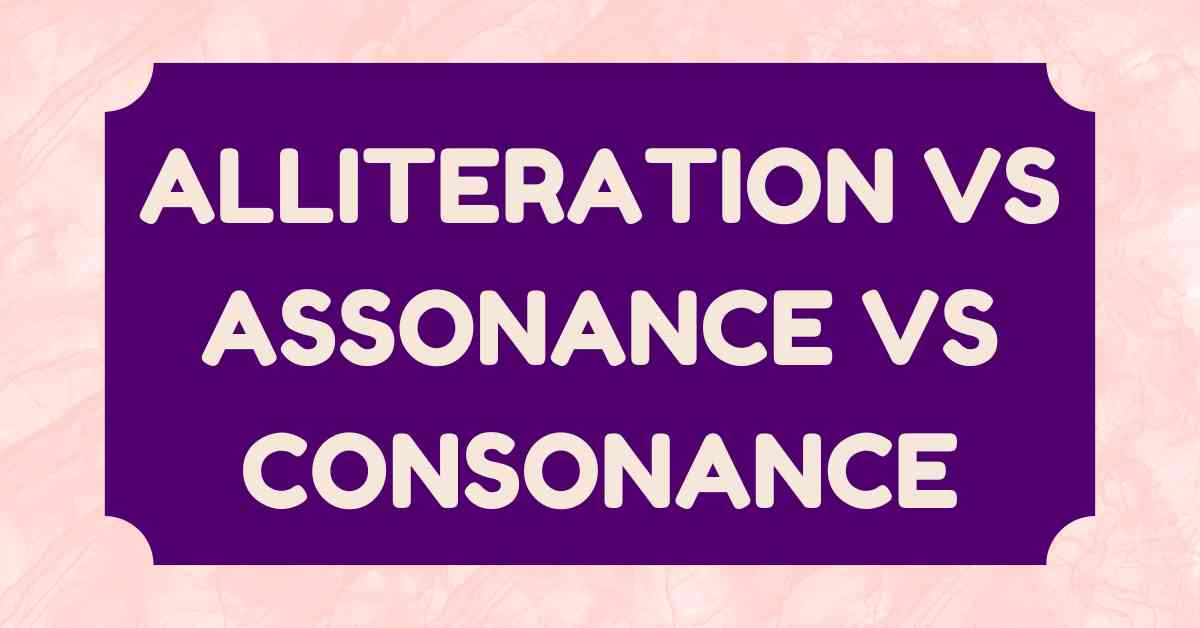
Phonetic devices are the musical building blocks of the English language, transforming ordinary prose into rhythmic and memorable communication. These literary tools focus on the repetition of specific sounds to create harmony, mood, and emphasis within a sentence or verse. Common examples of these auditory patterns include Peter Piper picked, the light of the fire, and toss the glass, which demonstrate how consonants and vowels interact to please the ear. Understanding these concepts is essential for students, poets, and copywriters who wish to enhance the lyrical quality of their writing. By mastering the nuances of sound repetition, a writer can guide the reader’s pace and evoke specific emotional responses through purely linguistic means.
Table of Contents
- Comprehensive Definitions and Classification
- Structural Breakdown of Sound Patterns
- Deep Dive into Alliteration
- Deep Dive into Assonance
- Deep Dive into Consonance
- Extensive Example Tables for Comparison
- Usage Rules and Stylistic Guidelines
- Common Mistakes and How to Avoid Them
- Comprehensive Practice Exercises
- Advanced Topics: Sibilance and Slant Rhymes
- Frequently Asked Questions (FAQ)
- Conclusion and Final Learning Tips
Comprehensive Definitions and Classification
To understand the artistry behind English literature, one must first distinguish between the three primary pillars of sound repetition. While they all involve the recurrence of specific phonemes, they differ significantly in where those sounds occur and what types of letters are involved.
What is Alliteration?
Alliteration is the repetition of the same initial consonant sound in a sequence of nearby words. It is often referred to as “head rhyme” or “initial rhyme” because the focus is entirely on the beginning of the words. It is important to note that alliteration is based on sound, not spelling. For instance, “physical fitness” is alliterative because both words start with the /f/ sound, even though they begin with different letters.
What is Assonance?
Assonance is the repetition of similar vowel sounds within nearby words, usually in the stressed syllables. Unlike alliteration, these sounds can occur at the beginning, middle, or end of words, provided they are vowel sounds. This device is frequently used to create internal rhyming and a sense of fluidity. In the phrase “the rain in Spain stays mainly in the plain,” the long /a/ sound provides the connective tissue of the sentence.
What is Consonance?
Consonance is the repetition of consonant sounds within or at the end of words in quick succession. It is broader than alliteration because the repeated sound does not have to be at the start of the word. Consonance provides a “clicking” or “thudding” rhythmic quality to sentences. A classic example is the repetition of the /t/ sound in “pitter-patter,” where the consonants remain stable while the vowels change.
Structural Breakdown of Sound Patterns
The structure of these devices relies heavily on the phonetic environment of the sentence. To identify them correctly, a learner must look at three specific variables: the type of sound (vowel vs. consonant), the position of the sound (initial, medial, or final), and the proximity of the words.
Alliteration requires proximity; the words usually need to be consecutive or separated by only a few minor words like “and” or “the.” If the sounds are too far apart, the auditory effect is lost. Assonance and consonance are slightly more flexible, as the human ear can pick up on internal vowel echoes or trailing consonant sounds across a longer phrase.
The following table provides a quick structural reference to help you distinguish between these three concepts at a glance. It focuses on the linguistic requirements for each device.
| Device | Sound Type | Position in Word | Primary Function |
|---|---|---|---|
| Alliteration | Consonant | Initial (Beginning) | Creates a rhythmic beat and links concepts. |
| Assonance | Vowel | Anywhere (Internal focus) | Creates mood and internal melodic flow. |
| Consonance | Consonant | Middle or End | Adds texture and percussive emphasis. |
Deep Dive into Alliteration
Alliteration is perhaps the most recognizable of the three devices. It has been a staple of English poetry since the Anglo-Saxon era, where it served as the primary structural element of verse. In modern times, it is a powerful tool in branding and advertising because it makes phrases more “sticky” in the human memory.
The Rule of Sound vs. Spelling
As mentioned previously, alliteration is an auditory phenomenon. The letters on the page matter less than the vibrations in the air. Consider the phrase “The knight knocked on the door.” This is not alliteration because the “k” in “knight” is silent, resulting in an /n/ sound, while “knocked” also starts with /n/. However, “The noble knight knelt” is alliterative because all three words produce the /n/ sound.
Symmetry and Rhythm
Alliteration often works best in pairs or triplets. When a writer uses too much alliteration, it can become a tongue twister, which might distract the reader. However, when used sparingly, it creates a sense of symmetry. Phrases like “bread and butter” or “kith and kin” feel “right” to native speakers because of the subtle alliterative links.
Deep Dive into Assonance
Assonance is often described as the “softer” cousin of alliteration. Because vowels are the breath of the language, repeating them creates a resonant, atmospheric effect. It is a favorite tool of lyricists and romantic poets who want to slow down the reader’s pace.
Mood and Vowel Quality
The choice of vowel can dictate the mood of the writing. Long vowels (like the /o/ in “go” or /ee/ in “free”) tend to slow down a sentence and create a somber or peaceful mood. Short vowels (like the /i/ in “bit” or /a/ in “cat”) can create a sense of urgency, energy, or staccato movement. For example, “The crumbling thunder of the seas” uses assonance to mimic the booming sound of water.
Internal Rhyme vs. Assonance
While all internal rhymes contain assonance, not all assonance is a rhyme. A rhyme requires both the vowel and the following consonant to match (e.g., “cat” and “hat”). Assonance only requires the vowel to match (e.g., “cat” and “back”). This subtlety allows writers to create a sense of cohesion without the “sing-song” effect of traditional rhyming.
Deep Dive into Consonance
Consonance is the most versatile of the three because it can appear anywhere in the word. It is frequently used in hip-hop and modern poetry to create “slant rhymes” or “half-rhymes.” By keeping the consonants the same but changing the vowels, a writer can create a sense of near-repetition that is sophisticated and complex.
The Percussive Effect
Hard consonants like /t/, /k/, /p/, and /d/ create a percussive effect when repeated. This is often used to describe mechanical sounds, violence, or intense action. Conversely, soft consonants like /l/, /m/, and /n/ create a humming, soothing effect. “The ship has struck” uses the sharp /k/ sound to emphasize the impact.
Consonance in Word Pairs
Many common English idioms rely on consonance for their staying power. Words that share ending sounds feel more connected than words that don’t. This is why we say “odds and ends” or “short and sweet.” The shared terminal sounds provide a linguistic “click” that signals the end of a thought.
Extensive Example Tables for Comparison
To truly master these concepts, you need to see them in action across a variety of contexts. The following tables provide dozens of examples, categorized by the specific device they illustrate. Pay close attention to where the sounds are located in each word.
Table 1: 30 Examples of Alliteration
This table showcases initial consonant repetition. Notice how the letters might differ, but the sounds remain consistent.
| Number | Example Phrase | Repeated Sound | Context |
|---|---|---|---|
| 1 | Busy as a bee | /b/ | Common Idiom |
| 2 | The wild winds whisked | /w/ | Nature Description |
| 3 | Picture perfect | /p/ | Photography |
| 4 | Money matters | /m/ | Finance |
| 5 | Rocky road | /r/ | Travel |
| 6 | Sweet smell of success | /s/ | Achievement |
| 7 | Good as gold | /g/ | Quality |
| 8 | Tough talk | /t/ | Communication |
| 9 | Fast and furious | /f/ | Speed |
| 10 | No nonsense | /n/ | Behavior |
| 11 | Deep down | /d/ | Emotions |
| 12 | Live and learn | /l/ | Wisdom |
| 13 | Keep it cool | /k/ | Slang |
| 14 | Jump for joy | /j/ | Emotion |
| 15 | Hard habits | /h/ | Routine |
| 16 | Vocal vibes | /v/ | Music |
| 17 | Quick questions | /kw/ | Inquiry |
| 18 | Zesty zucchini | /z/ | Cooking |
| 19 | Through thick and thin | /th/ | Loyalty |
| 20 | Phony photos | /f/ | Deception |
| 21 | Circle of cinema | /s/ | Entertainment |
| 22 | Knock on knots | /n/ | Carpentry |
| 23 | Sea shells | /s/ | Nature |
| 24 | Big bad bear | /b/ | Fable |
| 25 | Cream of the crop | /k/ | Excellence |
| 26 | Dead as a doornail | /d/ | Idiom |
| 27 | Functional fashion | /f/ | Style |
| 28 | Green grass grows | /g/ | Nature |
| 29 | Last laugh | /l/ | Victory |
| 30 | Make a mountain | /m/ | Exaggeration |
Table 2: 30 Examples of Assonance
This table focuses on repeated vowel sounds. Note that the spelling of the vowels can change while the sound remains the same.
| Number | Example Phrase | Repeated Vowel Sound | Notes |
|---|---|---|---|
| 1 | The light of the fire | Long /i/ | Bright, airy feel |
| 2 | Go slow over the road | Long /o/ | Dragging, slow feel |
| 3 | Fleet feet sweep by | Long /e/ | Fast, smooth feel |
| 4 | The rain in Spain | Long /a/ | Classic example |
| 5 | Try to light the fire | Long /i/ | Active, energetic |
| 6 | Men sell the wedding bells | Short /e/ | Rhythmic, ringing |
| 7 | A fat cat sat on a mat | Short /a/ | Simple, percussive |
| 8 | The crumbling thunder | Short /u/ | Heavy, dark |
| 9 | Chips and dips | Short /i/ | Quick, snackable |
| 10 | Hot pot | Short /o/ | Blunt, short |
| 11 | Hear the mellow wedding bells | Short /e/ | Poe’s “The Bells” |
| 12 | The squeaky wheel gets the grease | Long /e/ | Common proverb |
| 13 | How now brown cow | /ow/ diphthong | Classic nursery rhyme |
| 14 | A stitch in time saves nine | Long /i/ | Proverbial wisdom |
| 15 | Hate to be late | Long /a/ | Expressing urgency |
| 16 | The engineer steered the gear | Long /e/ | Technical context |
| 17 | True blue | Long /u/ | Loyalty |
| 18 | High sky | Long /i/ | Description |
| 19 | The loot was in the boot | Long /u/ | Crime context |
| 20 | Stay away today | Long /a/ | Warning |
| 21 | The boat won’t float | Long /o/ | Negative outcome |
| 22 | Wild child | Long /i/ | Description |
| 23 | Deep sea | Long /e/ | Nature |
| 24 | Small ball | /aw/ sound | Sports |
| 25 | Good book | Short /oo/ | Reading |
| 26 | Fine wine | Long /i/ | Luxury |
| 27 | Mean machine | Long /e/ | Power |
| 28 | Round sound | /ow/ diphthong | Acoustics |
| 29 | Near the pier | Long /e/ | Location |
| 30 | Old gold | Long /o/ | Valuable |
Table 3: 30 Examples of Consonance
Consonance focuses on repeating consonants at the middle or end of words. This creates a subtle texture in the writing.
| Number | Example Phrase | Repeated Consonant | Position |
|---|---|---|---|
| 1 | Pitter-patter | /t/ and /r/ | Middle and End |
| 2 | Chuckling duckling | /k/ and /l/ | Middle |
| 3 | All’s well that ends well | /l/ | End |
| 4 | The lock stuck | /k/ | End |
| 5 | First and last | /st/ | End |
| 6 | Odds and ends | /ds/ | End |
| 7 | Short and sweet | /t/ | End |
| 8 | Stroke of luck | /k/ | End |
| 9 | A blessing in disguise | /s/ | Middle and End |
| 10 | Toss the glass | /s/ | End |
| 11 | Rough and tough | /f/ sound | End |
| 12 | Black and blue | /l/ | Middle |
| 13 | Hard and loud | /d/ | End |
| 14 | Think and thank | /nk/ | End |
| 15 | Sent and went | /nt/ | End |
| 16 | Bill and hill | /l/ | End |
| 17 | Strong and long | /ng/ | End |
| 18 | Middle of the puddle | /ddl/ | Middle |
| 19 | Shelley sells shells | /l/ | Middle and End |
| 20 | Blank and blink | /nk/ | End |
| 21 | Dress and press | /ss/ | End |
| 22 | Hand in hand | /nd/ | End |
| 23 | Best in show | /st/ | End |
| 24 | Click-clack | /k/ | End |
| 25 | Hush and rush | /sh/ | End |
| 26 | Wet and set | /t/ | End |
| 27 | Wind and sand | /nd/ | End |
| 28 | Tick-tock | /k/ | End |
| 29 | Bright and light | /t/ | End |
| 30 | Laughed and coughed | /f/ and /t/ | End |
Usage Rules and Stylistic Guidelines
To use these sound patterns effectively, you must follow certain stylistic “rules of the road.” While there are no hard grammatical laws forbidding specific sound patterns, there are principles of aesthetics that govern their success in writing.
1. Prioritize Sound Over Spelling
Always remember that these devices are auditory. When writing, read your work aloud. If you are aiming for alliteration with the letter “C,” words like “City” and “Car” will not work together because “City” sounds like an /s/ and “Car” sounds like a /k/. Conversely, “Keep” and “Car” are perfectly alliterative.
2. The Rule of Three
In prose, alliteration or assonance involving more than three words in a row can often feel “purple” or overly dramatic. This is great for poetry or children’s books, but in professional or academic writing, it can be distracting. Aim for pairs or triplets to maintain a professional yet engaging tone.
3. Contextual Appropriateness
Use harsh consonants (consonance) for harsh topics and soft vowels (assonance) for gentle topics. If you are writing a technical manual, avoid these devices entirely as they can decrease reading speed and clarity. If you are writing a speech, use them to highlight key points you want the audience to remember.
4. Avoid “Accidental” Repetition
Sometimes, writers create these patterns by accident, which can make a sentence feel clunky. For example, “The tall wall fell” might be too much rhyming assonance for a serious news report. Always scan your work for unintentional sound patterns that might undermine your message.
Common Mistakes and How to Avoid Them
Even advanced writers sometimes struggle with the nuances of sound repetition. Here are the most frequent pitfalls and how to correct them.
Confusing Alliteration with Consonance
The most common error is assuming that any repeated consonant is alliteration. Remember: Alliteration is only at the start. If the sound is in the middle or end, it is consonance.
Incorrect: “The boat hit the mat” (Calling this alliteration).
Correct: This is consonance because of the /t/ sound at the end of “boat,” “hit,” and “mat.”
Ignoring the “Silent” Letters
Writers often look at the page and see the same letters, assuming they have created a sound pattern.
Incorrect: “The honest horse” (Thinking this is alliteration).
Correct: “Honest” starts with a vowel sound (/o/), while “horse” starts with a consonant sound (/h/). There is no alliteration here.
Over-Alliteration
Using too much of a good thing can lead to “tongue-twister syndrome,” where the reader gets stuck on the sounds and loses the meaning.
Example: “Peter’s purple panther played pathetic pipes.” This is difficult to read and feels forced.
Solution: Break it up. “Peter’s purple panther played the flute.”
Comprehensive Practice Exercises
Test your knowledge with the following exercises. These are designed to help you distinguish between the three devices in various contexts.
Exercise 1: Identify the Device
Identify whether each sentence primarily uses Alliteration, Assonance, or Consonance.
| Question | Sentence | Answer | |
|---|---|---|---|
| 1 | The early bird catches the worm. | Assonance (/er/ sound) | |
| 2 | She sells seashells by the seashore. | Alliteration (/s/ sound) | |
| 3 | The lumpy bumpy road. | Consonance (/p/ and /y/ sounds) | |
| 4 | Mike likes his new bike. | Assonance (Long /i/ sound) | |
| 5 | He struck a streak of bad luck. | Consonance (/k/ sound) | |
| 6 | Better late than never. | Alliteration (/t/ sound in ‘better’ is internal, but ‘late’ and ‘never’ don’t match—actually, this has little sound play beyond ‘t’.) Let’s try: Big bad bears. | Alliteration (/b/) |
| 7 | The crumbling thunder of the drums. | Assonance (Short /u/) | |
| 8 | The glass was boss. | Consonance (/s/) | |
| 9 | Fair is foul, and foul is fair. | Alliteration (/f/) | |
| 10 | Slow Joe went home. | Assonance (Long /o/) |
Exercise 2: Sentence Completion
Complete the sentence using the requested device.
- (Alliteration with /w/): The _____ _____ wandered. (Answer: wild wind)
- (Assonance with Long /e/): The _____ _____ was green. (Answer: deep sea)
- (Consonance with /n/): The _____ _____ was thin. (Answer: broken pen)
- (Alliteration with /m/): _____ _____ makes a man. (Answer: Money mostly)
- (Assonance with /i/): The _____ _____ is bright. (Answer: white light)
Advanced Topics: Sibilance and Slant Rhymes
Once you understand the basics, you can explore more specialized forms of sound repetition. These advanced concepts are essential for literary analysis and high-level creative writing.
Sibilance: A Specific Type of Alliteration
Sibilance is a sub-category of alliteration and consonance that specifically involves “hissing” sounds, primarily the /s/ and /sh/ sounds. It is used to create a sense of stealth, danger, or softness. Think of the sound a snake makes. In the line “Six slippery snails slid slowly,” the sibilance creates a wet, sliding auditory texture that matches the subject matter.
Slant Rhymes and Consonance
In modern songwriting and poetry, “perfect rhymes” (like “cat” and “hat”) are often seen as cliché. Writers instead use “slant rhymes” or “half-rhymes,” which rely heavily on consonance and assonance. For example, “bridge” and “grudge” are slant rhymes because they share the /dg/ consonant sound but have different vowels. This allows for more creative freedom while still maintaining a sense of sonic connection.
The Onomatopoeic Connection
Sound devices often work in tandem with onomatopoeia (words that sound like what they describe). When you use consonance with the /k/ sound to describe a “cracking” branch, the sound of the words reinforces the meaning. This “phonetic symbolism” is a powerful way to make your writing more immersive.
Frequently Asked Questions (FAQ)
| Question | Detailed Answer |
|---|---|
| Can a sentence have all three devices at once? | Yes! Complex poetry often uses all three. For example: “The silvery snake slid through the green reed.” This has sibilant alliteration (/s/), assonance (long /e/), and consonance (/n/). |
| Is alliteration only for consonants? | Technically, yes. Repetition of initial vowel sounds is often classified as assonance, though some older definitions included it under alliteration. In modern grammar, we separate them based on the vowel/consonant distinction. |
| Does the spelling have to be the same? | No. Sound is the only thing that matters. “Photo” and “Fan” are alliterative. “Rough” and “Stuff” have consonance and assonance despite different spellings. |
| Why is this important for non-poets? | It helps with “memorability.” If you are naming a business, writing a slogan, or giving a speech, these devices make your words stick in the listener’s brain. |
| Is “pitter-patter” alliteration? | It is both alliteration (initial /p/) and consonance (internal /t/ and /r/). This is why it is such a satisfying phrase to say! |
| How many words do I need for it to count? | Usually, at least two words in close proximity are required to establish a pattern. Three or more words make the pattern much more obvious. |
| Can I use these in formal essays? | Use them very sparingly. In formal writing, clarity is king. If your sound patterns become too obvious, they may distract from your argument. |
| What is the difference between assonance and rhyme? | Rhyme requires the vowel AND the following consonant to match (e.g., map/tap). Assonance only requires the vowel to match (e.g., map/back). |
Conclusion and Final Learning Tips
Mastering alliteration, assonance, and consonance is a journey into the musical heart of the English language. By paying attention to the initial, internal, and terminal sounds of your words, you gain the power to influence your reader’s emotions and improve their memory of your text. Remember that these tools should serve your meaning, not overwhelm it. The best use of sound repetition is often the one the reader doesn’t consciously notice but “feels” as they read. To continue improving, try reading poetry aloud every day and identifying these patterns. Practice by rewriting simple sentences to include one of these devices, such as changing “the cat sat” to “the crafty cat crouched.” With time, these phonetic patterns will become a natural and vibrant part of your writing toolkit.