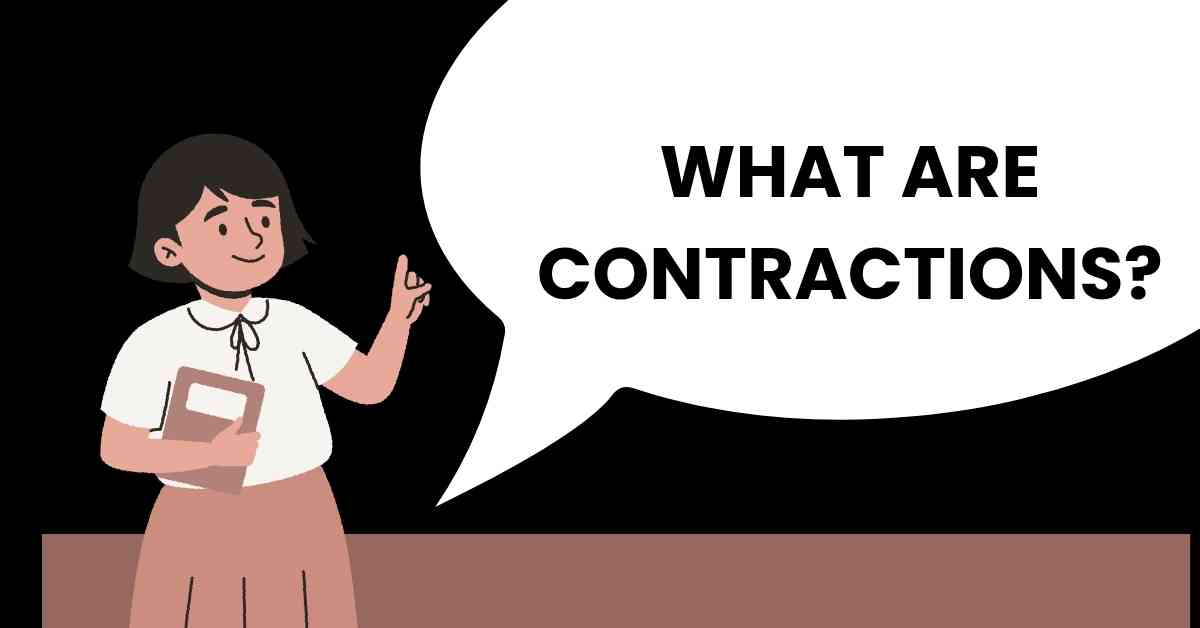
Contractions are shortened forms of words or phrases, where letters are omitted and replaced by an apostrophe, such as can’t (can not), it’s (it is or it has), and we’re (we are). They enhance the flow of informal writing and speech by making language more concise and conversational. Understanding contractions is essential for clear communication and avoiding common grammatical errors. Anyone learning or teaching English, especially those focusing on fluency and natural language use, will benefit from mastering contractions.
Table of Contents
- Definition of Contractions
- Structural Breakdown of Contractions
- Types of Contractions
- Examples of Common Contractions
- Usage Rules for Contractions
- Common Mistakes with Contractions
- Practice Exercises
- Advanced Topics: Less Common Contractions
- Frequently Asked Questions (FAQ)
- Conclusion
Definition of Contractions
A contraction is a word or phrase that has been shortened by dropping one or more letters. In writing, an apostrophe takes the place of the missing letters. Contractions are most commonly used in informal speech and writing, such as in casual conversations, emails to friends, and some types of fiction. They contribute to a more relaxed and natural tone.
The primary function of contractions is to simplify and speed up communication. By combining two or more words into one, the speaker or writer can convey the same information more efficiently. This is particularly useful in spoken English, where speed and fluidity are important.
Contractions are not typically used in formal writing, such as academic papers, business reports, or legal documents, where a more precise and formal tone is required. In these contexts, it is generally preferred to use the full, uncontracted forms of words.
Structural Breakdown of Contractions
Contractions are formed by combining two words and omitting one or more letters. The apostrophe (‘) indicates where the letters have been removed. The most common types of contractions involve combining a pronoun or noun with a verb, or combining a verb with the word “not.” Let’s examine the components in detail:
Pronoun/Noun + Verb Contractions
These contractions combine a pronoun (I, you, he, she, it, we, they) or a noun with a form of the verb be (am, is, are, was, were) or have (have, has, had). For example:
- I am becomes I’m
- He is becomes He’s
- They are becomes They’re
- She has becomes She’s
- We have becomes We’ve
Verb + “Not” Contractions
These contractions combine a verb with the word “not.” In these contractions, the “o” in “not” is replaced by an apostrophe. For example:
- Is not becomes Isn’t
- Are not becomes Aren’t
- Was not becomes Wasn’t
- Could not becomes Couldn’t
- Will not becomes Won’t (an irregular contraction)
Other Common Contractions
Some contractions involve combining two auxiliary verbs or a verb with the word “to.” For example:
- I would becomes I’d
- You will becomes You’ll
- Want to becomes Wanna (less formal)
- Going to becomes Gonna (less formal)
Types of Contractions
Contractions can be categorized based on the types of words they combine. Understanding these categories can help you use contractions correctly and avoid common errors.
Contractions with Pronouns
These contractions combine a pronoun with an auxiliary verb, such as be or have. Examples include:
- I’m (I am)
- You’re (You are)
- He’s (He is/He has)
- She’s (She is/She has)
- It’s (It is/It has)
- We’re (We are)
- They’re (They are)
Contractions with “Not”
These contractions combine a verb with the word “not.” Examples include:
- Isn’t (Is not)
- Aren’t (Are not)
- Wasn’t (Was not)
- Weren’t (Were not)
- Can’t (Cannot)
- Couldn’t (Could not)
- Won’t (Will not)
- Shouldn’t (Should not)
- Wouldn’t (Would not)
- Don’t (Do not)
- Doesn’t (Does not)
- Didn’t (Did not)
Contractions with “Will” and “Would”
These contractions combine a pronoun with the auxiliary verbs will or would. Examples include:
- I’ll (I will)
- You’ll (You will)
- He’ll (He will)
- She’ll (She will)
- It’ll (It will)
- We’ll (We will)
- They’ll (They will)
- I’d (I would/I had)
- You’d (You would/You had)
- He’d (He would/He had)
- She’d (She would/She had)
- It’d (It would/It had)
- We’d (We would/We had)
- They’d (They would/They had)
Informal Contractions
These contractions are generally considered informal and are more common in spoken English or very casual writing. It’s important to note that these are often discouraged in formal writing. Examples include:
- Gonna (Going to)
- Wanna (Want to)
- Gotta (Got to)
- Lemme (Let me)
- Gimme (Give me)
Examples of Common Contractions
Understanding how contractions are used in context is crucial for mastering their usage. The following tables provide examples of common contractions in sentences.
Table 1: Pronoun + Verb “Be” Contractions
This table illustrates how pronouns combine with forms of the verb “be” to create contractions.
| Contraction | Full Form | Example Sentence |
|---|---|---|
| I’m | I am | I’m going to the store. |
| You’re | You are | You’re my best friend. |
| He’s | He is | He’s a talented musician. |
| She’s | She is | She’s very intelligent. |
| It’s | It is | It’s a beautiful day. |
| We’re | We are | We’re planning a party. |
| They’re | They are | They’re coming to visit us. |
| That’s | That is | That’s a good idea. |
| There’s | There is | There’s a cat on the roof. |
| Here’s | Here is | Here’s your coffee. |
| Who’s | Who is | Who’s at the door? |
| What’s | What is | What’s your name? |
| Where’s | Where is | Where’s the library? |
| When’s | When is | When’s the game start? |
| Why’s | Why is | Why’s the sky blue? |
| How’s | How is | How’s it going? |
| Let’s | Let us | Let’s go to the beach. |
| That’ll | That will | That’ll be fun. |
| There’ll | There will | There’ll be plenty of food. |
| Who’ll | Who will | Who’ll help me with this? |
| What’ll | What will | What’ll we do today? |
| Where’ll | Where will | Where’ll we meet? |
| When’ll | When will | When’ll you arrive? |
| Why’ll | Why will | Why’ll he do that? |
| How’ll | How will | How’ll we get there? |
Table 2: Verb + “Not” Contractions
This table presents examples of verbs combined with “not” to form contractions.
| Contraction | Full Form | Example Sentence |
|---|---|---|
| Isn’t | Is not | It isn’t raining today. |
| Aren’t | Are not | They aren’t coming to the party. |
| Wasn’t | Was not | He wasn’t at home yesterday. |
| Weren’t | Were not | We weren’t invited to the wedding. |
| Can’t | Cannot | I can’t believe it! |
| Couldn’t | Could not | She couldn’t find her keys. |
| Won’t | Will not | I won’t be able to attend. |
| Shouldn’t | Should not | You shouldn’t eat too much candy. |
| Wouldn’t | Would not | He wouldn’t agree to the terms. |
| Don’t | Do not | Don’t forget your umbrella. |
| Doesn’t | Does not | She doesn’t like coffee. |
| Didn’t | Did not | They didn’t finish the project. |
| Hadn’t | Had not | I hadn’t seen him before. |
| Hasn’t | Has not | She hasn’t called me yet. |
| Haven’t | Have not | We haven’t been to that restaurant. |
| Mightn’t | Might not | He mightn’t come to the party. |
| Mustn’t | Must not | You mustn’t touch that. |
| Oughtn’t | Ought not | You oughtn’t to do that. |
| Shan’t | Shall not | I shan’t be late. |
| Wouldn’t’ve | Would not have | I wouldn’t’ve done that. |
| Couldn’t’ve | Could not have | I couldn’t’ve done it without you. |
| Shouldn’t’ve | Should not have | I shouldn’t’ve said that. |
| Mightn’t’ve | Might not have | I mightn’t’ve seen him. |
| Mustn’t’ve | Must not have | I mustn’t’ve locked the door. |
| Oughtn’t’ve | Ought not have | I oughtn’t’ve said that. |
Table 3: Pronoun + Verb “Have” Contractions
This table shows how pronouns combine with forms of the verb “have” to create contractions.
| Contraction | Full Form | Example Sentence |
|---|---|---|
| I’ve | I have | I’ve finished my homework. |
| You’ve | You have | You’ve done a great job. |
| He’s | He has | He’s already left. |
| She’s | She has | She’s been to Paris. |
| It’s | It has | It’s been a long day. |
| We’ve | We have | We’ve decided to move. |
| They’ve | They have | They’ve seen that movie before. |
| Who’ve | Who have | Who’ve seen this before? |
| What’ve | What have | What’ve you been up to? |
| Where’ve | Where have | Where’ve you been all day? |
| When’ve | When have | When’ve you seen him last? |
| Why’ve | Why have | Why’ve you done that? |
| How’ve | How have | How’ve you been? |
| There’ve | There have | There’ve been some changes made. |
| That’ve | That have | That’ve been my shoes. |
Table 4: Pronoun + Verb “Will/Would” Contractions
This table illustrates how pronouns combine with forms of the verb “will” or “would” to create contractions.
| Contraction | Full Form | Example Sentence |
|---|---|---|
| I’ll | I will | I’ll call you later. |
| You’ll | You will | You’ll enjoy the movie. |
| He’ll | He will | He’ll be here soon. |
| She’ll | She will | She’ll help you with that. |
| It’ll | It will | It’ll be a great experience. |
| We’ll | We will | We’ll see you tomorrow. |
| They’ll | They will | They’ll arrive on time. |
| I’d | I would | I’d like a cup of coffee. |
| You’d | You would | You’d better hurry. |
| He’d | He would | He’d love to come. |
| She’d | She would | She’d prefer tea. |
| It’d | It would | It’d be nice to relax. |
| We’d | We would | We’d be happy to help. |
| They’d | They would | They’d agree with you. |
| Who’d | Who would | Who’d want to do that? |
| What’d | What would | What’d you do in that situation? |
| Where’d | Where would | Where’d you go if you could travel anywhere? |
| When’d | When would | When’d you like to meet? |
| Why’d | Why would | Why’d he say that? |
| How’d | How would | How’d you do that? |
Usage Rules for Contractions
While contractions are common in informal contexts, it’s important to understand the rules governing their use. Using contractions appropriately can enhance your writing and speaking, while misusing them can lead to confusion or a less professional tone.
Formal vs. Informal Contexts
Contractions are generally appropriate in informal settings, such as conversations, personal emails, and informal writing. In formal contexts, such as academic papers, business reports, and legal documents, it is usually best to avoid contractions and use the full forms of words.
For example, in a business email to a colleague, you might write, “I’ll be there by 3 PM.” However, in a formal report, you would write, “I will be there by 3 PM.”
Clarity and Avoiding Ambiguity
In some cases, using contractions can create ambiguity. For example, “it’s” can mean either “it is” or “it has.” Ensure that the meaning is clear from the context.
For example, “It’s raining” (it is raining) is clear, but “It’s been a long day” (it has been a long day) could be confused if the context is unclear.
Consistency
Maintain consistency in your use of contractions. If you choose to use contractions in a piece of writing, use them throughout. Avoid switching back and forth between contracted and uncontracted forms, as this can make your writing seem inconsistent.
Exceptions and Special Cases
There are some exceptions to the general rules about using contractions. For example, in creative writing, such as fiction, contractions are often used to mimic natural speech patterns and create a more realistic dialogue. Additionally, some types of writing, such as journalism, may use contractions to save space.
Also, “won’t” is an irregular contraction of “will not.” It’s important to remember this specific form to avoid errors.
Common Mistakes with Contractions
One of the most common mistakes is confusing contractions with possessive pronouns. The most frequent error involves “its” and “it’s.” “Its” is the possessive form of “it,” while “it’s” is a contraction of “it is” or “it has.”
| Incorrect | Correct | Explanation |
|---|---|---|
| The dog wagged it’s tail. | The dog wagged its tail. | “Its” is the possessive form, showing ownership. |
| It’s a beautiful day. | It’s a beautiful day. | “It’s” is a contraction of “it is.” |
| Your going to love this. | You’re going to love this. | “You’re” is a contraction of “you are.” |
| Their coming to the party. | They’re coming to the party. | “They’re” is a contraction of “they are.” |
| Whose going to help me? | Who’s going to help me? | “Who’s” is a contraction of “who is.” |
| I would of gone if I could. | I would’ve gone if I could. | “Would’ve” is a contraction of “would have.” |
| Could of, Should of, Might of | Could’ve, Should’ve, Might’ve | The “have” is contracted to ‘ve. |
Practice Exercises
Test your understanding of contractions with the following exercises. Fill in the blanks with the correct contraction or full form.
Exercise 1: Fill in the Blanks
Choose the correct contraction or full form to complete each sentence.
| Question | Answer |
|---|---|
| 1. ________ (I am) going to the park. | I’m |
| 2. ________ (They are) excited about the trip. | They’re |
| 3. ________ (It is) a beautiful day. | It’s |
| 4. She ________ (is not) coming to the party. | isn’t |
| 5. I ________ (cannot) believe what happened. | can’t |
| 6. ________ (We have) been to that restaurant before. | We’ve |
| 7. He ________ (will) be here soon. | He’ll |
| 8. I ________ (would) like a cup of tea. | I’d |
| 9. ________ (You are) my best friend. | You’re |
| 10. ________ (Who is) at the door? | Who’s |
Exercise 2: Rewrite the Sentences
Rewrite the following sentences using contractions where appropriate.
| Question | Answer |
|---|---|
| 1. I am not sure what to do. | I’m not sure what to do. |
| 2. He is going to the store. | He’s going to the store. |
| 3. They are planning a vacation. | They’re planning a vacation. |
| 4. It is raining outside. | It’s raining outside. |
| 5. We have finished the project. | We’ve finished the project. |
| 6. She will arrive on time. | She’ll arrive on time. |
| 7. I would like to thank you. | I’d like to thank you. |
| 8. You are welcome to join us. | You’re welcome to join us. |
| 9. He has been working hard. | He’s been working hard. |
| 10. She is not feeling well. | She isn’t feeling well. |
Exercise 3: Correct the Mistakes
Identify and correct the mistakes in the following sentences.
| Question | Answer |
|---|---|
| 1. Its a beautiful day. | It’s a beautiful day. |
| 2. Your going to be late. | You’re going to be late. |
| 3. Their coming to visit. | They’re coming to visit. |
| 4. Whose at the door? | Who’s at the door? |
| 5. I would of helped you. | I would’ve helped you. |
| 6. He dosent like coffee. | He doesn’t like coffee. |
| 7. She hadnt seen him before. | She hadn’t seen him before. |
| 8. We havent been there yet. | We haven’t been there yet. |
| 9. They havent finished the project. | They haven’t finished the project. |
| 10. I canot believe it. | I cannot believe it. |
Advanced Topics: Less Common Contractions
Beyond the common contractions, there are some less frequently used forms that can add nuance to your English. These contractions often appear in specific dialects or informal contexts.
Contractions with “Have” after Modal Verbs
Contractions of “have” after modal verbs like could, should, and would are common in spoken English and informal writing. For example:
- Could’ve (Could have): “I could’ve gone to the party.”
- Should’ve (Should have): “You should’ve told me earlier.”
- Would’ve (Would have): “I would’ve helped if I had known.”
Archaic Contractions
Some contractions are considered archaic and are rarely used in modern English, except in literature or historical contexts. Examples include:
- ‘Tis (It is): “‘Tis a beautiful morning.”
- ‘Twas (It was): “‘Twas the night before Christmas.”
- ‘Twill (It will): “‘Twill be a grand adventure.”
Dialectal Contractions
Certain contractions are specific to certain dialects of English. These may not be widely understood or accepted in standard English. Examples include:
- Ain’t (Am not, is not, are not, has not, have not): “I ain’t going there.”
Frequently Asked Questions (FAQ)
Here are some frequently asked questions about contractions to help clarify any remaining doubts.
- What is the difference between “its” and “it’s”?
- When should I avoid using contractions?
- Is it okay to use contractions in academic essays?
- What are some common mistakes people make with contractions?
- How can I improve my use of contractions?
- Why is “won’t” the contraction for “will not”?
- What is the difference between “I’d” as “I would” and “I’d” as “I had”?
- Are contractions necessary for fluency in English?
“Its” is a possessive pronoun indicating ownership (e.g., “The dog wagged its tail”). “It’s” is a contraction of “it is” or “it has” (e.g., “It’s a beautiful day,” or “It’s been a long time”). Confusing these two is a common mistake, so always check the context.
Avoid contractions in formal writing, such as academic papers, business reports, and legal documents. In these contexts, it is best to use the full forms of words to maintain a professional and precise tone. However, in informal settings like conversations, personal emails, and some types of fiction, contractions are generally acceptable and can make your language sound more natural.
Generally, no. Academic essays require a formal tone, and contractions are considered informal. It is better to use the full forms of words (e.g., “it is” instead of “it’s”) to maintain a professional and serious tone.
One of the most common mistakes is confusing “its” and “it’s.” Another frequent error is using “your” instead of “you’re” (or vice versa). Also, some people incorrectly write “would of” instead of “would’ve” (would have). Always double-check your contractions to ensure they are used correctly.
Pay attention to how native English speakers use contractions in their speech and writing. Read widely and notice how contractions are used in different contexts. Practice writing in both formal and informal styles to get a feel for when contractions are appropriate. Review the common contractions and their full forms regularly.
“Won’t” is an irregular contraction of “will not.” The reason for this unique form is historical. Originally, “will” was “woll” and “will not” contracted to “woll not” and further evolved to “wonnot” and eventually “won’t”.
“I’d” can be a contraction of either “I would” or “I had,” and the meaning is determined by the context of the sentence. For example, “I’d go to the beach if it weren’t raining” means “I would go,” while “I’d already eaten when you arrived” means “I had already eaten.”
While not strictly necessary, using contractions can significantly enhance your fluency and make your English sound more natural. Native English speakers use contractions frequently, so understanding and using them will help you communicate more effectively and sound more like a native speaker.
Conclusion
Mastering contractions is an important step in achieving fluency and confidence in English. Understanding how contractions such as I’m, can’t, and they’re are formed and used allows you to communicate more naturally and effectively, especially in informal settings. By learning the different types of contractions, recognizing common mistakes, and practicing their use, you can improve your overall command of the language.
Remember to pay attention to the context in which you are writing or speaking and adjust your use of contractions accordingly. While they are perfectly acceptable in casual conversations and informal writing, it’s generally best to avoid them in formal situations. With practice and attention to detail, you can confidently use contractions to enhance your English communication skills.