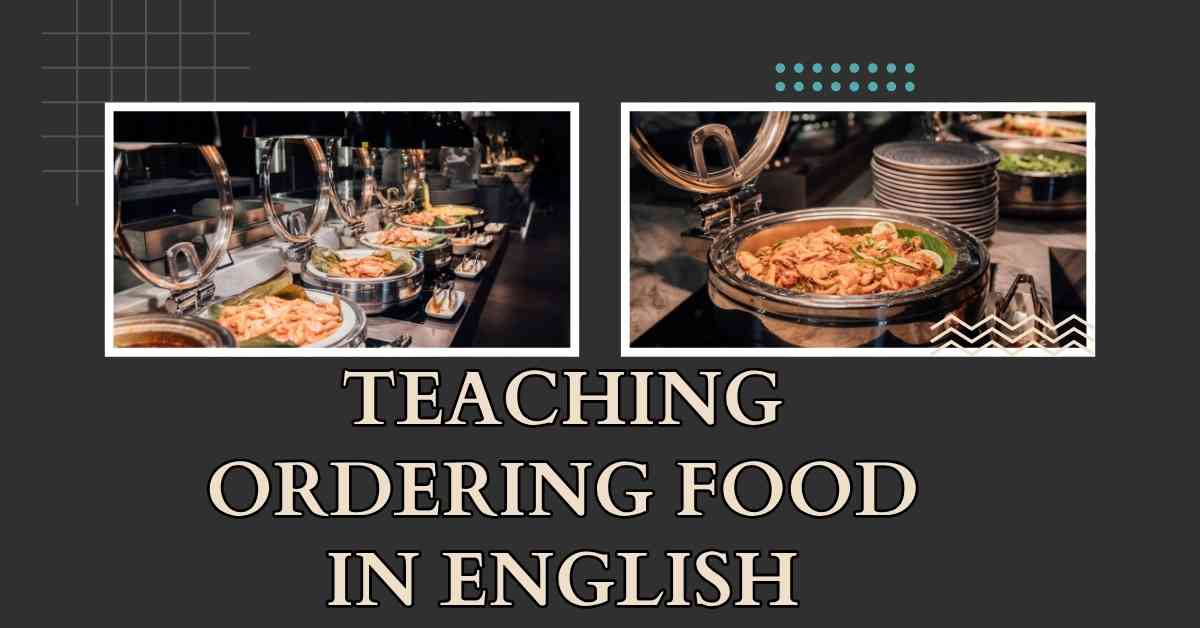
Teaching students how to order food in English is one of the most practical and rewarding aspects of language instruction because it bridges the gap between classroom theory and real-world survival skills. Mastering this functional language involves learning specific polite structures and transactional phrases, such as “I would like,” “Could I have,” “I’ll take,” “Can I get,” and “May I see the menu.” By understanding these nuances, learners gain the confidence to navigate restaurants, cafes, and bistros with ease, ensuring they can communicate their preferences and dietary needs effectively. This guide provides a comprehensive framework for educators and students to master the etiquette, grammar, and vocabulary essential for a seamless dining experience in any English-speaking environment.
Table of Contents
- Definition and Functional Scope
- Structural Breakdown of Ordering Phrases
- Categories of Restaurant Language
- Comprehensive Examples and Reference Tables
- Usage Rules and Social Etiquette
- Common Mistakes and How to Avoid Them
- Complete Lesson Plan and Materials
- Practice Exercises and Roleplay Scenarios
- Advanced Topics: Formal Dining and Complaints
- Frequently Asked Questions (FAQ)
- Conclusion and Final Tips
Definition and Functional Scope
Ordering food in English is categorized under “Functional Language” or “Situational English.” Unlike descriptive grammar, which focuses on the mechanics of sentence building, functional language focuses on achieving a specific goal—in this case, obtaining a meal. It requires a blend of modal verbs, polite request forms, and specific vocabulary related to gastronomy and service. The primary goal is to move beyond the imperative “I want” to more socially acceptable forms that reflect the culture of politeness inherent in English-speaking service industries.
The scope of this topic covers the entire chronological experience of dining out. It begins with making a reservation, continues through the greeting and seating process, moves into the core task of ordering drinks, appetizers, and main courses, and concludes with asking for the bill and handling payment. Each stage uses a specific set of linguistic tools. For example, the grammar of a reservation often uses the future tense or “would like,” while the act of ordering often employs the “will” for spontaneous decisions.
Furthermore, teaching this topic involves more than just vocabulary lists. It requires an understanding of register—the level of formality used in different settings. A student should be able to distinguish between the casual language used at a fast-food counter and the formal language expected at a Michelin-star restaurant. This distinction is crucial for social integration and avoids the accidental rudeness that often stems from a lack of linguistic nuance.
Structural Breakdown of Ordering Phrases
The structure of a food order typically follows a predictable grammatical pattern. At the heart of these patterns are modal verbs, which soften the request and make it polite. The most common structure is Subject + Modal + Verb + Object. For example, “I would like the steak.” Understanding these building blocks allows students to swap out nouns and verbs to fit any dining situation they encounter.
Another common structure is the interrogative form used for requests. Instead of making a statement, the customer asks a question, such as “Could I have a glass of water?” This structure is particularly useful because it is universally polite across all English-speaking cultures. It utilizes the modal verbs could, can, or may. While can is common in casual settings, could and may elevate the level of politeness, which is often preferred when speaking to service staff.
The use of “will” (often contracted to ‘ll) is a specific grammatical nuance used for making decisions at the moment of speaking. When a waiter asks, “Are you ready to order?” a native speaker will rarely say “I order the chicken.” Instead, they say, “I’ll have the chicken.” This use of the future simple tense indicates a decision made right now, which is the standard way to announce your choice from a menu. Mastering this “I’ll have…” structure is one of the quickest ways for a student to sound more natural.
Categories of Restaurant Language
1. Making Reservations
This category involves the language of time, date, and number of people. It usually occurs over the phone or via an online booking system. Key phrases include “I’d like to book a table for [number]” or “Do you have any openings for [time]?” This stage requires students to be comfortable with numbers and temporal prepositions like at, on, and for.
2. Arriving and Seating
Upon arrival, the interaction is usually brief but essential. The staff will ask if you have a reservation or how many people are in your party. Responses like “We have a reservation under the name [Name]” or “A table for four, please” are standard. This is also the time to request specific seating preferences, such as “Could we sit by the window?” or “Do you have a high chair for the baby?”
3. The Main Order
This is the most complex category, involving multiple steps: drinks, appetizers (starters), main courses (entrees), and desserts. It also involves the language of modification, where customers ask for changes to a dish. Phrases like “On the side,” “Instead of,” and “No [ingredient], please” are vital here. Students must learn to navigate the menu and communicate their specific desires clearly to avoid errors in their meal.
4. The Bill and Departure
The final stage involves requesting the total cost and deciding on the method of payment. Common phrases include “Could we have the check, please?” or “Do you take credit cards?” In many Western cultures, this stage also involves the “split bill” conversation, requiring phrases like “Can we pay separately?” or “We’d like to split the bill evenly.”
Comprehensive Examples and Reference Tables
The following tables provide a vast array of phrases and vocabulary items to give students a deep repository of language to draw from. These are organized by the stage of the dining experience and the specific function of the language.
Table 1: 30 Common Phrases for the Customer
This table covers various stages of the meal, providing a wide range of polite options for students to practice and memorize.
| Phase | Phrase | Level of Formality |
|---|---|---|
| Reservation | I’d like to book a table for two for tonight at 7:00. | Neutral/Formal |
| Reservation | Do you have any tables available for Friday night? | Neutral |
| Arrival | We have a reservation for [Name] at [Time]. | Neutral/Formal |
| Arrival | A table for four, please. | Neutral/Casual |
| Arrival | Could we sit outside on the patio? | Neutral |
| Arrival | Is there a wait for a table? | Neutral |
| Ordering | Could we see the menu, please? | Neutral/Formal |
| Ordering | What do you recommend? | Neutral |
| Ordering | What are the specials today? | Neutral |
| Ordering | I’ll have the grilled salmon, please. | Neutral |
| Ordering | I’d like the Caesar salad to start. | Neutral/Formal |
| Ordering | Can I get a burger with no onions? | Casual/Neutral |
| Ordering | I’ll take the pasta dish, please. | Casual/Neutral |
| Ordering | Could I have the dressing on the side? | Neutral |
| Ordering | Is this dish spicy? | Neutral |
| Ordering | Does this contain any nuts? (Allergy check) | Neutral/Essential |
| Ordering | Could I have a refill on my water? | Neutral |
| Ordering | We’re not quite ready yet. Give us a few more minutes. | Neutral |
| Ordering | I’ll have the same thing he’s having. | Casual/Neutral |
| Ordering | Can I substitute the fries for a side salad? | Neutral |
| During Meal | Everything is delicious, thank you. | Neutral/Polite |
| During Meal | Could we have some more napkins? | Neutral |
| During Meal | Excuse me, I ordered the soup, not the salad. | Polite/Corrective |
| During Meal | Is it possible to get some extra butter? | Neutral |
| After Meal | Could we see the dessert menu? | Neutral |
| After Meal | I’m too full for dessert, just the bill, please. | Neutral/Casual |
| Payment | Could we have the check, please? | Neutral/Formal |
| Payment | Can we pay separately? | Neutral |
| Payment | Do you accept American Express? | Neutral |
| Payment | Keep the change. | Casual/Neutral |
Table 2: 25 Common Phrases for the Server
Understanding what the server says is just as important as knowing what to say. This table helps students prepare for the questions they will be asked.
| Context | Server’s Phrase | Meaning/Expected Response |
|---|---|---|
| Greeting | Welcome to [Restaurant Name]. Do you have a reservation? | Asking for booking info |
| Greeting | How many in your party today? | Asking for number of people |
| Greeting | Follow me, I’ll show you to your table. | Instruction to move |
| Drinks | Can I start you off with something to drink? | Asking for drink order |
| Drinks | Are you interested in our wine list? | Offering alcohol menu |
| Ordering | Are you ready to order, or do you need a few more minutes? | Checking readiness |
| Ordering | Would you like to hear the specials? | Offering daily dishes |
| Ordering | How would you like that steak cooked? | Asking for meat preference |
| Ordering | Would you like any sides with that? | Suggesting extra items |
| Ordering | Anything else for you? | Checking if order is complete |
| During Meal | How is everything tasting so far? | Quality check |
| During Meal | Can I get you anything else at the moment? | General assistance |
| During Meal | Are you still working on that? | Asking if plate can be cleared |
| Dessert | Did you save room for dessert? | Offering dessert |
| Dessert | Would you like some coffee or tea? | Offering hot drinks |
| Payment | Will that be all on one check? | Asking about splitting bill |
| Payment | I’ll be right back with your change. | Indicating payment process |
| Closing | Have a wonderful evening! | Farewell |
| Clarification | I’m sorry, we’re out of the lobster today. | Informing of unavailability |
| Clarification | The soup of the day is Tomato Basil. | Providing information |
| Clarification | That comes with a choice of soup or salad. | Asking for a choice |
| Clarification | Would you like that sparkling or still? | Asking for water preference |
| Clarification | Is that for here or to go? | Asking for dining location |
| Greeting | Just a moment while I clear this table for you. | Asking for patience |
| Ordering | Excellent choice! | Positive reinforcement |
Table 3: Vocabulary for Food Descriptions and Cooking Methods
To order effectively, students must understand the adjectives used to describe food. This table provides 20 essential terms.
| Term | Category | Definition/Example |
|---|---|---|
| Rare | Cooking (Meat) | Cool red center |
| Medium-rare | Cooking (Meat) | Warm red center (Standard) |
| Medium | Cooking (Meat) | Warm pink center |
| Well-done | Cooking (Meat) | Cooked through, no pink |
| Savory | Taste | Salty/spicy, not sweet |
| Bland | Taste | Lacking flavor |
| Rich | Taste | Heavy, full of cream or butter |
| Zesty | Taste | Tangy or citrusy |
| Crispy | Texture | Firm and making a sound when bitten |
| Tender | Texture | Easy to chew (usually meat) |
| Soggy | Texture | Too wet and soft (negative) |
| Al dente | Texture | Firm to the bite (pasta) |
| Steamed | Method | Cooked over boiling water |
| Poached | Method | Cooked in simmering liquid |
| Braised | Method | Fried lightly then stewed slowly |
| Smoked | Method | Cured with smoke for flavor |
| Garnished | Presentation | Decorated with a small item |
| Drizzled | Presentation | Poured over in a thin stream |
| House-made | Origin | Made on the premises |
| Seasonal | Origin | Available at this time of year |
Usage Rules and Social Etiquette
When ordering food, the “Usage Rules” extend beyond grammar into the realm of pragmatics—how we use language to be socially appropriate. The first rule is the Rule of Politeness. In English, direct imperatives like “Give me a beer” are considered rude. Instead, we use “Can I get a beer?” or “I’ll have a beer, please.” The addition of “please” at the end of every request is not just a suggestion; it is a linguistic requirement for smooth social interaction in a restaurant.
The second rule is the Rule of Specificity. When ordering, especially in North America and the UK, diners are expected to be specific about how they want their food. This includes specifying the level of “doneness” for steak, the type of dressing for a salad, or any allergies. If a menu says “served with your choice of side,” the customer must be ready to name that side immediately. Failure to do so results in a back-and-forth that can slow down service.
The third rule involves Non-Verbal Communication. While not strictly “grammar,” the way we signal a waiter is part of the language of dining. One should avoid snapping fingers or shouting. Instead, making eye contact and slightly raising a hand, or saying a soft “Excuse me” when they pass by, is the correct way to initiate an interaction. This is often taught alongside the phrase “Could we have a moment?” which is used if the waiter arrives before the diners are ready.
Common Mistakes and How to Avoid Them
One of the most frequent errors for English learners is using the present simple instead of the future simple when ordering. A student might say, “I eat the chicken,” which sounds like a general habit rather than a specific choice for the meal. The correct form is “I’ll have the chicken” or “I’m going to have the chicken.” This distinction is subtle but important for sounding like a proficient speaker.
Another common mistake is the misuse of “want.” While “I want” is grammatically correct, it is often perceived as too demanding or “child-like” in a restaurant setting. Learners should be encouraged to use “I’d like” or “Could I have.” These conditional and interrogative forms create a softer tone that respects the service relationship. Additionally, many students forget to use “please” and “thank you,” which can make them seem unintentionally brusque.
Finally, learners often struggle with the difference between “the bill” and “the check.” While both are understood, “the check” is more common in American English, while “the bill” is standard in British English. Using “the recipe” (which is a set of instructions for cooking) instead of “the receipt” (the proof of payment) is another classic vocabulary slip-up that can cause confusion during the final stages of the meal.
Table 4: Correcting Common Errors
| Incorrect/Awkward Phrase | Correct/Natural Phrase | Reason for Correction |
|---|---|---|
| I want a steak. | I’d like a steak, please. | “Want” is too direct/demanding. |
| I eat the fish. | I’ll have the fish. | Use “will” for spontaneous decisions. |
| Give me the menu. | Could we see the menu, please? | Imperatives are rude to staff. |
| I have an allergy for nuts. | I have a nut allergy. / I’m allergic to nuts. | Correct preposition/structure. |
| What is the recipe? (asking for the cost) | Could I have the check? | “Recipe” is for cooking; “check” is for cost. |
| How much I pay? | How much do I owe you? / What is the total? | Correct question structure. |
| Waitress! (shouting) | Excuse me… (with eye contact) | Shouting titles is considered impolite. |
| The food is bad. (too blunt) | Actually, this isn’t what I expected. | Polite way to initiate a complaint. |
Complete Lesson Plan and Materials
Lesson Overview
Topic: Navigating the Restaurant Experience
Level: Pre-Intermediate to Intermediate (B1-B2)
Duration: 90 Minutes
Objectives: Students will be able to make a reservation, order a three-course meal with modifications, and handle the payment process using polite English structures.
Step 1: Warm-up (10 Minutes)
Start with a “Picture Prompt.” Show images of different types of restaurants (Fast food, fine dining, a cafe). Ask students to brainstorm five words for each. Then, ask: “When was the last time you ate out? What did you order?” This activates prior knowledge and sets the context for the lesson.
Step 2: Vocabulary Presentation (15 Minutes)
Distribute a sample menu. Introduce categories: Appetizers, Entrees, Sides, Desserts, Beverages. Explain the difference between “Still” and “Sparkling” water, and “House wine” versus “Premium.” Use the “Cooking Methods” table from this article to explain how food is prepared. Ensure students understand adjectives like savory, spicy, and bland.
Step 3: Functional Language Introduction (20 Minutes)
Present the “I’ll have…” and “Could I get…” structures. Explain the “Rule of Politeness.” Use a whiteboard to draw a timeline of a meal: Reservation -> Seating -> Drinks -> Food -> Dessert -> Bill. Map the phrases from Table 1 to each point on the timeline. Practice the pronunciation of “I’d like” (/aɪd laɪk/), emphasizing the contraction.
Step 4: Controlled Practice (15 Minutes)
Provide a worksheet with “Fill in the Blanks” dialogues. For example: “Server: Are you ready to order? Customer: Yes, I ____ the salmon.” Have students work in pairs to complete the dialogues using the phrases learned. Check as a class, focusing on the correct use of modals and polite endings.
Step 5: Production/Roleplay (20 Minutes)
The “Restaurant Simulation.” Divide the class into groups of three: one server and two customers. Give customers “Scenario Cards” (e.g., “You are allergic to gluten,” “You are in a hurry,” “You want to split the bill”). The server must use a “Server Script” but respond to the customers’ specific needs. Encourage them to use as many phrases as possible from the tables.
Step 6: Review and Wrap-up (10 Minutes)
Ask students to share one new phrase they learned. Correct any common errors observed during the roleplay. Assign homework: “Find a menu online for a restaurant in London or New York and write down what you would order using the polite structures we learned today.”
Practice Exercises and Roleplay Scenarios
The following exercises are designed to test both vocabulary and grammatical accuracy in the context of ordering food. Teachers can use these as handouts or digital quizzes.
Exercise 1: Matching the Function
Match the customer phrase on the left with the correct situation on the right.
| Phrase | Situation |
|---|---|
| 1. “Do you have a high chair?” | A. Paying the bill |
| 2. “I’ll have the dressing on the side.” | B. Arriving with a toddler |
| 3. “Could we get the check, please?” | C. Modifying an order |
| 4. “Is it possible to sit by the window?” | D. Requesting a specific table |
| 5. “What are the specials today?” | E. Asking for recommendations |
Exercise 2: Dialogue Completion
Fill in the missing words to complete this restaurant interaction.
- Server: Good evening. Do you have a __________?
- Customer: Yes, it’s __________ the name Smith.
- Server: Right this way. Can I __________ you started with some drinks?
- Customer: Just water for now, __________.
- Server: Are you __________ to order?
- Customer: Yes, I’ll __________ the steak, please.
- Server: How would you like that __________?
- Customer: __________-rare, please.
- Server: Excellent. And for you, sir?
- Customer: I’d __________ the pasta. Does it __________ any nuts?
Exercise 3: Scenario Roleplays
Use these prompts for speaking practice in small groups:
- Scenario A: The Picky Eater. You want the burger, but you want no onions, extra pickles, and the sauce on the side. You also want to swap the fries for fruit.
- Scenario B: The Complaint. You ordered a medium steak, but it arrived well-done. You also have been waiting 20 minutes for your second drink. Talk to the server politely.
- Scenario C: The Business Lunch. You are hosting a client. You need to ask for recommendations, order a bottle of wine, and ensure you get the bill at the end (you are paying).
Advanced Topics: Formal Dining and Complaints
For higher-level students, the conversation shifts from basic needs to the nuances of formal etiquette and conflict resolution. In formal dining, the language becomes even more indirect. Instead of “I want more water,” a guest might say, “Would it be possible to have another carafe of water for the table?” Understanding the names of specific cutlery (salad fork, butter knife, soup spoon) and glassware becomes relevant here.
Handling complaints is another advanced skill. The “Sandwich Method” of complaining is often taught: start with a positive, state the problem politely, and end with a request for a solution. For example: “The appetizers were wonderful, but I’m afraid my main course is a bit cold. Could you please have the kitchen heat it up for me?” This approach maintains a positive relationship with the staff while ensuring the problem is fixed.
Another advanced topic is the language of “Tipping and Gratuity.” In many English-speaking countries, particularly the United States, tipping is a complex social requirement. Students should learn phrases like “Is the tip included?” or “Is there a service charge?” and understand how to calculate a standard 15-20% tip. Discussing these cultural expectations prevents awkwardness and ensures students are prepared for the financial realities of dining out.
Frequently Asked Questions (FAQ)
Q: Is it “Can I have” or “May I have”?
A: Both are correct and polite. “May I have” is slightly more formal and traditional, while “Can I have” is the most common phrase used by native speakers in daily life. In a very high-end restaurant, “May I” might feel more appropriate.
Q: What does “How would you like that cooked?” mean?
A: This question is almost exclusively for steak or burgers. It refers to the internal temperature of the meat. Refer to Table 3 for the options ranging from “Rare” to “Well-done.”
Q: How do I ask to pay for only my food?
A: You should ask the server at the beginning or end: “Can we have separate checks?” or “Could you split the bill by what we ordered?” In some busy restaurants, they may only allow you to split the bill evenly between credit cards.
Q: What is a “side dish”?
A: A side dish (or “side”) is a smaller portion of food that accompanies the main course, such as fries, mashed potatoes, steamed vegetables, or a small salad.
Q: What should I say if I have a food allergy?
A: It is vital to be direct. Say, “I have a severe [allergy name] allergy. Could you please check with the chef if this dish is safe for me?” or “Does this dish contain any [ingredient]?”
Q: What is the difference between “the check” and “the receipt”?
A: The “check” (or bill) is the list of items and the total amount you need to pay. The “receipt” is the small piece of paper they give you after you have paid, proving that the transaction is complete.
Conclusion and Final Tips
Mastering the art of ordering food in English is a significant milestone for any language learner. It involves a combination of specific vocabulary, polite modal structures, and an understanding of cultural etiquette. By practicing phrases like “I’ll have,” “Could I get,” and “Would you recommend,” students can move from feeling anxious to feeling empowered during their dining experiences. Remember that the key to success is politeness; a simple “please” and “thank you” go a long way in any language. Encourage students to practice these roleplays frequently, as the confidence gained in a simulated restaurant setting will translate directly to real-world fluency. Whether dining in a casual cafe or a formal steakhouse, these linguistic tools will ensure a pleasant and delicious experience for everyone involved.