
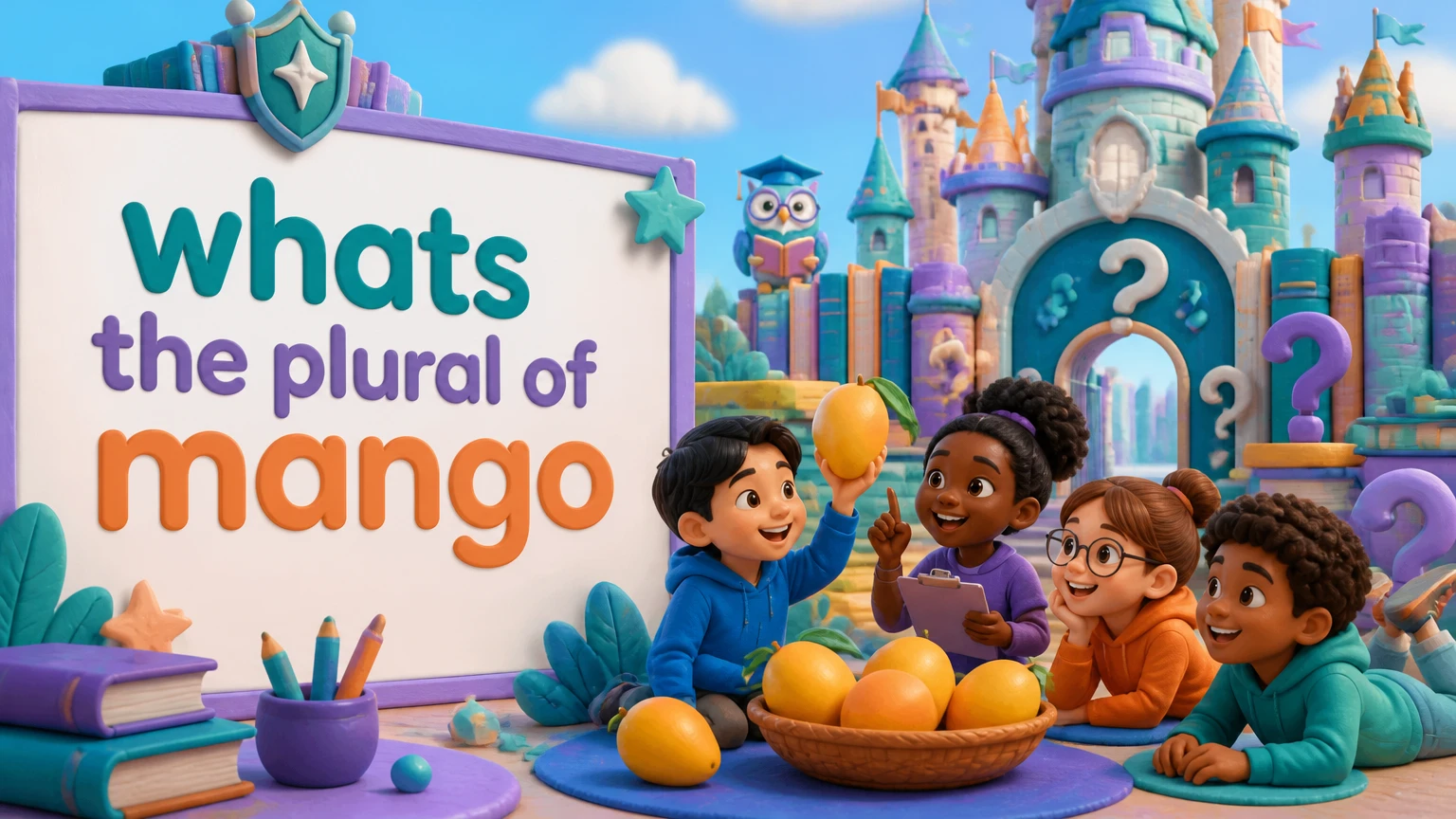
Both mangoes and mangos are accepted plurals of mango. Mangoes is a familiar choice in general writing, but mangos is not automatically a spelling mistake.
Whichever form you choose, use it consistently in the same document. If a school, publisher, or organisation has a preferred spelling, follow that preference.
Singular and plural forms
| Form | Example |
|---|---|
| Singular | This mango is ripe. |
| Plural with -es | These mangoes are ripe. |
| Plural with -s | These mangos are ripe. |
The two plurals have the same basic meaning. There is no dependable rule that one must refer to fruit and the other to varieties.
Why two endings are possible
English nouns ending in o do not all follow the same plural pattern. Potato normally becomes potatoes. Photo becomes photos. Mango allows both -s and -es.
That is why “add -es to every word ending in o” is not a reliable rule. When an ending looks unfamiliar, check the individual word rather than borrowing the rule from another noun.
Using mango in a sentence
Use a plural verb when the noun is the subject and refers to several fruits: “The mangoes are on the table.”
When mango modifies another noun, it commonly stays singular: “mango juice,” “mango trees,” and “mango recipes.” The plural belongs to the head noun in those examples: trees and recipes.
If you mean varieties, either plural may occur: “The market sells several varieties of mango.” Naming the varieties explicitly is often clearer than relying on a spelling difference.
Plurals and apostrophes
An ordinary plural has no apostrophe:
- “Three mangoes fell.”
- “The mango’s skin is green.” This refers to one fruit’s skin.
- “The mangoes’ skins are green.” This refers to several fruits.
If you choose mangos, its plural possessive is mangos’. The apostrophe follows the plural s.
Practice
Complete the sentences: “We bought four ___.” “This ___ tastes sweet.” “She made two glasses of ___ juice.”
Answers: mangoes or mangos; mango; mango.
Distinguish spelling from ripeness or variety
Neither mangoes nor mangos tells the reader whether the fruit is ripe, unripe, sliced, or a particular cultivar. Add those details explicitly when they matter: “three ripe mangoes” or “two varieties of mango.”
Do not invent a technical distinction between accepted spellings to make the choice seem more complicated than it is. The main decision is editorial consistency.
A market conversation
Customer: I’d like four mangoes, please.
Seller: Would you like the larger ones or the smaller ones?
Customer: Two of each, please.
The noun identifies the fruit, while four and two of each provide the number. The same exchange could use mangos without changing the intended order.
Correct the mistakes
Edit “These mango is ripe,” “two mango’s,” and “fresh mangoes juice.”
Answers: “These mangoes are ripe” or “These mangos are ripe”; “two mangoes” or “two mangos”; “fresh mango juice.” The corrections address agreement, an unnecessary apostrophe, and a noun used as a modifier.
Frequently asked questions
Should I correct mangos to mangoes?
Only if a required style or consistency decision calls for it. Both are accepted forms.
Is mangoes possessive?
No. Mangoes is plural. A possessive form needs an apostrophe, such as mango’s or mangoes’.