Article generation failed: Error code: 402 – {‘error’: {‘message’: ‘Insufficient credits. Add more using https://openrouter.ai/settings/credits’, ‘code’: 402}}
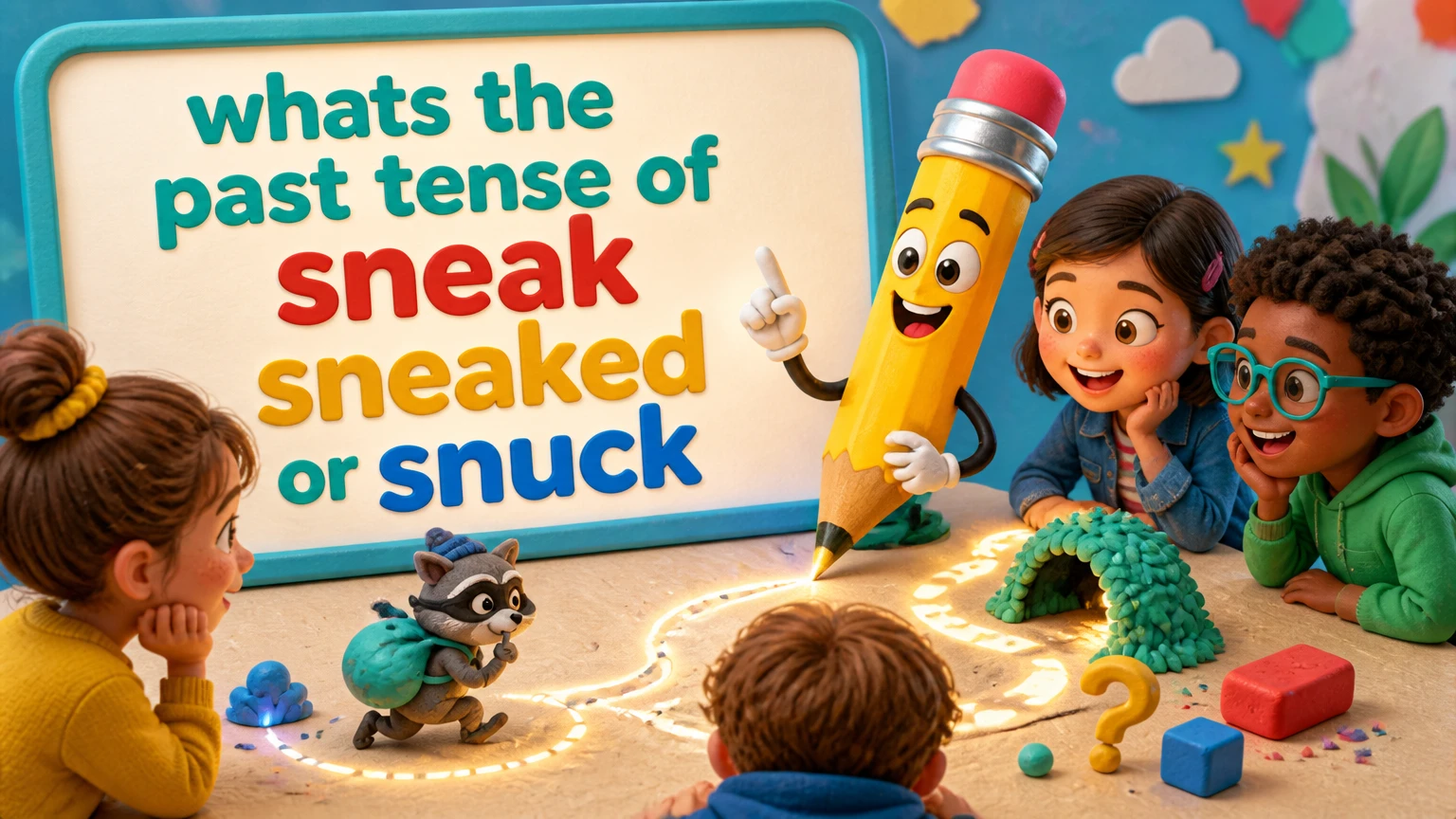
When it comes to the past tense of “sneak,” many English speakers find themselves caught between two options: **sneaked** and **snuck**. The short answer is that both are currently accepted in modern English, but they carry different histories and levels of formality.
Table of Contents
Sneaked vs. Snuck: The Quick Comparison
Historically, “sneaked” is the traditional past tense and past participle of the verb “sneak.” It follows the standard pattern for regular English verbs (adding -ed). “Snuck,” on the other hand, is an irregular form that emerged relatively recently in the history of the language.
| Verb Form | Regular (Traditional) | Irregular (Modern) |
|---|---|---|
| Past Tense | Sneaked | Snuck |
| Past Participle | Sneaked | Snuck |
| Formality | Formal / Academic | Informal / Casual |
The Surprising History of “Snuck”
Unlike many irregular verbs that date back to Old English (like sing/sang or drive/drove), “snuck” didn’t appear in writing until the late 19th century. It likely originated in American dialects as a non-standard variation. For decades, grammarians dismissed it as a “barbarism” or a mistake.
Interesting Fact: “Snuck” is one of the very few examples in English where a verb has moved from being regular to irregular over time. Usually, the process happens the other way around!
Regional Usage: US vs. UK
Your location often dictates which version sounds more “correct” to your ears:
- North America: In the United States and Canada, “snuck” is extremely common and widely accepted in everyday speech, journalism, and even some literature.
- United Kingdom and Commonwealth: “Sneaked” remains the dominant form in British English. While “snuck” is becoming more common due to the influence of American media, it is still frequently viewed as incorrect or “too American” by many British speakers.
When to Use Each Version
The Golden Rule: If you are writing a formal essay, a legal document, or an academic paper, stick with sneaked. If you are writing fiction, a blog post, or speaking with friends, snuck is perfectly acceptable and often sounds more natural to American ears.
Examples in Sentences
Using Sneaked (Formal): “The spy sneaked past the guards without triggering the alarm.”
Using Snuck (Informal): “I snuck an extra cookie from the kitchen while Mom wasn’t looking.”
Past Participle: “They have sneaked (or snuck) into the theater every weekend this month.”
Quick Practice
Which sentence uses the most formal version of the word?
- He snuck out of the meeting early.
- He sneaked out of the meeting early.
Answer: Number 2 is the traditional, formal choice.
Frequently Asked Questions
Is “snuck” a real word?
Yes. While it was once considered a mistake, it is now listed in all major dictionaries, including Merriam-Webster and the Oxford English Dictionary, as a standard past tense form of sneak.
Can I use “snucked”?
No. Snucked is not a recognized word. You should use either “sneaked” or “snuck.”
Does the AP Stylebook allow “snuck”?
The AP Stylebook and the Chicago Manual of Style both prefer “sneaked,” though they acknowledge that “snuck” is in widespread use. For professional journalism, “sneaked” is usually the safer bet.