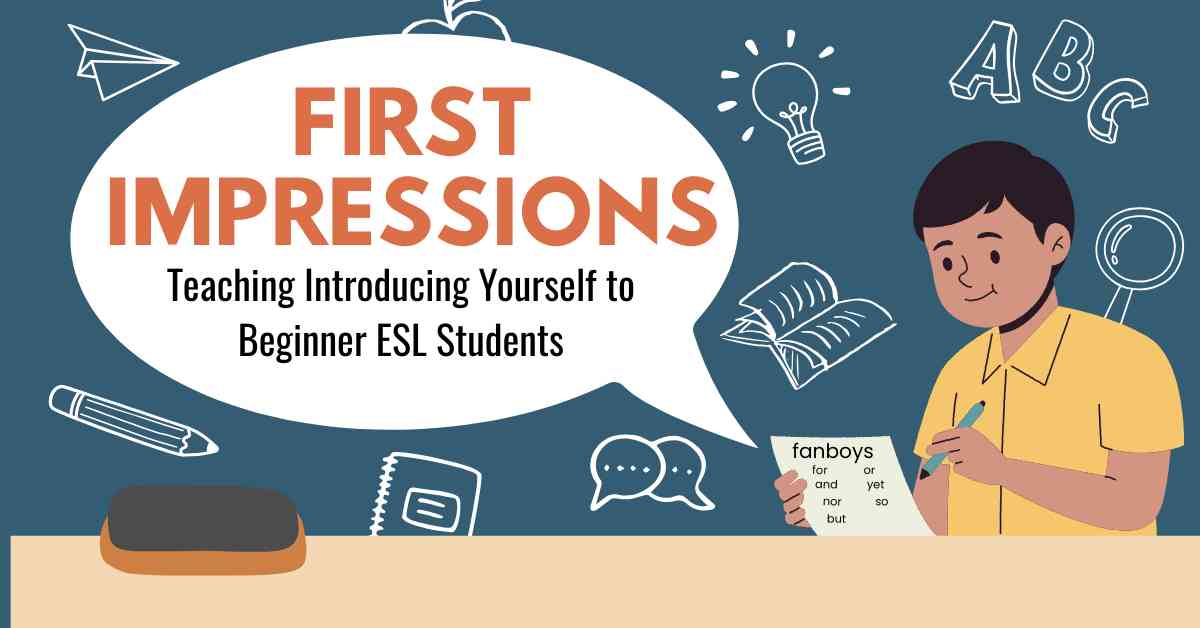
Teaching beginner ESL students how to introduce themselves is the fundamental cornerstone of language acquisition because it provides the immediate functional tools necessary for social survival. When learners first enter an English-speaking environment, they need foundational phrases such as “My name is,” “I am from,” “Nice to meet you,” and “I am a student” to establish their identity and build rapport with others. This process is not merely about memorizing vocabulary; it is about mastering the grammatical structures of the verb ‘to be,’ possessive adjectives, and basic sentence syntax. By focusing on these essential building blocks, educators empower students to navigate real-world interactions with confidence and clarity from their very first lesson.
Table of Contents
- Definition and Scope of Self-Introductions
- Structural Breakdown of Personal Information
- The Role of the Verb ‘To Be’
- Possessive Adjectives in Introductions
- Categories of Introductory Information
- Extensive Examples and Reference Tables
- Usage Rules and Social Etiquette
- Common Mistakes and How to Fix Them
- Practice Exercises and Worksheets
- Advanced Topics: Expanding the Narrative
- Frequently Asked Questions (FAQ)
- Conclusion and Final Tips
Definition and Scope of Self-Introductions
In the context of English Language Teaching (ELT), a self-introduction is a structured set of linguistic routines used to provide personal identity markers to a listener. For beginners, this involves a specific “formulaic” approach where learners use high-frequency sentence frames to convey their name, origin, occupation, and interests. The primary function of this grammar topic is to facilitate the “breaking of the ice” in social, academic, or professional settings.
Functionally, self-introductions serve as the student’s first encounter with declarative sentences. At the beginner level (A1 on the CEFR scale), the scope is limited to present-tense facts. We do not usually introduce past experiences or future goals until the student has mastered the basic “Identity Profile.” This profile acts as a linguistic anchor, giving the student a safe “script” they can rely on when the stress of a new environment makes spontaneous production difficult.
The context of these introductions can vary significantly. A student might introduce themselves in a classroom, at a job interview, or during a casual meet-up. Each context requires a slightly different register, though the core grammatical components—subject pronouns and the verb ‘to be’—remain constant across all variations. Understanding this scope helps teachers prioritize what to teach first: names and origins before hobbies and complex job descriptions.
Structural Breakdown of Personal Information
To teach introductions effectively, we must break the sentences down into their constituent parts. Most beginner introductions follow a Subject + Verb + Complement structure. For example, in the sentence “I am a teacher,” ‘I’ is the subject, ‘am’ is the linking verb, and ‘a teacher’ is the subject complement that provides the identity information.
The Subject-Verb Agreement
The most critical structural element is the agreement between the subject pronoun and the form of the verb ‘to be’. Beginners often struggle with the distinction between “I am,” “You are,” and “He/She is.” Teachers should emphasize that the verb changes based on who is being introduced. Even though the lesson is about “self” (using ‘I’), students must also learn to introduce others, necessitating the full conjugation of the present simple ‘to be’.
The Use of Articles
Another structural hurdle is the use of indefinite articles (a/an) before occupations. While many languages omit the article in this context, English requires it. We say “I am a student,” not “I am student.” This structural rule is a primary focus during the early stages of teaching introductions to ensure students develop accurate habits from the beginning.
Word Order in Questions
Introductions are rarely a monologue; they are a dialogue. Therefore, the structure of questions is just as important as the structure of statements. Students must learn the Inversion Rule: moving the verb before the subject. Instead of “You are from Japan,” the question becomes “Are you from Japan?” or “Where are you from?” mastering this “flip” is a major milestone for beginner learners.
The Role of the Verb ‘To Be’
The verb ‘to be’ is the most important verb in the English language for beginners. It functions as a “link” or a “bridge” between the subject and the information about that subject. In introductions, it is used to state names, nationalities, ages (unlike in Romance languages where ‘have’ is used), and professions. It is the “identity verb.”
Teachers should present the verb ‘to be’ in both its full forms and its contracted forms. While “I am” is grammatically correct and useful for formal writing, “I’m” is the standard for spoken introductions. Beginners need to be trained to hear and produce these contractions to sound more natural and to understand native speakers who rarely use the full forms in casual conversation.
The following table illustrates the conjugation of the verb ‘to be’ as it relates to personal introductions and basic identification sentences. This is the primary tool students will use to build their self-introduction scripts.
| Subject Pronoun | Full Form (Verb) | Contraction | Example Sentence |
|---|---|---|---|
| I | am | I’m | I’m Marco. |
| You | are | You’re | You’re a student. |
| He | is | He’s | He’s from Italy. |
| She | is | She’s | She’s a doctor. |
| It | is | It’s | It’s a big city. |
| We | are | We’re | We’re friends. |
| They | are | They’re | They’re from Brazil. |
Possessive Adjectives in Introductions
While the verb ‘to be’ handles “I am [Name],” possessive adjectives allow for the alternative “My name is [Name].” This shift in perspective—from the person as the subject to the name as the subject—is a vital grammatical nuance. It introduces the concept of ownership and relationship, which is essential when talking about family or coworkers later in the introduction.
Students often confuse subject pronouns (I, You, He) with possessive adjectives (My, Your, His). A common error is saying “Me name is…” or “I name is…” Correcting this requires repetitive practice with the possessive forms. Teachers should emphasize that possessive adjectives are always followed by a noun (e.g., my name, your job, his country).
Using possessive adjectives also allows students to provide more detail about their lives. For example, “My hobby is swimming” or “My favorite color is blue.” These sentences follow a slightly different logic than “I am…” because they focus on an attribute belonging to the person rather than the person’s identity itself.
Categories of Introductory Information
To help students build a comprehensive introduction, we categorize information into logical “modules.” By mastering one module at a time, the student can eventually “stack” them together to create a full paragraph about themselves. These categories typically include Greeting, Name, Location, Occupation, and Closing.
1. The Greeting
The greeting sets the tone. We distinguish between formal greetings (Hello, Good morning) and informal greetings (Hi, Hey, What’s up). Beginners should start with “Hello” or “Hi” as they are safe in almost any situation. The choice of greeting often depends on the time of day or the level of familiarity between the speakers.
2. Personal Identity (Name and Age)
This is the core of the introduction. Students learn “My name is…” or “I’m…” followed by their name. For age, it is crucial to remind students that in English, we “are” an age; we do not “have” an age. “I am 25 years old” is the correct structure, though “I am 25” is equally common and slightly more natural in conversation.
3. Origin and Nationality
This category uses two main structures: “I am from [Country]” or “I am [Nationality].” This is an excellent opportunity to teach geography and the suffixes used for nationalities (e.g., -an, -ish, -ese). Understanding the difference between a noun (the country) and an adjective (the nationality) is a key grammatical takeaway here.
Extensive Examples and Reference Tables
The following tables provide a vast array of vocabulary and sentence structures that students can use to customize their introductions. These tables are designed to be used as “menus” from which students can pick the items that apply to their own lives.
The first table focuses on the most common occupations. Notice the consistent use of the indefinite articles ‘a’ and ‘an’. This is a recurring teaching point that needs constant reinforcement during introduction practice.
| Occupation | Example Sentence | Occupation | Example Sentence |
|---|---|---|---|
| Student | I am a student. | Engineer | I am an engineer. |
| Teacher | I am a teacher. | Doctor | I am a doctor. |
| Nurse | I am a nurse. | Artist | I am an artist. |
| Chef | I am a chef. | Driver | I am a driver. |
| Waiter | I am a waiter. | Manager | I am a manager. |
| Accountant | I am an accountant. | Lawyer | I am a lawyer. |
| Architect | I am an architect. | Pilot | I am a pilot. |
| Dentist | I am a dentist. | Farmer | I am a farmer. |
| Police Officer | I am a police officer. | Writer | I am a writer. |
| Designer | I am a designer. | Programmer | I am a programmer. |
| Salesperson | I am a salesperson. | Actor | I am an actor. |
| Mechanic | I am a mechanic. | Electrician | I am an electrician. |
| Baker | I am a baker. | – | – |
The next table provides a list of countries and their corresponding nationalities. This helps students move beyond just saying the name of their country and allows them to describe themselves using adjectives, which is a slightly more advanced grammatical step.
| Country | Nationality | Example Sentence |
|---|---|---|
| Mexico | Mexican | I am Mexican. |
| Japan | Japanese | I am Japanese. |
| France | French | I am French. |
| Brazil | Brazilian | I am Brazilian. |
| China | Chinese | I am Chinese. |
| Germany | German | I am German. |
| Italy | Italian | I am Italian. |
| Spain | Spanish | I am Spanish. |
| Canada | Canadian | I am Canadian. |
| Egypt | Egyptian | I am Egyptian. |
| Korea | Korean | I am Korean. |
| India | Indian | I am Indian. |
| Turkey | Turkish | I am Turkish. |
| Vietnam | Vietnamese | I am Vietnamese. |
| Thailand | Thai | I am Thai. |
| Poland | Polish | I am Polish. |
| Greece | Greek | I am Greek. |
| Australia | Australian | I am Australian. |
| Colombia | Colombian | I am Colombian. |
| Portugal | Portuguese | I am Portuguese. |
Interests and hobbies add personality to an introduction. While beginners might only know a few verbs, we can teach them to use the structure “I like…” or “My hobby is…” followed by a gerund (the -ing form of a verb) or a noun.
| Hobby | Sentence (I like…) | Sentence (My hobby is…) |
|---|---|---|
| Reading | I like reading. | My hobby is reading. |
| Cooking | I like cooking. | My hobby is cooking. |
| Running | I like running. | My hobby is running. |
| Swimming | I like swimming. | My hobby is swimming. |
| Traveling | I like traveling. | My hobby is traveling. |
| Music | I like music. | My hobby is music. |
| Movies | I like movies. | My hobby is movies. |
| Photography | I like photography. | My hobby is photography. |
| Dancing | I like dancing. | My hobby is dancing. |
| Painting | I like painting. | My hobby is painting. |
| Gaming | I like gaming. | My hobby is gaming. |
| Hiking | I like hiking. | My hobby is hiking. |
| Gardening | I like gardening. | My hobby is gardening. |
| Singing | I like singing. | My hobby is singing. |
| Shopping | I like shopping. | My hobby is shopping. |
| Football | I like football. | My hobby is football. |
| Yoga | I like yoga. | My hobby is yoga. |
| Writing | I like writing. | My hobby is writing. |
| Cycling | I like cycling. | My hobby is cycling. |
| Chess | I like chess. | My hobby is chess. |
Usage Rules and Social Etiquette
When teaching introductions, grammar is only half the battle; the other half is social usage. In English-speaking cultures, introductions are often accompanied by specific non-verbal cues and “politeness markers.” For instance, a handshake is common in professional settings, while a wave or a nod suffices in casual ones.
Rule 1: The Response. When someone says “Nice to meet you,” the standard response is “Nice to meet you, too.” Beginners must learn to add that “too” at the end. It is a small word that carries a lot of social weight, signaling that the feeling of pleasure in meeting is mutual.
Rule 2: Formal vs. Informal. Use “Mr.” or “Ms.” followed by the last name for formal situations (e.g., “Hello, I am Mr. Smith”). In most modern English contexts, however, first names are preferred. Teachers should explain that “Teacher [Name]” is not commonly used in English; instead, we use “Mr./Ms. [Last Name]” or just the first name if invited to do so.
Rule 3: Eye Contact. While not a grammar rule, eye contact is a vital part of an English introduction. In many cultures, looking down is a sign of respect, but in English-speaking cultures, it can be perceived as a lack of confidence or honesty. Encouraging students to look at their partner while saying “I am…” helps them build the necessary cultural fluency alongside their linguistic skills.
Common Mistakes and How to Fix Them
Beginner ESL students often carry over rules from their native languages, leading to predictable errors. Identifying these early allows for “preventative” teaching. One of the most common errors is the omission of the verb ‘to be’ entirely, as seen in “I student” instead of “I am a student.”
Another frequent mistake involves the use of “have” for age. Because many languages (Spanish, French, Italian) use the verb for “to have” when stating age, students will say “I have 20 years.” It is essential to drill the “I AM [Age]” structure repeatedly until it becomes a reflex.
The following table highlights these common pitfalls and provides the correct English alternative to help students self-correct.
| Incorrect Sentence | Correct Sentence | The Rule |
|---|---|---|
| I have 25 years old. | I am 25 years old. | Use ‘be’ for age, not ‘have’. |
| My name is of Marco. | My name is Marco. | No preposition needed before the name. |
| I am teacher. | I am a teacher. | Always use ‘a/an’ for jobs. |
| I live in Japan 2 years. | I have lived in Japan for 2 years. | (Advanced) Use Perfect tense for duration. |
| Nice meet you. | Nice to meet you. | Don’t forget the ‘to’ infinitive. |
| He name is John. | His name is John. | Use possessive adjectives, not pronouns. |
| I am from Mexican. | I am from Mexico. | Use the country name after ‘from’. |
| I am Japan. | I am Japanese. | Use the nationality for identity. |
Practice Exercises and Worksheets
To master introductions, students need to move from passive understanding to active production. These exercises are designed to build confidence by starting with simple “fill-in-the-blank” tasks and moving toward full sentence creation.
Exercise 1: Fill in the Blanks (Verb To Be)
Complete the sentences with the correct form of the verb ‘to be’ (am, is, are).
- I ______ from Spain.
- She ______ a doctor.
- My name ______ Sarah.
- They ______ students.
- It ______ nice to meet you.
- You ______ my friend.
- We ______ from the same city.
- He ______ 30 years old.
- My favorite color ______ green.
- I ______ happy to be here.
Exercise 2: Possessive Adjectives
Choose the correct possessive adjective (My, Your, His, Her).
- (I) ______ name is Alex.
- (She) ______ job is interesting.
- (He) ______ favorite food is pizza.
- (You) What is ______ phone number?
- (I) ______ hobby is playing guitar.
- (She) ______ mother is a teacher.
- (He) ______ car is red.
- (I) ______ city is very big.
- (You) Where is ______ house?
- (He) ______ last name is Smith.
Exercise 3: Sentence Scramble
Unscramble the words to make correct sentences.
- name / is / my / Maria
- from / I / Brazil / am
- meet / to / nice / you
- am / a / student / I
- old / 22 / I / years / am
- is / hobby / my / cooking
- you / are / how / ?
- is / what / name / your / ?
- from / where / you / are / ?
- teacher / is / she / a
| Question # | Ex 1 Answers | Ex 2 Answers | Ex 3 Answers |
|---|---|---|---|
| 1 | am | My | My name is Maria. |
| 2 | is | Her | I am from Brazil. |
| 3 | is | His | Nice to meet you. |
| 4 | are | your | I am a student. |
| 5 | is | My | I am 22 years old. |
| 6 | are | Her | My hobby is cooking. |
| 7 | are | His | How are you? |
| 8 | is | My | What is your name? |
| 9 | is | your | Where are you from? |
| 10 | am | His | She is a teacher. |
Advanced Topics: Expanding the Narrative
Once a student is comfortable with the “Identity Profile,” they can begin to add complexity to their introductions. This involves moving beyond simple ‘to be’ sentences and incorporating more varied verbs and tenses. For example, instead of just saying “I am a student,” a student might say “I am studying economics at the university.”
Using the Present Continuous
The present continuous (am/is/are + verb-ing) allows students to talk about what they are doing “these days.” This adds a temporal layer to the introduction. “I am currently living in London” or “I am looking for a job in marketing” provides more context than a simple present tense statement.
Adding “Because” and “So”
Connecting sentences with conjunctions like “because” and “so” makes the introduction sound more fluid and less like a list of facts. “I am from Italy, but I live in New York because I work for a tech company.” This transition from simple to compound sentences is a major step toward intermediate proficiency.
The “Elevator Pitch”
For professional students, the introduction evolves into an “elevator pitch.” This is a 30-second summary of who they are, what they do, and what they want. It requires a higher level of vocabulary, including action verbs like “manage,” “create,” and “develop.” Even at a high-beginner level, students can start practicing a simplified version of this by focusing on their professional goals.
Frequently Asked Questions (FAQ)
Q: Should I teach “My name is” or “I’m”?
A: Both are important. “My name is” is slightly more formal and very clear for beginners. “I’m” is more common in spoken English. Teach both so students can recognize them when they hear them.
Q: How do I handle students who are shy?
A: Use role-play with puppets or “character cards.” If a student is pretending to be a famous person, they often feel less pressure than when they are talking about themselves.
Q: Is it okay to use “How do you do?”
A: In modern English, “How do you do?” is very formal and increasingly rare. It is better to teach “How are you?” or “Nice to meet you” as the primary responses.
Q: Why do students keep saying “I have 20 years”?
A: This is “L1 Interference.” Their brain is translating directly from their native language. The best fix is constant, gentle correction and repetitive drilling of the “I am [Age]” pattern.
Q: When should I introduce “What’s up?”
A: Only after the student has mastered “Hello” and “How are you?” Explain that “What’s up” is very informal and should only be used with friends, not teachers or bosses.
Q: How can students practice at home?
A: Encourage them to record themselves on their phones and listen back. They can also practice in front of a mirror to work on their facial expressions and eye contact.
Q: Should I teach “Ms.” or “Mrs.”?
A: “Ms.” (pronounced ‘miz’) is the safest choice because it does not indicate marital status. It is the professional standard in most English-speaking countries today.
Q: How do I explain the difference between ‘from’ and ‘in’?
A: Use a simple visual. ‘From’ is the starting point (origin/country), and ‘In’ is the current location (city/building). “I am from China, but I live in New York.”
Conclusion and Final Tips
Teaching introductions is about much more than just words; it is about giving a student their voice in a new language. By focusing on the core structures of the verb ‘to be,’ the correct use of articles, and the social nuances of greetings, you provide a solid foundation for all future learning. Remember that repetition is key for beginners. They need to say their name, their origin, and their job dozens of times before the structures feel natural. Encourage your students to be patient with themselves and to view every new introduction as an opportunity to practice. With a clear script and a bit of confidence, they will soon be able to navigate any social situation with ease. Keep the lessons interactive, use plenty of visual aids, and always celebrate the small victories as they build their English identity.