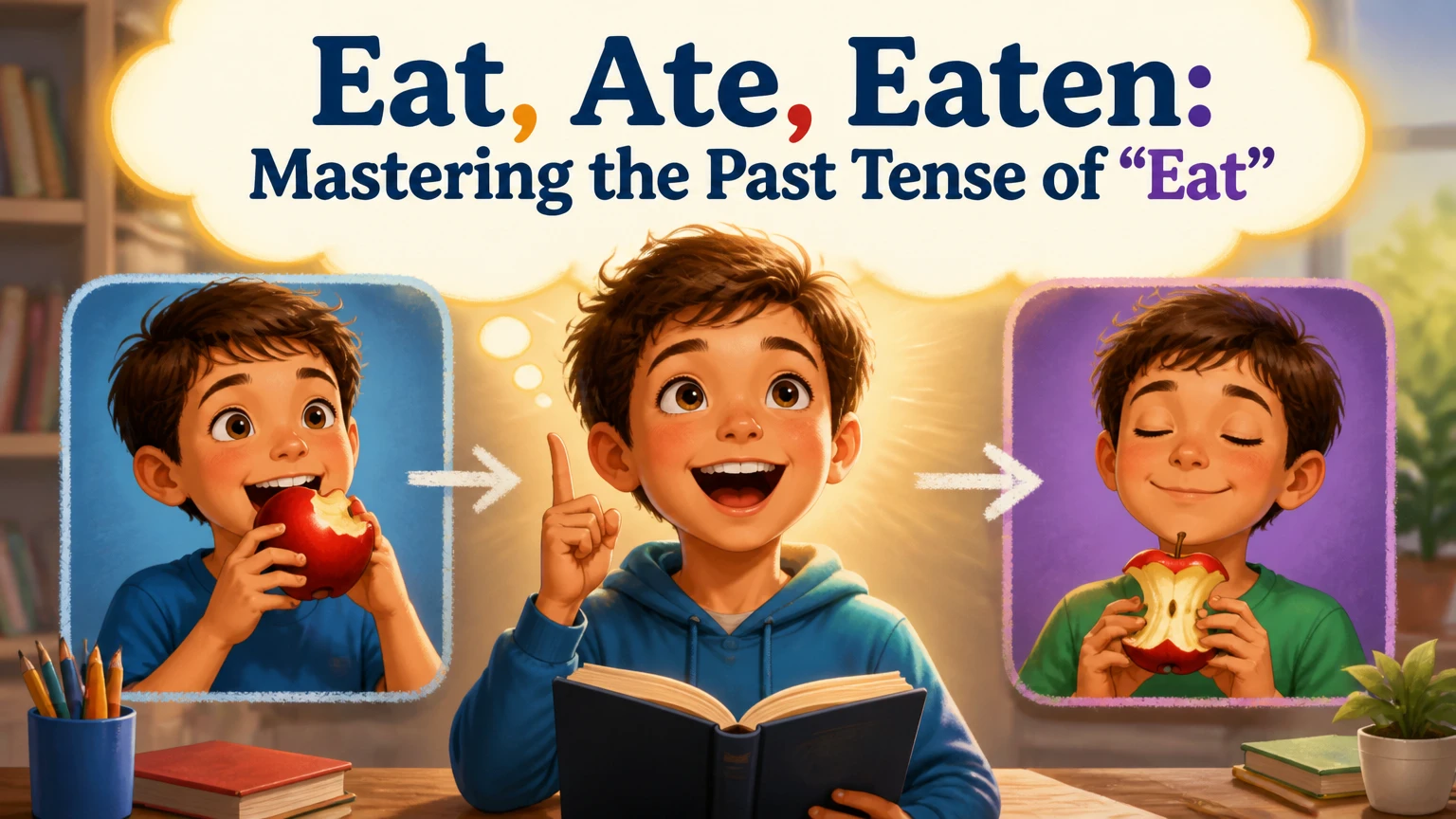
The verb “eat” is a fundamental part of our daily vocabulary, used to describe the act of consuming food. However, like many verbs in English, “eat” has irregular past tense and past participle forms: ate and eaten. Understanding how to correctly use these forms, including eat, ate, and eaten, is essential for clear and accurate communication. These different forms are used in different tenses and contexts, each playing a specific role in conveying when the action of eating occurred.
For example, we say “I eat breakfast every morning” (present simple), “I ate breakfast this morning” (past simple), and “I have eaten breakfast already” (present perfect). Knowing when to use “eat,” “ate,” or “eaten” is crucial for constructing grammatically correct and meaningful sentences. This article will provide a comprehensive guide to mastering the past tense of “eat,” complete with definitions, examples, and practice exercises. This knowledge will be beneficial for English language learners, writers, and anyone looking to improve their grammar skills.
Table of Contents
- Definition of “Eat,” “Ate,” and “Eaten”
- Structural Breakdown
- Types of Past Tense with “Eat”
- Examples of “Eat,” “Ate,” and “Eaten” in Sentences
- Usage Rules for “Eat,” “Ate,” and “Eaten”
- Common Mistakes
- Practice Exercises
- Advanced Topics
- FAQ
- Conclusion
Definition of “Eat,” “Ate,” and “Eaten”
Let’s define each form of the verb “eat” to understand its specific role:
Eat: This is the base form of the verb, used in the present tense and with modal verbs. “Eat” means to put food into your mouth and chew and swallow it.
Ate: This is the simple past tense form of “eat.” It describes an action that was completed in the past at a specific time.
Eaten: This is the past participle form of “eat.” It is used with auxiliary verbs such as “have,” “has,” or “had” to form perfect tenses (present perfect, past perfect, future perfect) and in passive voice constructions.
Structural Breakdown
Understanding the structure of how these verb forms are used in sentences is crucial. Here’s a breakdown:
Present Simple (Eat): Subject + Eat (+ -s/es for third-person singular)
Example: I eat pasta. She eats pizza.
Past Simple (Ate): Subject + Ate
Example: I ate pasta. She ate pizza.
Present Perfect (Eaten): Subject + Have/Has + Eaten
Example: I have eaten pasta. She has eaten pizza.
Past Perfect (Eaten): Subject + Had + Eaten
Example: I had eaten pasta before she arrived. She had eaten pizza before the movie started.
Future Perfect (Eaten): Subject + Will Have + Eaten
Example: I will have eaten pasta by the time you get here. She will have eaten pizza before the game begins.
Passive Voice (Eaten): Subject + Is/Was/Were/Has Been/Had Been + Eaten
Example: The cake was eaten by the children. The pizza has been eaten.
Types of Past Tense with “Eat”
The verb “eat” is used in several past tense forms, each with a distinct function:
Simple Past Tense (“Ate”)
The simple past tense describes a completed action in the past. It is often used with specific time markers, such as “yesterday,” “last week,” or “an hour ago.”
Present Perfect Tense (“Have/Has Eaten”)
The present perfect tense connects the past with the present. It is used when the time of the action is not specific or when the action has relevance to the present moment.
Past Perfect Tense (“Had Eaten”)
The past perfect tense describes an action that was completed before another action in the past. It is used to establish a sequence of events.
Future Perfect Tense (“Will Have Eaten”)
The future perfect tense describes an action that will be completed before a specific time in the future.
Examples of “Eat,” “Ate,” and “Eaten” in Sentences
Here are examples illustrating the use of “eat,” “ate,” and “eaten” in various contexts:
Table 1: Examples of “Eat” (Present Tense)
The table below shows examples of the base form ‘eat’ used in the present tense. Notice how the third person singular (he/she/it) takes the ‘-s’ form.
| Subject | Sentence |
|---|---|
| I | I eat fruit every day. |
| You | You eat too much sugar. |
| He | He eats a big lunch. |
| She | She eats only vegetables. |
| It | The dog eats its food quickly. |
| We | We eat dinner together. |
| They | They eat at the restaurant often. |
| Children | Children eat candy on Halloween. |
| The cat | The cat eats fish. |
| My friend | My friend eats spicy food. |
| I | I eat when I’m hungry. |
| You | You eat healthy foods. |
| He | He eats before going to school. |
| She | She eats a light breakfast. |
| It | The baby eats pureed food. |
| We | We eat outside in the summer. |
| They | They eat popcorn at the movies. |
| Students | Students eat in the cafeteria. |
| The bird | The bird eats seeds. |
| My sister | My sister eats vegetarian meals. |
| I | I eat with chopsticks sometimes. |
| You | You eat more slowly than me. |
| He | He eats out every weekend. |
| She | She eats less meat than I do. |
| It | The rabbit eats carrots. |
| We | We eat local produce when possible. |
| They | They eat at different times each day. |
| Tourists | Tourists eat at famous restaurants. |
| The bear | The bear eats berries in the forest. |
| My brother | My brother eats everything! |
Table 2: Examples of “Ate” (Past Simple)
The following table presents examples of ‘ate’ used in the simple past tense. Each sentence describes a completed action in the past.
| Subject | Sentence |
|---|---|
| I | I ate pizza last night. |
| You | You ate all the cookies. |
| He | He ate a sandwich for lunch. |
| She | She ate dinner at a fancy restaurant. |
| It | The dog ate my homework. |
| We | We ate at the new cafe yesterday. |
| They | They ate burgers at the barbecue. |
| The children | The children ate all their vegetables. |
| The cat | The cat ate the bird. |
| My friend | My friend ate too much candy. |
| I | I ate a big breakfast this morning. |
| You | You ate your lunch quickly. |
| He | He ate the entire cake by himself. |
| She | She ate at the best restaurant in town. |
| It | The bear ate all the honey. |
| We | We ate dinner late last night. |
| They | They ate everything on the buffet. |
| Students | Students ate lunch in the park. |
| The bird | The bird ate all the seeds. |
| My sister | My sister ate a vegetarian meal. |
| I | I ate sushi for the first time. |
| You | You ate more than I did. |
| He | He ate out last weekend. |
| She | She ate less than usual. |
| It | The rabbit ate the lettuce. |
| We | We ate a delicious meal on vacation. |
| They | They ate at a food truck. |
| Tourists | Tourists ate local cuisine. |
| The bear | The bear ate fish in the river. |
| My brother | My brother ate my dessert! |
Table 3: Examples of “Eaten” (Perfect Tenses)
The following table illustrates the use of ‘eaten’ in various perfect tenses, combined with auxiliary verbs like ‘have’, ‘has’, and ‘had’.
| Tense | Subject | Sentence |
|---|---|---|
| Present Perfect | I | I have eaten breakfast already. |
| Present Perfect | You | You have eaten all the cake! |
| Present Perfect | He | He has eaten lunch. |
| Present Perfect | She | She has eaten dinner at that restaurant before. |
| Present Perfect | It | The dog has eaten its food. |
| Present Perfect | We | We have eaten at this cafe many times. |
| Present Perfect | They | They have eaten all the snacks. |
| Past Perfect | I | I had eaten before you arrived. |
| Past Perfect | You | You had eaten all the cookies before I could have one. |
| Past Perfect | He | He had eaten the sandwich by the time the meeting started. |
| Past Perfect | She | She had eaten dinner before going to the movies. |
| Past Perfect | It | The cat had eaten the mouse before I noticed. |
| Past Perfect | We | We had eaten lunch before we went shopping. |
| Past Perfect | They | They had eaten all the pizza before the guests arrived. |
| Future Perfect | I | I will have eaten by the time you get here. |
| Future Perfect | You | You will have eaten all the food before the party even begins. |
| Future Perfect | He | He will have eaten dinner by 8 PM. |
| Future Perfect | She | She will have eaten before her flight. |
| Future Perfect | It | The dog will have eaten its treat by then. |
| Future Perfect | We | We will have eaten by the time the movie starts. |
| Future Perfect | They | They will have eaten all the appetizers before the main course. |
| Passive Voice | The cake | The cake has been eaten. |
| Passive Voice | The pizza | The pizza was eaten quickly. |
| Passive Voice | All the cookies | All the cookies had been eaten. |
Usage Rules for “Eat,” “Ate,” and “Eaten”
Here are the key usage rules for “eat,” “ate,” and “eaten”:
- “Eat” is used in the present tense or with modal verbs (e.g., can eat, should eat, will eat).
- “Ate” is used to describe a completed action in the past, without any connection to the present.
- “Eaten” is used with auxiliary verbs “have,” “has,” or “had” to form perfect tenses, indicating a completed action with relevance to the present or another point in the past or future.
- “Eaten” is also used in passive voice constructions, indicating that the subject received the action.
Common Mistakes
Here are some common mistakes to avoid when using “eat,” “ate,” and “eaten”:
Mistake 1: Using “eat” instead of “ate” in the past simple tense.
Incorrect: I eat pizza yesterday.
Correct: I ate pizza yesterday.
Mistake 2: Using “ate” instead of “eaten” with auxiliary verbs in perfect tenses.
Incorrect: I have ate dinner.
Correct: I have eaten dinner.
Mistake 3: Using “eaten” instead of “ate” in the past simple tense.
Incorrect: I eaten pizza last night.
Correct: I ate pizza last night.
Mistake 4: Confusing the past participle “eaten” with the adjective “eating.”
Incorrect: The cake was eating by the children.
Correct: The cake was eaten by the children.
Practice Exercises
Test your understanding with the following exercises:
Exercise 1: Fill in the Blanks with “Eat,” “Ate,” or “Eaten”
Complete the following sentences with the correct form of the verb “eat.”
| # | Sentence | Answer |
|---|---|---|
| 1 | I usually _______ breakfast at 7 AM. | eat |
| 2 | Yesterday, I _______ a sandwich for lunch. | ate |
| 3 | She has _______ all the cookies. | eaten |
| 4 | They will have _______ dinner by the time we arrive. | eaten |
| 5 | We _______ at that restaurant last week. | ate |
| 6 | He _______ an apple every day. | eats |
| 7 | The cat _______ the mouse. | ate |
| 8 | The snacks have been _______. | eaten |
| 9 | I had _______ before the movie started. | eaten |
| 10 | If you want, you can _______ with us. | eat |
Exercise 2: Correct the Sentences
Correct the following sentences, which may contain errors in the use of “eat,” “ate,” or “eaten.”
| # | Incorrect Sentence | Correct Sentence |
|---|---|---|
| 1 | I eat pizza yesterday. | I ate pizza yesterday. |
| 2 | She have ate dinner. | She has eaten dinner. |
| 3 | They eaten all the cake. | They have eaten all the cake. |
| 4 | He had eat before we arrived. | He had eaten before we arrived. |
| 5 | We will eat by the time you come. | We will have eaten by the time you come. |
| 6 | Last night, I eat a burger. | Last night, I ate a burger. |
| 7 | The dog has ate its food. | The dog has eaten its food. |
| 8 | The cookies were eating by the children. | The cookies were eaten by the children. |
| 9 | Before the party, they eat dinner. | Before the party, they had eaten dinner. |
| 10 | I have ate too much candy. | I have eaten too much candy. |
Exercise 3: Sentence Completion
Create your own sentences using “eat,” “ate,” and “eaten” in the correct tense.
| # | Tense | Sentence Starter | Example Completion |
|---|---|---|---|
| 1 | Present Simple | Every morning, I eat… | Every morning, I eat a bowl of cereal. |
| 2 | Past Simple | Last weekend, we ate… | Last weekend, we ate at a new Italian restaurant. |
| 3 | Present Perfect | I have never eaten… | I have never eaten sushi. |
| 4 | Past Perfect | Before going to bed, she had eaten… | Before going to bed, she had eaten a light snack. |
| 5 | Future Perfect | By the time the guests arrive, we will have eaten… | By the time the guests arrive, we will have eaten the appetizers. |
| 6 | Present Simple | He eats… | He eats a lot of vegetables. |
| 7 | Past Simple | The cat ate… | The cat ate a mouse. |
| 8 | Present Perfect | They have eaten… | They have eaten all the pizza. |
| 9 | Past Perfect | Before leaving, I had eaten… | Before leaving, I had eaten a piece of cake. |
| 10 | Future Perfect | By tomorrow, I will have eaten… | By tomorrow, I will have eaten all the leftovers. |
Advanced Topics
For advanced learners, consider these more complex aspects:
Figurative Language: “Eat” can be used figuratively to mean “consume” or “use up,” such as “The project ate up all my time.”
Idioms: Explore idioms like “eat your words,” “eat humble pie,” and “eat someone out of house and home.”
Regional Variations: Be aware that some dialects might have slight variations in usage or pronunciation, although these are rare for such a common verb.
FAQ
Here are some frequently asked questions about the past tense of “eat”:
Q1: What is the difference between “ate” and “eaten”?
A1: “Ate” is the simple past tense form, used to describe a completed action in the past. “Eaten” is the past participle form, used with auxiliary verbs (have, has, had) in perfect tenses to indicate a completed action with relevance to another time or situation.
Q2: When should I use “have eaten” vs. “had eaten”?
A2: Use “have eaten” in the present perfect tense to describe an action that started in the past and continues to have relevance in the present. Use “had eaten” in the past perfect tense to describe an action that was completed before another action in the past.
Q3: Can “eaten” be used without an auxiliary verb?
A3: No, “eaten” is the past participle and requires an auxiliary verb such as “have,” “has,” “had,” “is,” “was,” or “were” to form a complete verb phrase.
Q4: Is “eat” an irregular verb?
A4: Yes, “eat” is an irregular verb because its past simple (“ate”) and past participle (“eaten”) forms do not follow the regular -ed pattern.
Q5: How do I know when to use the past perfect tense with “had eaten”?
A5: Use the past perfect tense to show that one action was completed before another action in the past. For example, “I had eaten dinner before I went to the movies.”
Q6: What is the future perfect tense, and how do I use “will have eaten”?
A6: The future perfect tense describes an action that will be completed before a specific time in the future. For example, “I will have eaten dinner by the time you arrive.”
Q7: How can I remember the different forms of “eat”?
A7: Practice using the verb in different contexts, create flashcards, and focus on understanding the function of each tense. Regular practice and exposure to the language will help solidify your understanding.
Q8: Can “eat” be used in the passive voice?
A8: Yes, “eat” can be used in the passive voice. For example, “The cake was eaten by the children.”
Conclusion
Mastering the various forms of the verb “eat”—eat, ate, and eaten—is crucial for effective communication in English. By understanding the roles of the present simple, past simple, and perfect tenses, you can accurately describe when the action of eating occurred. Remember that “eat” is the base form, “ate” is the simple past, and “eaten” is the past participle used with auxiliary verbs.
Consistent practice, attention to usage rules, and awareness of common mistakes will help you confidently use these forms in your writing and speaking. Keep practicing with examples and exercises to reinforce your knowledge. With dedication and effort, you can confidently use “eat,” “ate,” and “eaten” in any context.